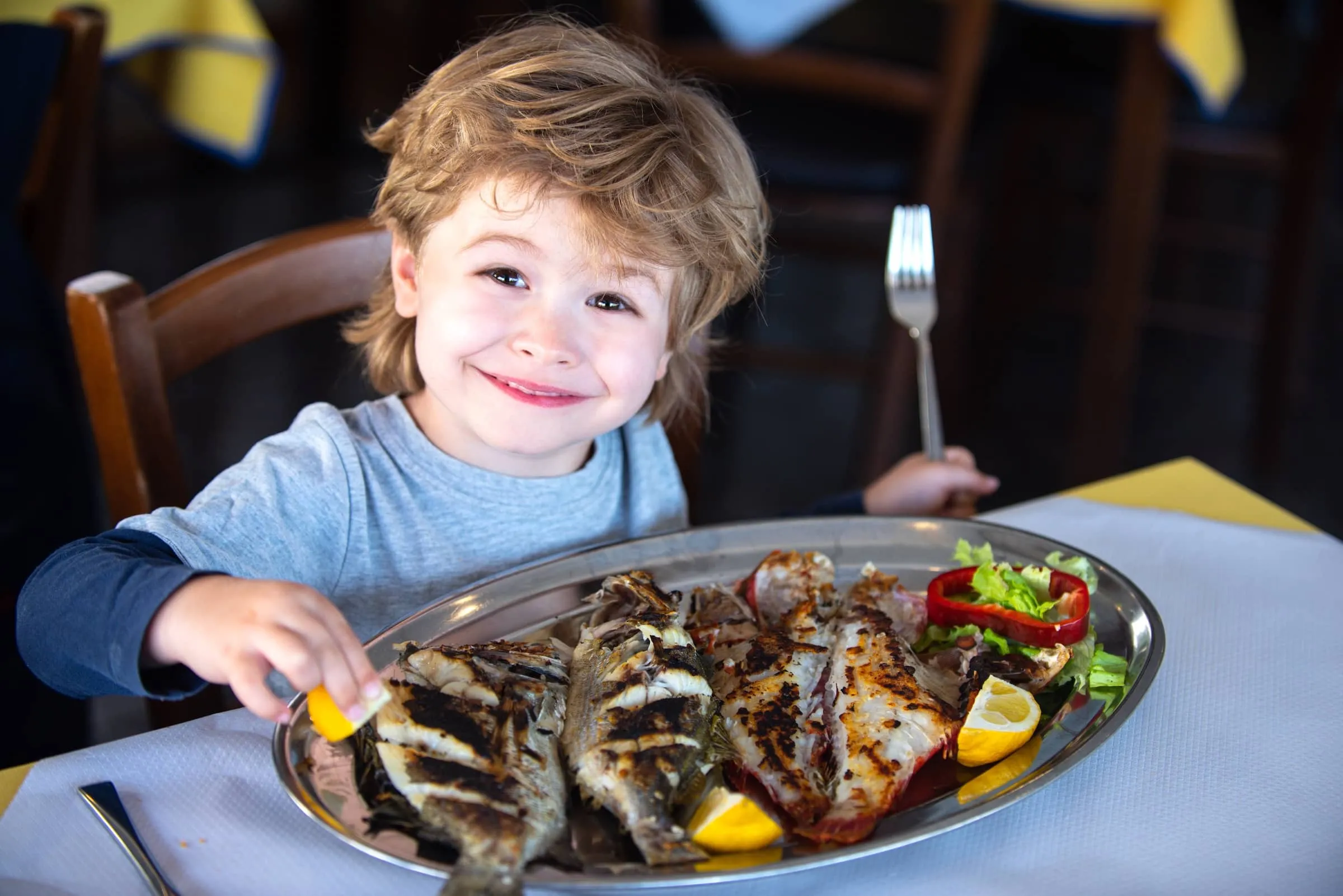
New UK research finds 87% of children miss the NHS fish target, as parents cite fussy eating, food waste and cooking confidence.
For parents worried about children not eating enough fish, the national picture is fairly stark.
An independent survey of 2,000 UK parents found that 87% of children were reported to fall short of the NHS recommendation of two portions of fish a week, including one portion of oily fish. Another 21% were said to eat no fish at all.
The survey was commissioned by seafood specialist Regal Fish, an interested party in getting more fish on British plates. That is useful context. Even so, the numbers point to a familiar gap between nutrition guidance and the daily mechanics of feeding a family: knowing the target is one thing; getting dinner eaten is another.
The fish gap is bigger than simple nutrition awareness
Regal Fish found that 51% of parents did not know about developmental research linking low seafood consumption in early childhood with lower prosocial behaviours, including sharing, empathy and social cooperation.
That finding needs careful handling. An association is not the same as saying a child who eats little fish will develop social difficulties, and this parent survey does not establish cause and effect. What it does show is that many families are not connecting seafood intake with the wider developmental conversation around diet.
Awareness of Omega-3 benefits was uneven too. It reached 39% among parents in London but fell to 18% in both Scotland and the South East.
The NHS target is simple; family dinner is not
The most common obstacle was not a lack of nutritional ambition. It was fussy eating. Almost a third of parents, 30%, named refusal to try new foods as the biggest barrier to serving healthier family meals.
The gender split is revealing. Dads were twice as likely as mums to hesitate over buying fresh fish because they lacked confidence in preparing and cooking it safely: 20% versus 10%. Mums, meanwhile, reported more of the diplomatic work once the meal reached the table. Twenty-nine per cent said serving fish required active bargaining, compared with 21% of dads, while 15% of mums reported complete meal refusal, against 8% of dads.
Among children of parents aged 30 to 45, 88% were reported to miss the twice-weekly target, fractionally worse than the overall figure.
Nutrition guidance has the luxury of never having to negotiate over dinner.
London leads, but even London is a long way from the target
|
There is no region in the survey where compliance looks particularly comfortable. London recorded the highest share of children meeting the twice-weekly target, at 19%. The East of England and South East followed on 14%, with the East Midlands and North West on 13%.
At the other end, the North East stood at 10% and the South West at 9%. Northern Ireland, Scotland and the West Midlands were each on 11%.
That makes London the leader, but it is hardly a victory parade. Even in the strongest-performing region, more than four in five children were reported to miss the recommendation.
Familiar meals may be more useful than worthy ones
The practical lesson from the findings is not that parents need more elaborate fish recipes. Quite the opposite. Thirty-nine per cent said quick, accessible family recipes would encourage them to serve more seafood.
Hani Girgis, e-commerce manager at Regal Fish, recommends making the first change as small as possible.
“One of the easiest tricks is starting with dishes children already love and simply swapping the main protein.
“Try flaking mild white fish or stirring tinned tuna into familiar staples like macaroni cheese, pasta bakes or homemade tacos. It’s a stress-free way to introduce fish without presenting children with an entirely unfamiliar meal.”
There is some common sense in that approach. A new ingredient inside an established routine asks less of a cautious eater than an unfamiliar meal arriving with the air of a nutritional intervention.
Small portions, flexible formats and fewer wasted dinners
Girgis also suggests starting with smaller servings rather than placing a full portion in front of a child and hoping for the best. That reduces pressure on the child and limits the amount that may end up uneaten.
Frozen and tinned fish can make experimentation more flexible. Frozen portions allow families to cook only what they need, while tinned fish keeps longer and can be added to pasta, sandwiches or jacket potatoes. Leftovers can be planned into fishcakes, wraps, pasta or lunches the following day.
Texture deserves another attempt before a food is written off entirely. Regal Fish suggests that children who reject one preparation may respond better to a different texture, including breadcrumb or oven-baked coatings.
None of this turns a reluctant eater into an enthusiastic one on command. It does, however, make the route to two weekly portions more practical: less waste, less pressure and fewer meals built around a dramatic reveal.
The NHS target is modest on paper. The diplomacy required to reach it, apparently, is not.