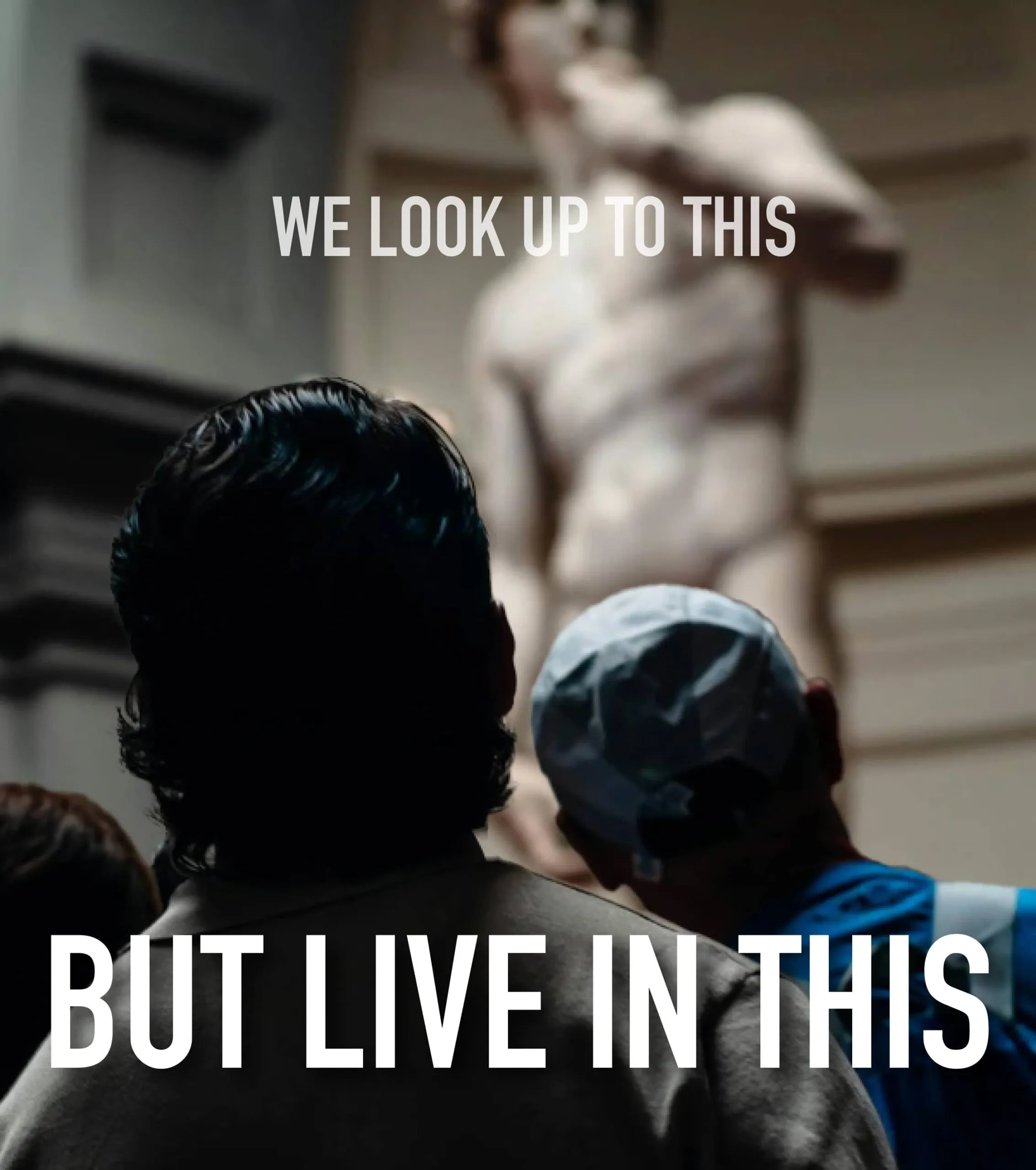
A sharp look at body positivity, celebrity image, and why sustainable accountability matters more than a perfectly timed photograph.
The first piece wasn’t written to provoke anything. It was an observation — there’s the body you see, and then there’s the body that exists in between. The one without lighting, without a deadline, without a role to prepare for. That’s the body most people live in. And it’s the one that rarely gets shown.
In a recent piece for Sustain Health Magazine, I referenced an unedited image of a well-known actor—originally published in the Daily Mail—to explore that gap: the body on screen is a constructed moment, not a permanent state.
The article was posted on Instagram, and it didn’t just sit there. A well-known actor responded directly. Not through a PR team or an agent, which is usually how it works.
The response was blunt. A single emoji. There was no explanation, no context, no attempt to engage with what had been written. Just a reaction. It was a negative response.
This was coming from someone with over 11 million followers. I’m a nobody — and I know how quickly that can turn.
It could have gone either way. It would have been easy to react. To defend. To push back. I didn’t. Someone was watching. My son.
He loves this actor. He was genuinely impressed that someone at that level was engaging with his father. And then he saw the response. The look on his face told me everything.
That’s when it stopped being about strategy. There was a short exchange after that. Nothing polished, nothing managed. Just replies. Human. And then, two days later, they were gone. Deleted. No explanation. Just absence.
That matters.
Because in a space where everything is curated, edited, and controlled, what gets removed carries weight. It tells you where the line is. What it showed was clear. The gap is real. There’s a difference between how a body looks and how it lives.
And that difference matters. People see a moment and mistake it for a lifestyle. They see a body at its peak — trained for a role, lit for a scene, captured at the exact point it’s meant to be seen — and assume that’s how it exists all the time.
It isn’t.
Those moments are constructed. Built for a purpose, held for as long as needed, and then released. The camera moves on. The role ends. The expectation remains.
That’s where the problem begins. And here’s the part no one wants to say out loud: we keep it going.
We click.
We compare.
We save the image, forget the person, and move on to the next one.
The performer performs because the audience demands it.
That’s not cruelty. It’s the deal. But it’s also the lie. Because none of us live under that light either. We just expect someone else to.
The audience doesn’t see the process. They see the outcome. And then they measure themselves against it.
They compare themselves to something temporary.
Then try to live up to it — permanently.
They chase something that, by design, cannot last.
Meta-Age was never built around moments.
It’s built around what happens when there’s no moment — no camera, no role, no reason to perform. When there’s nothing to prove and no one watching.
That’s where the real work is.
Daily habits.
Self-accountability.
A system that doesn’t switch on and off.
Because when accountability becomes part of who you are, there’s nothing to get back to.
You don’t move in and out of it.
You don’t prepare for it.
You live in it.
Some bodies are built for occasions.
Others are built to last.
And the difference isn’t how they look at their best.
It’s how they hold up when there’s no reason to be at their best.
That brief interaction — seen, then removed — wasn’t conflict. It was clarity.
A glimpse behind the image. A reminder that even at the highest level, the gap between how a body looks and how it lives is real.
But the biggest lesson wasn’t about the actor, the emoji, or the deletion. It was this: my son knows what I stand for.
And that means everything.
The question isn’t whether that gap exists.
It does.
The question is what you do with it.
Because in the end, it’s not what you show people that defines you.
It’s what’s still there when there’s nothing to show.
Meta-Age
Accountability is the system. Everything else is performance.