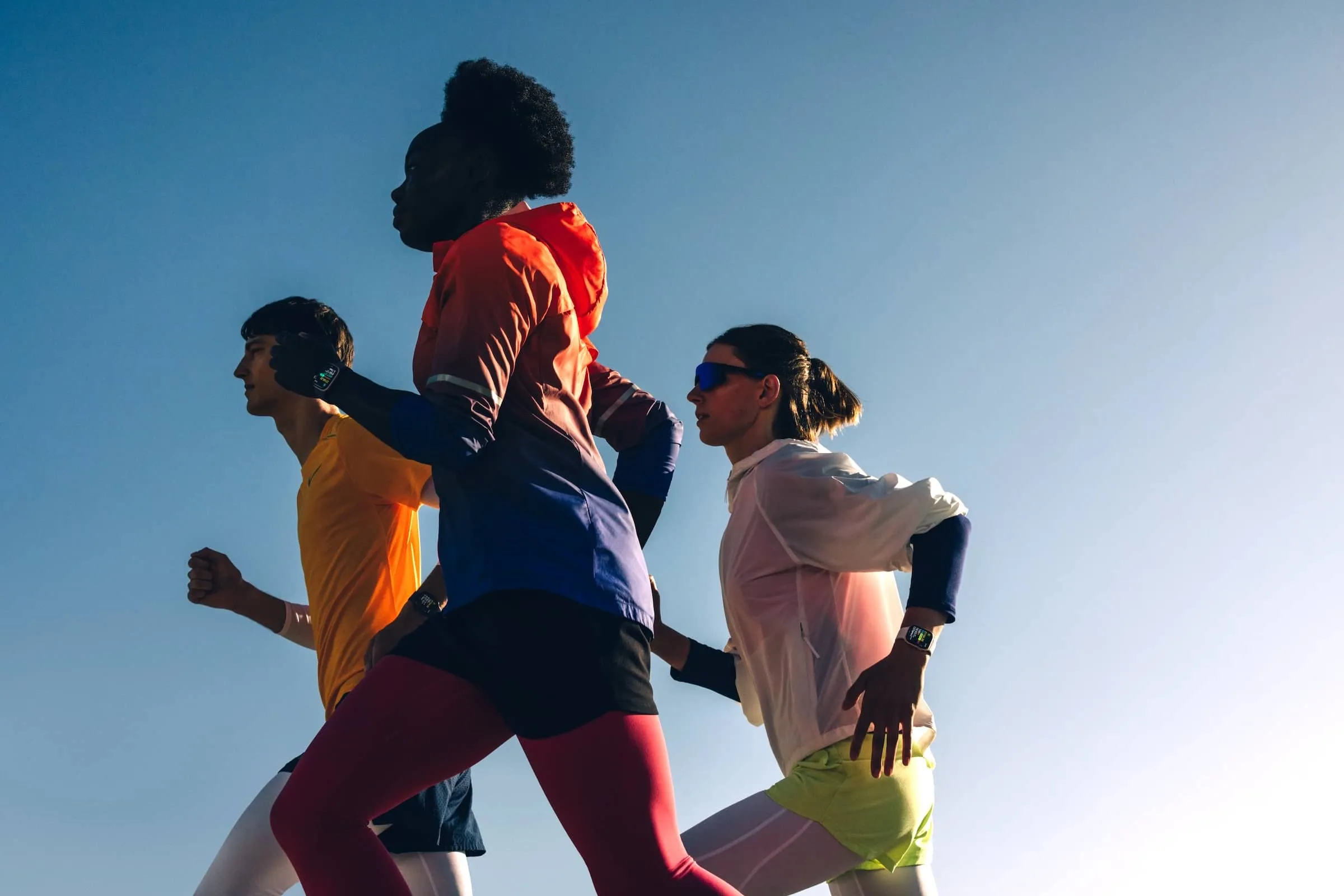
Apple brings fitness tech, music and community events to London Marathon week, supporting runners, spectators and schools across the capital.
The London Marathon has never been just a race. It is a rolling circus of grit, Lycra, noble intentions and the occasional man dressed as a fridge. Now Apple has stepped into the picture as an official partner, bringing its health, fitness and music platform to runners and spectators across a packed week of events in the capital.
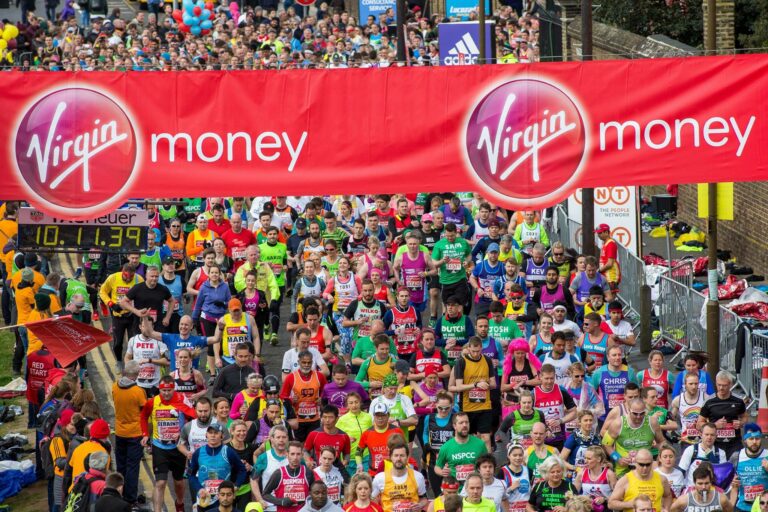
That is no small stage. More than one million people applied for the ballot for the 2026 event, which tells you two things at once: first, the London Marathon remains one of the great public sporting obsessions; second, there are a great many people quite willing to suffer voluntarily if there is a medal and a banana at the end of it.
Apple’s involvement is broad rather than decorative. This is not merely a logo on a barrier and a handshake at the finish. The company is embedding itself in marathon week through community runs, live discussions, youth fitness activity and race-day music, using its London stores and product ecosystem to place itself squarely in the path of the city’s running fever.
A natural fit for a modern marathon
The modern marathon runner is no longer powered by little more than courage and an unreliable wristwatch. Training now lives in data, recovery, pacing, playlists, sleep scores and split times. That makes the London Marathon a fairly tidy match for Apple, whose health and fitness technology has become part of how many runners prepare, monitor progress and stay on speaking terms with their own ambitions.
Whether an athlete is tackling the distance for the first time or trying to shave seconds from a personal best, the appeal is obvious. The marathon journey begins long before Blackheath or Greenwich and usually involves months of planning, a fair amount of self-doubt and at least one deeply regrettable tempo run in the rain.
Apple’s approach seems built around that reality. It is not only targeting race day, but the wider ritual around it: the nerves, the final preparations, the mental chatter and the need for some last spark of confidence before the body is asked to do something faintly unreasonable.
Apple Brompton Road becomes marathon week base camp
A good deal of Apple’s London Marathon activity will revolve around Apple Brompton Road, which is being turned into a kind of urban clubhouse for runners in the days leading up to the race.
On Thursday, 23 April, it hosts Race Day Inspiration and 5K with Joe Wicks and Friends, a free community event bringing together Joe Wicks, Hellah Sidibe, Dora Atim, Becky Briggs, and Sherica Holmon. Hosted by Apple Fitness+ trainer Cory Wharton-Malcolm, the session will offer training advice before runners head into Hyde Park for a 5K shakeout run.
That has the right feel about it. Marathon week is a peculiar time. Nobody really wants to train hard, nobody trusts their taper, and everyone suddenly becomes interested in whether they have done enough hill work. A session like this gives runners something useful: calm voices, practical guidance and the reassuring presence of people who know exactly what pre-race nerves look like.
Then on Saturday, 25 April, the spotlight shifts to Paula Radcliffe & Chris Thompson’s Road to London, a live episode of Paula’s Run Club. Former world champion and world-record holder Paula Radcliffe joins two-time Olympian Chris Thompson to discuss training, race-day mindset and the role of technology in running. They will be joined by Cory Wharton-Malcolm, whose standing within London’s running scene gives the event both relevance and credibility.
That is a sharp line-up for any marathon audience. Radcliffe speaks with the authority of someone who has lived at the very sharp end of the sport. Thompson brings the hard-earned wisdom of an Olympian. Wharton-Malcolm bridges elite insight and community running in a way that feels particularly suited to London, where the marathon belongs as much to club runners and first-timers as it does to professionals.
Music for the late miles
The final stages of the London Marathon can be a peculiar blur. By then, form has usually gone missing, pacing plans have started to wobble, and the entire race becomes a negotiation between the legs and the will. This is where atmosphere matters.
Apple Music is leaning into that part of the day, with artists and DJs set to appear at a key point on the course on Sunday, 26 April. It is a sensible move. Ask any marathon runner what carried them through the worst patch and there is every chance the answer will involve noise: a crowd, a familiar voice, or a song arriving just as the body began writing letters of complaint.
Apple is also extending that experience beyond the roadside. Exclusive playlists have been curated for the event, including the Ultimate Marathon Playlist, which offers seven hours of tracks aimed at fuelling training runs and race-day effort. Exclusive mixes from the on-course DJs will also be available after the race.
That may sound like a flourish, but it is rooted in how people actually run now. Music is part motivator, part distraction, part survival tool. When the wall starts looming like an unpaid tax bill, the right soundtrack can do a fine job of convincing the brain to keep the rest of the operation moving.
More than a sporting tie-in
The most substantial part of Apple’s London Marathon involvement may sit slightly away from the race itself.
Ahead of marathon week, the company will host the first PE with Apple: Hour of Play event for students from six schools in Wandsworth. Joe Wicks, alongside Apple Fitness+ trainers Cory Wharton-Malcolm and Kim Ngo, will lead PE-style sessions for children aged 10 to 14, focusing on movement, health and wellbeing.
That gives the partnership some actual depth. Too many sports tie-ins amount to little more than branding with trainers on. This at least reaches into the community and places children at the centre of the conversation about activity and health. For a city event as visible as the London Marathon, that matters. The race is not only a spectacle. It is also a public statement about fitness, inclusion and what active living can look like.
The programme will be delivered with Enable, Apple’s nonprofit community partner, which supports health, leisure and community services. Apple is also backing other organisations across Greater London, including Battersea Arts Centre, Southbank Centre, Youth Battersea, and Wandsworth BEST.
Why the partnership makes sense
The London Marathon is one of the few sporting events that can genuinely claim mass emotional ownership. Elite runners chase times at the front, but the race belongs equally to club athletes, charity fundraisers, first-timers and those determined simply to make it to The Mall without needing to lie down in public.
That breadth is precisely why the event works for Apple. Running today is wrapped up in technology, but it is also intensely human. It is about preparation, stress, rhythm, resilience and the odd irrational belief that one more training block will somehow make everything feel easier.
Apple’s health and fitness tools speak to the technical side of that journey. Its events and community activity aim at the emotional one.
Crucially, the company seems to understand that the London Marathon is bigger than race day. It is a week of anticipation and atmosphere, a city-wide swell of purpose and apprehension, and one of those rare occasions when ordinary people do extraordinary things in plain view.
The bigger picture for marathon week
There is no shortage of major brands keen to stand close to the London Marathon. Few events offer this combination of scale, affection and global reach. But the better partnerships are the ones that add something to the occasion rather than merely attaching themselves to it.
Apple appears to be aiming for that more useful role. It is offering runners training insight, live discussion, community activity and race-day energy, while also widening the lens to include schools and local organisations.
In the end, that is what makes this feel more than cosmetic. The London Marathon has always been a race, but it is also a city in motion, a public test of endurance and a remarkably British blend of suffering and cheerfulness.
Apple’s contribution is to support the build-up, amplify the atmosphere and give the week a little more pulse. That seems a sensible way to meet an event that never needed help being famous, only partners clever enough not to get in its way.