A lifelong weight struggler tests acupuncture at Qin’s Clinic, Harley Street, and asks whether reduced cravings can rival GLP-1 treatment.
Can acupuncture help with weight loss? At Qin’s Harley Street Clinic, I put that question to Yimei after a lifetime of wrestling with my weight — and with the particular claim that acupuncture might quiet cravings in a manner comparable to GLP-1 medicines such as semaglutide and tirzepatide.
After one treatment, I noticed two things: I wanted food less urgently and felt full sooner. It was encouraging. It was not, however, proof that several extremely fine needles had reinvented the weekly weight-loss injection.
A lifetime of weight problems makes optimism complicated
When you have dealt with weight issues for most of your life, every new solution arrives with baggage.
There have been plans, programmes, rules, restarts and earnest Monday mornings. Some produce results. Others produce little beyond an impressive collection of abandoned kitchen scales and the suspicion that celery has been oversold.
The difficulty is rarely a shortage of information. Most people who have struggled with their weight could deliver a respectable lecture on calories, protein, portion sizes and the dangers of wandering towards the fridge after 9 pm.
Knowing and doing, however, are different sports.
That is why appetite-suppressing medicines have attracted such attention. The prospect of reducing the persistent mental pull of food can feel less like a shortcut than relief from an argument that has been running in the background for years.
I went to Qin’s Clinic curious about whether acupuncture could turn down that volume without my immediately resorting to the so-called skinny jab.
Inside Qin’s Clinic on Harley Street
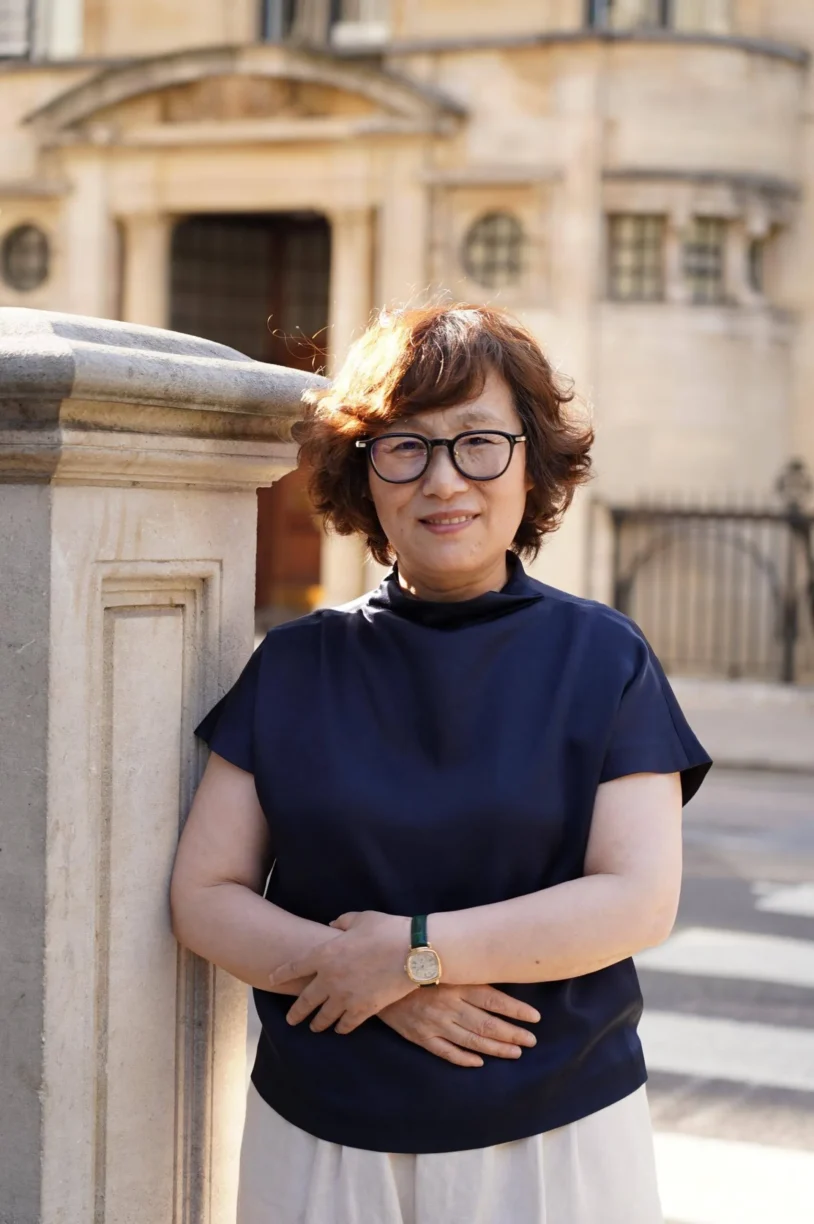
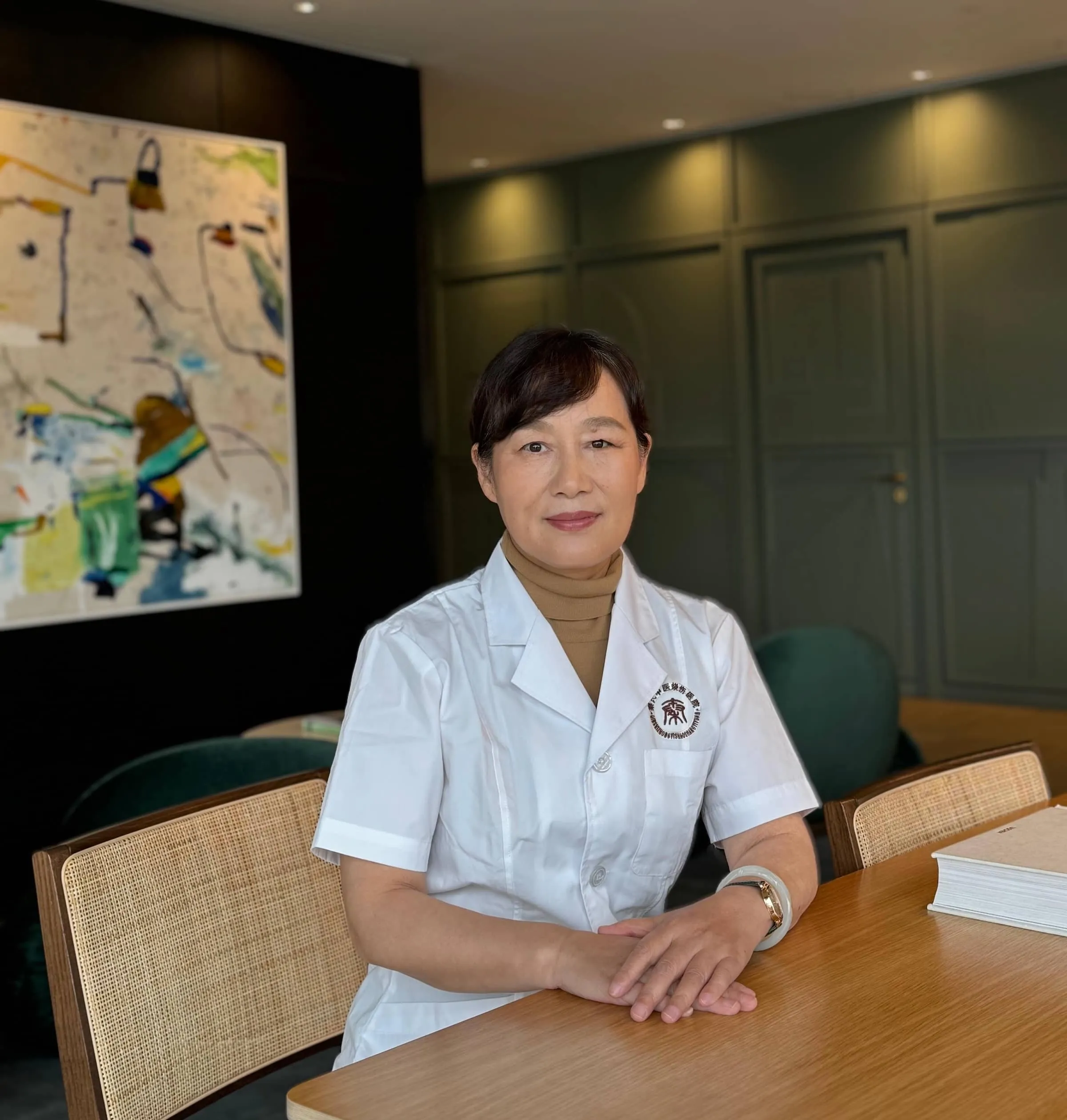
Qin’s Clinic is based at 22 Harley Street London and is led by Yimei Qin, a Traditional Chinese Medicine practitioner and acupuncturist with more than three decades of clinical experience.
The experience began with a consultation rather than a brisk invitation to remove my socks and become a pincushion.
Yimei asked about my weight history, appetite, digestion, sleep, stress and wider health. Her approach was measured and attentive. I did not feel hurried towards a predetermined treatment or treated as though every difficulty could be blamed on a failure to decline pudding with sufficient moral fibre.
The wider team were friendly, professional and reassuring. More importantly, Yimei gave the impression that she had my best interests at heart rather than simply an available appointment slot.
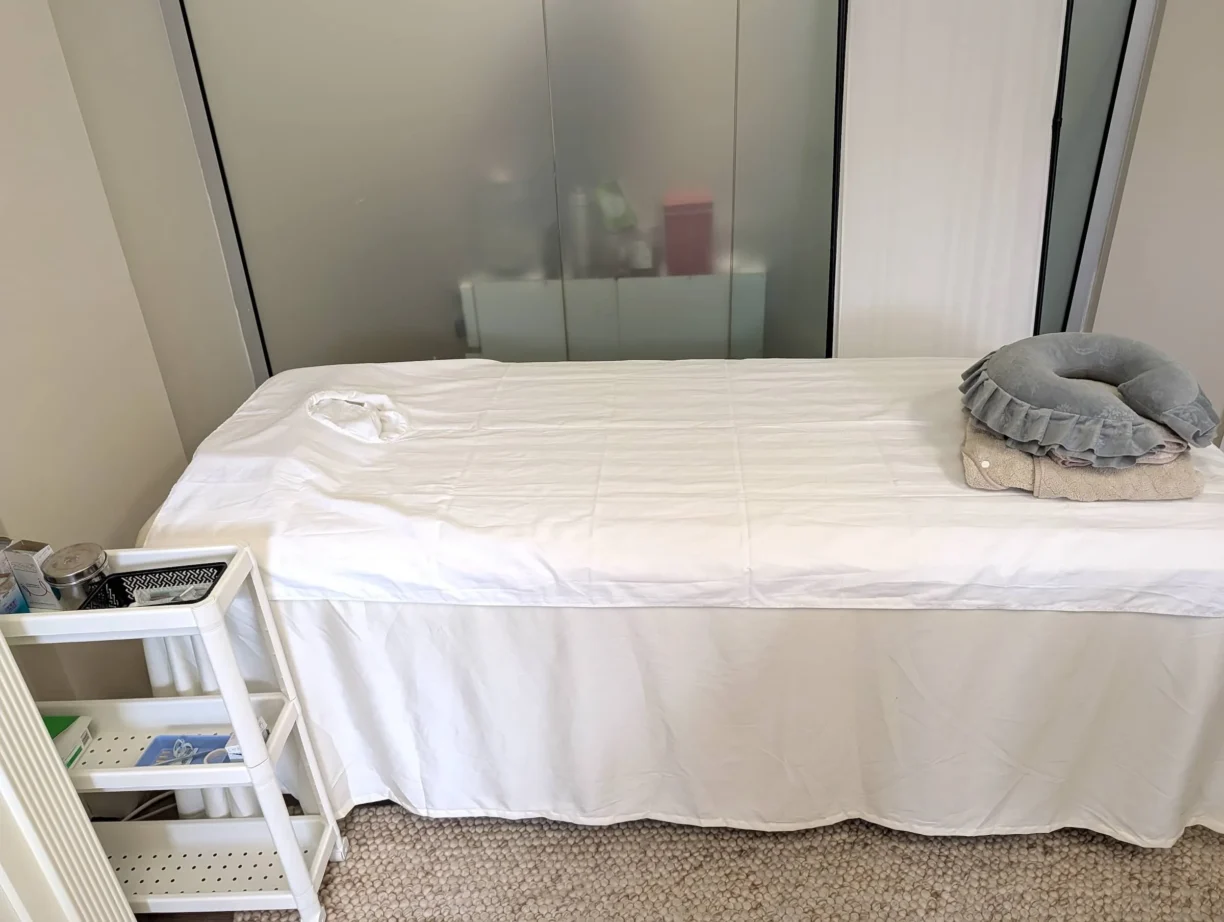
By the time I was lying on the treatment bed, I felt safe and comfortable. Then came the part that tends to occupy the imagination: the needles.
In reality, the drama was supplied almost entirely by my own anticipation. The insertion was pain-free. There was no heroic grimacing, no biting down on a rolled towel and no moment requiring a stirring orchestral soundtrack.
The needles went in. I remained comfortable. Life continued.
The first surprise was a quieter appetite
The interesting part came afterwards.
Following that first treatment, I noticed less craving for food. I also appeared to feel full more quickly when I ate. The difference was not theatrical, but it was noticeable enough to catch my attention.
For somebody accustomed to appetite arriving with all the subtlety of a fire alarm, even a modest reduction is difficult to ignore.
But one treatment presents a problem for any honest assessment. A personal reaction is an observation, not a clinical trial. It cannot tell us whether the change came from acupuncture, expectation, relaxation, the consultation itself or the normal daily movement of appetite.
It also tells us nothing about duration. Feeling less hungry for a short period is not the same as achieving meaningful, sustained weight loss.
My early experience was positive. It remains anecdotal.
Can acupuncture act like a GLP-1 medicine?
Here, the evidence draws a fairly firm line.
GLP-1-based weight-management medicines reduce appetite and help people feel fuller for longer. In the UK, medicines including semaglutide, liraglutide and the dual GIP/GLP-1 medicine tirzepatide may be prescribed to eligible patients alongside dietary, physical-activity and clinical support.
Their effects have been examined in large randomised trials lasting well over a year. In the STEP 1 trial, participants receiving weekly semaglutide lost an average of 14.9 per cent of their body weight over 68 weeks. In the SURMOUNT-1 trial, average reductions with the higher tirzepatide doses reached 19.5 and 20.9 per cent over 72 weeks.
Those are not figures that can be placed beside my feeling slightly less interested in lunch after one acupuncture appointment and considered a fair contest.
The research into acupuncture for obesity is considerably less settled. A recent systematic review concluded that acupuncture may provide modest weight-loss benefits, but rated the supporting evidence as low to moderate in certainty because of methodological limitations. Its authors described acupuncture as a possible complementary intervention rather than a primary treatment.
NICE has previously reviewed acupuncture research for obesity and found conflicting results, small study populations and methodological weaknesses insufficient to alter its guidance.
So, will the claim that acupuncture is as effective as a GLP-1 medicine stand up?
Not on the available evidence.
That does not make my response imaginary or the treatment worthless. It makes it something that needs to be assessed over time, without awarding it a trophy after the opening hole.
Yimei Qin’s argument: appetite is not the enemy
Yimei does not dismiss weight-loss medication. Her position is that suppressing appetite may not explain why someone’s appetite, sleep, digestion, stress response and energy have become difficult to regulate.
“I understand why GLP-1 medications have become so widely discussed. For many people, the relief of no longer feeling driven by constant hunger is real and significant. These drugs have a legitimate role in medicine, and I do not dismiss the benefit they offer to certain patients.”
Her clinical approach asks not only “how do we reduce appetite?” but “why has the body’s ability to regulate itself been disrupted in the first place?”
It is an appealing distinction, particularly for people whose weight difficulties sit alongside poor sleep, digestive problems, fatigue, hormonal concerns or chronic stress.
Traditional Chinese Medicine views these symptoms as interconnected rather than isolated. That is its conceptual framework, rather than proof that acupuncture can reproduce the physiological effects or weight-loss outcomes of medication.
Yimei is careful not to make that claim. “I want to be clear that this is not a claim of cure, and I would never present it as an alternative for patients for whom medication is clinically appropriate.”
That caveat matters. Too much discussion around weight management is arranged as a prize fight: medication in one corner, complementary treatment in the other, everybody waving towels and accusing the opposition of moral failure.
Yimei’s view is more restrained. “These are not competing questions. They are complementary ones.”
The value of being treated as a whole person
There is an important part of this visit that cannot be measured on a bathroom scale.
Weight consultations can become remarkably impersonal. The individual is reduced to a number, the number is assigned a category and the category is handed advice the patient has probably heard repeatedly.
At Qin’s Clinic, the conversation was broader. Sleep mattered. Stress mattered. Digestion mattered. My history mattered.
That does not prove efficacy. It does explain why the consultation felt constructive.
Good clinical care should leave room for the patient’s experience without mistaking empathy for scientific validation. The two can coexist perfectly well.
“The conversation should begin, as good medicine always should, with listening.”
On that point, few sensible people would argue.
Is acupuncture safe?
My treatment was completely pain-free, but acupuncture is not entirely without risk.
NHS guidance describes it as generally safe when performed by an appropriately qualified practitioner. Temporary effects can include bruising, minor bleeding, soreness, drowsiness, dizziness or feeling faint. Serious complications, including infection or a punctured lung, are rare.
People taking anticoagulants, those with bleeding problems and anyone with a skin infection around the treatment area should discuss the risks before proceeding. Patients should also tell their doctor about complementary treatments and should not stop prescribed medication without medical advice.
Being comfortable during one appointment does not remove the need for proper screening, clean technique and a suitably trained practitioner.
My verdict after one treatment
Can acupuncture help with weight loss? My first experience suggests it may help some people manage the sensations surrounding appetite, but that is a very different conclusion from saying it produces weight loss equivalent to a GLP-1 medicine.
After one session, my cravings appeared less forceful and I felt full sooner. That is the encouraging part.
The honest test is whether those changes persist, whether they alter eating behaviour and whether they eventually contribute to measurable, sustainable progress. Appetite, portion size, weight trend, sleep, mood and any adverse effects all matter more than the glow of a promising first appointment.
For patients medically eligible for GLP-1 treatment, acupuncture should not be presented as a proven replacement. Those decisions belong in a conversation with a GP or appropriately qualified clinician.
For someone such as me, who has spent a lifetime searching for an approach that feels manageable, the first session at Qin’s Clinic offered something worth examining: not a miracle, not a cure and not yet an escape from medication, but a quieter appetite and a little cautious optimism.
For now, the needles have earned another hearing — not a coronation.