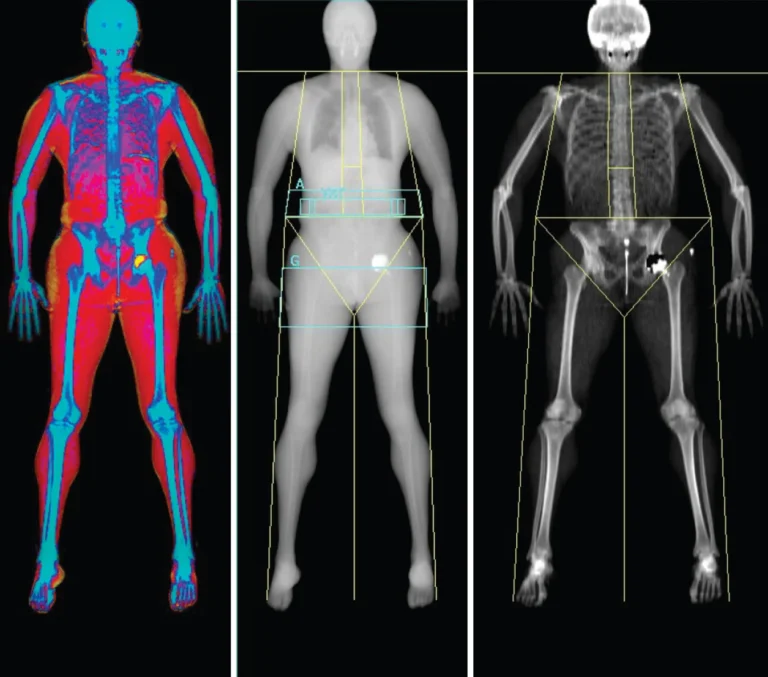
An appointment at Scanletics on London's King's Road promised a closer look at my body composition. What followed involved the collapse of a well-known yoga institution, an unexpectedly angry visitor and a conversation about what our bodies carry with them.
Scanletics had been appearing in my Instagram feed for weeks. The algorithm was clearly determined that I needed a DEXA scan, and eventually I caved in.
The fact that they were conveniently located on King’s Road, not far from home, helped. But it was the address that really caught my attention.
Scanletics was based inside Triyoga, a London institution founded in 2000 by Jonathan Sattin that became one of the capital’s best-known yoga organisations.
I knew Triyoga long before I became a yoga teacher. It represented a stylish marriage of Eastern philosophy and Western presentation without entirely losing sight of yoga’s deeper traditions, so the idea of a body-scanning business operating inside it seemed rather appropriate.
Western science meeting Eastern philosophy sounded like a perfect combination.
My expectations changed the moment I arrived.
I had imagined a lively reception area with people coming and going, but the ground floor was completely deserted. After pressing a buzzer, I was met by Harvey, who took me upstairs to the Scanletics office.
The building had an eerie atmosphere, as though everyone had packed up the previous evening and forgotten to tell anyone.
“What’s going on?” I asked. “Has there been an emergency?”
“Kind of,” Harvey replied.
He explained that he had arrived weeks earlier to discover that Triyoga had ceased trading.
I was astonished. The Guardian subsequently reported that an estimated 100 yoga teachers had been left unpaid, while customers had lost classes and memberships.
Behind the abandoned reception was a genuinely sad story, although I was about to discover that the building still had a few surprises left.
A Fight Over a Yoga Mat
While Harvey and I were upstairs, someone began banging heavily on the downstairs door.
I asked whether he had another appointment after mine, but Harvey told me I was his last customer of the day.
The banging continued until Harvey went downstairs to investigate.
When he returned, he looked shell-shocked.
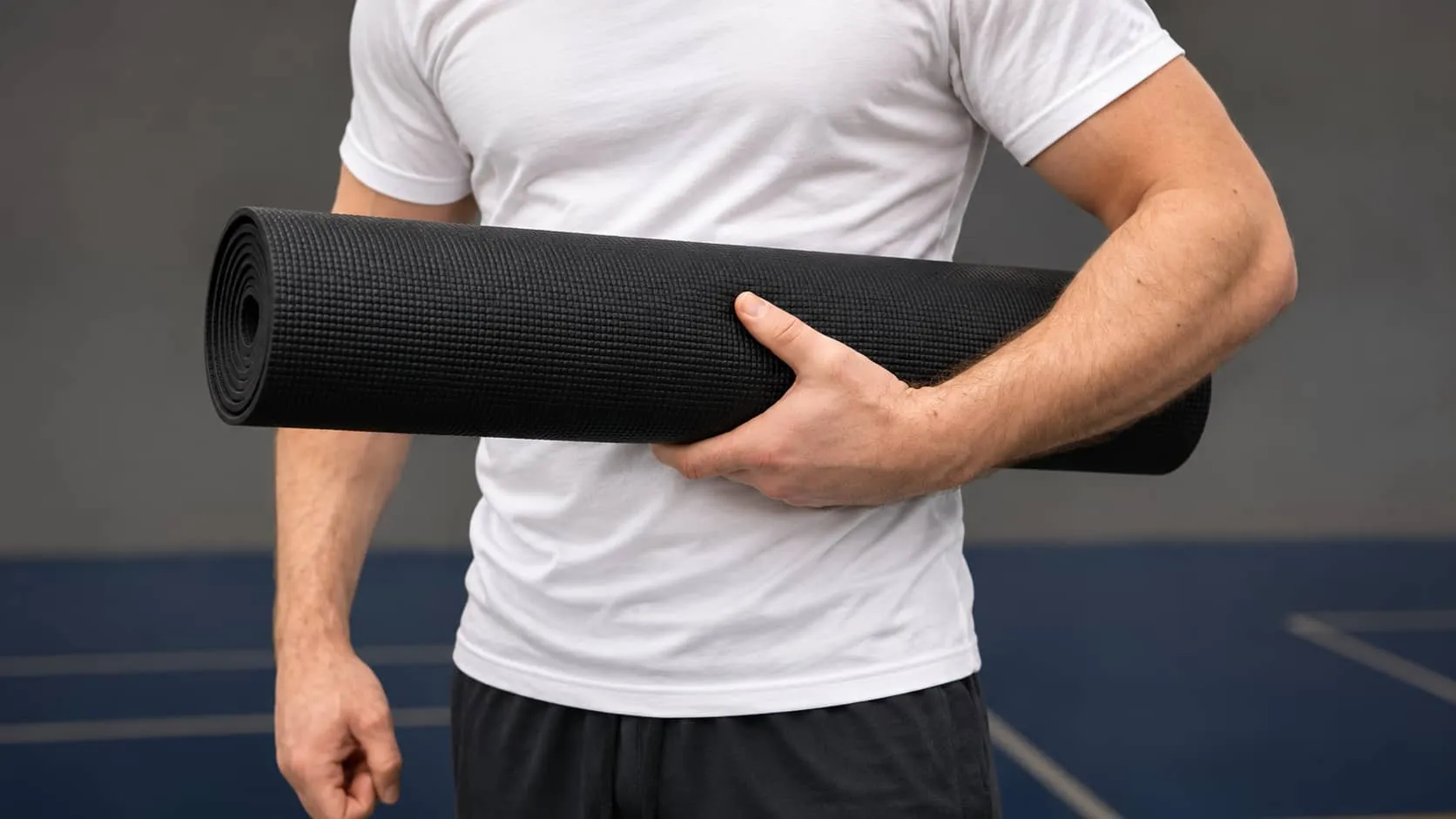
Apparently, a man had arrived demanding the return of his yoga mat. Harvey explained that Triyoga was no longer operating and that he couldn’t simply allow people into the premises, but the visitor was having none of it.
According to Harvey, the man looked him straight in the eye and demanded:
“And who’s going to stop me? You?”
Harvey wisely decided that a confrontation over a yoga mat was not worth having and allowed him to look for it.
Eventually the man left, and Harvey returned upstairs to tell me what had happened.
I was already struggling to believe the story when Harvey delivered the line that reduced me to tears of laughter.
“Clearly he’s not done enough yoga.”
The irony was irresistible.
Here we were in the remains of one of London’s best-known yoga institutions, discussing a man who had apparently been prepared to start a fight over a yoga mat.
I had booked a health scan, but I was receiving considerably more entertainment than I had anticipated.
The Stories Behind the Measurements
Once the excitement had subsided, I asked Harvey about the people who visited Scanletics.
Many were younger fitness enthusiasts, while others had experienced substantial weight loss and wanted to understand what had changed inside their bodies. And then the people in their fifties who are getting fitness back on track.
I was curious about how people who spent considerable time working on their appearance reacted when the scan produced results they hadn’t expected.
Harvey said surprise was common, recalling one relatively short client who had been particularly disappointed.
Then he told me about someone who had lost an extraordinary 90 kilograms.
What impressed Harvey was not simply the amount of weight the person had lost, but the fact that their bone density was still good and their muscle mass appeared to have held up remarkably well.
I asked whether people using weight-loss drugs such as Ozempic could lose muscle alongside fat.
Harvey agreed that this was possible, but he wanted me to consider the physical history of someone who had spent years carrying so much additional weight.
“Think about it,” he said. “Imagine how long that person had been carrying an extra 90 kilos. Think about what their bones and muscles had to do to support that weight.”
His observation stayed with me.
Every time that person stood up, walked or climbed a flight of stairs, their body had to manage the load. Bones and muscles adapt to the demands placed upon them.
That doesn’t mean excess weight guarantees stronger bones or protects muscle. The relationship is more complicated than that.
But Harvey had reminded me of something worth considering: the body has a history, and that history matters when we interpret what a scan reveals.
We tend to look at people as they are today, paying little attention to the physical demands their bodies have spent years accommodating.
Losing 90 kilograms is a remarkable achievement, but the body that emerges from that transformation has a history that cannot be read from its present appearance alone.
More Than a Scan
The DEXA procedure itself was straightforward.
I lay on a bed while the equipment moved over me, and the scan took approximately four minutes, without the noise or sense of confinement associated with an MRI.
When I think back to that afternoon, however, the scanner is not what I remember first.
I remember the deserted Triyoga building, Harvey’s expression when he returned from downstairs and our conversation about someone whose body had spent years adapting to an extraordinary physical load.
I had booked the appointment because I wanted a machine to tell me something I didn’t know.
As it turned out, the person operating it had just as much to offer.
And whenever I remember Harvey’s verdict on the yoga-mat incident, I still laugh.