World Athletics unveils lane drafts, jump-offs and new field-event rules for the Ultimate Championship in Budapest.
The World Athletics Ultimate Championship technical regulations will make Budapest look rather less like athletics conducted by committee.
Ahead of the competition on 11-13 September, World Athletics has confirmed a 200m lane draft, compulsory jump-offs for first place in the vertical jumps and a progressively shrinking field-event format designed to leave fewer athletes standing as the contest reaches its final round.
The most intriguing change arrives before anybody runs a metre.
200m stars will choose their own lane
Men’s and women’s 200m competitors will select their preferred semifinal heat and lane according to world-ranking seed order during The Day Before on 10 September.
That turns a traditionally anonymous allocation process into a tactical choice made in public.
The highest-ranked athletes gain first refusal, but with that privilege comes something athletics rarely asks of sprinters before a championship race: show your hand.
A lane choice can now become part sporting decision, part psychological breadcrumb. Pick one position and rivals may wonder what you know. Pick another and they may conclude you have lost your senses. Either way, people will be discussing a lane draw, which is a minor administrative miracle.
The experiment is limited to the 200m at the Ultimate Championship.
No shared victories in the vertical jumps
World Athletics has also removed the possibility of a first-place tie in the vertical jumps.
If two athletes remain tied for victory, the title will be settled by a jump-off.
That fits the championship’s central premise rather neatly. The Ultimate is being presented as a competition intended to identify one winner rather than leave the top step requiring extra elbow room.
It also creates the possibility of a title extending beyond the normal countback procedure into a direct head-to-head finish.
Field events become increasingly unforgiving
Horizontal jumps and throws will follow an 8:8:6:4 progression across four rounds.
All eight athletes receive attempts in the opening two rounds. Only the leading six continue into round three, before the field is reduced again to four for the final attempt.
There is nowhere to spend half an afternoon gently finding one’s rhythm.
The format puts greater weight on early execution while preserving the final round for the athletes already occupying the strongest positions. It should also make the standings easier to follow as the event narrows towards its conclusion.
Attempt order changes with it. The highest seed competes first in round one. From round two onwards, athletes go in standings order after the preceding round, again with the leader first.
Vertical jumps take a different approach, beginning with the lowest seed and finishing with the highest.
Protests remain, but the jury disappears
One of the quieter changes may prove among the more consequential.
There will be no jury of appeal at the Ultimate Championship.
Athletes can still lodge an immediate oral protest with the referee on the field of play. Athletes or their representatives can also make a written protest through the technical information centre within 30 minutes of the official result being announced.
The mechanism for challenging decisions therefore remains, but with one fewer layer in the process.
Budapest is being built as a different kind of athletics show
The regulations sit within a much wider attempt to reshape how the meeting looks and feels.
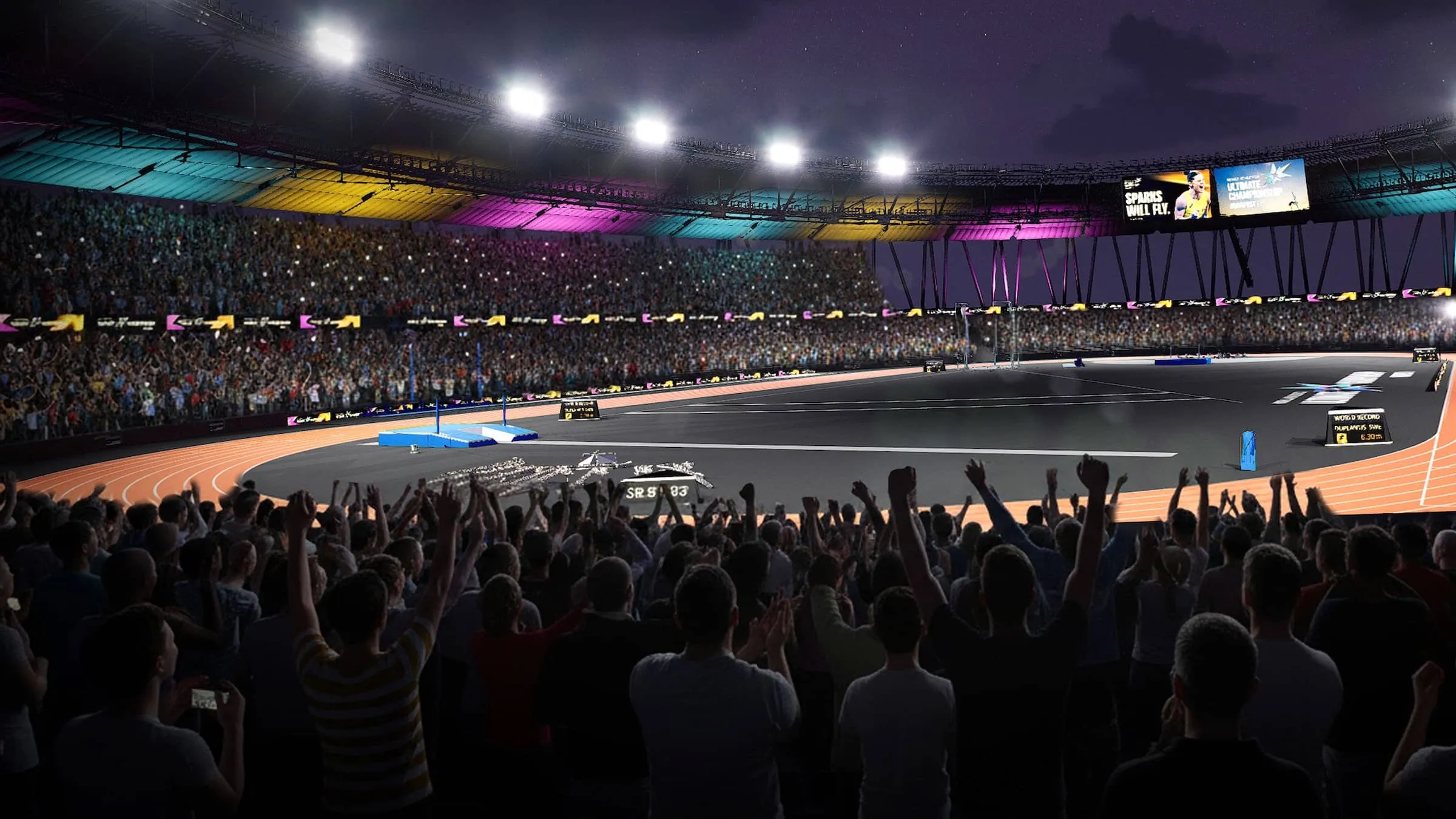
Previously announced plans include a black infield, a timetable intended to focus attention on one field event at a time where possible, augmented-reality broadcast graphics, win probabilities, projected finishing positions and a race clock repositioned for vertical-screen viewing.
There will also be athlete interviews, live acts, a new mobile app and a series of activities during The Day Before. Even the awards have been reconsidered: athletes will receive participation tokens rather than medals, while champions receive trophies designed to connect with those tokens.
Some of that is presentation. The new technical regulations are more interesting because they alter the actual competitive decisions.
The lane draft asks athletes to choose. The field format gives them less room to recover. The jump-off refuses to permit a shared winner.
World Athletics clearly wants the Ultimate to move quickly. More importantly, it now wants the competition to acquire sharp elbows while doing so.