One year after Women’s Rugby World Cup 2025, participation, WXV expansion and new pathways show how the tournament’s legacy is taking shape.
Twelve months after a landmark World Cup, women’s rugby is confronting the harder test of legacy: turning a spectacular tournament into more players, better pathways and meaningful international competition.
A World Cup can fill stadiums, command television audiences and briefly make a sport feel as though it has discovered an entirely new gear. The difficult bit begins when everybody goes home.
One year after the Women’s Rugby World Cup 2025, there are signs that its legacy is becoming something more substantial than a collection of fond memories and impressive audience figures.
Participation programmes are expanding, more unions are committing to growing the women’s game and the international calendar is being rebuilt around a broader WXV Global Series.
That matters because major sporting events are very good at producing moments. Producing systems is considerably harder.
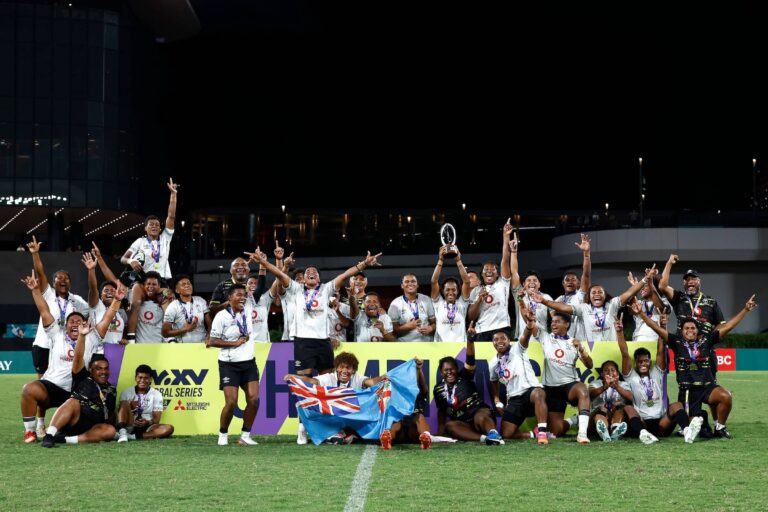
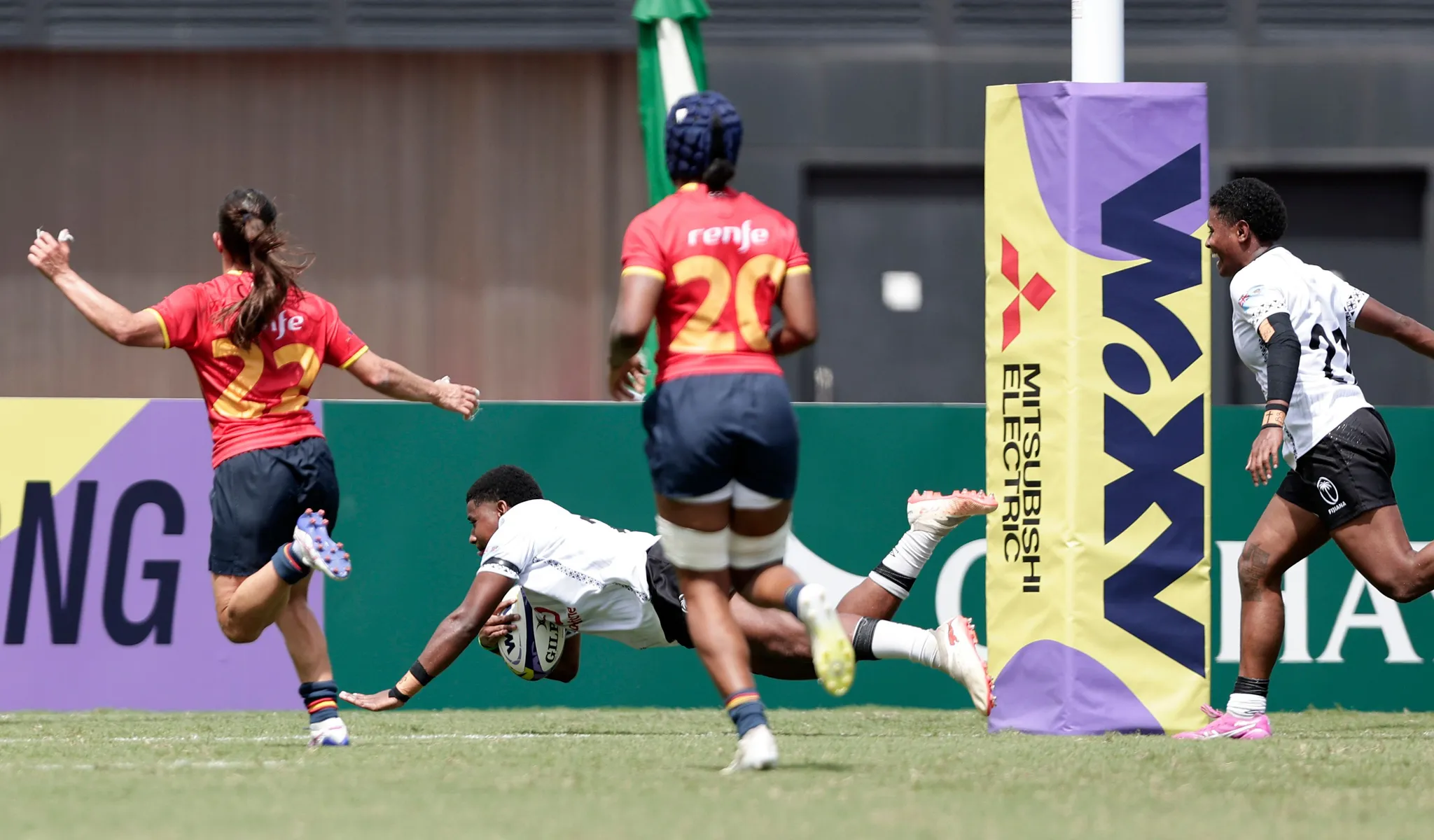
On 27 September, the first anniversary of the 2025 final arrives with women’s international rugby conspicuously busy. The WXV Global Series Challenger reaches its final round in Hong Kong, with Fiji and the Netherlands occupying the top two positions, while every Women’s Six Nations side hosts touring opposition. World champions England return to Allianz Stadium to play New Zealand.
It is a fitting way to mark the anniversary. The argument for women’s rugby no longer rests simply on proving that an audience exists. The question now is what the sport does with it.
WXV Global Series puts more rugby on the calendar
One of the clearest answers is competition.
Created with 18 unions, the evolved WXV Global Series is intended to provide greater structure to the international 15-a-side game on the journey towards the 2029 Women’s Rugby World Cup in Australia.
Across September and October, the top 18 teams are involved, with more than 100 matches scheduled between 2026 and 2028.
The leading 12 sides compete through a home-and-away touring model. For players, that means regular high-level opposition. For unions, it provides guaranteed home fixtures and, with them, opportunities to develop audiences and commercial income rather than waiting for the next World Cup to do the heavy lifting.
Another six teams contest the WXV Global Series Challenger, with Hong Kong hosting the 2026 competition across three weekends in September.
There is an important distinction here. Growing women’s rugby cannot simply mean making its biggest event bigger every four years. International teams need meaningful matches between World Cups, supporters need reasons to keep watching and emerging nations need somewhere to go.
The calendar is where momentum either becomes infrastructure or quietly disappears.
More than 25,000 girls reached through Rugby Rising Play
The other half of the equation starts considerably further from the floodlights.
World Rugby’s Rugby Rising Play programme has now directly reached 25,162 girls during its first two years. Designed for girls aged 11 to 18, the 10-session programme aims to recruit participants and help retain them in the sport, with a pathway into non-contact T1 Rugby and beyond.
Its footprint is widening. In 2025, 975 trained workforce members delivered the programme, while another 32 member unions joined during 2026, bringing the total number supported globally to 63.
Participants have reported improvements in confidence, self-discipline, friendships and their sense of belonging.
Those figures matter because recruitment is only part of the problem in women’s sport. Getting somebody through the door once is not the same as giving them an environment in which they want to stay.
Since the 2025 World Cup, 68 unions have committed to increasing global participation by 50 per cent, with a target of 3.4 million women and girls playing rugby by 2029. Earlier in 2026, 53 unions had made that commitment.
In England, meanwhile, the RFU’s Impact ’25 work has introduced more than 40,000 girls aged six to 12 to rugby through initiatives connected with the tournament’s legacy.
These are substantial numbers. Their longer-term significance will depend on how effectively first contact with rugby becomes regular participation.
Growth brings a player-welfare challenge with it
More girls playing and more international rugby being staged inevitably creates another responsibility: ensuring the structures around players develop at something approaching the same speed.
World Rugby’s Women’s Health Webinar Series has addressed pelvic, period and breast health as well as knee injury prevention. Its first two webinars attracted 780 attendees, with the final session scheduled for November.
There is also a refreshed Women in Coaching digital toolkit aimed at helping rugby organisations recruit, develop and retain female coaches.
Beyond coaching, more than 250 women across 91 countries are participating in the 2026 Women in Rugby Careers Programme, designed to expand women’s representation and leadership across the sport’s workforce.
This is the less glamorous part of sporting growth, which is precisely why it is important.
Packed stands make better photographs. Coaching pathways, health education and career development rarely enjoy quite the same treatment. Yet a sport serious about increasing participation cannot concentrate solely on creating more players. It needs people capable of coaching them, supporting them and eventually running the game around them.
Commercial interest is following the audience
The business surrounding women’s rugby is changing too.
World Rugby has brought Emirates, Asahi, Visa, LIQUI MOLY, Coca-Cola, Unilever, Gilbert, Macron and Ticketmaster into partnerships spanning the men’s and women’s Rugby World Cups in 2027 and 2029. Mitsubishi Electric has separately become presenting partner of the WXV Global Series for 2026-28.
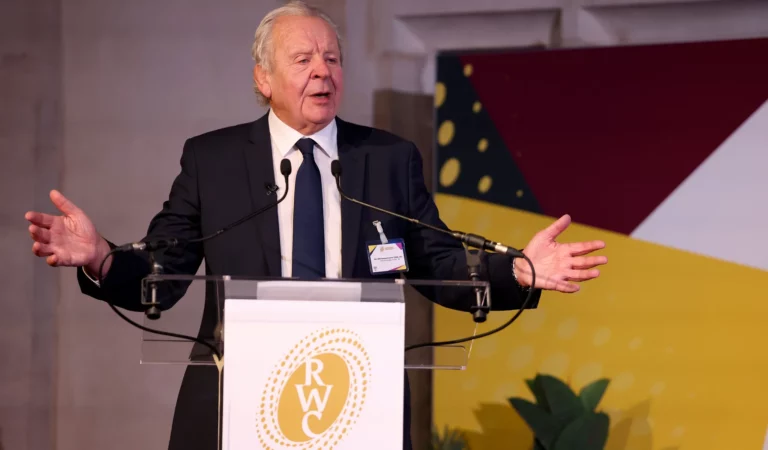
World Rugby Chair Brett Robinson described the 2025 tournament as the beginning rather than the destination.
“Women’s Rugby World Cup 2025 was a defining moment for the game, but its lasting impact is enduring. Core commitments in our 2026-31 Strategic Plan provide unions with greater competition certainty, commercial growth, and clear pathways.
“From Rugby Rising Play to our evolved WXV Global Series, we are building a sustainable ecosystem in partnership with our unions as we drive momentum toward Australia 2029.”
That word — sustainable — is doing quite a lot of work. Commercial partners can help provide the resources, but the lasting measure of the World Cup will be whether opportunity continues to exist when the tournament itself is no longer dominating attention.
Australia 2029 is already the next test
Sally Horrox, World Rugby’s Chief of Women’s Rugby, sees the period between World Cups as crucial.
“One year ago, Women’s RWC 2025 set a new benchmark for women’s sport, proving the passion and potential that exists within our game.
“Our focus has been translating that historic tournament into long-term, sustainable growth. From the expansion of the WXV Global Series to record numbers of young girls joining Rugby Rising Play, momentum behind the women’s game has never been stronger as we set a clear course for the next three years.”
There is plenty still to prove. Participation commitments have to become actual players. Introductions to rugby have to become lasting involvement. A larger international programme has to remain competitive and commercially viable.
But the first anniversary of Women’s Rugby World Cup 2025 arrives with something more useful than another celebration of what happened a year ago.
There are girls being brought into the sport, women being developed as coaches and leaders, and international teams being given more matches to play.
The World Cup supplied the noise. The legacy will be judged by what remains after it.
Fans can follow all the weekend’s WXV Global Series action live at wxvrugby.com, via RugbyPass TV or their local broadcaster.
More information on World Rugby’s women’s programmes and initiatives can be found here.