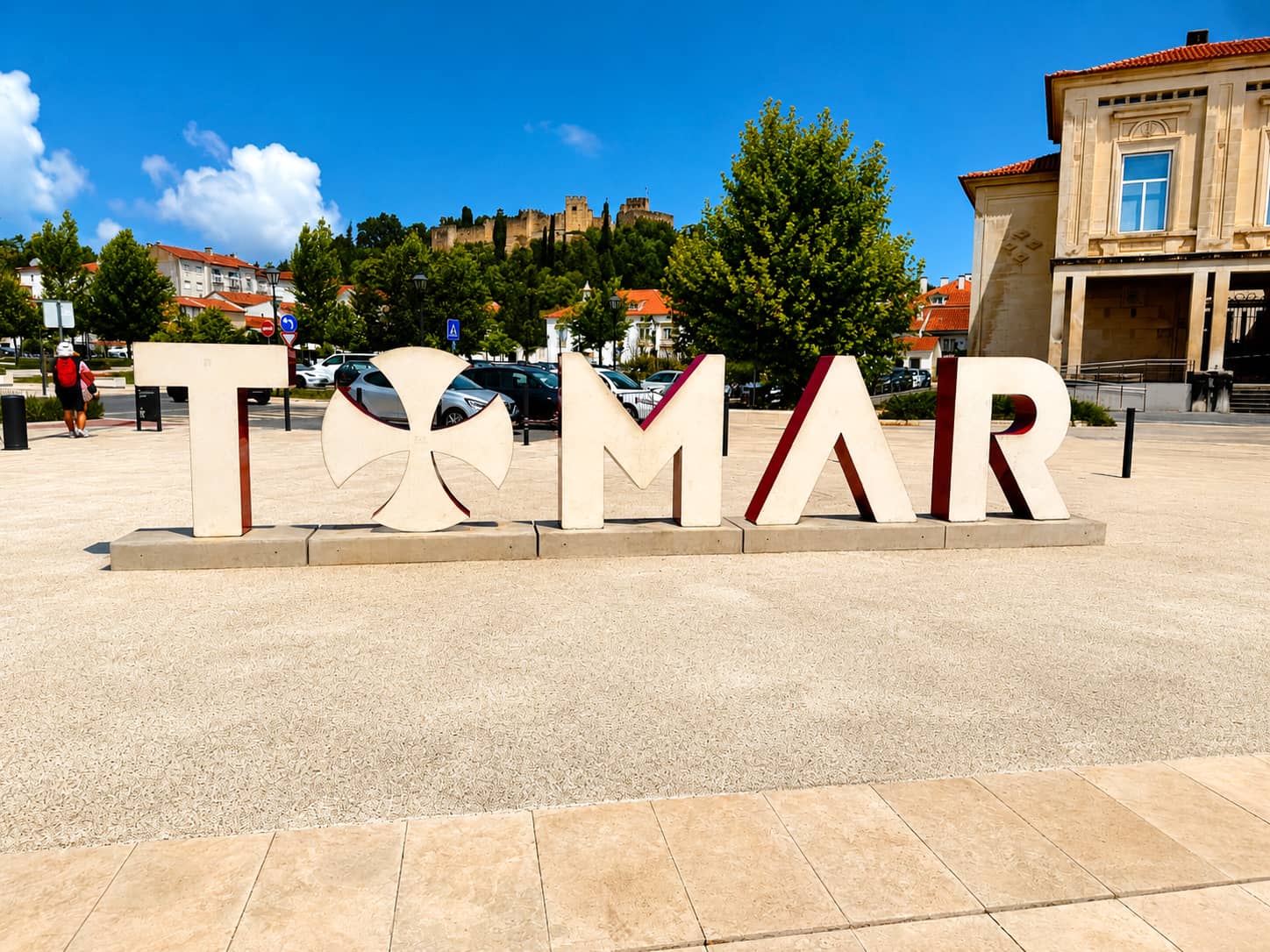
Explore Tomar’s Convent of Christ, medieval synagogue, Nabão River and Almourol Castle on a richer two-day historical escape.
The best things to do in Tomar, Portugal begin at the UNESCO-listed Convent of Christ and the Knights Templar castle, but the city’s deeper appeal lies below the battlements: beside the Nabão River, inside a rare medieval synagogue and across squares where Tomar periodically returns to the Middle Ages with costumes, processions and an encouraging disregard for subtlety.
Tomar is compact enough to explore on foot, yet substantial enough to punish anyone attempting to consume eight centuries of history between breakfast and a departing coach.
The old centre remains a working Portuguese city rather than a historical exhibit with coffee machines discreetly installed. Above it, the fortress maintains a stern watch. Below, cafés fill, the river turns its water wheel and daily life continues without appearing unduly troubled by the weight of the past.
That balance is the reason Tomar deserves more than a hurried day trip.
1. Begin at the Convent of Christ
Calling the Convent of Christ a “building” is rather like describing the Atlantic as slightly moist.
The hilltop complex is a fortress, monastery, architectural timeline and record of Portugal’s changing ambitions. Developed over five centuries, it brings together Romanesque, Gothic, Manueline, Renaissance, Mannerist and Baroque elements. UNESCO added the site to its World Heritage List in 1983.
Its immediate showpiece is the Charola, the circular 12th-century Templar oratory influenced by Jerusalem’s Church of the Holy Sepulchre. Its octagonal choir, ambulatory, paintings and gilded decoration provide the spectacle most visitors expect.
They are merely the opening argument.
Beyond the Charola, cloisters, corridors, chapels and stairways reveal how the complex evolved after the Templar era and became the headquarters of the Order of Christ. Each generation appears to have inspected the existing work and concluded that another cloister would settle matters.
Allow a generous morning. This is not a monument that responds well to speed-walking or an appointment with a bus.
Why a knowledgeable Tomar guide can justify the cost
Historic monuments can be visually magnificent but conversationally hopeless. Stonework rarely explains why a symbol keeps appearing, how a doorway reflects a shift in power or how the Templar legacy survived in Portugal through the Order of Christ.
We explored Tomar with Darren Keohane of Templar Knights Tours, an English-speaking guide based in the city. Rather than reciting dates beside a succession of increasingly similar walls, he connected the architecture with the people, politics and disputed interpretations behind it.
Templar Knights Tours offers private visits focused on the Templars, medieval Tomar and the Order of Christ.
The value of a capable guide is not simply more information. It is better information, sensibly arranged, with documented history kept separate from legends that tend to improve whenever somebody puts on a cloak.
2. Walk the walls of Tomar Castle
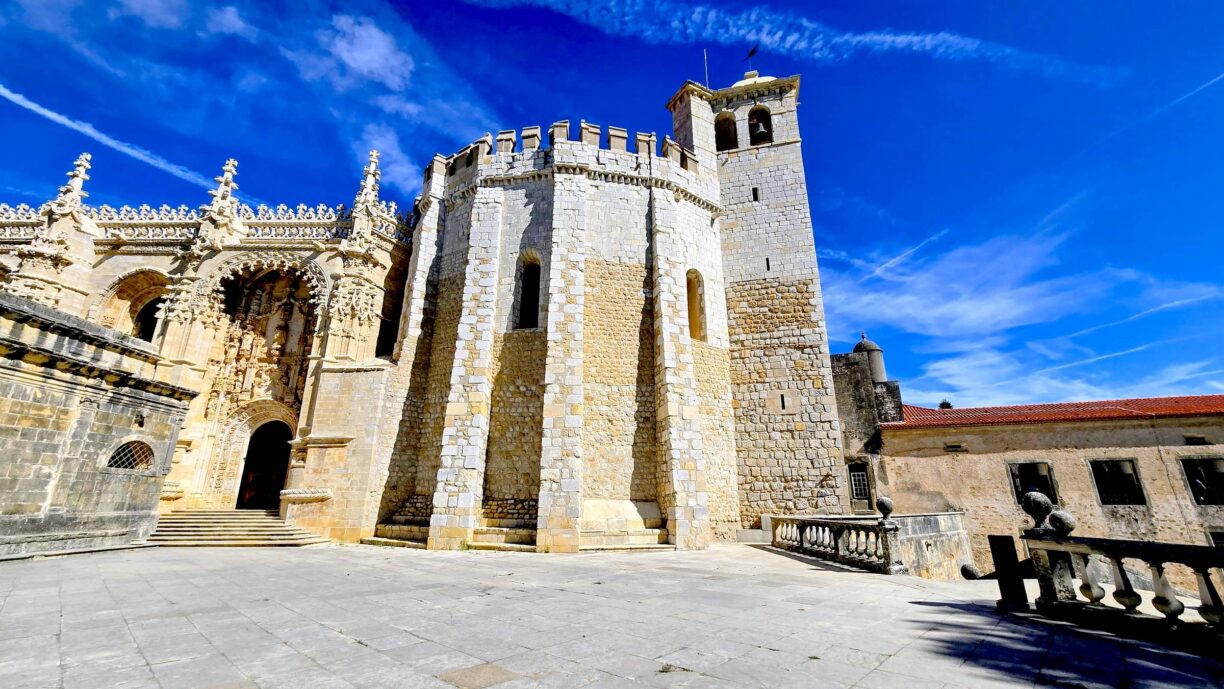
The castle surrounding the convent was founded in 1160 by Gualdim Pais, Grand Master of the Knights Templar. Its fortifications drew upon defensive ideas associated with Crusader strongholds in the Middle East.
The uphill walk from the old town provides a useful first lesson in medieval military planning. With every step, Tomar’s defensive geography becomes clearer.
Medieval commanders, it seems, had a perfectly understandable dislike of level ground and unexpected visitors.
Pause along the route to look back over the Nabão, the terracotta roofs and the surrounding landscape. The castle walls are not an architectural waiting room before the convent. They explain the military purpose from which the religious complex developed.
3. Take your bearings in Praça da República
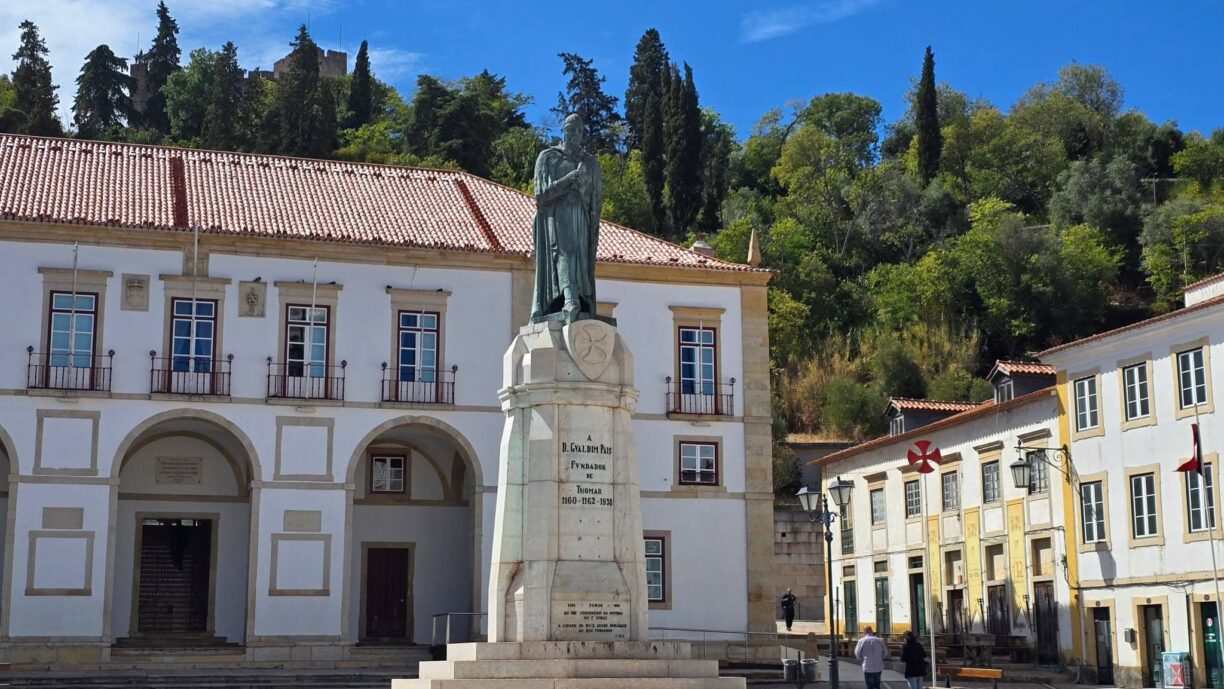
Praça da República is Tomar’s civic stage.
The Church of São João Baptista faces the town hall, with a statue of Gualdim Pais standing between them. The square occupies the centre of the medieval town plan and remains the natural place to begin, pause or quietly abandon an itinerary that has become too ambitious.
Streets lead towards the former Jewish quarter, the Nabão River and several smaller historic sites. The cafés offer coffee, shade and the revolutionary discovery that sitting down may improve a walking holiday.
On an ordinary afternoon, the square is handsome and composed. During the city’s major festivals, composure gives way to processions, decorations and a surprising number of people dressed with considerable medieval conviction.
4. Give São João Baptista more than a photograph
The Church of São João Baptista occupies such a prominent position in Praça da República that many visitors photograph the façade and consider the relationship complete.
It deserves a closer look.
Its Manueline doorway leads into a spacious interior, providing a compact architectural counterpoint to the sprawling Convent of Christ. The church also helps orientate first-time visitors: the castle and convent rise to the west, the old Jewish quarter is nearby and the river lies only a short walk away.
It is the sort of building that rewards 20 attentive minutes more than another 40 spent pretending to understand a map in direct sunlight.
5. Find the human story at Santa Maria do Olival
The Church of Santa Maria do Olival is quieter and more restrained than the Convent of Christ. Emotionally, it may prove the more affecting of the two.
The Gothic church served as a pantheon for Portuguese Templar masters and contains the tombstone of Gualdim Pais. Here, the broad sweep of military orders, kings and religious authority narrows to individual names and graves.
Its comparative simplicity is the point. After the architectural abundance of the convent, Santa Maria do Olival provides space, solemnity and proportion.
This is where the Templar story stops behaving like an international conspiracy thriller and becomes personal.
6. Step inside Tomar’s medieval synagogue
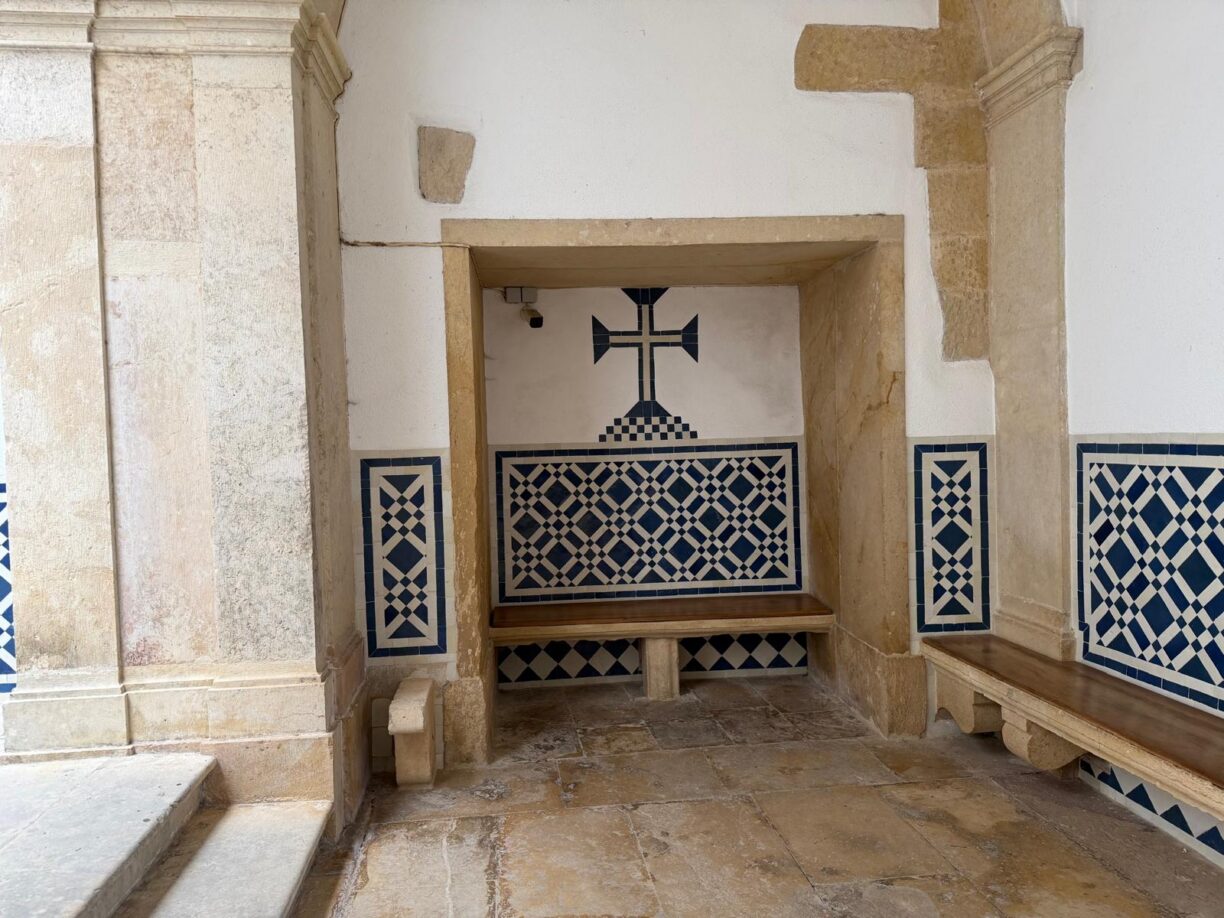
Tomar’s synagogue introduces a vital part of the city’s history that cannot be explained entirely through swords, crosses and men wearing impractical heavy cloaks.
Built in the mid-15th century, it is an exceptionally rare surviving example of a medieval Portuguese synagogue. The building now houses the Abraham Zacuto Luso-Hebrew Museum.
Its almost square interior is supported by four columns. Clay vessels fitted into the upper walls were used to improve the acoustics, an elegant solution devised several centuries before somebody suggested twelve speakers and a mixing desk.
The building’s modest scale increases its impact. There is no monumental frontage announcing its importance. Instead, the space quietly opens a wider discussion about scholarship, commerce, religious life, persecution and survival.
Tomar’s history becomes considerably more interesting once none of its communities is edited out.
7. Lower the historical temperature beside the Nabão
After several hours of fortifications, tombs and ecclesiastical symbolism, the Nabão River offers useful relief.
Its paths and bridges reveal a softer side of Tomar, particularly when the afternoon light reaches the stone façades and the castle begins to lose some of its daytime severity.
The riverside also helps visitors understand the scale of the city. The convent may dominate the skyline, but ordinary life carries on below without appearing particularly intimidated by it.
A walk beside the Nabão is not dead time between attractions. It is the pause that prevents cultural curiosity from becoming an endurance contest.
8. Stop at Mouchão Park
Mouchão Park occupies a green island in the river close to the historic centre. It offers room for a walk, a coffee or a calculated period of inactivity.
Its wooden water wheel is one of Tomar’s most recognisable landmarks. The wheel recalls the mills, olive presses and irrigation systems once powered by the Nabão.
The park also supplies trees, benches and an opportunity to stop behaving as though every doorway in central Portugal must be inspected before lunch.
Good travel occasionally requires the discipline to do absolutely nothing for half an hour.
9. Make the journey to Almourol Castle
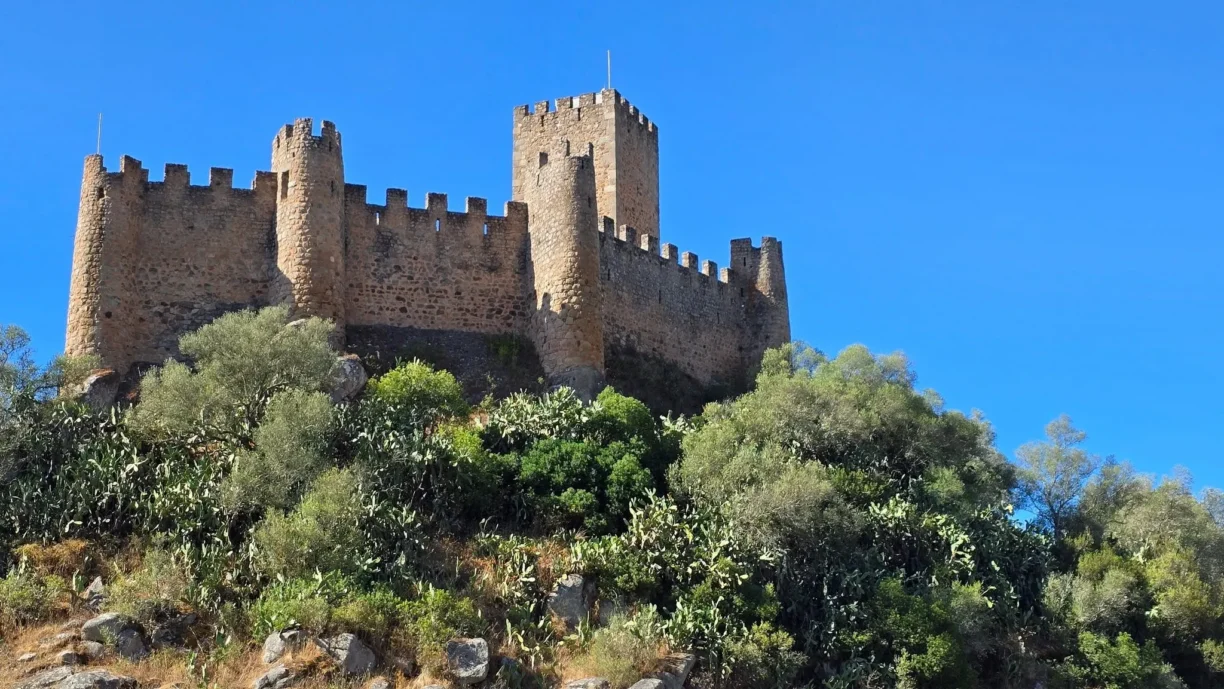
Almourol Castle rises from a small island in the Tagus with such dramatic precision that it appears almost indecently pleased with itself.
The site was incorporated into Templar territory under Gualdim Pais, with reconstruction beginning in 1171. Alongside Tomar and other regional fortifications, it formed part of a defensive line associated with the Tagus.
Visitors approach by a short boat journey, which is precisely how an island fortress should be reached. A shuttle bus through a retail park would ruin the effect.
The crossing changes both the landscape and the rhythm of the day. Towers rise above the water, battlements reveal their defensive logic and the entire excursion carries just enough theatre to justify bringing the camera out again.
Boat services and opening arrangements can change. Check current municipal information before travelling rather than arriving with heroic optimism and nowhere to sail.
10. Plan a visit around Tomar’s festivals
Tomar is compelling when quiet. During its major festivals, quiet is removed from the programme.
The Festa dos Tabuleiros, or Festival of the Trays, takes place every four years. Processions, decorated streets, window hangings and towering flower-covered trays transform the city. The next edition is due in July 2027.
Anyone planning to attend should organise accommodation early. Road arrangements, room availability and crowd levels will bear little resemblance to an ordinary weekend.
Tomar also staged the Festa Templária from 9 to 12 July 2026 which I was extremely lucky to experience with my timing. The event commemorated the foundation of Tomar Castle in 1160 under the theme “A Fundação do Castelo – 1160”.
The programme included a medieval village, historical camps, craft demonstrations, tournament areas, torchlight processions and fiery performances on the River Nabão. A four-day general pass cost €5, while a daily pass was €3.
The 2026 programme was published by Câmara Municipal de Tomar, with ticket information previously listed through BOL. Future dates, prices and activities should be confirmed with the organisers rather than inferred from an earlier edition.
Visitors arriving outside festival dates should still consult Tomar’s cultural calendar. The city has a habit of returning to the Middle Ages, occasionally with fire.
11. Leave time to eat without armour
Tomar suits an unhurried dinner.
Its compact centre makes it easy to return after sightseeing, while the river gives the evening a gentler pace than the battlements might suggest. That is useful after a full day spent examining religious symbolism with an expression of scholarly concern.
Exercise judgement when considering medieval-themed dining. The distance between atmosphere and theatre becomes alarmingly narrow once synthetic chainmail and wooden goblets enter the room.
A worthwhile restaurant should still succeed after the props are removed: thoughtful cooking, informed service and a genuine relationship with the region rather than a dining room that has been assaulted by imitation shields.
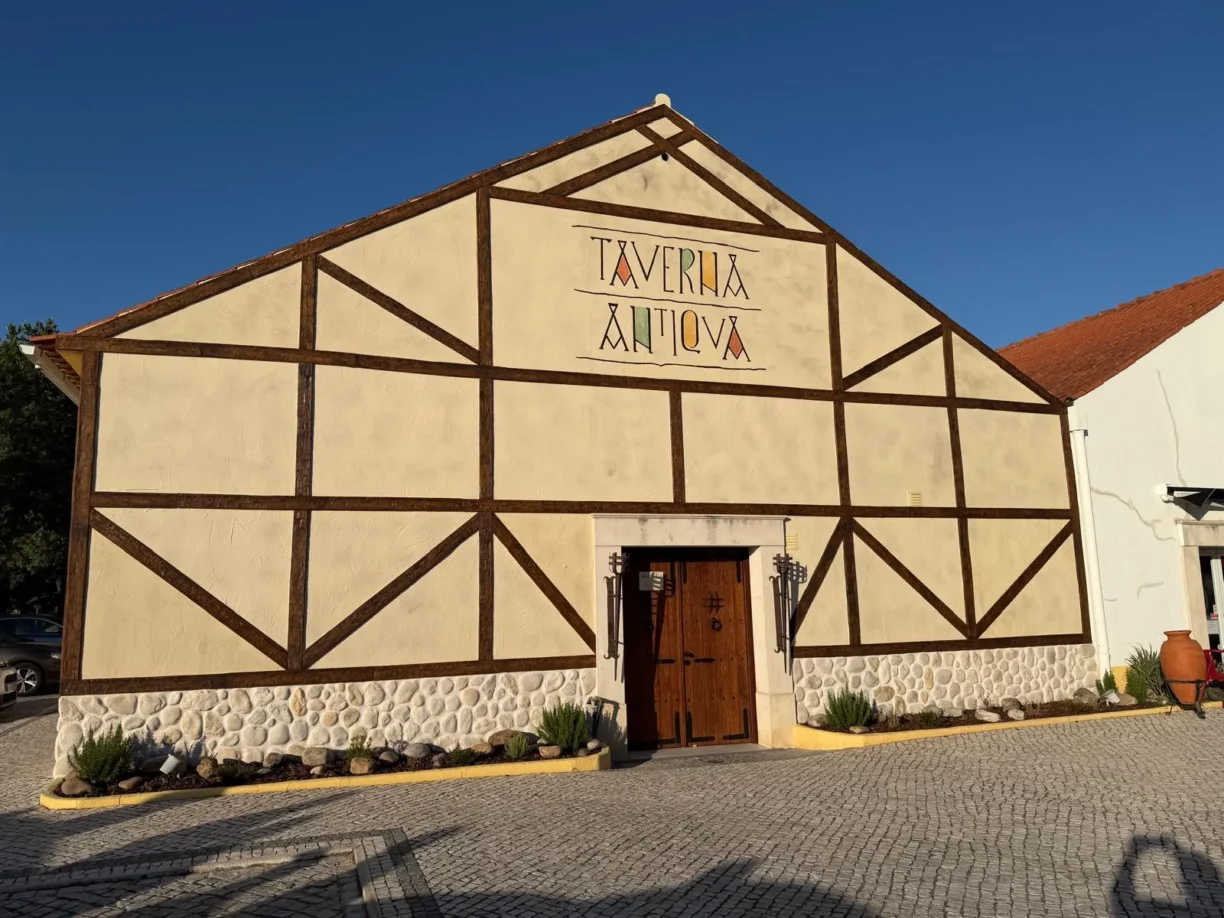
Taverna Antiqua embraces medieval dining with considerably more commitment than a few shields hung above the bar.
The themed restaurant combines period-inspired dishes with live music, costumed characters and storytelling drawn from an age of feudal rivalries, fortified kingdoms and laws frequently settled by whichever side possessed the sharper sword. Subtle it is not, but subtlety was rarely the defining quality of medieval Europe.
As the meal progresses, the dining rooms become part banquet hall and part theatre. Musicians move through the tavern, songs rise above the tables and performers turn dinner into an unfolding piece of historical entertainment. The spectacle is designed to sit alongside the food rather than merely decorate the walls.
For travellers who enjoy immersive experiences, Taverna Antiqua offers a livelier counterpart to Tomar’s churches, tombs and cloisters. It does not attempt to replace serious historical interpretation, nor should it. Its appeal lies in allowing visitors to loosen the scholarly expression, raise a cup and enjoy the Middle Ages with rather better catering.
12. Use Tomar as a base for central Portugal
Tomar works much better as a base than as a hurried day-trip target.
The Pegões Aqueduct lies outside the centre and was constructed to supply water to the Convent of Christ. Extending for roughly six kilometres and incorporating 180 arches, it demonstrates the extraordinary engineering scale attached to the complex.
Fátima, Batalha and Alcobaça can be incorporated into a broader central Portugal itinerary. Almourol provides the most natural continuation of Tomar’s Templar story.
Staying for two nights allows the smaller churches, riverside paths and old streets to earn their place. Without that time, Tomar risks becoming an exhausting succession of stone doorways remembered mainly through photographs taken while checking the hour.
Where to stay in Tomar
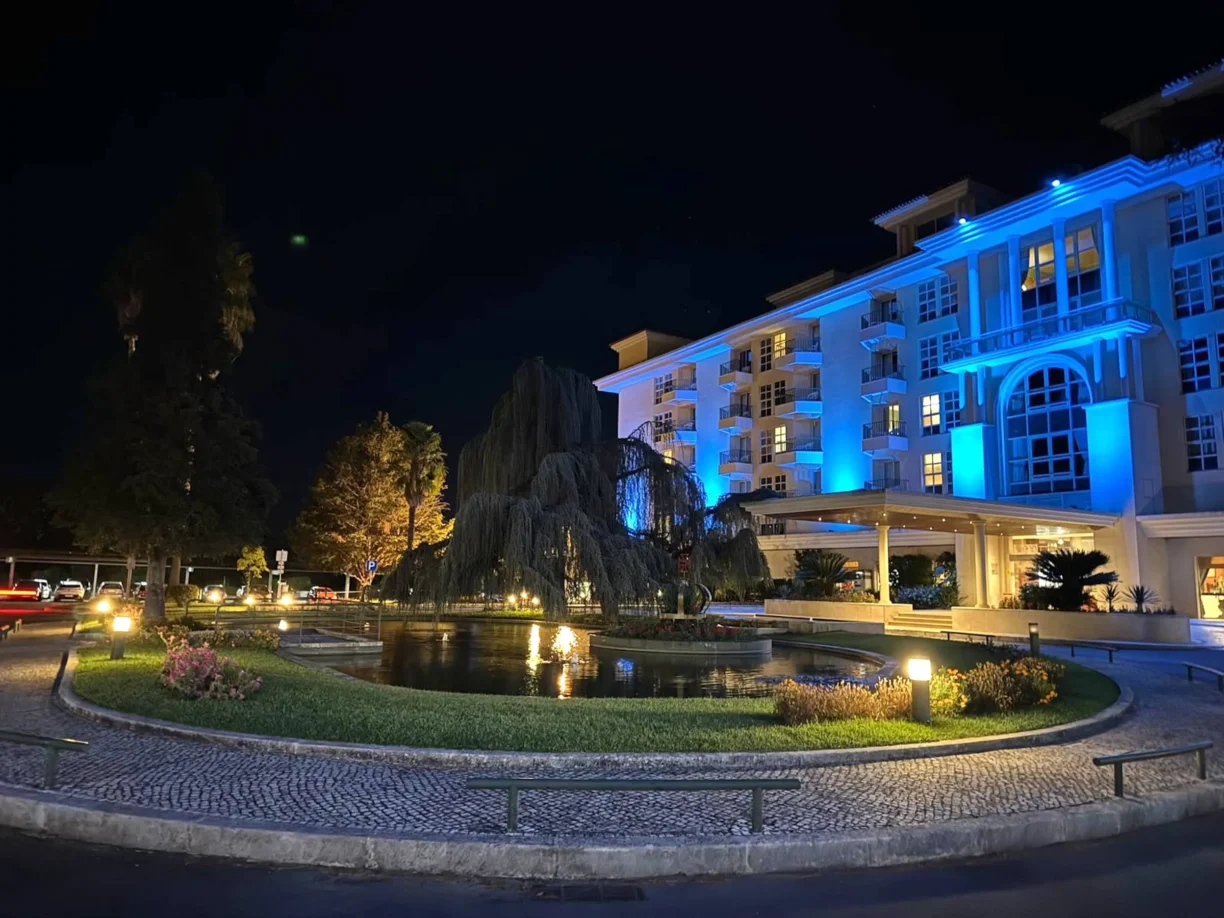
We stayed at Hotel dos Templários, beside the Nabão River, gardens and historic centre.
Its principal advantage is practical rather than theatrical. The old town is close, evening walks require little planning and there is sufficient space to decompress after a day spent peering solemnly at carvings.
The hotel describes its position as central to Tomar, beside the river and within easy reach of the historic centre.
That proximity matters. A heritage break improves considerably when dinner does not require a strategic transport conference.
Extending the trip with a wellness stay
Travellers seeking a broader wellness journey could combine Tomar with a separate stay at Juicy Oasis.
The distinction is important: Juicy Oasis is not in Tomar and should not be treated as a convenient city hotel. It is in Cernache do Bonjardim and operates as a structured seven-day, Saturday-to-Saturday juice-only retreat.
Its setting overlooks water, forest and distant hills, providing an emphatic change of pace after several days of churches, castles and medieval military planning.
The programme combines juice-based nutrition with organised movement, yoga, spa facilities and other activities. As this is a juice-only retreat rather than conventional accommodation, prospective guests with health conditions or specific nutritional requirements should establish whether the programme is appropriate before booking.
It is best understood as a separate wellness extension: less somewhere to sleep between attractions than somewhere to stop moving altogether.
How many days do you need in Tomar?
Tomar can be visited in a day, although that does not necessarily make it a good idea.
A one-day itinerary can cover the Convent of Christ, castle walls, Praça da República, synagogue and riverside. It will also involve a determined pace and a close personal relationship with the time.
Two nights create a more satisfying visit. The first day can focus on the castle, the convent and the old town. The second can include Santa Maria do Olival, the Pegões Aqueduct, a slower riverside walk and the excursion to Almourol Castle.
That extra time changes the character of the trip. Tomar stops being a collection of monuments and becomes a living city with several intertwined histories.
Lisbon dazzles, Porto broods and the Algarve has elevated lying in sunshine to an advanced branch of logistics. Tomar takes the quieter route.
Its appeal accumulates: the Charola, the castle walls, the tomb of Gualdim Pais, the restrained synagogue, the Mouchão water wheel, the river and Almourol’s outrageous island battlements.
A knowledgeable guide makes the connections clearer. An overnight stay gives them time to settle. A second day allows the city to speak for itself.
Tomar does not need to shout. Eight centuries of stonework are already handling the conversation.