Build a home gym without wasting space: expert tips on flooring, electrics, and the best compact equipment.
If you’re chasing that “summer body” without battling for a bench at 6 pm, the simplest answer is staring you in the face: build a home gym that fits your space, your budget, and your tolerance for noise complaints.
The myth is that home training requires a spare room the size of a small airport lounge and a bank loan to match. In reality, the smartest at-home setups look less like a shiny showroom and more like a compact PT studio: functional, space-saving, and ruthlessly organised.
That, in a sentence, is the approach backed by Thibo David — ex-commando and performance specialist to A-listers (including Harry Styles), professional athletes and footballers — who says you should plan first, buy second, and avoid turning your living room into a cluttered obstacle course.
Start with the boring stuff: space, storage and where it all goes
Before you get seduced by shiny kit and “New Year, New Me” deals that somehow still exist in spring, figure out what you’re working with.
What space do you actually have?
That single question determines whether your home gym is a neatly defined “training zone” or a kit-you-pack-away-after-each-session arrangement.
- Can you designate space permanently, or does it need to disappear when guests arrive?
- Are you in a flat where sound travels like gossip, or a house where you can train without feeling like you’re auditioning for a complaint letter?
- Got a garage? That’s the popular choice for a reason: it keeps the gear out of the way and gives you the best chance of a proper setup.
Electrics: the unglamorous detail that matters
When setting up an at-home gym, make sure you’ve got enough outlets for whatever you’ll actually use: equipment, a fan, and yes, a speaker if music is the difference between training and staring at your phone.
Training in a garage that’s basically a fridge with a door? An indoor heater might be needed — and Thibo points out there’s a performance angle to heat too: heat adaptation can be used as a training tool over time, if done sensibly and safely.
Flooring: save your joints, save your ears, save your neighbours

The quickest way to hate your home gym is to make every session feel like you’re training on ice or hammering a drum kit through the floorboards.
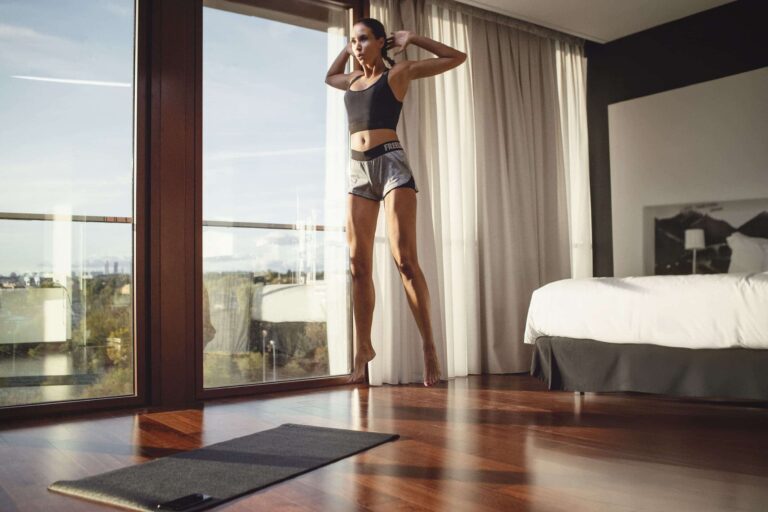
Rubber mats are the obvious fix:
- Reduce noise and vibration
- Protect wood floors, carpets, and concrete
- Give you a safer base for lifting and conditioning
If you live in a flat, flooring isn’t optional. It’s basic manners.
A wall-mounted mirror: your form check when no one’s watching
If you train alone, a wall-mounted mirror is a practical investment. It helps you keep form honest and reduces the odds of gradually turning a clean movement into a weird personal interpretation of it.
Put simply: it’s easier to avoid injury when you can actually see what you’re doing.
Tight on space? Make one thing harder instead of buying five things
If your space is limited, the clever move is to make your existing workout more demanding without filling the room with plates and machines.
A weighted vest does that job nicely:
- Makes bodyweight work significantly harder
- Reduces the need to store heavy weights
- Ideal for flat-living workouts if you focus on controlled movements
One note for flats: avoid jumping and other plyometric exercises unless you fancy becoming a local legend for all the wrong reasons. If you’ve got communal stairs, use them for conditioning and lower-body strength instead.
The home gym equipment checklist (pick what fits, skip what doesn’t)

Choosing the best home gym equipment comes down to two things: space and budget. The biggest mistake is buying too much, too soon, then discovering you’ve built a storeroom instead of a training area.
You don’t need everything here. Pick what matches how you train.
Small, cheap, and effective
Ab roller
Cheap, tiny, and brutal in the right way. Great for building a strong core with almost no space required.
Resistance bands
The most versatile bit of kit going: warm-ups, mobility, stretching, assistance work, and serious strength work when used properly.
Skipping rope
Brilliant cardio and warm-up tool — but not ideal in a flat. Also, make sure you’ve got enough ceiling height, unless you enjoy replacing light fittings.
Big training value with minimal footprint
TRX

An excellent upper-body strength tool (rows and more), plus plenty of lower-body and core options. Hooks onto a door and takes virtually no space.
Door frame pull-up bar
A classic for whole-body strength development with minimal space and setup time.
Strength staples without the clutter
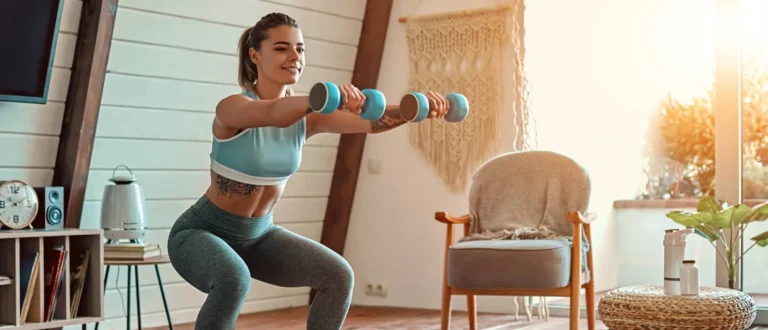
Adjustable dumbbells
A space-efficient way to cover presses, rows, curls, raises, snatches, and more. Adjustable models keep things tidy and scalable.
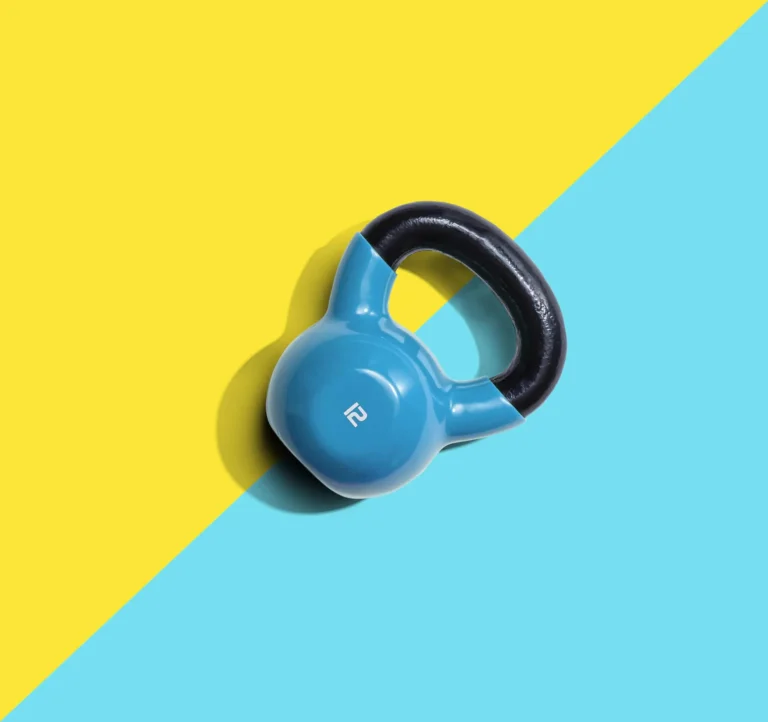
Adjustable kettlebell
Kettlebells are excellent for strength, balance, and conditioning — often helping build a lean, athletic look rather than pure bulk. Adjustable versions save space while giving you multiple weight options.
Adjustable bench
Useful for presses and rows, and a sturdy one can double as a conditioning tool. Foldable benches help keep a home gym from taking over your life.
If you want “proper gym” lifts at home
Barbell with plates + storage (insert wall)
Essential for deadlifts, Olympic lifts, and squats. Prioritise setups with storage systems so your home gym stays organised rather than chaotic.
Wall-mounted squat rack
A smart solution for space-restricted setups because it can fold away. But it can get noisy, so it’s generally a poor idea in a flat.
Conditioning kit that hits hard (but can hit your floor harder)
Boxing bag

A serious full-body workout and a strong fat-burning tool. If you can’t mount it to a beam, freestanding bags are an option and don’t take up much space.
Heavy slam ball (20/30kg)

Strongman-style, full-body strength work that targets legs, glutes, lower back, shoulders, and core. Not recommended in a flat.
Heavy battle ropes
A complete workout on their own or a savage finisher. Low cost, high versatility, huge conditioning payoff — but noisy, and better suited to spaces without strict neighbours.
The luxury lane
Peloton treadmill
If budget and space aren’t constraints, a treadmill is the convenient cardio king. Peloton’s ecosystem adds classes across running, walking, yoga, and strength. But treadmills create noise, so in a flat it’s a fast track to becoming “that neighbour.”
The money bit: how to build a home gym without wasting it
Thibo David’s advice is blunt, and it’s the kind of blunt most people need before they start panic-buying:
Thibo David, Ex-commando and Performance Specialist commented: “Some of us have already been considering a home gym setup as a way to get fit without the expense of a gym membership.
But before you dash off to buy the equipment, take some time to consider what kinds of exercises you want to do.
Then buy according to these needs. Gym equipment can range from cheap to costing hundreds of pounds so keep costs low by starting with the basics and then adding one at a time. Find bargains in discount stores and also consider buying second-hand.”
That’s the winning formula: define your training, buy only what serves it, and build the home gym in phases instead of trying to “complete” it in one weekend.
A sensible starter setup (that doesn’t swallow your room)
If you want a practical baseline to get moving now:
- Resistance bands
- Adjustable dumbbells (or a single adjustable kettlebell)
- Door frame pull-up bar
- Rubber mats
- Optional: TRX and a weighted vest
It’s simple, scalable, and it keeps your home gym from becoming an expensive storage problem with good intentions.