Sporting Khalsa’s new cricket dome opens as ECB launches a £45m fund to grow inclusive grassroots sport.
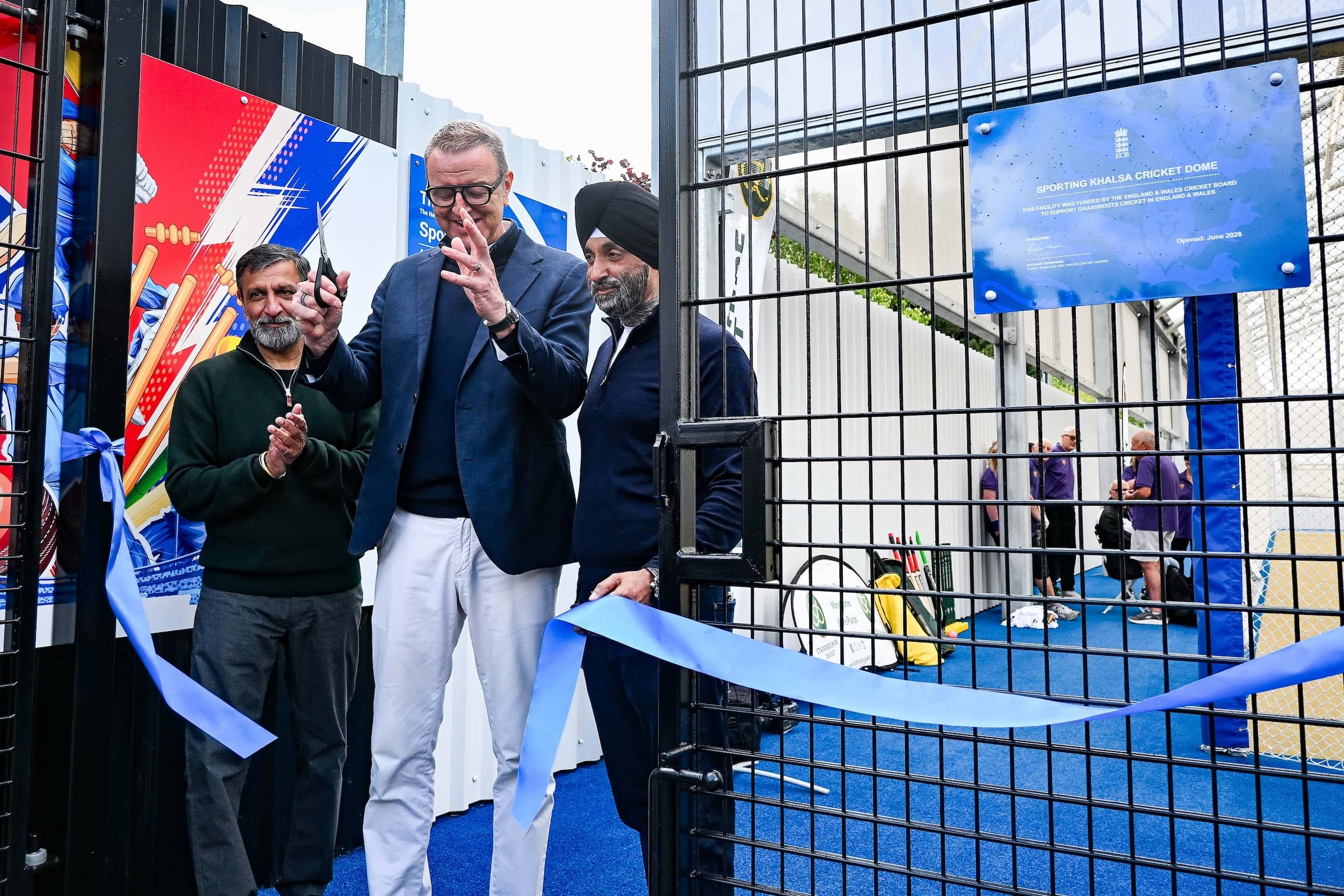
Cricket has a new all-weather home in the West Midlands after Sporting Khalsa FC officially opened the country’s third ECB-funded cricket dome, a three-lane facility designed to give more people the chance to play all year round, without needing to negotiate with rain clouds, football bookings or the usual British sporting calendar chaos.
The new dome sits next to Sporting Khalsa FC’s existing football ground and adds cricket to a community sport site already serving a large and ethnically diverse local population in an economically underprivileged area.
It is the third cricket dome funded by the ECB, following existing facilities in Bradford and Darwen, Lancashire, and it arrives with a wider message attached: if the game is serious about inclusion, it needs more than warm words and well-lit campaign videos. It needs places to play.
A New Cricket Home Beside The Football Pitch
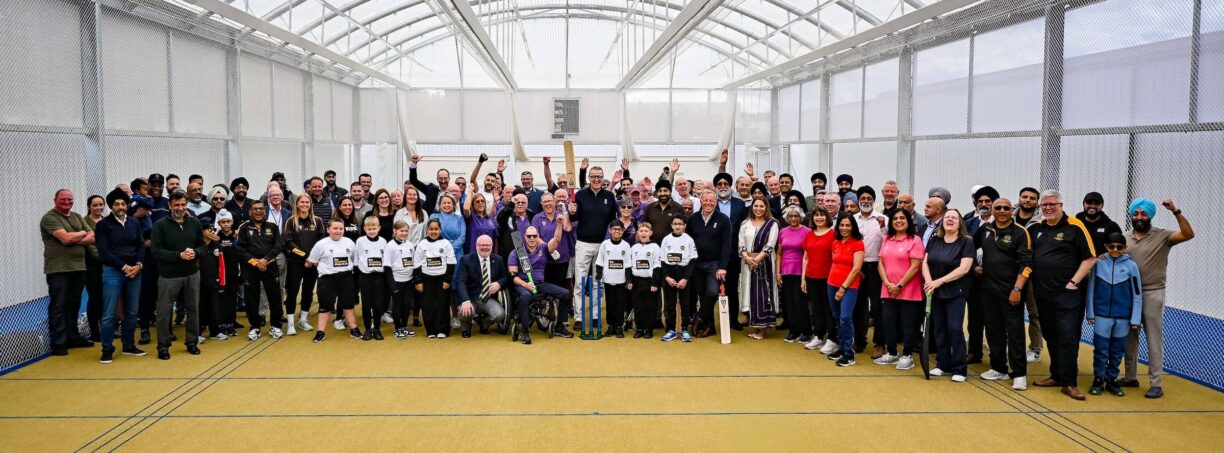
Sporting Khalsa FC will operate the facility, expanding its community offer beyond football and into cricket. The club, a Sikh charitable organisation, has recently been awarded FA 3-Star Accreditation for its community sport provision, and the new dome is intended to widen that work further.
The facility includes three full-length lanes and can also be adapted for match play, coaching sessions and community events. That flexibility matters. In urban areas, space is often the first opponent before a ball has even been bowled.
The Sporting Khalsa site was chosen partly to test how this type of facility can work in a tight urban environment. It is a practical question with major consequences: if cricket can build cleverly in places where land is limited and demand is high, the sport suddenly has a much more credible answer to its access problem.
ECB Launches £45m Building Belonging In Cricket Fund
The opening also marks the official launch of the ECB’s new £45m Building Belonging in Cricket Fund, using money from sales of The Hundred teams to support grassroots cricket projects across England and Wales.
The fund will invest between £50,000 and £1m into projects focused on growing the game, particularly for women and girls, disabled participants, people on lower incomes and ethnically diverse communities.
That is not a small tweak around the edges. It is a sizeable attempt to put infrastructure behind the ambition of making cricket the most inclusive team sport.
The ECB expects the fund to deliver more than £150m in total economic value by attracting additional funding from partners, including Government. Applications will be solicited by Recreational Cricket Boards, with the fund aimed at strategically significant projects such as further cricket domes, indoor cricket or sports halls, community cricket venues, multi-sport hubs, non-turf pitches and practice facilities.
In plain English: fewer locked gates, fewer waiting lists, fewer children squeezed out because the only available indoor slot is at an hour normally reserved for owls and shift workers.
Richard Thompson On Breaking Down Barriers
ECB Chair Richard Thompson said: “Our goal is to make cricket the most inclusive team sport and our third new cricket dome will open up access to hundreds of thousands of people in the West Midlands.
“We’ve already seen from Bradford and Darwen what a difference facilities like these can make, becoming community hubs and offering not just cricket but access to other activities as well.
“I’m delighted that through the Building Belonging in Cricket Fund, which is now officially open for business, we’ll be able to invest £45m from the sales of The Hundred teams into more grassroots projects like this, breaking down more barriers and supporting communities which currently lack the facilities they need to play and enjoy all the good cricket can give them.”
That final point is the spine of the story. Cricket has never lacked affection in communities across England and Wales. It has often lacked capacity, proximity and practical access. The game can be loved from a distance, but it grows when people can actually pick up a bat, have a bowl and feel they belong there.
Why Sporting Khalsa Matters
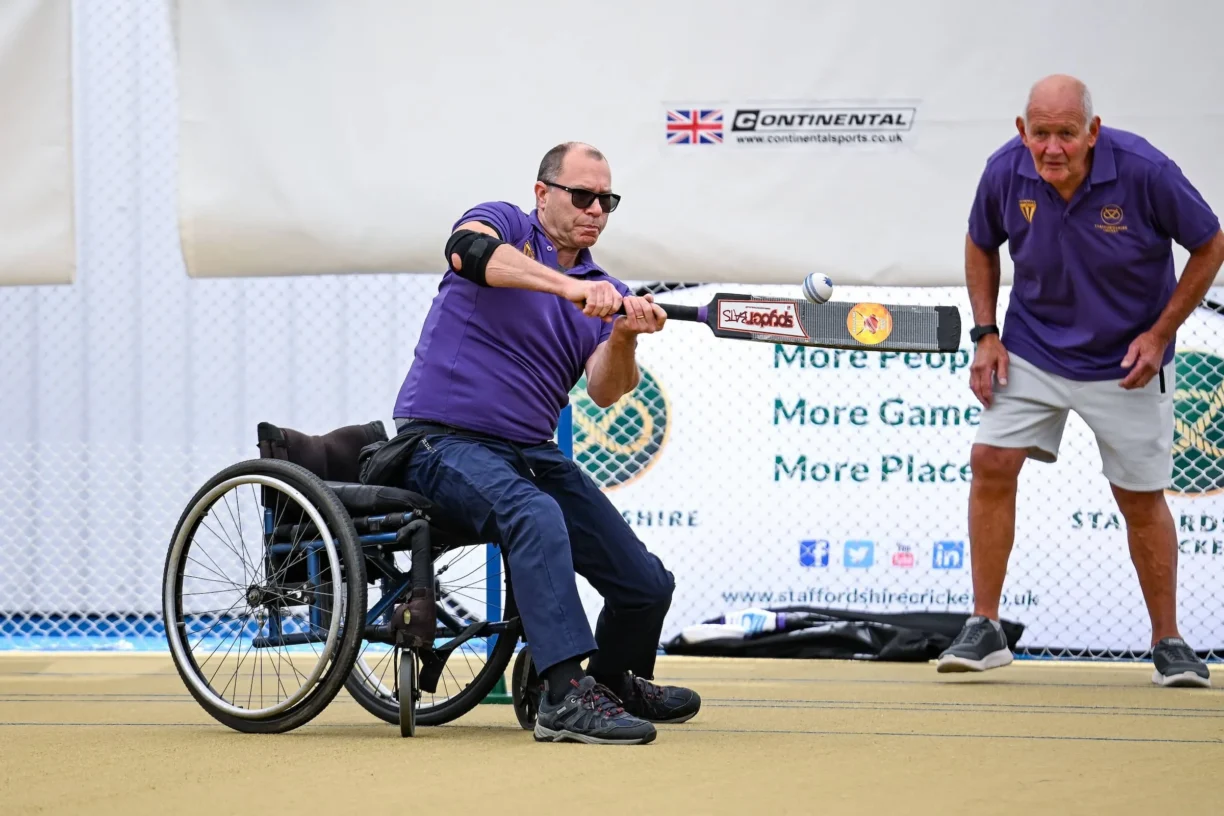
Sporting Khalsa is not merely adding a shiny new building to the estate. The dome gives the club a broader sporting footprint and brings cricket into a setting already trusted by the local community.
For grassroots sport, that matters enormously. Facilities work best when they are not parachuted in as monuments to strategy documents, but built into places where people already gather, volunteer, coach, compete and bring their children.
Jason Britton, Development Director Staffordshire Cricket commented; “The new dome is an excellent facility and it will serve both the local and wider cricket communities where the demand for the game sometimes struggles to find capacity in traditional indoor spaces. We are incredibly grateful to the ECB for the investment into Staffordshire and we look forward to working closely with the team at Sporting Khalsa to continue to grow access to the game.”
That demand for space is one of cricket’s quieter but most stubborn problems. Indoor facilities are often stretched, expensive, oversubscribed or simply too far away. A dedicated cricket dome, especially one attached to an established multi-sport community site, gives the game room to breathe.
A Multi-Sport Future For The Community
The dome also supports Sporting Khalsa’s wider ambition to become a multi-sport hub. That is a sensible direction, not least because community sport rarely exists in tidy little silos. Families move between football, cricket, fitness sessions, coaching programmes and local events. A good venue understands that. A great one plans for it.
Rajinder Gill, Club Chair of Sporting Khalsa said, “Our goal has always been to provide a multi-sport facility that serves as a beacon for the local and our wider community and the cricket dome is another fantastic addition to our site. We would like to thank the ECB for the investment at Sporting Khalsa and we are excited to work in partnership with Staffordshire Cricket to fully utilise the facilities.”
The phrase “fully utilise” may not set the pulse racing, but the idea behind it should. A facility like this earns its keep not by looking impressive on opening day, but by being busy on wet Tuesdays, cold Thursdays and those long winter evenings when young players either improve or drift away.
More Cricket Domes Are Already In Development
The ECB’s dome programme is not stopping in the West Midlands. Two more domes are already in advanced development in Luton and at Farington, Lancashire, with partial funding from the Government.
A further pipeline of dome projects is also being developed with Recreational Cricket Boards across England and Wales.
That is where the Sporting Khalsa opening becomes more than a local sports story. It is a test case for how cricket can build facilities in urban settings, serve diverse communities, and reduce reliance on traditional indoor venues that are already under pressure.
Cricket Needs Places That Match Its Ambition
For years, cricket has talked about broadening participation. The real test has always been whether the sport can put proper facilities close to the people it wants to reach.
The Sporting Khalsa cricket dome is a useful step in that direction: practical, community-based and open to more than just the usual suspects. It gives the West Midlands a new year-round cricket space and gives the ECB’s Building Belonging in Cricket Fund a timely, tangible example of the sort of project it wants to back.
The game will still need coaches, volunteers, programmes and long-term commitment. Buildings alone do not create belonging. But they do open the door.
And in a sport that has spent far too much time waiting for fair weather, that feels like a rather decent place to start.