How to build a six-pack with smarter training, better sleep, sharper nutrition and less wasted effort.
The six-pack has become the modern gym floor’s version of the Holy Grail: much discussed, often chased, and rarely found by those still flinging themselves through endless crunches like a man trying to fold a deckchair with his stomach. The trouble is not effort. It is direction. Many people work hard for abdominal definition, yet the real route to visible abs has less to do with punishment and far more to do with body fat, recovery, movement quality and a bit of common sense.
That matters for more than vanity. Carrying excess fat around the midsection is associated with serious health risks, including type 2 diabetes and heart disease. So while a carved-out core may look good in a changing-room mirror, the bigger prize is a stronger body, better metabolic health and a training plan that does not collapse at the first sight of a takeaway menu.
A six-pack starts with body fat, not bravado

Here is the awkward truth many gym-goers would rather not hear: you may already have decent abs. They are simply hidden under a layer of body fat. That is why a thousand extra sit-ups usually achieve little beyond a sore neck and an inflated sense of martyrdom.
If stomach definition is the goal, body composition becomes the real game. That means working towards a calorie deficit, where you burn more energy than you consume, while still eating enough to train properly and recover well. Starving yourself is not strategy. It is just a slower route to irritability.
A better approach is brutally unglamorous and therefore effective: trim the processed food, rein in the sugar, keep an eye on calories, prioritise protein and fibre, and build meals around vegetables, fruit, nuts, lean meats and healthier fats. It is not sexy, but then neither is wondering why your core workouts are going nowhere while your diet is held together by convenience food and crossed fingers.
Stop counting reps and start creating tension

There is a persistent belief in gyms that abdominal training should look frantic. People rattle through rep after rep as though speed alone might frighten the fat away. In reality, poor-quality movement tends to produce poor-quality results.
Marvin Burton, head of product at Anytime Fitness UK, puts it plainly: “Focus on creating tension and contracting your muscles correctly, instead of counting endless repetitions,”
He adds: “Think about the movement quality of an exercise and executing it properly.
“Fast, out of control and high-repetition exercises are usually unsafe and counterproductive.”
That is the heart of it. A strong core is built through controlled effort, not chaos. Slow the movement down. Feel the abdominal wall brace. Make the exercise harder by improving the execution, not by turning it into a blur. Better tension improves muscle recruitment, improves stability and reduces the odds of turning your lower back into collateral damage.
Why planks beat old-school sit-ups
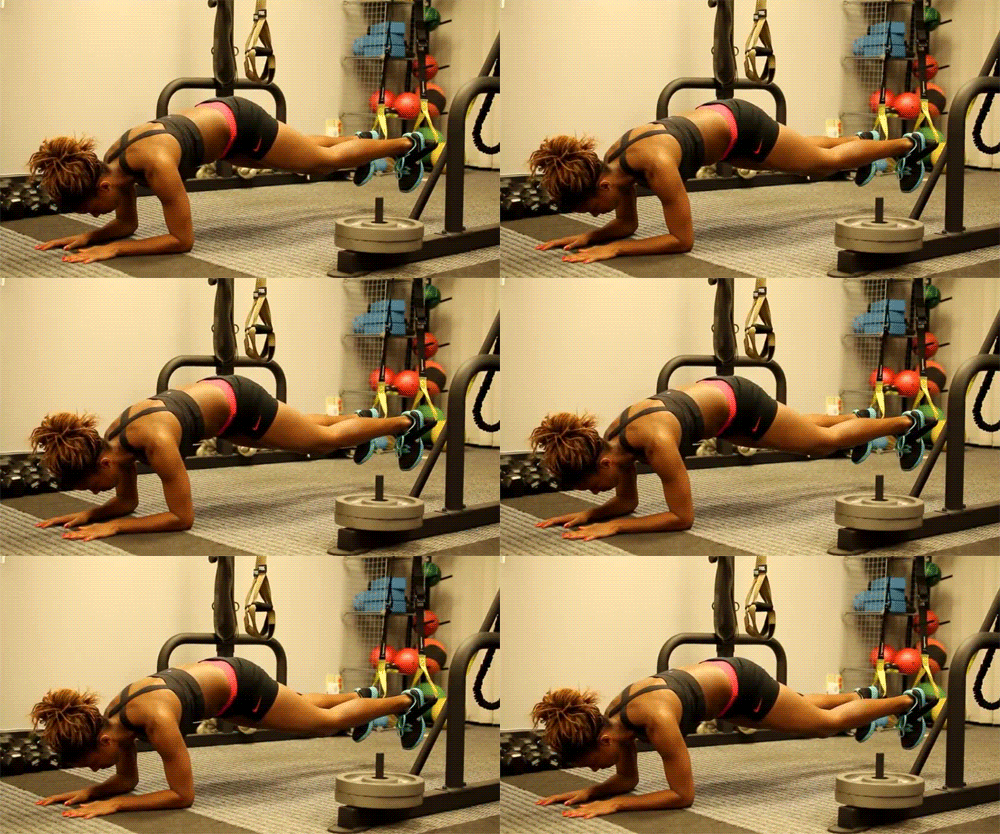
Sit-ups have history. Unfortunately, so do rotary phones and England penalty shootouts. Their longevity does not necessarily make them the best choice.
For many people, repeated sit-ups place unnecessary strain on the lower back and hip flexors while doing less for overall core stability than more modern alternatives. Exercises such as planks, side planks and bicycle crunches demand better control and often stimulate more useful abdominal activation.
Burton again cuts through the noise: “Think core exercises instead of specific abdominal exercises,”
And then the important part: “It’s much safer to strengthen your core and support your spine. Overtraining your abdominals with excessive crunches can lead to lower back pain and poor posture.”
That distinction matters. A six-pack may be the visible prize, but core training is really about function. The abdominal muscles work as part of a wider system that stabilises the trunk, protects the spine and transfers force efficiently. Train them like decoration and you miss the point. Train them like part of the engine and the aesthetic rewards often follow.
Sleep is not a luxury. It is part of the programme

Plenty of people will obsess over supplements, macros and whether their plank should last 40 seconds or 60, then think nothing of sleeping five hours a night and living on caffeine. That is rather like polishing the bonnet while the engine falls out.
Poor sleep is strongly linked with weight gain and a higher body mass index. One reason is hormonal. Sleep deprivation disrupts the hormones that regulate hunger and appetite, making overeating more likely and self-control rather less heroic than it seemed at breakfast.
In practical terms, better sleep quality can support fat loss, training consistency, mood and recovery. It is hard to build a leaner midsection when your body is under-recovered and your appetite is behaving like a Labrador in a butcher’s shop.
If the aim is a stronger, leaner waistline, then recovery has to be treated with the same seriousness as training volume. The gym may provide the stimulus, but sleep is where much of the repair work gets done.
Train the whole body if you want better abs
Here is another common mistake: treating the six-pack as a local issue. It is not. You do not reveal abs by only training abs, any more than you improve your golf swing by only polishing one shoe.
Melissa Weldon, head trainer at Sweat it, makes the broader case: “A training regimen which consists of heavy resistance work, with plenty of compound exercises, will build a strong core and help you to blitz calories.”
She continues: “Add to that some high-intensity interval training for cardio, and a balanced and nutritious diet, and you are bound to see incredible results.
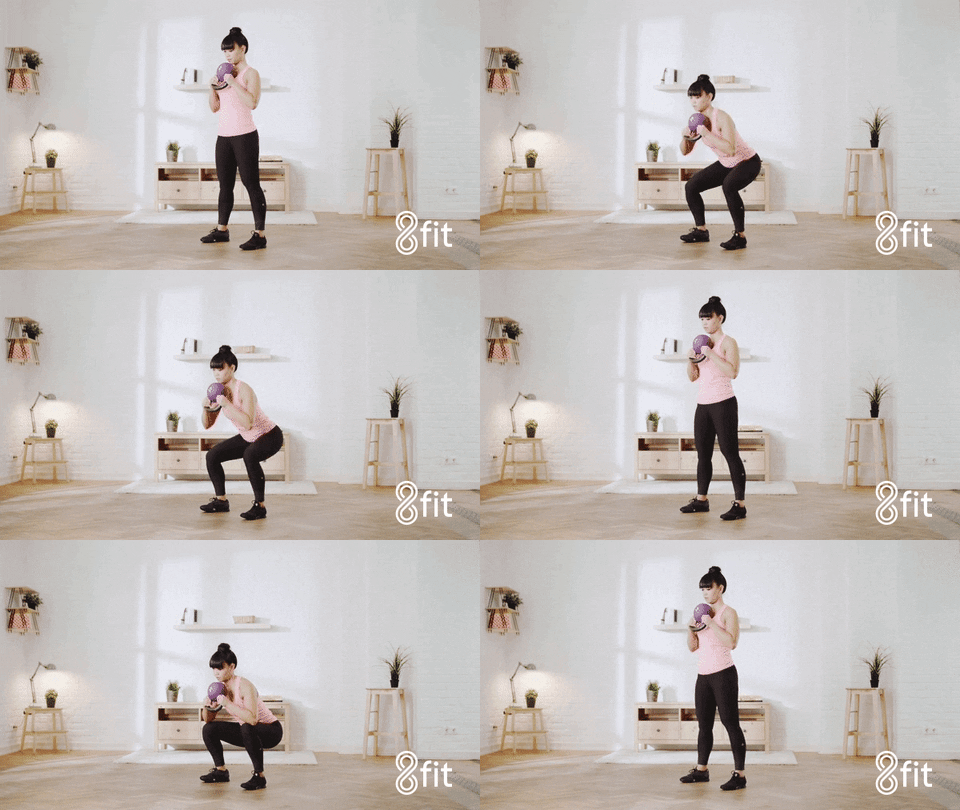
“Try mixing heavy compound exercises like squats, dead lifts and renegade rows, with HIIT training on the treadmill, for a solid full body blast.”
This is where many successful body transformation plans separate themselves from the usual ab-circuit nonsense. Compound lifts recruit more muscle mass, drive up energy expenditure and train the core in the way it often works in real life: resisting movement, stabilising load and supporting powerful motion. Add HIIT sensibly, keep the nutrition steady, and the whole system starts to move in the right direction.
Alcohol is the quiet saboteur

Few things derail a six-pack plan more efficiently than a heroic weekend followed by a hungover brunch and the sort of food choices normally made only at motorway services. Alcohol brings empty calories, poorer recovery, dehydration and a tendency to lower the standards you were so proud of on Thursday.
Weldon does not dress it up: “Naturally, if you cut down in alcohol, you’ll accelerate your results, as many alcoholic beverages are high in calories. Plus, we’re more likely to make questionable food choices when under the influence or hungover,”
That does not mean a lifetime of mineral water and joyless restraint. It means balance. And Weldon is realistic about that too: “Many of us enjoy a glass of wine with our friends from time to time, and it might be unrealistic to give up drinking completely,” says Weldon. “Finding a balance with alcohol is important though, as it can help you to prioritise making gains with your fitness.”
That is a sensible line to hold. The best fitness plan is not the one that sounds purest on paper. It is the one you can actually sustain without becoming intolerable to yourself and everybody else.
The real six-pack equation
A visible six-pack is rarely built through one magic exercise, one savage workout or one week of saintly eating. It is built through a quieter formula: lower body fat, better nutrition, strong core training, compound lifts, proper recovery and fewer self-inflicted setbacks.
That may be less glamorous than the fantasy sold in many corners of fitness culture, but it is considerably more useful. Abs are not found through punishment. They are uncovered through consistency. And like most worthwhile things in training, they tend to arrive when you stop chasing shortcuts and start doing the boring bits well.