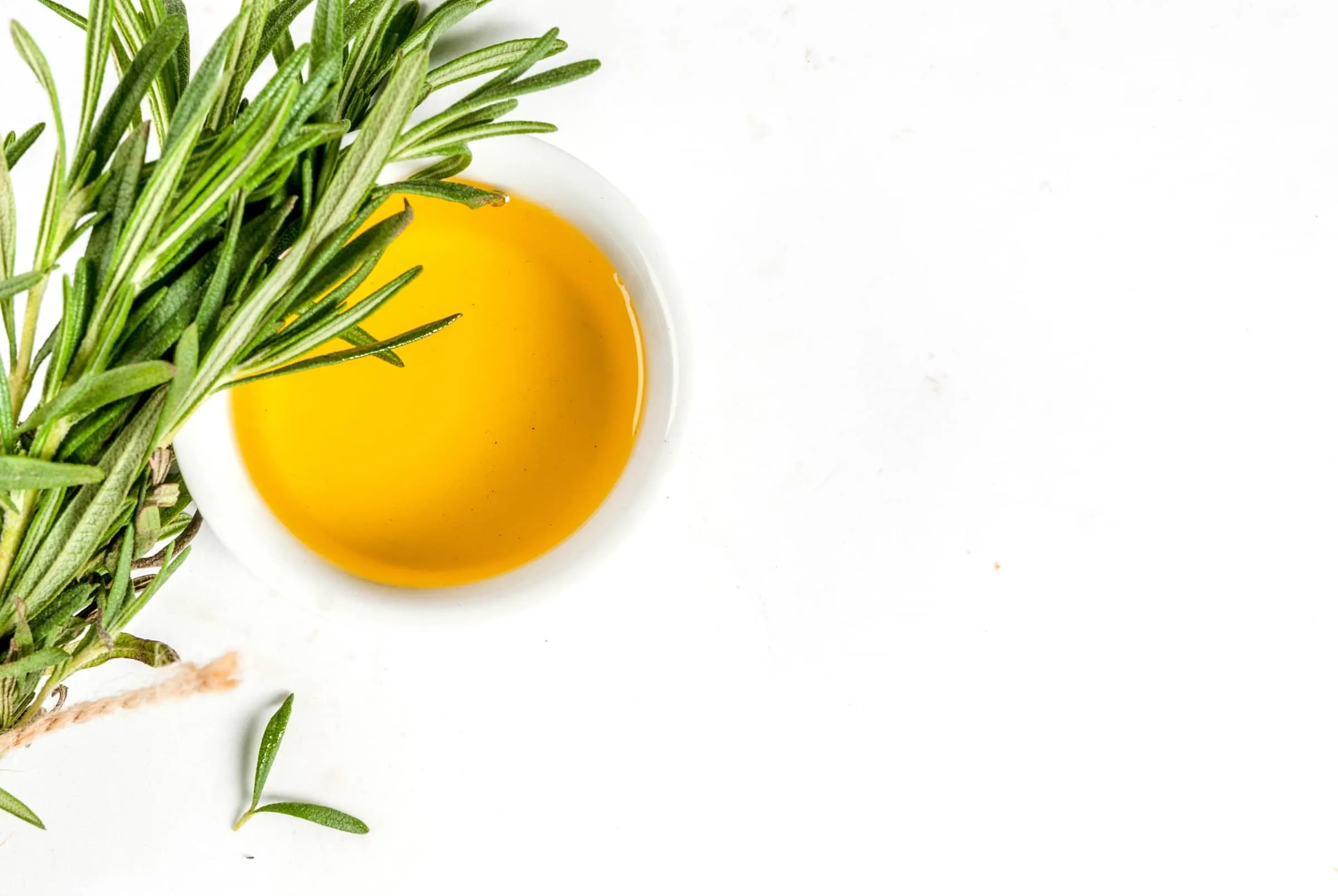
Rosemary is doing more than adding flavour to food. Its natural compounds can help slow fat oxidation, but research shows that the surrounding ingredients may be just as important as the extract itself.
Rosemary leaf extract is often selected for one practical reason: its phenolic diterpenes can help slow lipid oxidation in food systems. That can matter in oils, emulsions, powdered mixes, meat products, and foods carrying unsaturated fats.
Yet an ingredient that performs well in one matrix may disappoint in another. A supplier’s “antioxidant” grade is only a starting point; the buyer still has to define the oil phase, processing conditions, sensory limits, and analytical basis.
The most useful development question is not how high the carnosic acid number can go. It is how the extract behaves in the product the factory will actually make, after heat, oxygen exposure, and storage.
The active profile is shaped by extraction

Commercial rosemary extracts are not a single chemical. Carnosic acid and carnosol are prominent lipophilic phenolic compounds, while other constituents can contribute to the material’s fingerprint.
Extraction solvent, concentration, refining, and carrier determine what reaches the powder or liquid. Two products sold as rosemary leaf extract can therefore have different marker ratios, solubility, colour, flavour, and performance.
Ask the supplier to identify the plant as Salvia rosmarinus (syn. Rosmarinus officinalis), state the plant part, and describe whether the product is a conventional extract or a food additive grade intended for a defined use. Request the native extract ratio, extraction solvent, carrier, and marker method.
A “10% rosemary” declaration, for example, is not interpretable unless the supplier explains whether that percentage refers to extract solids, active markers, or a premix.
Read the assay as a method, not a headline
Carnosic acid and carnosol may be quantified by HPLC or UPLC using reference standards. The report should identify the compounds included, sample preparation, calibration basis, and whether results are reported as received or on a dry basis.
If the product specification uses “total phenolics” or “total rosemary antioxidants,” ask which compounds and assay response define that number. A colourimetric result should not be treated as interchangeable with a chromatographic sum of named analytes.
| Specification item | What to define in the purchasing brief |
| Botanical source | Species synonym, leaf identity, source region, traceability, and harvest lot |
| Extract process | Solvent, native extract ratio, concentration and refining steps |
| Marker profile | Carnosic acid, carnosol, any additional markers, method, and assay basis |
| Ingredient format | Liquid or powder, carrier, moisture, particle size, density, colour, and odour |
| Safety and compliance | Residual solvents, pesticides, heavy metals, microbial limits, and destination-market status |
| Change control | Notification for source, solvent, carrier, marker range, or manufacturing-site changes |
Put the antioxidant into the right phase
Carnosic acid and carnosol are relatively lipophilic compared with many water-soluble antioxidants. This makes the oil phase and dispersion method central to product design. A powder that blends easily into a dry seasoning may not dissolve in a beverage.
A lipid-compatible extract may distribute unevenly if added to a high-viscosity emulsion without enough mixing energy. Confirm where the ingredient is added, at what temperature, and how long it is mixed before the product is cooled or filled.
Bench trials should use the actual fat source and the expected processing sequence. Record the extract concentration on a defined basis, control the oxygen exposure, and include an untreated or established-antioxidant comparator.
For an emulsion, test the finished emulsion rather than only the bulk oil; proteins, minerals, emulsifiers, and water phase chemistry can change antioxidant partitioning. If the product is a powder, check both dry-blend uniformity and oxidation after reconstitution.
A published 2018 study on fish-oil-enriched cow and soy milk measured peroxide value and volatile secondary oxidation products during refrigerated storage. Rosemary extract inhibited oxidation in the cow-milk system, while the soy-milk matrix behaved differently; marker concentrations also changed during storage.
The practical lesson is narrow but valuable: matrix composition can alter both the measured antioxidant profile and the product outcome. It is not evidence that one rosemary dose will protect every food.
Select tests that track product failure
A useful development plan follows oxidation from early to later stages. Peroxide value can track primary oxidation products, but it does not describe every stage or sensory consequence.
Secondary measures such as TBARS or selected volatile compounds can add context, while sensory evaluation checks whether rancid notes are perceptible. Choose methods around the product’s failure mode and validate the sampling schedule with the shelf-life team.
For fat-containing powders, an accelerated storage test can help compare candidates, but it should not be presented as equivalent to real-time shelf life without a justified correlation. Control temperature, humidity, package oxygen transmission, headspace, and light.
Record the extract lot, marker assay, and sample preparation. If the active marker declines, distinguish true chemical degradation from extraction or recovery changes in the analytical method.
| Product situation | Trial design emphasis | Useful observations |
| Edible oil or fat blend | Dispersibility and oxidation under intended light and oxygen exposure | Peroxide value, secondary oxidation, odour, colour |
| Emulsion or dairy alternative | Partitioning between oil and water phases; process heat | Marker recovery, volatile profile, sensory change |
| Dry premix or fat-filled powder | Uniformity, moisture barrier, and reconstitution | Blend sampling, water activity, oxidation markers, caking |
| Meat or savoury formula | Flavor balance and heating conditions | Cooked flavor, color, oxidation, process yield |
Compare sensory impact before scaling
Rosemary has a recognisable herbal aroma and can contribute bitterness or colour, especially when a high extract level is used to compensate for poor dispersion. A sensory panel should compare the intended serving and use conditions, not a concentrated laboratory stock.
For foods with delicate flavours, assess odour and taste at the end of shelf life as well as immediately after production. If the formulation team adjusts the extract or carrier to reduce flavour impact, repeat both efficacy and stability checks.
Powders also need production-relevant physical testing. Confirm flow through the intended hopper, dust generation, bulk density, and blend uniformity at the target batch size. In liquids, check settling, clouding, filter compatibility, and whether the concentrate remains homogeneous during storage. A standardised marker level is useful only if the commercial format can be dosed repeatably.
Check the regulatory identity of the proposed use
Rosemary extract used as a food antioxidant may be regulated differently from a botanical ingredient sold for supplement or cosmetic use. In the European Union, rosemary extracts have been evaluated and authorised as food additive E 392 in specified food categories and at defined conditions.
That authorisation does not mean every rosemary extract can be used at any level or in any food. Confirm the current food category, specification, and local labelling rules for the intended market before finalising the formula.
Keep food functionality and human-health claims separate. An oxidation test measures a chemical change in a food matrix; it does not establish a health benefit for consumers. If a product label or marketing brief proposes an antioxidant wellness claim, the evidence and wording require a separate review for the exact ingredient and market.
Make supplier offers comparable
Use one RFQ for all candidates. Include the food or product matrix, intended point of addition, process temperature, target shelf life, marker method and basis, carrier constraints, sensory limits, packaging, requested sample size, annual volume, MOQ, lead time, and destination markets.
Request lot-specific COAs and representative chromatograms, plus residual-solvent and contaminant results. Ask whether the quoted sample comes from the process that would supply commercial orders.
When trial data are available, compare cost per effective use level rather than cost per kilogram alone. Include the amount of carrier, the marker recovery after processing, and any extra mixing or dispersion step. Buyers comparing prospective suppliers can start with PharmaSources and then qualify each candidate against the formula, documentation, and market requirements.
Conclusion
Rosemary leaf extract can add practical oxidation control to foods containing oils or unsaturated fats, but its value depends on chemistry meeting process. Define the marker profile, place the ingredient in the right phase, and test the finished matrix under relevant storage conditions. Those choices help R&D select a grade that performs without unacceptable flavour or colour and give procurement a fair basis for comparing supplier offers.
Procurement FAQ
Q1. Is a higher carnosic acid percentage always the better choice?
Not necessarily. A higher marker level may reduce the required input, but dispersion, matrix compatibility, flavor, color, and stability still determine performance. Compare candidates at equivalent marker input in the intended formula.
Q2. Which analytical results should accompany a rosemary extract sample?
Request a lot-specific HPLC or UPLC assay for the named markers, chromatogram, method and reference-standard details, moisture or solids, carrier declaration, residual-solvent results, contaminant testing, and microbial limits appropriate to the intended use.
Q3. Can an accelerated oxidation test replace a shelf-life study?
No. It can help screen candidates or formulations under controlled conditions. The finished product still needs a shelf-life plan suited to its packaging, process, storage, and market. Use accelerated data as supporting evidence unless a validated correlation applies.