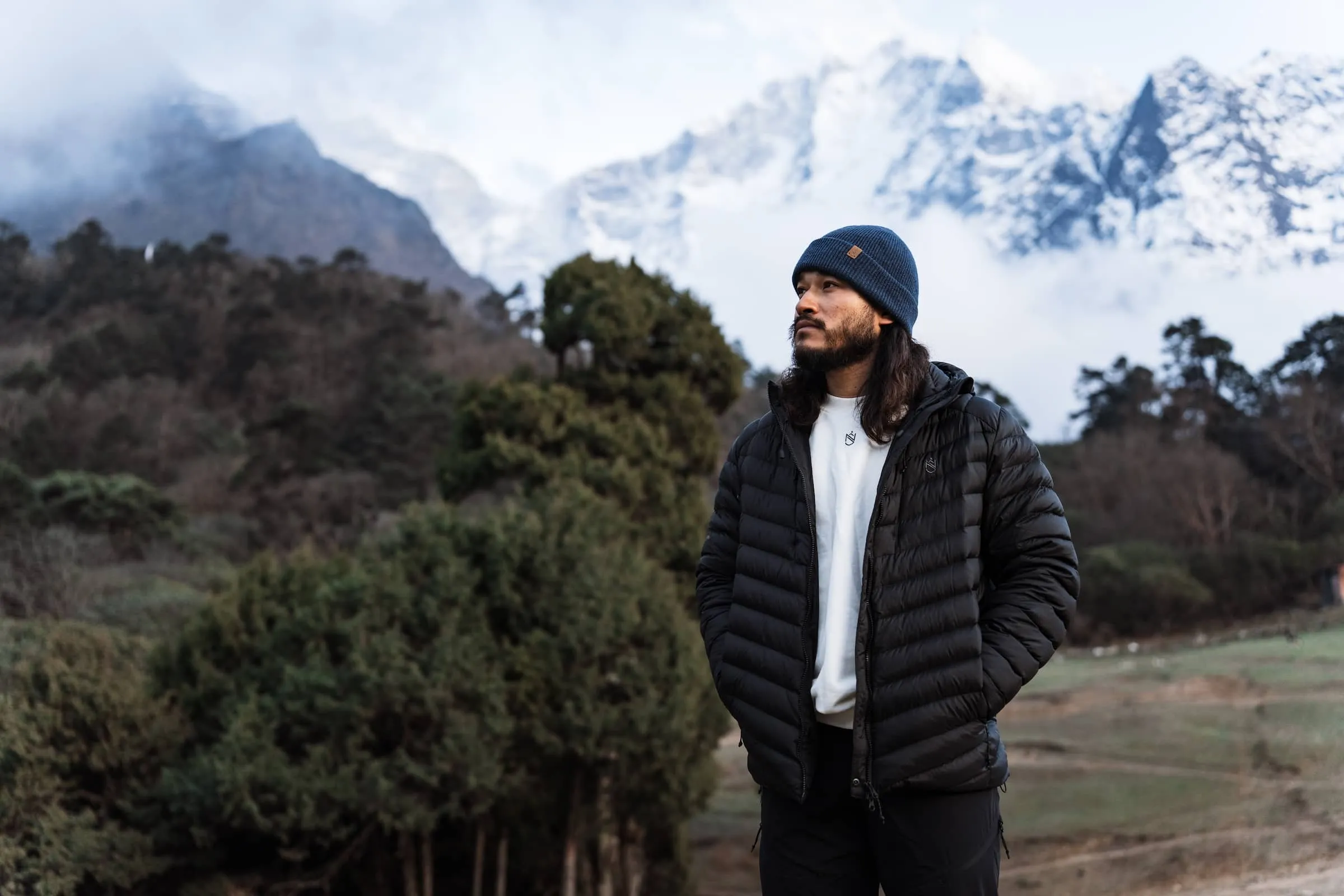
A closer look at the redesigned Vertex jacket, from 800-fill goose down to recycled ripstop nylon and practical cold-weather details.
Carrying the name of the late Nirmal “Nimsdai” Purja, one of modern mountaineering’s most recognisable figures, this Vertex jacket is best judged on practical mountain terms: warmth, low weight, wind resistance and useful cold-weather detail.
Cold-weather kit has a way of revealing its worth quickly. A jacket can look capable enough in calm conditions, but the real judgement comes when the temperature drops, the wind rises and the day begins to demand more from every layer.
The redesigned Nimsdai Vertex jacket arrives with a name that carries particular weight. Purja’s achievements made him one of the defining figures of modern high-altitude mountaineering, and his death on Broad Peak gives any reference to that legacy added sensitivity. The jacket itself makes a quieter case: lightweight warmth, wind resistance and practical detail for cold mountain days.
The Vertex is not best understood as a piece of expedition mythology. It is better viewed as a focused technical down layer: warm, relatively light, packable and detailed for cold mountain days where practical performance matters.
Warmth Without Unnecessary Bulk
At the heart of the Vertex is responsibly sourced 800-fill-power 90/10 hydrophobic goose down. High-quality down remains one of the most effective ways to deliver serious warmth without excessive weight, and this specification immediately places the jacket in capable cold-weather territory.
At a listed 530g in a men’s medium, the Vertex sits in a useful space for mountain walkers, hikers, travellers and climbers who need dependable insulation without giving over too much pack space to one layer.
The hydrophobic treatment is important, too. It gives the down a degree of reassurance in damp or changeable conditions, though it should not be mistaken for waterproofing. Down still needs to be looked after, and no insulated jacket of this type should be treated as a substitute for a proper shell. Used sensibly, however, the Vertex looks better prepared than an untreated down jacket for the cold, windy and occasionally damp weather that often defines mountain days.
Wind Resistance Is More Than A Supporting Detail
The fabric construction strengthens the jacket’s case. Both the outer and inner fabrics use 100% recycled ripstop nylon, while the outer is treated with a PFAS-free DWR. The jacket is also described as windproof, which may prove just as valuable as its water resistance.
Cold wind can quickly expose weaknesses in an insulation layer. A windproof outer gives the down a better chance to do its job: holding warmth close to the body when conditions become uncomfortable.
This combination of recycled nylon, DWR treatment and wind resistance gives the Vertex a modern material profile while keeping its role clear. It is an insulated mountain layer with useful weather resistance, not a full waterproof shell.
Practical Details For Real Mountain Use
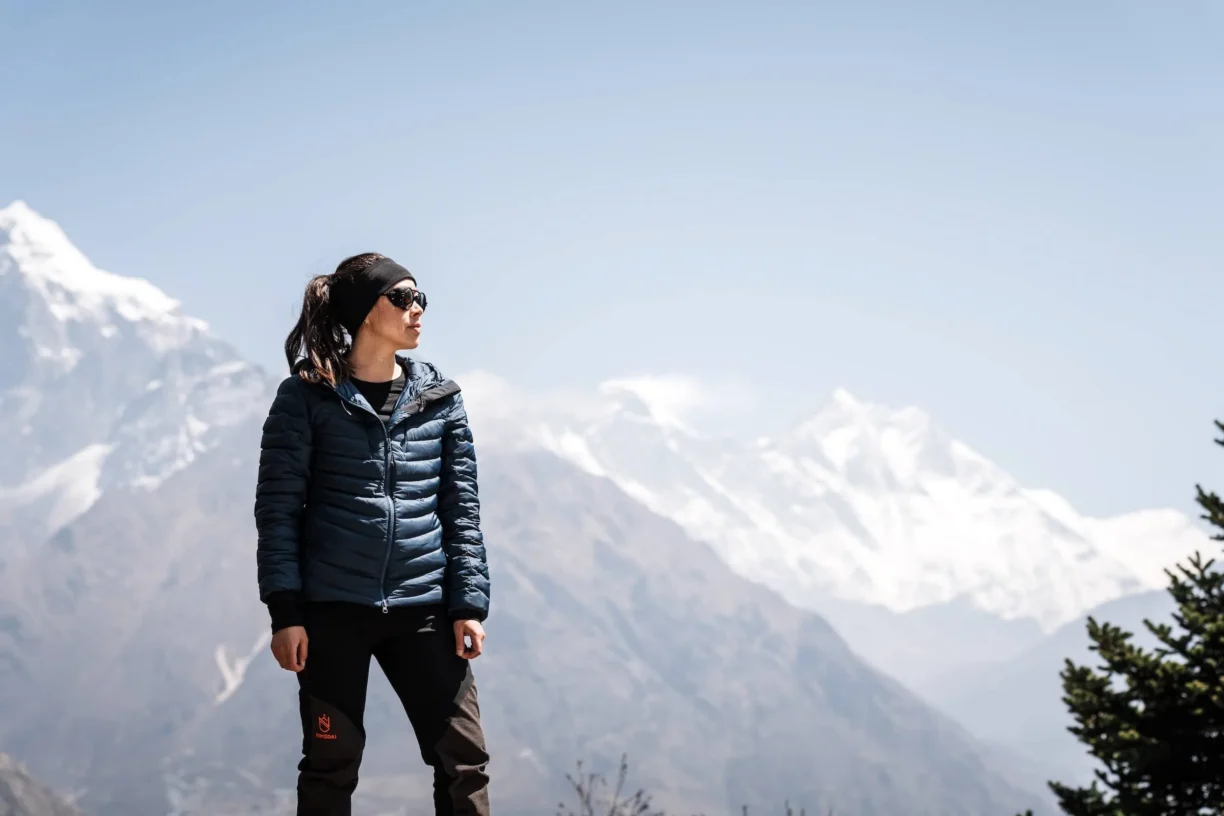
The most convincing elements of the Vertex are not especially loud. They are the small details that tend to matter most once the weather turns.
The adjustable hood includes a wired peak, giving it shape and structure in poor conditions. A two-way YKK centre-front zip should be useful for anyone wearing a harness or managing heat on the move.
Glove-friendly zip pulls are a simple but meaningful addition, especially when cold hands make small tasks more difficult than they ought to be.
Wide elasticated cuffs and a two-point adjustable hem drawcord help control heat loss, while the pocket layout is generous. The Vertex includes two zipped chest pockets, two zipped hand pockets, a deep internal zipped pocket and an internal drop-in welt pocket with popper closure.
That gives it enough storage for the familiar essentials of a cold day outside: gloves, phone, snacks, keys and the smaller items that are better kept close than buried deep in a pack.
Packability Makes It Easier To Carry
The Vertex packs into its internal pocket, which makes it more versatile as a carried insulation layer. That matters for stop-start days, cold rest breaks, exposed ridgelines, early starts and travel where conditions can shift across a few hours.
It can be pulled on quickly when the temperature drops, worn over a base layer in cold dry conditions, or kept in the pack until wind and temperature make it necessary.
This is where the Vertex seems most at home: not as a single answer to every mountain scenario, but as a capable part of a considered layering system.
The Right Jacket For The Right Objective
The distinction is important. The Vertex reads as a lightweight technical down jacket rather than a full expedition parka. It is not described as an 8,000-metre jacket, a down suit or a substitute for a waterproof shell. The available details also do not confirm helmet compatibility or how the jacket fits over multiple climbing layers.
Those points matter for serious climbing objectives. Anyone buying for a guided expedition, severe winter route or high-altitude climb should check the operator’s kit requirements carefully. If a guide service specifies a full down suit or expedition parka, the Vertex should be treated as part of a wider layering system unless confirmed otherwise.
For cold-weather hiking, mountain walking, approaches, travel and climbing use in suitable conditions, it makes a stronger and more realistic case.
A More Modern Material Story
There is also a sustainability angle, handled through the materials rather than grand claims. Recycled ripstop nylon, PFAS-free DWR and responsibly sourced hydrophobic goose down all give the Vertex a more contemporary footing.
The available information does not support wider claims about repairability, circular design or long-term product lifespan, so those should not be assumed. But the material choices do form part of the jacket’s appeal, particularly for buyers who want technical performance without ignoring the direction outdoor clothing has had to move in.
The Nimsdai Vertex is most persuasive when judged with clarity. It carries a serious name, but its value lies in practical execution: lightweight warmth, packability, wind resistance and details that make sense in cold mountain conditions. It is not a sole line of defence for major upper-mountain expeditions.
For cold, windy days where warmth and weight need to be balanced carefully, it looks like a capable and respectful continuation of a mountain-focused idea.