With discounts of up to 60% advertised across the Nimsdai Black Friday sale, outdoor enthusiasts have everything from everyday walking layers to specialist expedition equipment to consider. The trick is knowing which pieces genuinely belong in your wardrobe.
Outdoor clothing has a remarkable talent for solving problems you may never encounter. A jacket designed for serious mountaineering can look irresistible on a product page, right up until you remember that your next adventure is a damp Sunday walk rather than a confrontation with the upper Himalayas.
The Nimsdai Black Friday sale, scheduled for 7–30 November, brings that distinction into focus. The brand is advertising reductions of up to 60% across its store, covering everything from lightweight baselayers and trekking trousers to specialist equipment developed for extreme altitude.
Named after mountaineer Nimsdai Purja, the clothing range draws on experience in demanding mountain environments. Some of that technical thinking translates comfortably to ordinary outdoor activities. Other elements are intended for conditions so severe that most walkers will never have reason to encounter them.
For anyone preparing to spend more time outdoors during the colder months, the useful question is which features will make a noticeable difference on the walks they actually take.
The Jacket Decision: Warmth or Weather Protection?
Few outdoor clothing mistakes are quite as disappointing as discovering that an expensive insulated jacket is not particularly good at keeping out persistent rain.
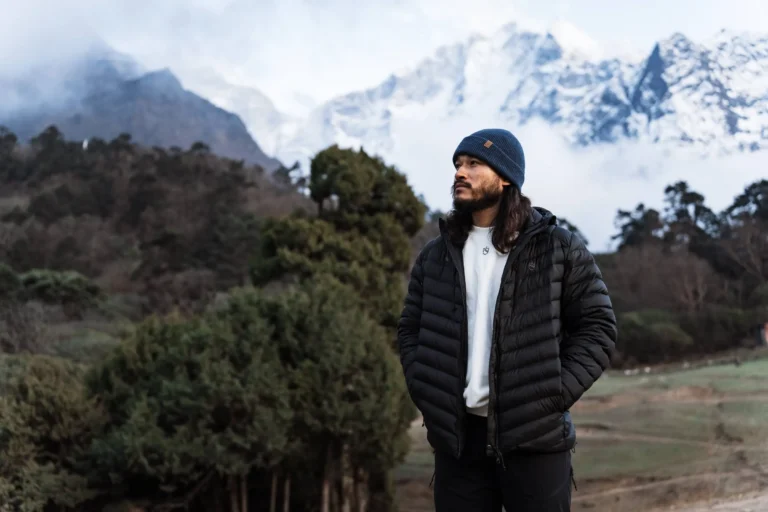
Nimsdai’s Vertex Down Jacket is built primarily around warmth. Its insulation uses responsibly sourced 800-fill-power, 90/10 hydrophobic goose down, housed within a recycled ripstop nylon outer fabric with a PFAS-free durable water-repellent finish.
The men’s medium is listed at 530g, while a separate weight is not provided for the women’s version.
An adjustable hood with a wired peak, glove-friendly zip pulls, a two-way front zip and multiple pockets give the Vertex a practical specification. It also packs into an internal pocket, making it an interesting option for carrying additional insulation.
For cold stops on a winter walk, or periods when physical activity no longer generates enough warmth, that combination has a clear purpose.
However, water-repellent treatment should not be confused with full waterproof protection. Hydrophobic down and a treated outer fabric can help manage moisture, but neither turns an insulated jacket into a dedicated rain shell.
That is where the K2 Winter Waterproof Jacket enters the picture.
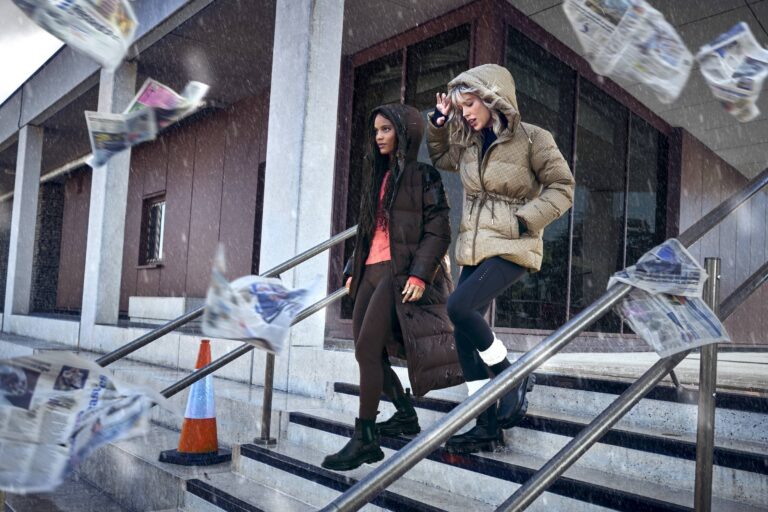
Its three-layer GORE-TEX PRO construction is designed to provide waterproof, windproof and breathable protection. Nimsdai positions it for demanding mountaineering, Scottish winter conditions and skiing.
Adjustable cuffs and waist, reflective detailing and multiple pockets are accompanied by RECCO technology, which can help appropriately equipped rescue services locate someone during an emergency.
The K2 has a close-fitting design, with the brand recommending that buyers size up for a regular fit. Anyone intending to wear a substantial fleece or insulated layer underneath should pay particular attention to that guidance.
Neither jacket automatically makes the other redundant. They answer different questions: how to stay warm, and how to stay protected when the weather turns unpleasant.
The Layers That Make Walking More Comfortable
A waterproof shell attracts most of the attention, but the layers underneath often determine how comfortable a long walk feels.
The Grid Crew Baselayer is among the more accessible pieces in the Nimsdai collection.
Made from recycled polyester with added Spandex, it is designed to move perspiration away from the skin and dry quickly. Raglan sleeves allow additional shoulder movement, while flatlocked seams aim to minimise rubbing.
There are integrated thumb loops, too. They might not sound particularly exciting, but keeping sleeves in place while adding another layer is exactly the sort of small convenience that becomes noticeable outdoors.
For greater insulation, the women’s Sherpa Trek Full Zip Fleece offers a different solution.
Its recycled polyester construction is intended to retain warmth while allowing moisture to escape. A recycled ripstop nylon shoulder yoke adds reinforcement, and the garment includes a two-way YKK zip, flatlocked seams and three zipped pockets.
The absence of a hood is arguably an advantage when layering beneath another jacket. One hood is useful. Several stacked behind your head can begin to resemble an architectural error.
Together, these garments illustrate a more practical approach to dressing for variable conditions. A baselayer helps manage moisture, a fleece provides additional insulation, and an appropriate outer garment deals with the weather.
Neither the Grid Crew nor the Sherpa Trek is intended to stand in for waterproof protection during prolonged rain.
Choosing Trousers for the Ground Beneath Your Feet
Trekking trousers rarely receive the attention lavished on jackets, although they can make an equally significant difference to comfort and movement.
The question is how much technical construction the activity requires.
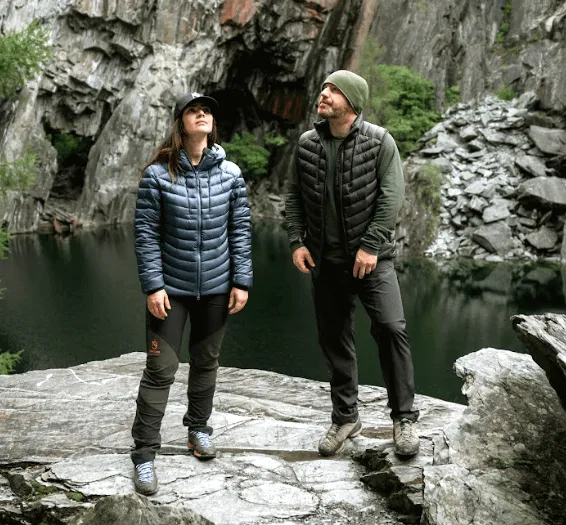
Nimsdai’s Baltoro Trousers are positioned towards more demanding trekking and mountaineering.
Their four-way stretch Nylon Thermolite softshell fabric is designed to provide wind resistance, while a durable water-repellent finish offers protection against lighter moisture.
A brushed inner surface aims to improve comfort, and reinforced Kevlar and nylon knee panels provide additional abrasion resistance. Adjustable waist and hem details, zipped pockets, silicone grippers and reflective elements complete the specification.
There are men’s and women’s versions, with high-altitude approaches among the intended uses.
For less technical walking, the Trekking Trouser may be the more straightforward choice.
Made using breathable 70D nylon with four-way stretch, it is designed to resist light rain and wind. Its regular fit, five pockets, integrated waistbelt and zipped hems provide useful everyday hiking functionality.
The lighter construction may appeal to walkers who spend most of their time on established paths rather than scrambling across abrasive rock.
There is little reason to pay for reinforced mountaineering features simply because they sound reassuring. Equally, somebody regularly encountering rough ground may find those details worthwhile.
The best choice depends on terrain, conditions and personal fit. A technical specification cannot settle all three.
From Handy Storage to Serious Expedition Equipment
The breadth of the Nimsdai range becomes particularly apparent when considering two products with very different intended audiences.
The Pramukh Chest Rig uses CORDURA performance fabric, adjustable straps, modular webbing and a laser-cut MOLLE panel to help organise smaller belongings.
An included strap also allows it to function as a cross-body bag.
For walkers who want ready access to essentials without repeatedly opening a rucksack, the concept has some practical appeal. How useful it proves will depend on what needs carrying and personal preferences about weight distribution.
The Summit Suit V2, meanwhile, operates in an entirely different world.
Developed for extreme high-altitude mountaineering, its design draws on challenges encountered during the 2021 K2 winter first ascent.
The suit incorporates 850-fill-power hydrophobic goose down and highly weather-resistant fabric. An off-centre zip is intended to accommodate oxygen systems, while glove-friendly fastenings and a hands-free seat arrangement address the difficulties of managing basic tasks in extreme conditions.
An integrated watch window, identification tagging, reflective branding and RECCO technology add further specialist details.
It is fascinating equipment, but most outdoor enthusiasts will have little practical need for it.
There is considerable distance between appreciating mountain engineering and requiring it.
What the Black Friday Discount Cannot Tell You
The advertised saving is only one part of the buying decision.
Nimsdai’s offer of up to 60% off does not establish that every item will receive that reduction. Individual prices, available sizes and actual savings need checking when the sale runs from 7–30 November.
The same caution applies to technical specifications.
Recycled fabrics, hydrophobic down, reinforced panels and waterproof membranes are all meaningful design characteristics. They help explain what a garment is intended to do, but they are not independent proof of comfort, durability or performance in real conditions.
Without hands-on testing, those qualities cannot be established with confidence.
The smarter approach is to identify the weakness in an existing clothing system before looking at the discount. Someone whose trousers restrict movement has a different purchasing priority from a walker who is regularly caught in heavy rain.
And if the existing equipment already does the job comfortably, a reduction on something more technical is not necessarily a reason to replace it.
The Summit Suit V2 may be the most extraordinary item in the collection. For the majority of walkers, however, a well-chosen baselayer, comfortable trousers or suitable jacket is far more likely to prove its value.
The mountains may inspire the engineering. Ordinary miles are where most of us find out whether our clothing was a sensible purchase.