An English football supporter walks into an NFL game at Tottenham expecting a different code of football. What surprises him is not the tackling, tactics or scale, but what happens between the action.
I grew up on English football. I grew up on flow.
The ball moves. The crowd moves with it. A song starts in one corner of the terrace and travels around the home end of the ground until thousands more are singing the same thing, and nobody organised it, and nobody needed to. The match lasts ninety minutes plus added time and halftime, and the ball is in play for far more of it than in any American sport. You go to a game and you watch a game.
I remember taking my son to a match when he was maybe nine or ten. Out of nowhere, the fans around us created a song. It was deliberate and it was rude, and within seconds everyone was singing it.
My son looked at me and said, “Can I sing that song, Dad?”
The other season ticket holders around me looked at me too.
“Yes,” I said. “But not the swear words.”
Nobody had organised it. Everybody joined in.
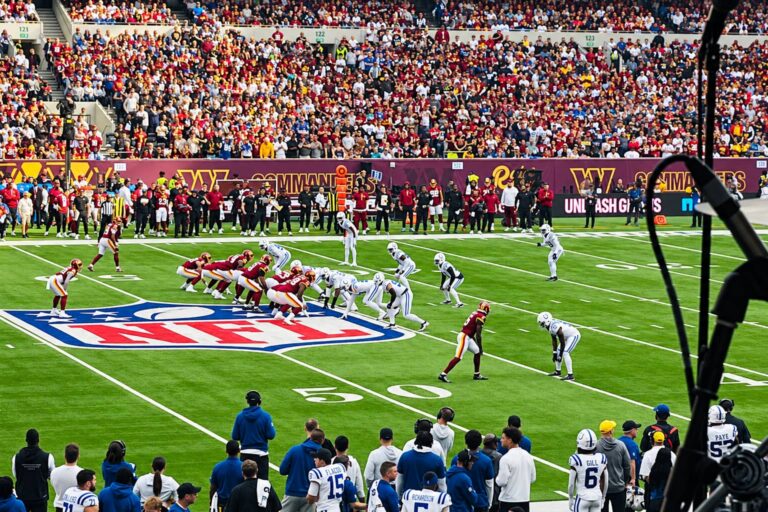
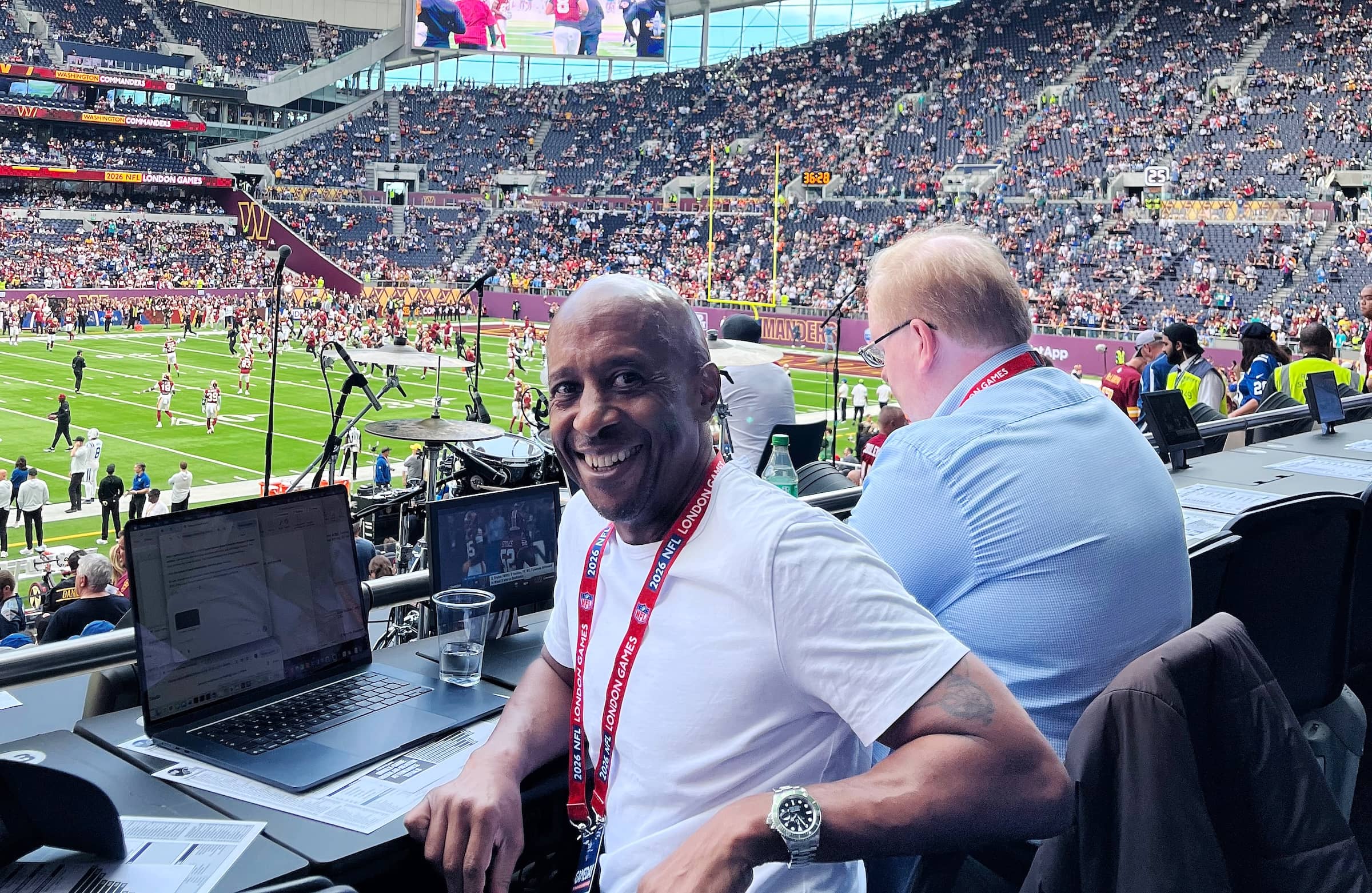
Due to a last-minute cancellation, I was invited to cover the Colts vs Commanders game at Tottenham. I knew nothing about American football, but the editor said, “I know you’ll have something to say.”
He was right.
I thought I knew what a big match feels like.
I did not.
The first thing that struck me was the stopping. Every play ends, and then everything stops. The players walk back to their huddles. The clock stops. The referees confer. The commercials play on the giant screen. The crowd sits down. Then, eventually, the ball is snapped again, and something happens for four or five seconds, and then it all stops again.
I timed it, because I could not believe what I was experiencing. Over the course of more than three hours, I witnessed roughly nine minutes of actual live ball-in-play action. Nine minutes. The rest was huddles, replays, penalties, timeouts, ad breaks, and a band that came back on after what seemed like only ten minutes of play. It was nuts.
I had read somewhere that the average NFL broadcast lasts three hours but the clock runs for only one. That is true. What I did not understand until I was there is what that actually feels like. It feels like waiting. It feels like being sold something. It feels like the sport is not the main event—the sport is the thing that happens between the main events.
Then there was the food. Boxes upon boxes of it, being carried to the seats. At a football match you might get a bag of crisps, and now and then someone scoffing a pie. Here it was mac and cheese, chicken nuggets and coleslaw, in a box, for one person.
You do not eat like that at something you are watching closely. You eat like that at something you are waiting through.
And then there was the silence.
Not silence exactly. Noise, but the wrong kind. In English football, the crowd sings. It chants. It keeps a rhythm going for the full ninety minutes. The songs are not organised by anyone. They emerge. They belong to the supporters. They are the sound of participation. At this game there were endless announcements, pop music and video messages asking the fans to make some noise.
And the noise seemed to come only when the stadium told it to. A prompt appears on the screen: MAKE NOISE. The crowd screams for ten seconds. Then the play happens. Then the prompt disappears, and the crowd sits down again. There is no song. There is no rhythm. There is no continuous expression of anything. There is just a series of instructions followed by a series of reactions.
The difference is structural. You cannot sing for three hours if the thing you are watching stops every thirty seconds. The stop-and-start nature of American football does not allow for continuous fan culture. It allows for bursts. And bursts are not the same as the buzz of the moment.
There was something else I did not expect. Fans of both teams were scattered all through the stands, sitting side by side, chatting, swapping jokes. In English football that would be unthinkable. Home fans and away fans do not mingle, and neither side wants to. We are tribal.
The songs belong to the tribe.
That is the design, and I understand it. American football is a game of set pieces, of strategy, of coaches calling plays and players executing them. A Premier League player covers around ten kilometres in a match; here, most players barely run. It is chess with collisions. There is skill in it. There is drama in it. There is athleticism in it.
But it is not flow.
I left the stadium five hours after I arrived feeling like I had attended an event rather than watched a sport. The event was impressive. The production was excellent. The atmosphere was loud when it was supposed to be loud.
But I did not hear a single chant, or anyone sing a player’s name. No song for a nine-year-old to ask about.
The NFL is not bad. I just grew up on something different: a game that flows, a crowd that sings, ninety minutes of continuous action that asks you to be part of it rather than watch it.
I grew up on football.
And football, the real football, is still the most popular sport in the world for a reason. Roughly three and a half billion people follow it. Roughly two hundred and fifty million play it. You need a ball and a flat space. That is all.
The game does the rest.