Meta-Age rejects familiar wellness imagery for typography, participation and a 40-edition Library built around one question: who are you becoming?
It is not a wellness brand. It is not a longevity platform. It is not another healthy-ageing programme. Meta-Age is a cultural identity—and you can see why the moment you look at it.
I have spent enough of my working life around health, fitness and wellbeing publishing to understand the challenge of making these subjects engaging. At Sustain Health, we use photography, interviews, expert opinion and many of the familiar visual conventions of contemporary publishing. There is good reason for them. They work.
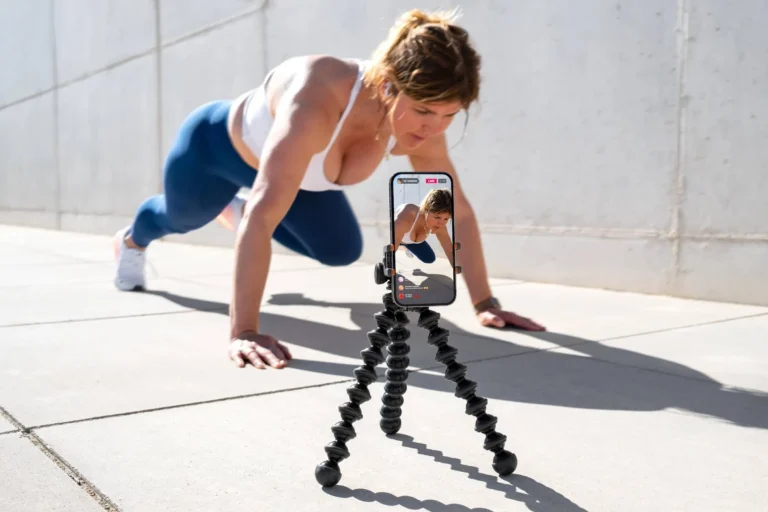
But familiarity has a consequence. Look across enough websites devoted to how we live and much of the visual language begins to merge. Fitness. Wellness. Longevity. Lifestyle. Smiling people on beaches. Couples cycling. Hands holding vegetables. Immaculate lives presented through immaculate photography. There is nothing inherently wrong with any of it. The difficulty is distinction. Remove the logo from many of these websites and their identity disappears with it.
Which is why Meta-Age caught my attention. Remove the META-AGE logo and its fingerprints remain everywhere. The typography. The Library. The language. The questions. The subjects it is prepared to confront. The people declaring I’M IN.
Meta-Age does not simply have a visual identity. It has a point of view.
Typography is the image
Modern websites have become increasingly dependent on photography to provide emotion and personality. Meta-Age does the opposite. It understands something publishing has always known: a letterform is an image.
Long before we consciously process a word, we encounter its shape. Scale, weight, contrast and geometry are already communicating something. Meta-Age exploits that relentlessly. I’M IN, stretched across the homepage, becomes a declaration.
SEX. IDENTITY. PARTICIPATION. GYM. LOVE. DIE. REBUILD. RIDE. The words are not captions added to imagery. The words are the imagery.
Across all 40 editions of the Meta-Age Library, the covers resist the obvious temptation to use people, bodies and lifestyle photography. Typography has to do the work. I cannot remember seeing another collection quite like it.
To build one cover differently is a design decision. To build 40 around the same conviction takes belief—and a certain amount of courage. The result is a visual grammar that can be elegant, confrontational, playful and occasionally uncomfortable. But rarely neutral. Meta-Age itself is not neutral.
The Library is the culture made visible
Look at the Meta-Age Library and something else becomes apparent. This is not a content strategy assembled around search terms.
Sex. Fitness. Retirement. Identity. Biohacking. Ageing. Art. Yoga. Movement. Skin. Habits. Participation. Menopause. Marriage. Dying. Mental health.
These are not simply subjects associated with ageing. They are the territory of a human life.
The Library is not a magazine. There is no need to invent another issue next month. It is a completed collection of 40 editions, each taking a different part of human life and looking beneath its familiar surface.
The editions do not give answers. They ask questions. Together, the 40 editions do not form a publishing schedule. They map the territory of a cultural identity.
That is why A Cultural Identity is a more accurate description of Meta-Age than wellness brand, longevity platform or healthy-ageing programme.
Meta-Age asks a more interesting question than what an older person should look like:
*Who are you becoming? *
Participation is the tribe
Much of the commercial conversation around how we live eventually arrives at ageing. And when it does, ageing is frequently presented as the problem. Then comes the solution: reverse it, slow it, optimise it, hide it.
Meta-Age starts somewhere else. Ageing is happening. How are you living while it happens?
That leads to the question underneath the philosophy: *Am I still participating in my own life? * And from that comes the principle: Participation Over Withdrawal.
Participation does not mean relentless activity or pretending to be 35 when you are 70. It can be physical, intellectual, emotional, creative or social. Learning something. Calling someone. Making something. Remaining curious. The activity is not the point. The participation is.
A Meta-Ager is not defined by when they were born. A Meta-Ager is defined by participation. The 28-year-old runner, 47-year-old Pilates devotee and 72-year-old cyclist can recognise the same cultural identity without pretending they are at the same stage of life.
Then comes the person
A philosophy can remain an abstraction. A cultural identity cannot. It needs people who recognise themselves within it.
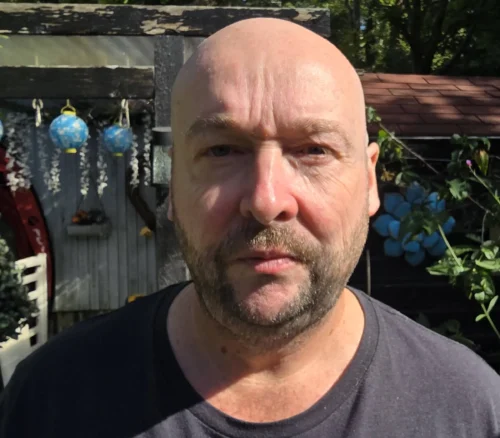
There is no prescribed age, body, wardrobe or fitness level for a Meta-Ager. On the Meta-Age homepage the question is simply: Meta-Ager?
I’M IN.
Then comes a real person.
It isn’t an instruction to join. It is an act of recognition:
That’s me.
The logo-swap test
Remove the Meta-Age logo. How much remains? Remove the typography. The Library. The questions. Participation Over Withdrawal. I’M IN.
Eventually there is very little left onto which another logo could be placed. Because the identity did not sit on top of the content. The identity produced the content.
You cannot manufacture provenance
A multinational health company can commission an immaculate brand system. It can employ a world-class agency, conduct research, develop personas and test every button. What it cannot commission retrospectively is provenance.
Meta-Age has provenance. Its visual language comes from publishing and typography. Its philosophy comes from lived observation. Its vocabulary developed because conventional language around how we live was not sufficient.
That does not mean every idea is correct or that the world will embrace it. But it does make Meta-Age authored. And authorship is extraordinarily difficult to manufacture.
From brand to culture
The real ambition is not simply for people to recognise the META-AGE logo. Something more interesting happens when the language begins to travel.
When someone says: “I’m a Meta-Ager.”
And another person understands what they mean.
That is when Meta-Age moves from communications into culture.
The ambition is not simply for people to know what Meta-Age is. It is for people to recognise what a Meta-Ager is. And ultimately, perhaps, to recognise it in themselves.
META-AGE. A Cultural Identity.