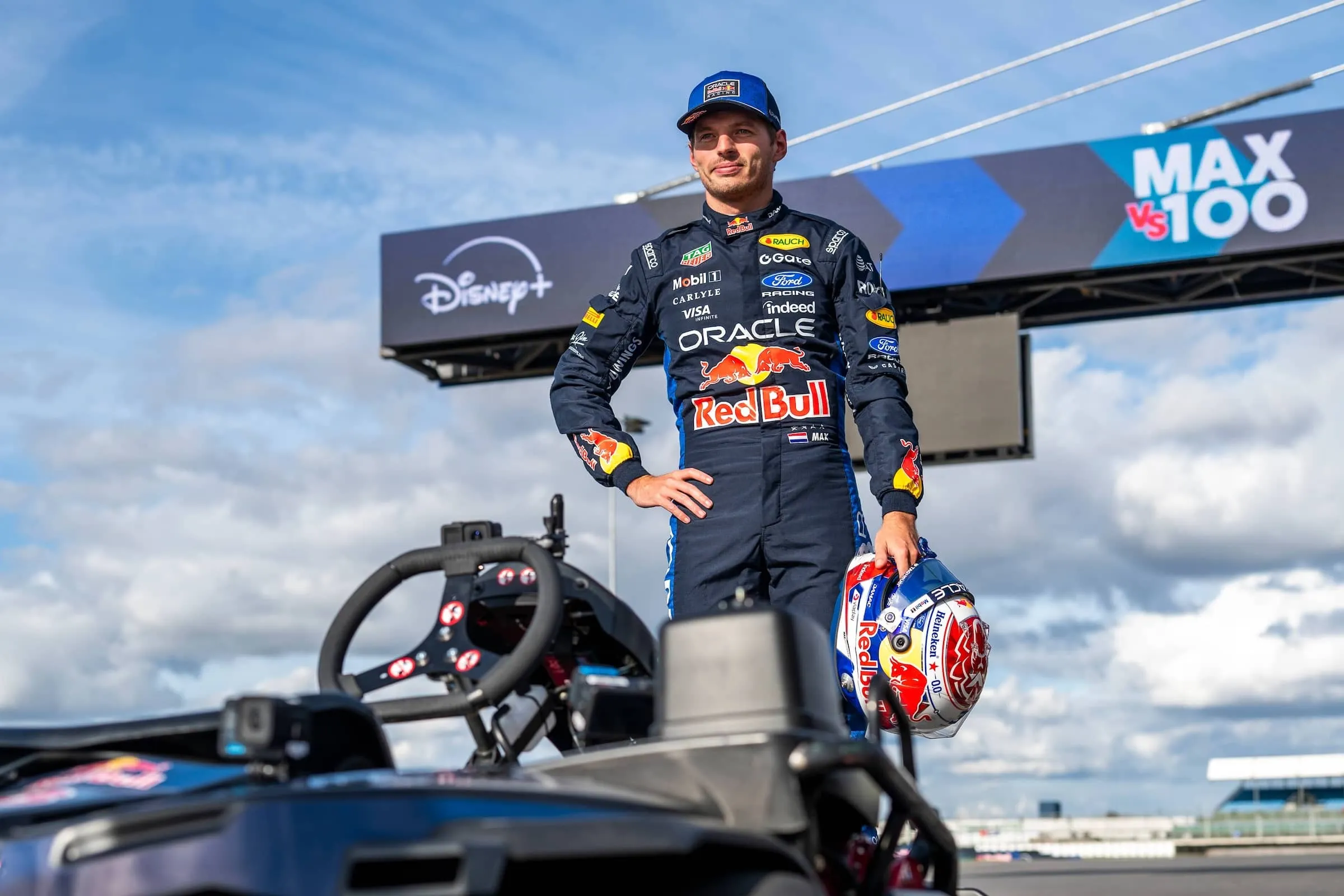
Max Verstappen passed 100 rivals in 35 minutes at Silverstone, winning Red Bull’s Max vs 100 on lap 14 after starting 101st.
One hundred karts stood between Max Verstappen and the front at Silverstone. Fourteen laps later, the four-time Formula 1 world champion had removed the lot.
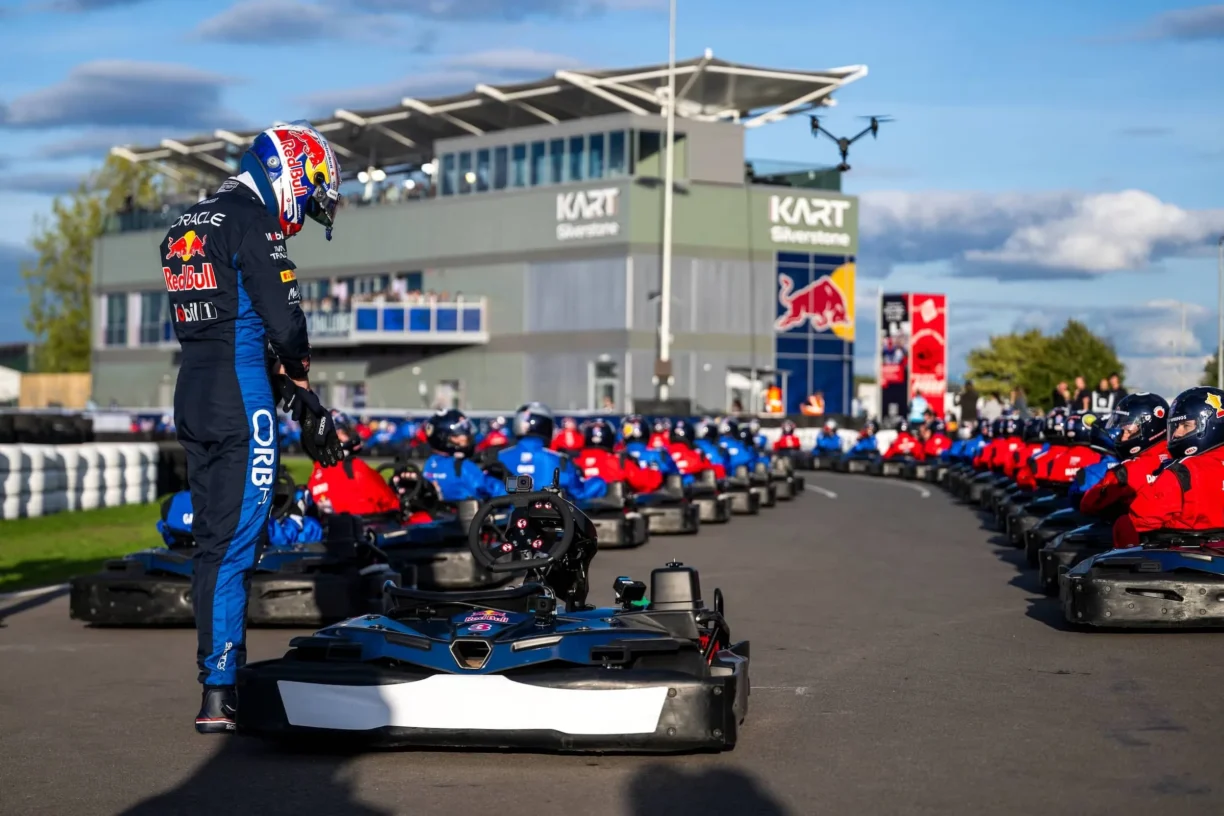
Starting 101st in a kart race is the sort of grid position that makes a shotgun start look orderly. Yet that was precisely where Max Verstappen found himself at Silverstone: 100 drivers ahead, 30 laps available and a wonderfully uncomplicated instruction — catch everybody.
He needed 35 minutes.
The Max Verstappen go-kart race, officially Red Bull’s Max vs 100, was not quite a conventional charge through a century of full overtakes. Under the rules, a rival was eliminated the moment the rear of Verstappen’s kart drew level with the front of theirs.
Still, that left him with 100 moving targets and rather a lot of traffic.
By lap 14, there was nobody left to catch.
The first lap wiped out more than half the field
The size of the grid was the spectacle, but it also gave Verstappen his first opportunity.
Two minutes after the start, he was already running 37th. Sixty-three drivers had been eliminated without completing a lap.
For a man who had looked down the grid beforehand and seen what amounted to a small motoring census in front of him, it was a useful change in perspective.
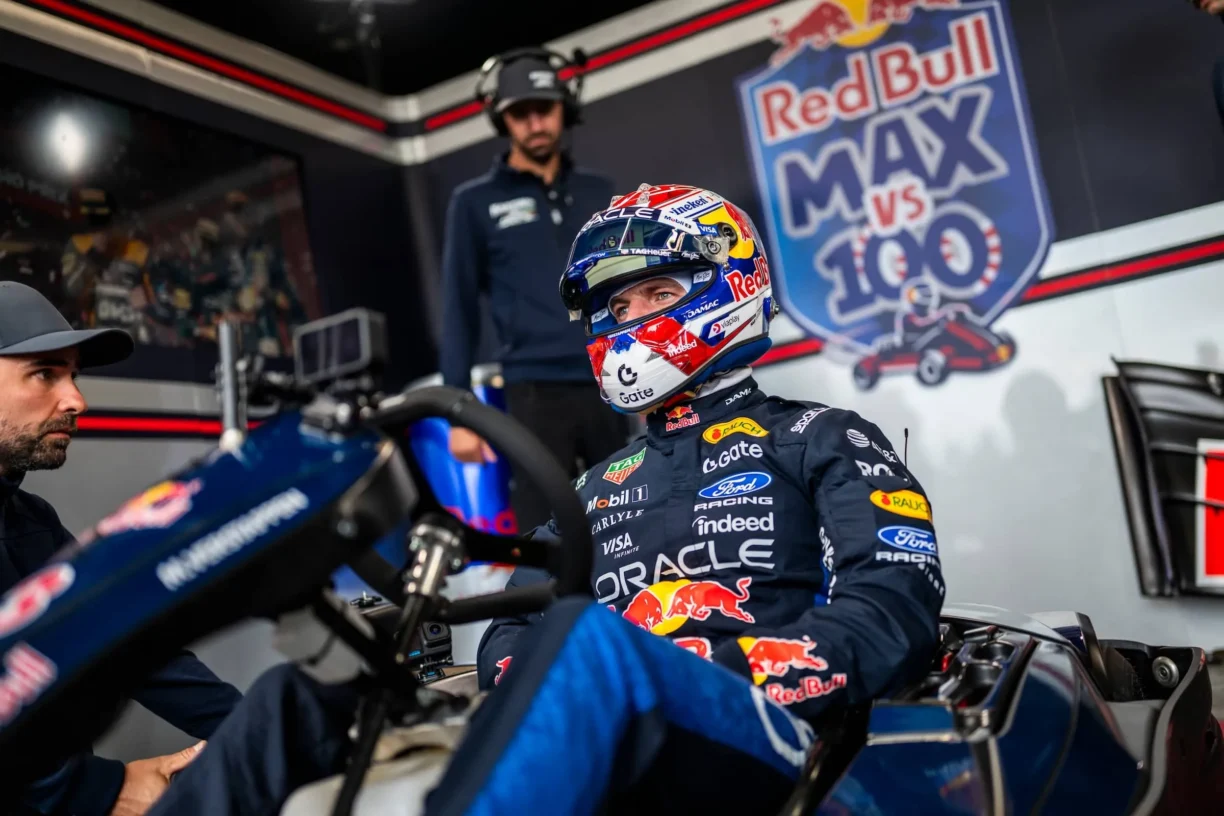
“When I went to the grid and I saw where I had to start, with 100 karts in front of me, I was a little bit worried,” Verstappen said. “After my first lap, with all the carnage, I did think, ‘Okay, we have got this under control!’ Once I started getting into a rhythm, was able to overtake them one-by-one and saw the gap closing, that was really exciting.”
Getting 63 of them out of the way was one thing. Catching the people at the front proved rather more interesting.
A 12-second lead began disappearing quickly
Pole-sitter Jacky Martens, YouTuber Zac Alsop and Red Bull Ford Powertrains technician Lewis Osler had used Verstappen’s early work in traffic to establish a lead of roughly 12 seconds.
Once the field thinned, the race changed character.
Instead of picking his way through packs of karts, Verstappen had clear ground over which to hunt the leaders. He began taking approximately three seconds a lap out of their advantage.
The stopwatch rather spoiled any hope of a surprise.
Verstappen recorded the fastest lap at 2m 20.673s. Martens, his quickest remaining rival, managed 2m 23.327s — more than 2.6 seconds slower.
Across the entire pursuit, Verstappen eliminated a driver every 21 seconds on average.
Two rivals disappeared in one corner
By the closing stages of the chase, the enormous grid had been reduced to a handful of stubborn survivors.
Alsop and Osler went together, Verstappen clearing both in the same corner. That left Martens, who had started from pole and had spent much of the event doing the sensible thing: getting as far away from Verstappen as possible.
It was not enough.
Verstappen caught Martens on lap 14 to complete the challenge, more than halfway before the scheduled 30-lap distance had been exhausted.
Martens therefore finished second, with Osler third — a respectable afternoon for a technician from Verstappen’s own operation. Alsop took fourth and off-road motorcyclist Pol Tarrés fifth.
Max vs 100 kept the idea deliberately simple
The broader field was an intentionally mixed collection of Red Bull athletes, content creators, streamers, journalists and fans chosen from around the world.
Race director and track designer David Terrien created a temporary Silverstone circuit capable of accommodating all 100 challengers at once, while BAFTA Award-winning comedian Mo Gilligan presented the event.
That scale mattered because Max vs 100 worked largely by resisting the urge to become complicated. There was one recognised champion, an absurd quantity of opposition and a rule anybody could understand without consulting a manual.
The event was streamed live on Disney+ and the ESPN App, and was made available to watch again on Disney+ globally and through the ESPN App for ESPN Unlimited subscribers in the United States.
Its most useful statistic, however, requires no explanation at all.
The job was set for 30 laps.
Verstappen needed 14.