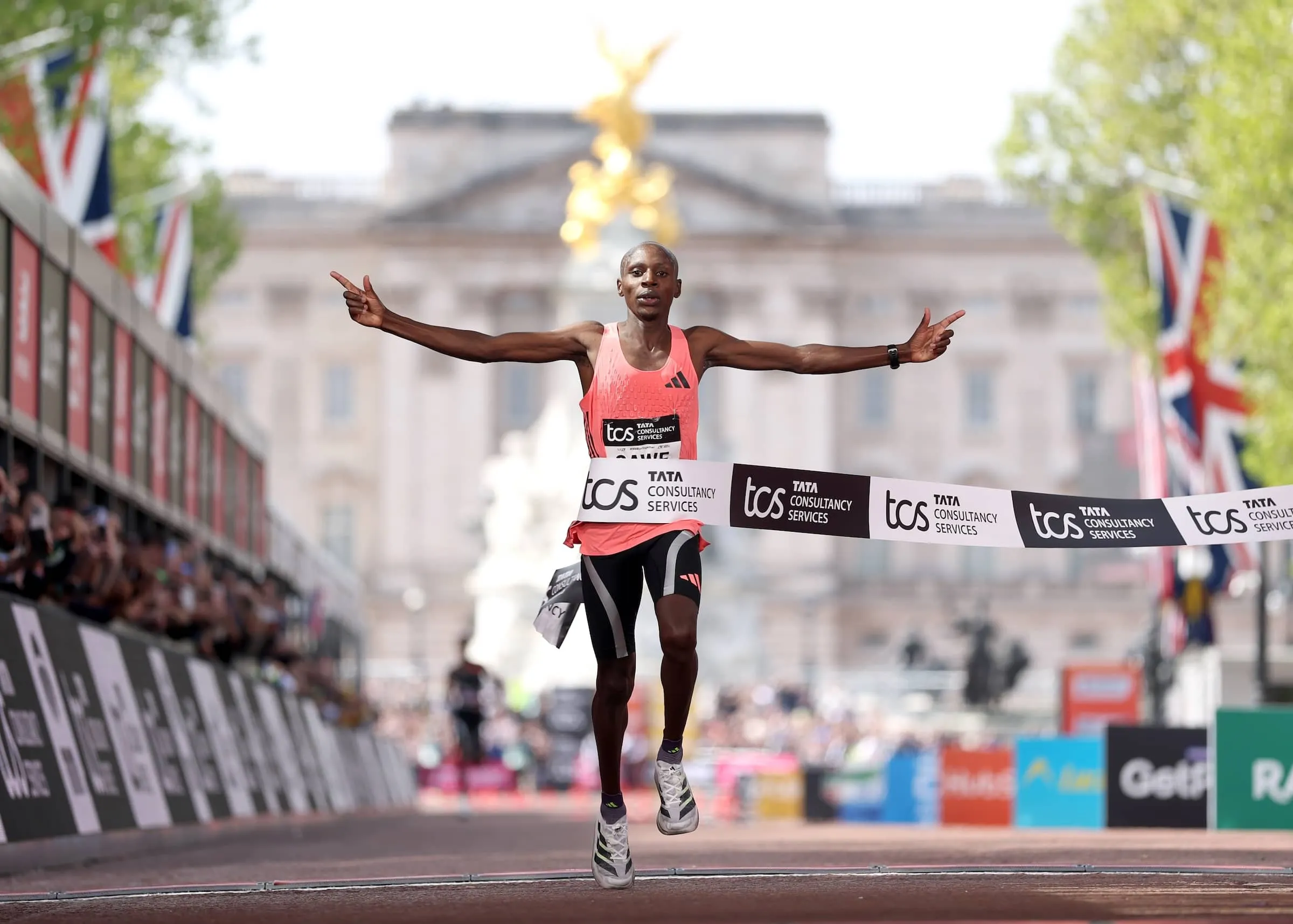
Sabastian Sawe, Yomif Kejelcha and Tigist Assefa rewrite London Marathon history in adidas’ latest Adizero supershoe.
The London Marathon has never been short of theatre, but this was less a race and more a controlled detonation of what we thought the human body could do over 26.2 miles.
On a day that will be spoken about in running circles with the same misty-eyed reverence golfers reserve for a Sunday back-nine collapse or miracle, adidas athletes Sabastian Sawe, Yomif Kejelcha and Tigist Assefa dragged marathon running into startling new territory.
Sawe broke the sub-two-hour marathon barrier in 1:59.30, setting a new world record. Kejelcha, making his debut over the distance, followed in 1:59.41. Assefa, meanwhile, produced a women-only world record of 2:15.41.
That is not so much raising the bar as picking it up, snapping it over one knee, and asking who brought the next one.
Sabastian Sawe Breaks The Barrier
For Kenyan-born Sabastian Sawe, this was the sort of performance that changes a career, a record book and possibly a few sports-science departments in one morning.
The sub-two-hour marathon has long sat in the imagination as running’s equivalent of landing a golf ball on a dinner plate from 240 yards in a gale. Possible, perhaps. Sensible, not particularly. Yet Sawe turned the London Marathon into his own personal laboratory and delivered the numbers everyone else will now chase.
Kenyan-born Sabastian said: “To break the world record is something I have dreamed about for a long time, and to achieve it means so much to me and to the sport of running. It reflects the hard work behind the scenes, the support of my team, and the role of innovation in helping me push beyond limits. I’m honoured to be part of a new chapter for the sport.”
There is the athlete’s answer: modest, polished and dignified. The performance itself was anything but modest. It was savage efficiency dressed in race kit.
Tigist Assefa Adds Her Own Piece Of History
If Sawe’s run rattled the windows, Tigist Assefa’s women-only world record made sure nobody left the building early.
The Ethiopian-born runner clocked 2:15.41, a time that underlined both her power and her precision. Marathon running is often described as a test of endurance, which is true in the same way the Atlantic is damp. At this level, it is endurance, mechanics, nutrition, nerve and the ability to suffer without looking as if the wheels are coming off.

Assefa made history with the composure of someone posting a letter.
Ethiopian-born Tigist said: “Breaking the world record has been in my mind for many years, and to finally do it is very special. It shows the work that happens every day, the strength of the team around me, and how everything comes together to go beyond what we thought was possible. I’m grateful to be part of this moment for the sport.”
Yomif Kejelcha Makes A Debut To Remember
Then there was Yomif Kejelcha, who ran 1:59.41 in his debut marathon.
A debut marathon is usually where runners learn harsh lessons about pacing, nutrition and the peculiar misery that arrives somewhere after mile 20. Kejelcha appeared to skip that introductory module and move straight to the advanced class.
To break two hours at the first attempt is not entering the marathon world politely. It is kicking the clubhouse door open and asking where the course record is kept.
The adidas Adizero Factor
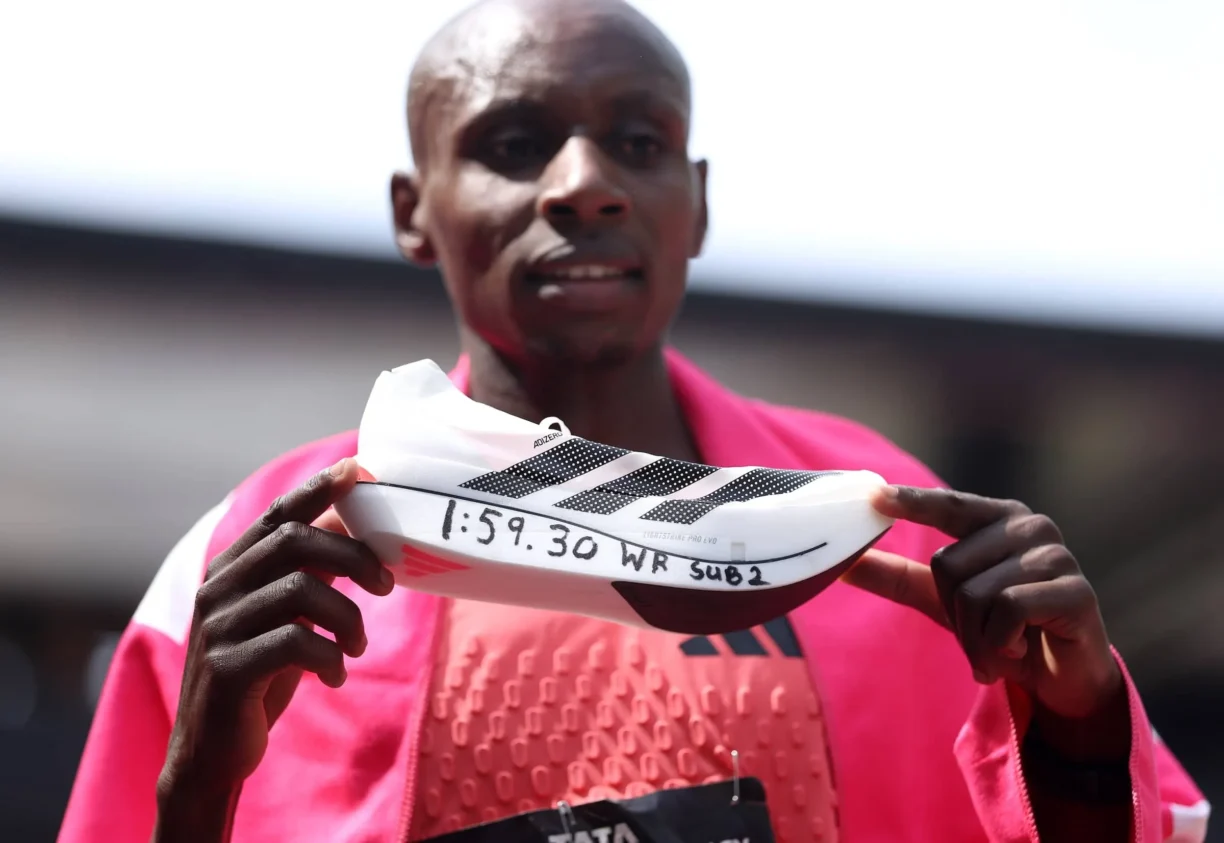
All three athletes wore the new adidas Adizero Adios Pro Evo 3, described by adidas as the fastest, lightest Adizero shoe ever made.
That detail matters because elite marathon running is now as much about the ecosystem around the athlete as the athlete alone. Shoes, kit, cooling, aerodynamics, training data and marginal gains all live in the same conversation.
The Adizero Adios Pro Evo 3 sits squarely in the supershoe age, where cushioning, weight reduction and propulsion are no longer marketing fluff tossed around like confetti. They are performance variables. At this level, a second is not a second. It is a lifetime with a stopwatch.
The adidas innovation team also worked with Sawe, Assefa and Kejelcha on race-day apparel, including the Techfit+ Endurance Shorts and Climacool+ Singlet worn by Sawe and Assefa, and the Techfit+ Endurance Suit worn by Kejelcha.
In plain English, the kit was built to help elite runners stay efficient, cool and unrestricted when the body is operating at a pace most of us would consider illegal on a treadmill.
What This Means For Marathon Running
The London Marathon has always been one of the sport’s great stages, but performances like this alter the conversation around what comes next.
Records used to fall with a creak. Now they seem to go with a bang.
This result lands at the meeting point of talent and technology. The athletes still do the suffering. They still log the miles, absorb the pain and carry the pressure. But innovation is now part of the chase, and adidas will understandably see this as a major validation of its Adizero project.
Patrick Nava, General Manager at adidas Running said: “The adidas family is incredibly proud of Sabastian and Tigist’s historic achievements, marking the fastest times humans have ever run in a marathon. This is a testament to the years of hard work and dedication they have made, alongside our innovation team, who have built a supershoe which breaks new ground in the Adizero Adios Pro Evo 3.”
A London Marathon Day Built For The Record Books
There are marathon victories, and then there are days that feel like a line drawn through history.
This London Marathon belonged to Sawe, Assefa, Kejelcha and the broader shift now reshaping elite distance running. It was a day of records, yes, but also a day of warning.
The next generation has just seen the door open wider. The athletes are faster, the shoes are sharper, and the margins are being hunted with forensic intent.
For everyone else, the London Marathon remains 26.2 miles of grit, noise and personal reckoning.
For this adidas trio, it became something else entirely: the day the impossible lost another argument.