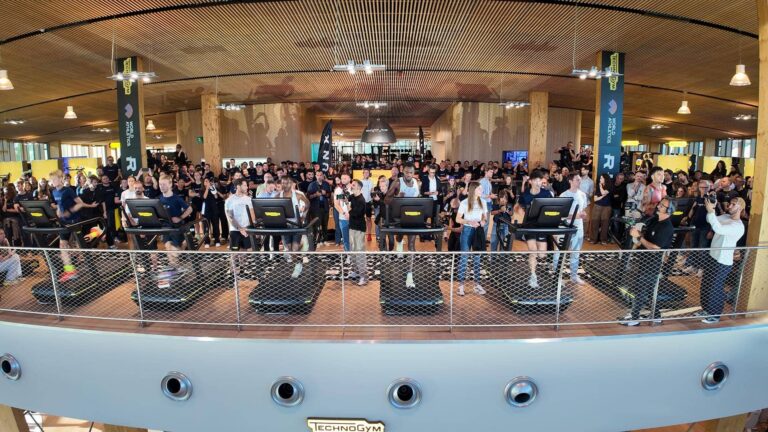
Lennox Lewis revisits Mexico City’s TRASO boxing gym after Gumball 3000, spotlighting Laureus Sport for Good’s youth programme.
Lennox Lewis was back in Mexico City yesterday, not for a belt, a purse or the sort of night where flashbulbs bounce off satin robes, but for something with rather more staying power: a return to the Transformación Social TRASO boxing gym, ten years after he first visited the Laureus-supported youth programme.
The former undisputed heavyweight champion had just completed the Gumball 3000 rally, which this year ran from Miami to Mexico City, arriving on the eve of the opening match of the World Cup. Quite the itinerary. Most men might want a lie-down, a quiet room and perhaps a sandwich not wrapped in adrenaline. Lewis, instead, went back to the gym.
And not just any gym.
TRASO is one of those places where sport stops being entertainment and starts earning its keep. Based in Mexico City, the programme uses boxing and structured activities to provide safe spaces, mentorship and personal development opportunities for vulnerable young people. Gloves, footwork and discipline are only part of the story. The real work happens somewhere between the jab, the listening ear and the moment a young person realises they are not being written off.
A Heavyweight Return With A Human Purpose
Lewis first visited TRASO in 2016, during his first year as a Laureus World Sports Academy Member. A decade later, his return carried the pleasing symmetry of a champion revisiting a corner that has kept working long after the crowd moved on.
The programme is supported by Laureus Sport for Good and delivered as part of Jugamos Juntas, a partnership between Nike and Laureus. Earlier this year, TRASO was shortlisted for the Sport for Good Award at the Laureus World Sports Awards in Madrid, which suggests this is not simply a well-meaning initiative with a nice mural and a few donated gloves. It is a serious, recognised piece of community work.
Lewis, who represented Laureus Sport for Good during Gumball 3000, arrived as the event’s charitable impact was again underlined. Since 2019, Laureus Sport for Good has been a charity partner of Gumball 3000, and this year the Gumball Foundation raised over $1million for good causes through the rally, including the project visited by Lewis and the Laureus team.
That money also has another destination close to the champion’s own story: the Lennox Lewis League of Champions Foundation, which provides boxing programmes for young people in Jamaica, with a focus on mentorship, life skills and the sort of boxing knowledge you would expect from one of the greatest heavyweights to lace them up.
Boxing Without The Bluster

Boxing is often sold with noise. Ring walks, staredowns, manufactured outrage, gentlemen in sunglasses indoors. But at grassroots level, it can be beautifully simple. Stand properly. Keep your hands up. Listen. Try again. Control yourself before someone else has to.
That is where TRASO appears to have found its rhythm. The ring becomes a classroom without the horrible chairs. The coach becomes a mentor. The bag takes the punishment that life might otherwise hand around indiscriminately.
Speaking at TRASO, Laureus Academy Member Lennox Lewis said: “It’s amazing to come back with Laureus and see how much this programme has expanded since my visit here in 2016. The energy and commitment of everyone involved is truly humbling to witness. What I love about TRASO is how they use boxing not just to build champions in the ring, but to give young people confidence and belief in their daily lives. When I meet these kids, I see determination, discipline and belief – all values that sit at the heart of Laureus Sport for Good and the same qualities that shaped my own journey.”
It is a line that lands because Lewis knows precisely what boxing can give beyond a scoreboard. His career was built on intelligence as much as power, composure as much as menace. He was never merely a heavyweight; he was a problem set in motion. That makes his endorsement of this kind of programme feel less ornamental and more earned.
Oscar De Marcos Joins Laureus In Mexico City
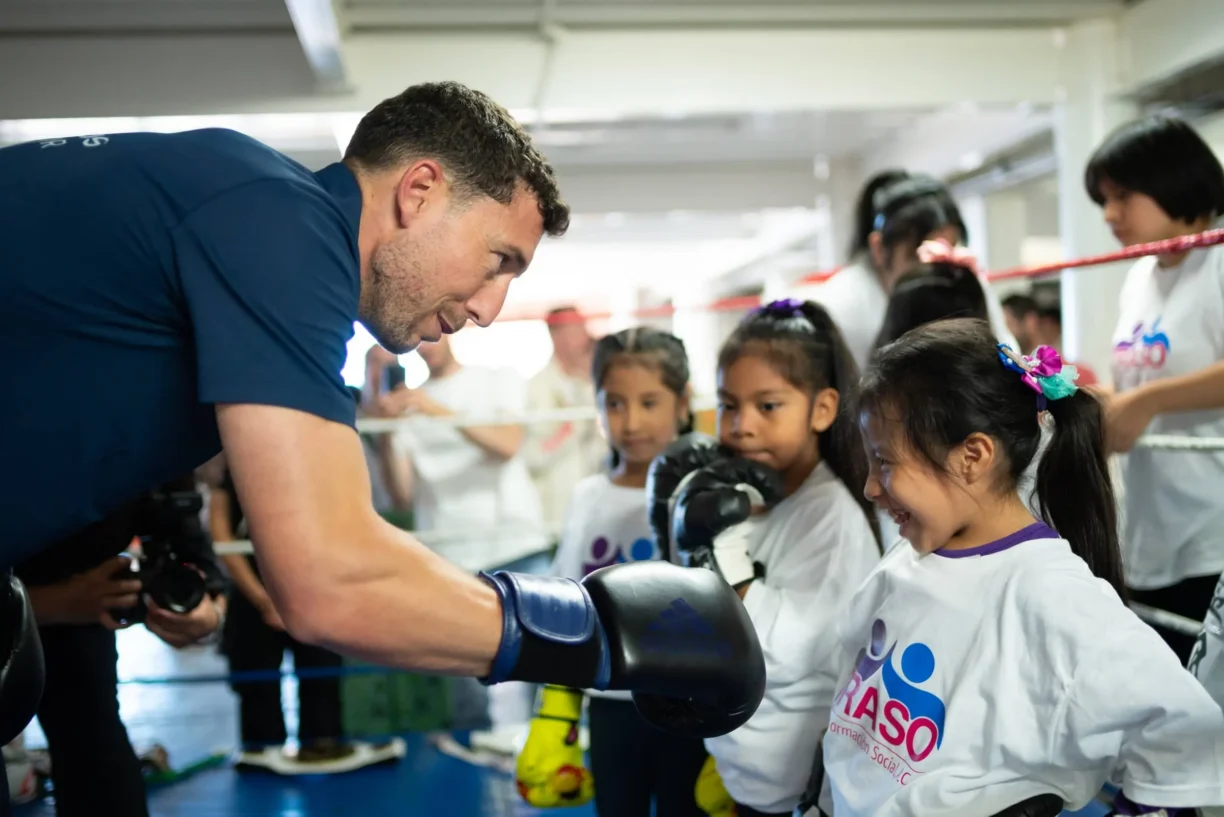
Lewis was joined on the visit by Athletic Club legend and new Laureus Ambassador Oscar de Marcos, along with Gumball 3000 founder and CEO Maximillion Cooper.
De Marcos arrives at Laureus with his own reputation for substance. After more than 500 games for Athletic Club, he was respected not only for his defending but for his commitment to the club’s responsibilities to its community. Defenders rarely get the poetry. They usually get the bruises, the bookings and a post-match ice bath that could preserve a salmon. But the best of them understand duty, which makes his new role with Laureus a natural fit.
His presence also created a neat echo. When Lewis visited the programme ten years earlier, he was joined by Spain’s 2010 World Cup winner Carles Puyol. This time, another Spanish football figure stood alongside him as World Cup attention began to swirl.
Laureus Ambassador Oscar de Marcos said: “It is a great honour to be here in Mexico City at such an inspirational programme. To see first-hand the impact that TRASO has on young people is incredible. Sport has the power to unite, to teach and to create opportunity, and I am excited to play my part with Laureus. The World Cup is about to capture the attention of the World and projects like this, supported by Laureus all over the world, remind us that sport has the power to bring real change to communities which are in desperate need of it.”
That last point matters. The World Cup will soon command attention by the tonne: flags, anthems, arguments about formation, and enough tactical analysis to make a whiteboard beg for mercy. Yet beneath the spectacle, sport’s quieter work continues in gyms like TRASO, where the stakes are less glamorous but often more profound.
Gumball 3000’s Charitable Engine
Gumball 3000 has always understood spectacle. It is a rally with celebrity wattage, long roads and the kind of automotive theatre that makes petrolheads go slightly misty-eyed. But its partnership with Laureus Sport for Good adds a useful counterweight to the glamour.
Maximillion Cooper, founder and CEO of Gumball 3000, said: “It is a privilege to continue our long partnership with Laureus Sport for Good and it’s always humbling to see the difference programmes such as TRASO can make in communities that need a focal point for their young people. To come here so soon after the end of another spectacular staging of Gumball 3000 reminds us why we do it – to empower partners such as Laureus Sport for Good, who know how to bring real change to communities.”
The point is not that rallies and boxing gyms are obvious companions. They are not. One is built on horsepower, celebrity and spectacle; the other on sweat, discipline and local trust. But when the former helps fund the latter, the combination begins to make a certain sense.
Why TRASO Matters
The enduring value of TRASO lies in its refusal to treat sport as a decorative extra. For vulnerable youth in Mexico City, the programme uses boxing as structure, not theatre. It gives young people somewhere to be, someone to listen to and something difficult to master.
That is a potent combination. The gym can be a refuge, but also a proving ground. It does not promise an easy route out. Boxing never does. It asks for repetition, humility and a healthy respect for consequences. In return, it offers confidence, discipline and belonging.
For Laureus Sport for Good, TRASO also fits a wider global model: sport as a practical tool for social change rather than a slogan stitched onto a banner. The partnership with Nike through Jugamos Juntas adds further weight, particularly in a city and region where opportunity, safety and mentorship can be life-shaping.
A Champion Back Where The Work Continues

There is something pleasingly unfussy about Lennox Lewis returning to this gym. Champions are often asked to look backwards: greatest fights, greatest rivals, greatest nights. But here the emphasis is forward-facing. Young people. Mentors. Programmes that grow. Communities that need more than applause.
Lewis’ presence brings visibility, certainly. His name still carries the clean thud of heavyweight authority. But the more interesting story is not celebrity turning up for a photograph. It is a former champion recognising that the habits that made him great — discipline, belief, patience and control — can still be useful in places far removed from the title-fight glare.
And that, in the end, is the charm of this Mexico City return. No belt changed hands. No arena shook. No judge needed a scorecard.
Just a boxing gym, a heavyweight champion, and a reminder that sometimes the most important victories are won long before anyone rings a bell.