ITRA confirms Women’s Trail Day 2027 after a global 2026 edition spanning five continents and more than 40 organisations.
ITRA has confirmed that Women’s Trail Day will return on Tuesday, 1 June 2027, after a second edition that stretched across five continents and pulled together more than 40 organisations in support of women’s participation in trail running.
The event, held between 30 May and 1 June 2026, was not one of those well-meaning sporting calendar entries that exist mostly as a hashtag and a logo. It had mud on its shoes. Across Hong Kong, the Philippines, Serbia, the United Kingdom, the United States, Brazil and beyond, local groups organised runs, gatherings, educational sessions and community events designed to get more women onto the trails — preferably with fewer barriers, fewer raised eyebrows and considerably more company.
Supported by Official Initiative Partner ANTA GUANJUN, the 2026 edition built on last year’s launch and gave ITRA a useful reminder of both progress and unfinished business. Women currently represent approximately 30.5% of ITRA’s global database, a figure that reads like encouragement with a firm nudge in the ribs.
A Global Trail Running Movement With Dirt Under Its Fingernails
Trail running has never been short of romance. Mountains, forests, ridgelines, the occasional questionable snack choice at altitude — it has all the raw material. But access, visibility and belonging are less scenic matters, and they tend to decide who feels welcome before the first climb has even begun.
That is where Women’s Trail Day is trying to make its mark. The 2026 edition mixed the practical with the symbolic: group runs, community gatherings, shared trail experiences and educational content aimed at making the sport feel less like a private club and more like an open gate.
In Portugal, the initiative included free entry to a trail race for women. Elsewhere, an educational webinar explored inclusion, representation and the lived experience of women in trail running. Those conversations matter. So does the simple act of turning up together, lacing up, and discovering that the trail does not care whether you are new, nervous, quick, slow, elite or merely trying not to trip over a root with an audience.
Janet Ng, President of ITRA, said: “Every step we take today is paving the way for someone tomorrow to believe she belongs in trail running too. That is the spirit of Women’s Trail Day: not simply a moment of celebration, but a commitment by ITRA to keep widening access, deepening belonging, and building a sport with inclusion at its heart. And we’re just getting started. Together, we can help more women discover, explore, and enjoy the trails.”
It is a polished line, certainly, but the sentiment is not ornamental. Trail running’s growth depends not merely on harder races, steeper profiles and increasingly heroic photography, but on whether more people can see a place for themselves in the sport.
Chamonix Gives Women’s Trail Day Its Flagship Moment
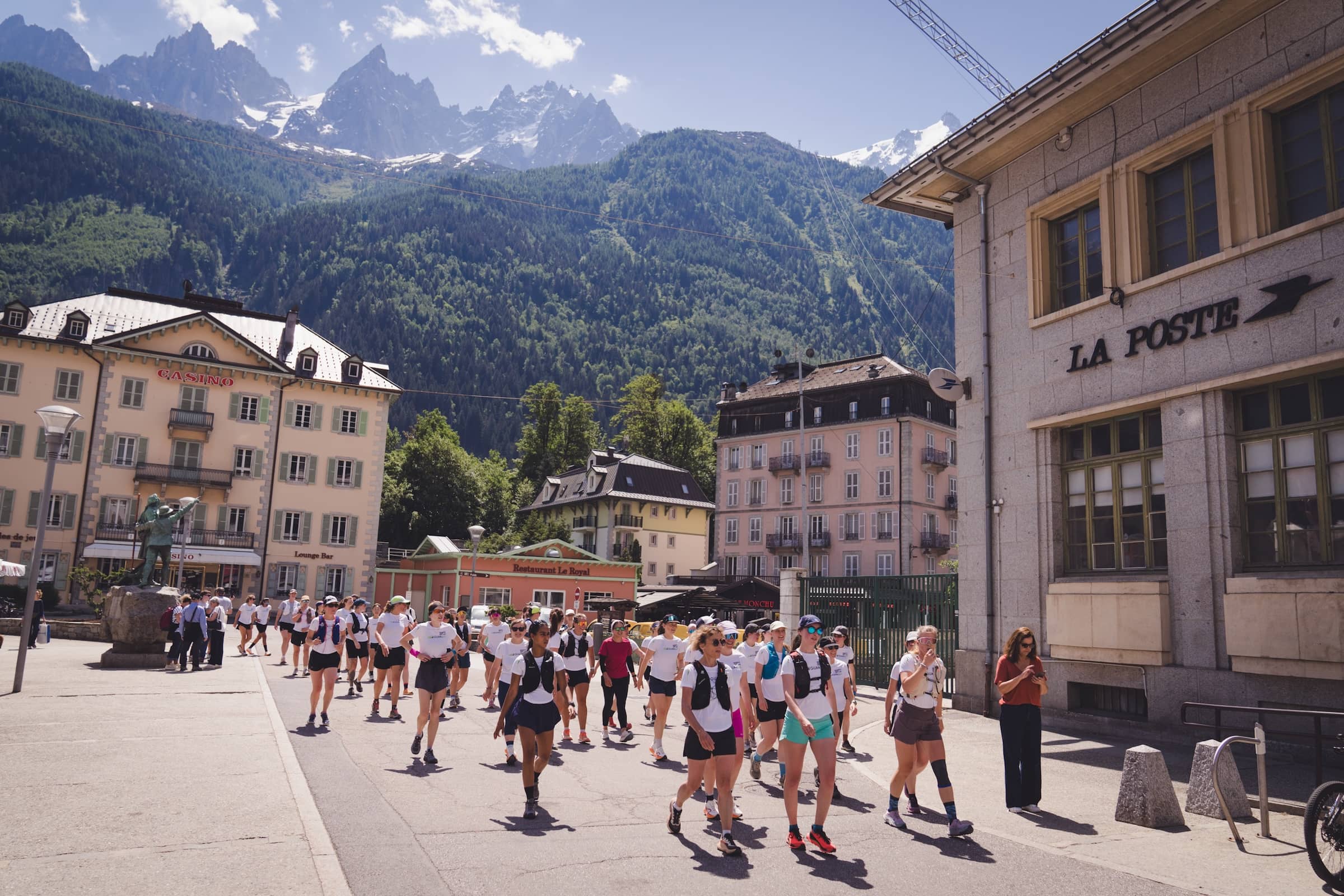
The flagship Women’s Trail Day gathering took place on Sunday, 31 May in Chamonix, France, co-organised by ITRA and Run the Alps. Chamonix is not short of mountain theatre. Even the coffee seems to arrive with a vertical gain profile.
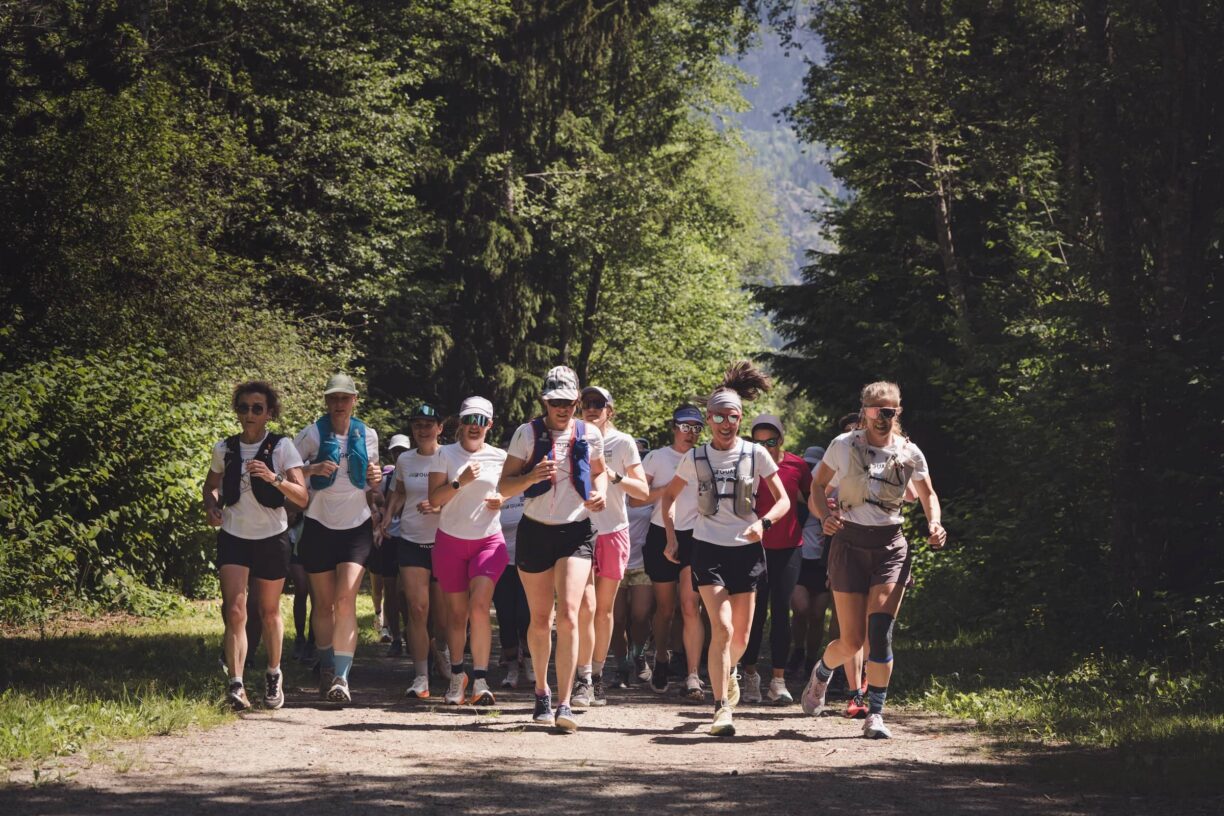
The gathering brought together women of different ages, backgrounds and experience levels for a relaxed 7–8 km social trail run, followed by a Q&A session at Big Mountain Basecamp. The pace was social, the setting was serious, and the point was refreshingly clear: representation is not a slogan when people can actually see it moving beside them on the trail.
The discussion in Chamonix focused on community, visibility and the importance of creating spaces where women feel supported rather than tolerated. That distinction is small only to people who have never had to think about it.
Stephanie Case, a Women’s Trail Day ambassador and guest speaker in Chamonix, reflected on the importance of example, ambition and future generations:
“Since becoming a mother, I am grateful for every minute I spend on the trails. I want to continue pursuing big adventures and ambitious goals so that I can show my daughter what women can achieve in the mountains and on the trails.”
There is the sharp edge of the whole thing. Women’s Trail Day is not simply about participation numbers, though those matter. It is also about imagination. Who gets to picture themselves in the mountains? Who sees possibility rather than permission? Who grows up believing the trail is somewhere they belong?
Not One Type Of Runner — And That Is The Point
For Run the Alps, the Chamonix event appears to have landed precisely because it avoided the usual trap of speaking only to the already converted. The gathering was not designed solely for the fast, the fearless or those whose kit drawer looks like a small specialist retailer.
Annabel Alfonso, Head of Marketing and Partnerships at Run the Alps, said:
“The thing that struck us this year was who showed up – not one type of runner, but a real mix of ages and experience levels, all running together. The energy during the run reflected it: inclusive, welcoming and genuinely excited to be there. Run the Alps is proud to support ITRA’s Women’s Trail Day and its work to get more women on the trails.”
That “real mix” matters. Sport can be wonderfully democratic once you are in it, and rather good at appearing impenetrable from the outside. Trail running, with its technical routes, race points, kit lists and occasional fondness for suffering presented as a lifestyle choice, is no exception.
Events like Women’s Trail Day work best when they lower the drawbridge without lowering the standard. The mountains remain the mountains. The effort remains the effort. But the welcome becomes louder.
Women’s Trail Day 2027 Confirmed For 1 June
Following the success of the 2026 edition, ITRA has confirmed that Women’s Trail Day 2027 will be marked on Tuesday, 1 June 2027, with community activations encouraged across the weekend of 29–30 May and through 1 June.
Races, associations, clubs and community leaders will be invited to register their 2027 activations, share local stories and create more entry points for women into trail running. That final phrase is the one to watch. Entry points are where sports either grow or quietly congratulate themselves into irrelevance.
The next edition gives the trail running community a clear date, but the better story is the one happening around it: local clubs taking ownership, race organisers making space, experienced runners becoming visible guides, and new runners discovering that the first step into the woods does not need to be taken alone.
Women’s Trail Day is still young, but its purpose is already plain enough. More women on the trails. More stories from the mountains. More doors held open.
And, with any luck, fewer people will mistake inclusion for a soft option. The trail is hard enough as it is; getting to the start should not be the steepest climb.