

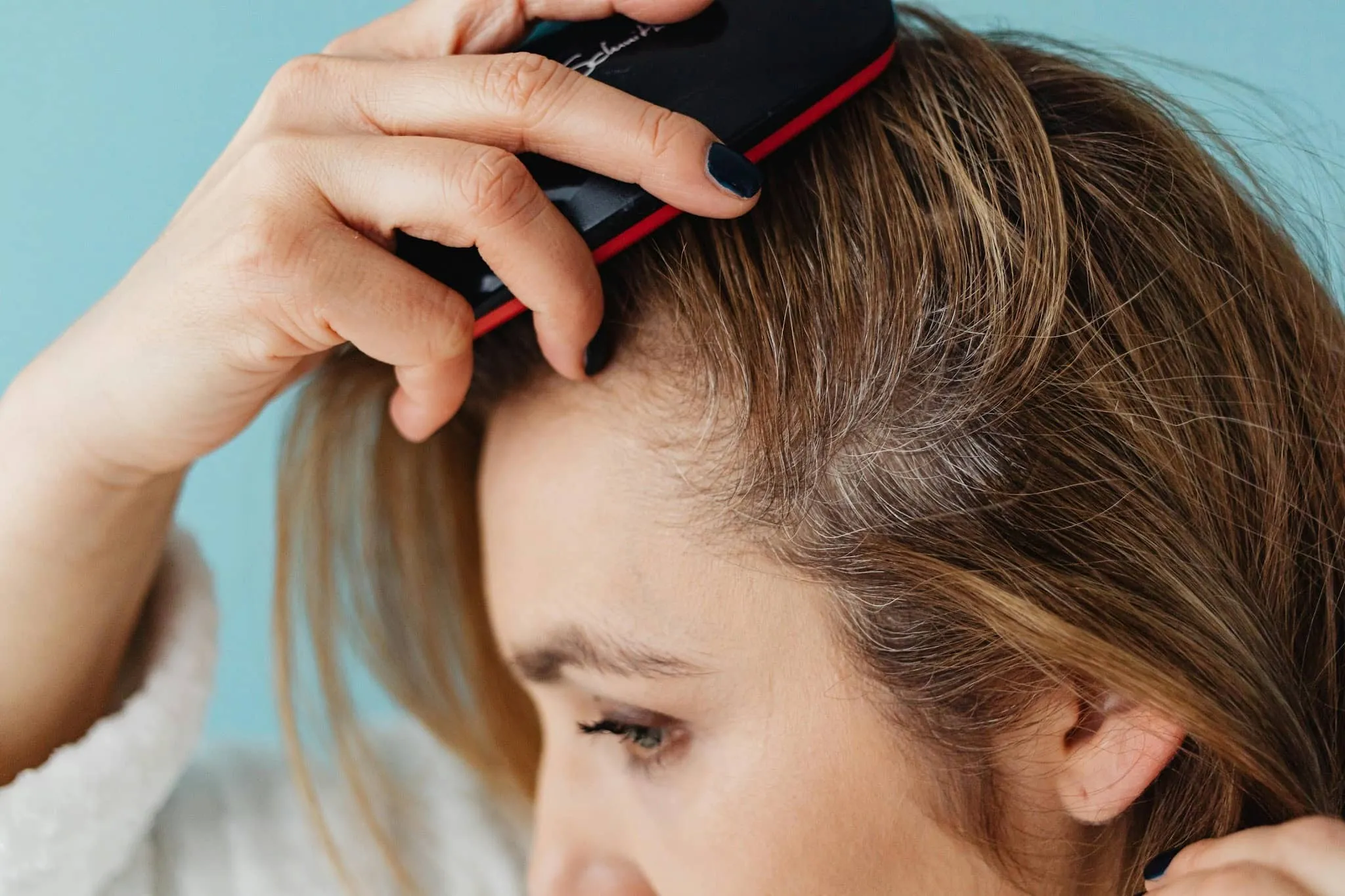
We scrutinise our faces, worry about the odd blemish and spend a small fortune looking after our hair. Yet new research suggests the skin underneath it all is getting rather less attention, even when it's trying to tell us something.
A spot on the chin rarely escapes a bathroom-mirror inspection. A patch of irritated scalp can be far less conspicuous. Hair is excellent at hiding things, including the skin underneath it.
That blind spot shows up in research commissioned by medicated-shampoo brand Polytar. People surveyed said they checked their facial skin every 6.1 days on average, but their scalps every 12.9 days. One in eight (13%) never deliberately looks at their scalp at all. Only 5% said the same of their face.
There is something faintly absurd about the priorities. Some 42% check their feet at least several times a week, and 39% do likewise with their genitals. For the scalp, the figure is 38%. The skin on top of our heads appears to be losing the battle for our attention to just about everything else.
The itch we learn to live with
Being overlooked would matter less if scalps weren’t so regularly troublesome.
Of those surveyed, 83% said they had experienced at least one scalp symptom, while 56% acknowledged ignoring or delaying action on at least one.
Itching leads the list. Just over half (51%) said they had experienced an itchy scalp, while 23% reported brushing it aside or putting off dealing with it.
Visible flaking or dandruff had affected 43%, with 18% delaying action. Spots and bumps were reported by 28%, and 15% said they had ignored or postponed doing something about those.
These figures describe what respondents recalled, rather than tell us how severe the symptoms were or what caused them. Still, they capture a familiar habit: if a problem is concealed by hair, and you can largely carry on with the day, it is remarkably easy to put it on tomorrow’s list.
And possibly the day after that.
From the scalp to the search bar
When something does finally demand attention, the first port of call is often a browser rather than a healthcare professional.
Asked where they would turn first with a new scalp concern, 21% selected Google. A GP came next on 17%, followed by a pharmacist on 16%.
Friends and family attracted 9%, while hairdressers and barbers were the first choice for 8%. Dermatologists accounted for 6%, AI chatbots for 5% and TikTok for 3%.
For younger adults, that last figure looks rather different.
Among 18- to 24-year-olds, 9% would go first to TikTok, the same proportion who would initially approach a GP. Another 8% would begin with an AI tool.
Online information can be useful for working out which questions to ask. The difficulty comes when descriptions and videos begin to stand in for somebody actually looking at the problem.
An itchy, flaky patch cannot be reliably identified by resemblance alone, particularly when several scalp conditions can produce similar symptoms.
Why flakes don’t always mean dandruff
Perhaps the most revealing gap is between confidence and understanding.
Nearly three-quarters of respondents (74%) believed they knew what a healthy scalp should look and feel like. Yet 25% assumed flakes meant dandruff, while another 25% were unaware that products such as dry shampoo and styling gel can accumulate on the scalp.
Fewer than half recognised hard water (44%) or winter weather (44%) as factors that can affect scalp health.
Marta Teixeira, a prescribing clinical trichologist at CliniHair and NHS dermatology specialist nurse, says she regularly sees patients who have spent months trying remedies they discovered online before seeking professional help.
Speaking in connection with the Polytar research, she explains that flaking can be associated with several different conditions, including seborrhoeic dermatitis, psoriasis, eczema and reactions to styling products.
The difficulty is that symptoms can look remarkably similar while requiring different approaches to treatment.
To help people get to know their scalp a bit better, Polytar has created a Scalp Health Calculator, which takes into account everyday factors including stress, exercise, winter weather, hard water and product build-up.
What appears to be straightforward dandruff might have another explanation entirely. Repeatedly reaching for the same product without understanding the underlying problem may simply prolong the discomfort.
That distinction matters. A photograph on a phone may make two scalps look identical while leaving out the very details that would help a professional tell them apart.
Give your scalp the same attention as your face
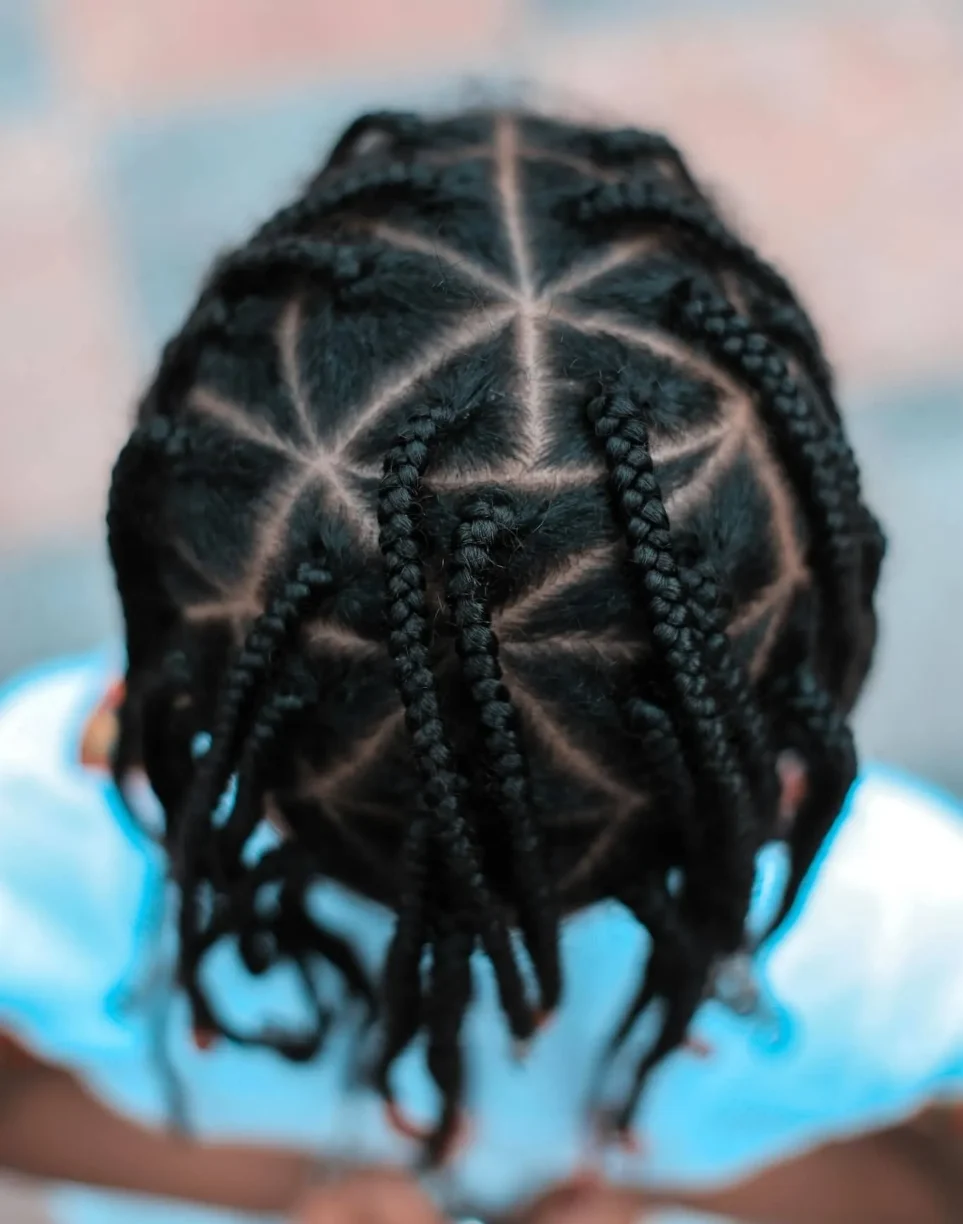
Teixeira’s practical advice begins with something refreshingly low-tech: looking. “My advice is simple: check your scalp as often as you check your face, in good light and don’t ignore itching, flaking or soreness. A pharmacist can recommend a medicated shampoo with an evidence-based ingredient such as coal tar.
If things haven’t improved after four weeks or your scalp is red, swollen or painful, see your GP, a dermatologist or a qualified trichologist.”
A pharmacist can help determine whether a medicated shampoo or another treatment is appropriate, rather than choosing something purely because a stranger online appeared to have similar-looking flakes.
The message isn’t that every occasional itch requires a medical appointment. It is that persistent symptoms deserve more than guesswork, particularly when redness, swelling or pain enters the picture.
There is no need to turn scalp checks into a new daily obsession. But given the attention we already devote to our faces, making a little room for the skin above them hardly seems a radical idea.
After all, a perfectly respectable hairstyle can conceal quite a lot.