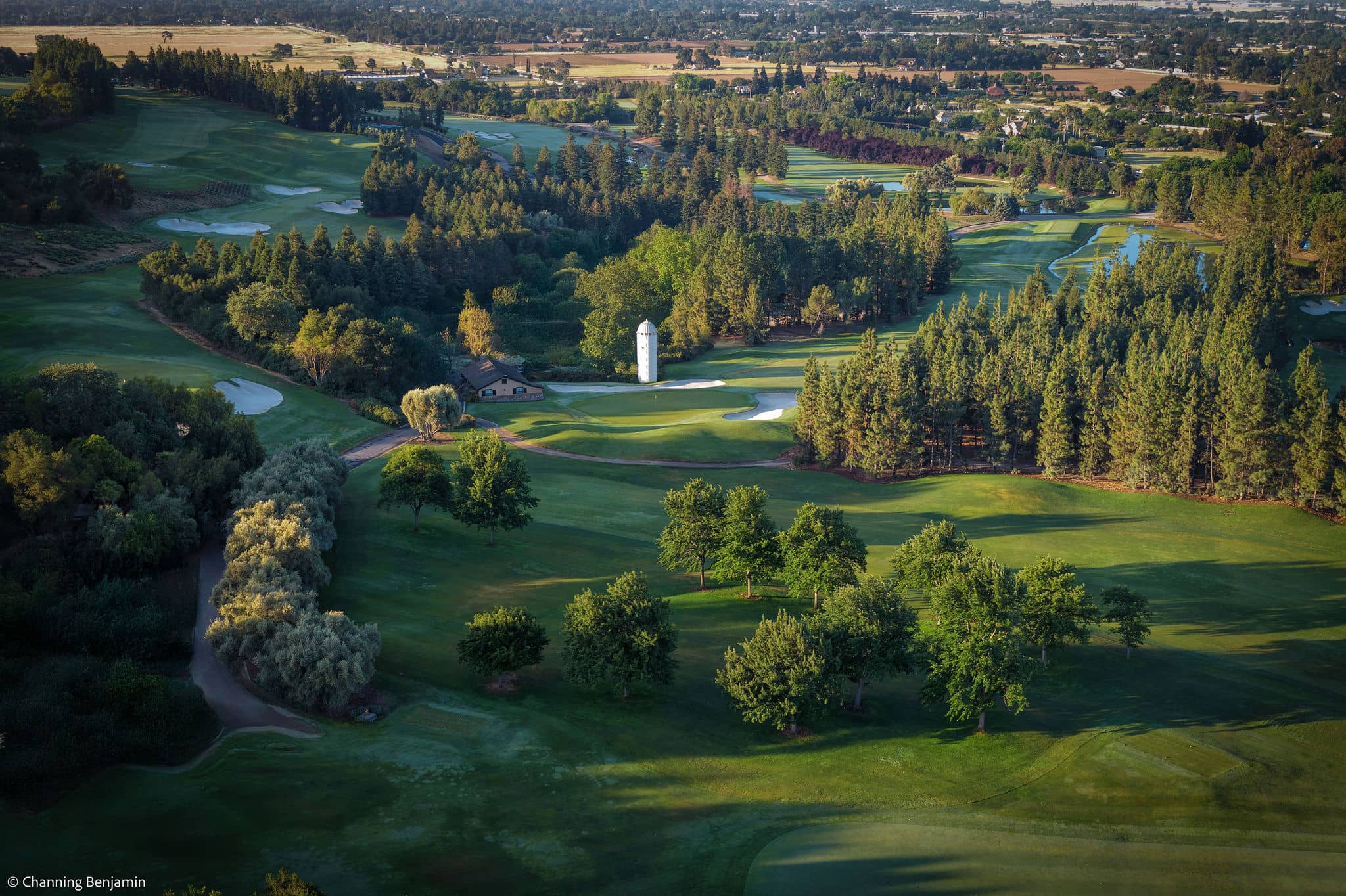
Photographer Channing Benjamin reveals why The Institute Golf Club’s quiet, strategic design could make it a compelling championship venue.
The Institute Golf Club has managed something increasingly unusual in modern golf: it has remained both immaculate and largely unseen. Set just south of San Jose, the ultra-select course was created as a labour of love for Randy and John Fry, of the Fry’s Electronics business empire.
Golf photographer Channing Benjamin was among the first permitted a proper look behind the gates. After two days walking, playing and photographing the property, he found a course whose appeal lies less in shouting for attention than in quietly earning it.
Benjamin arrives with a useful frame of reference. His portfolio includes Pebble Beach Resorts, The Los Angeles Country Club, Ladera Golf Club and Castle Pines Golf Club. He has seen enough immaculate turf and theatrical sunrise light to know that beauty alone is not a personality.
The Institute, he believes, has one.
Why great golf courses reveal themselves slowly
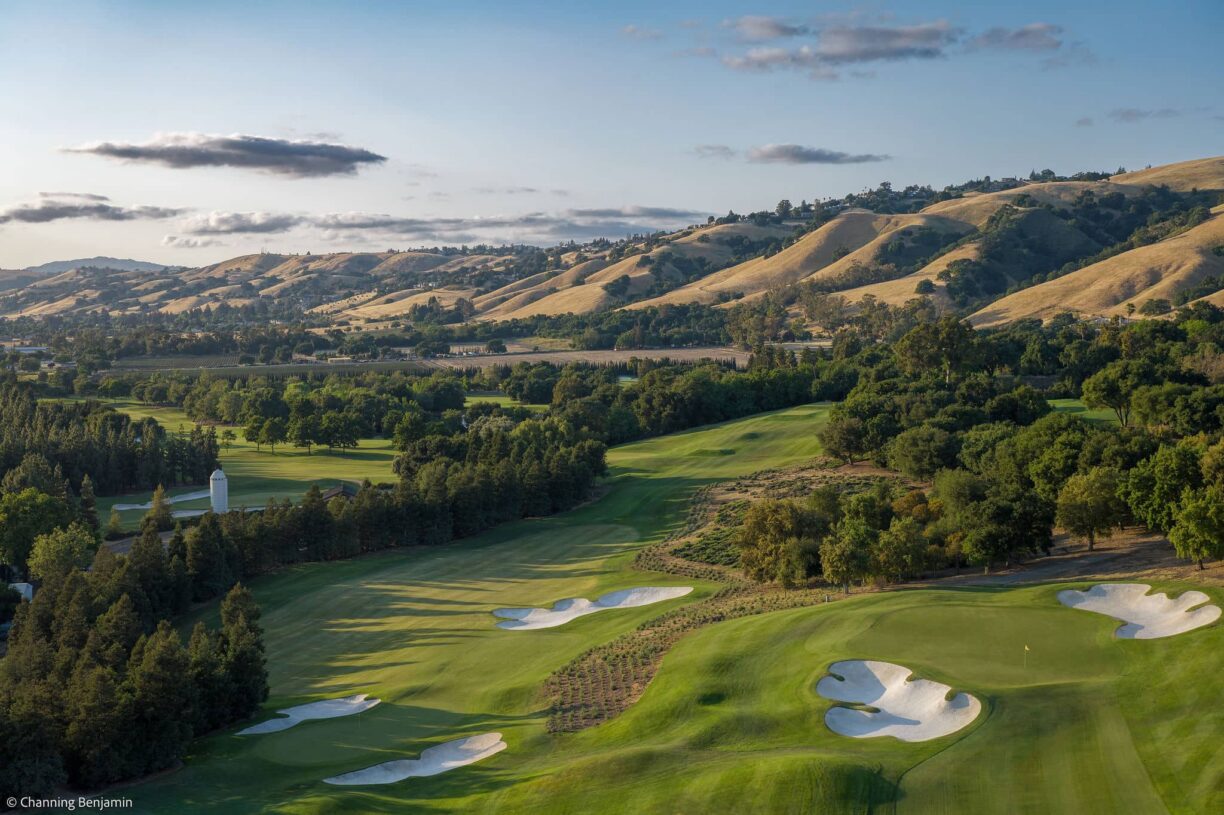
The finest courses rarely disclose everything from the clubhouse terrace. Their character emerges through repetition: the angle that only becomes apparent from the fairway, the slope that changes a sensible shot into a foolish one, the view that improves after the first impression has worn off.
Asked which qualities separate an extraordinary golf course from a merely handsome one, Benjamin placed time, flow and naturalness above instant spectacle.
What qualities do you look for in a golf course that make the extraordinary ones stand out?
“The best courses don’t always impress you immediately. In my experience, they’re the ones that get better the longer you spend on them.
As both a golfer and a photographer, I probably see things a little differently. I’m looking at how the holes flow together, how the land influences the strategy, how the light changes the character of the course throughout the day, and whether the design feels natural rather than forced.
The courses I remember most are the ones that never stop revealing something new. Every time you walk them, you notice another detail you missed before.”
It is a demanding standard. Almost any course can look heroic with a low sun, a long lens and nobody three-putting in the foreground. Remaining interesting after hours of scrutiny is a more serious achievement.
First impressions of The Institute Golf Club
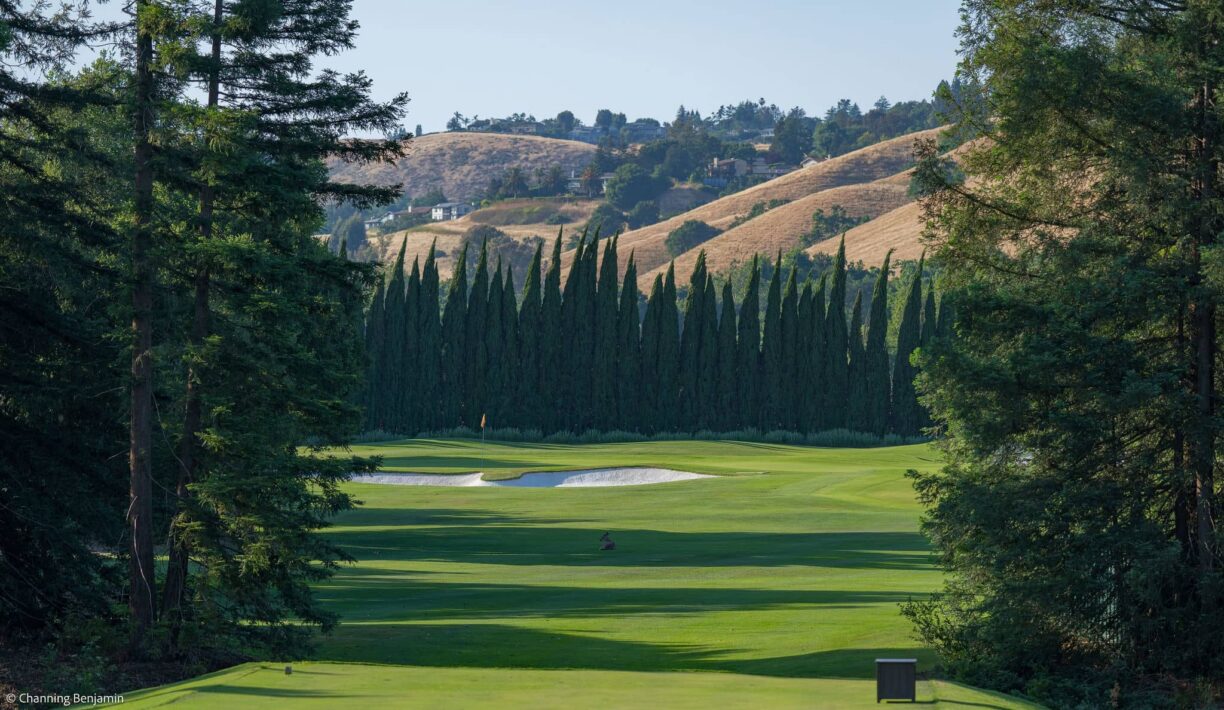
The defining characteristic of The Institute Golf Club was not scale, conditioning or exclusivity, although all three played their part. It was quiet.
There are no houses pressing against the fairways and no outside clutter demanding a share of the eye. Once inside, Benjamin found that the course occupied the entire frame.
What were your thoughts on The Institute Golf Club after spending a few days there?
“The first thing I noticed was just how peaceful it is.
Once you’re on a property, everything else disappears. There aren’t houses lining the fairways or outside distractions competing for your attention. It’s just golf, and I think that’s becoming increasingly rare.
The other thing that struck me was how understated the course is. It doesn’t try to overwhelm you. Instead, it quietly grows on you. Every day I spent walking and photographing it, I noticed something different. That’s usually a sign you’re looking at a golf course with real depth.”
Understatement can be difficult to photograph. Grand gestures present themselves willingly; subtle courses make the photographer do some work. Benjamin found that the same patience demanded by the design was rewarded behind the camera.
How does it compare both visually and as a playing challenge to some of the other great courses you’ve had the pleasure of capturing?
“I honestly try not to compare great golf courses because they’re memorable for different reasons.
What impressed me about The Institute is that it has its own identity. It isn’t loud, and it doesn’t need to be. It’s confident enough to let the golf course speak for itself.
From a player’s perspective, I really enjoyed how often it asks you to make decisions. There are opportunities to be aggressive, but there’s usually a consequence if you get it wrong. I think that’s what separates good golf courses from truly great ones.
From behind the camera, it was much the same. The course rewards patience. Some of my favorite images weren’t the obvious ones. They came from spending time there, watching the light change, and letting the course reveal itself.”
That combination — visual restraint and strategic insistence — gives The Institute a stronger identity than a collection of picturesque holes ever could. A course can be immaculate and still feel anonymous. Benjamin’s assessment suggests this one does not.
A family passion project shaped by land and light
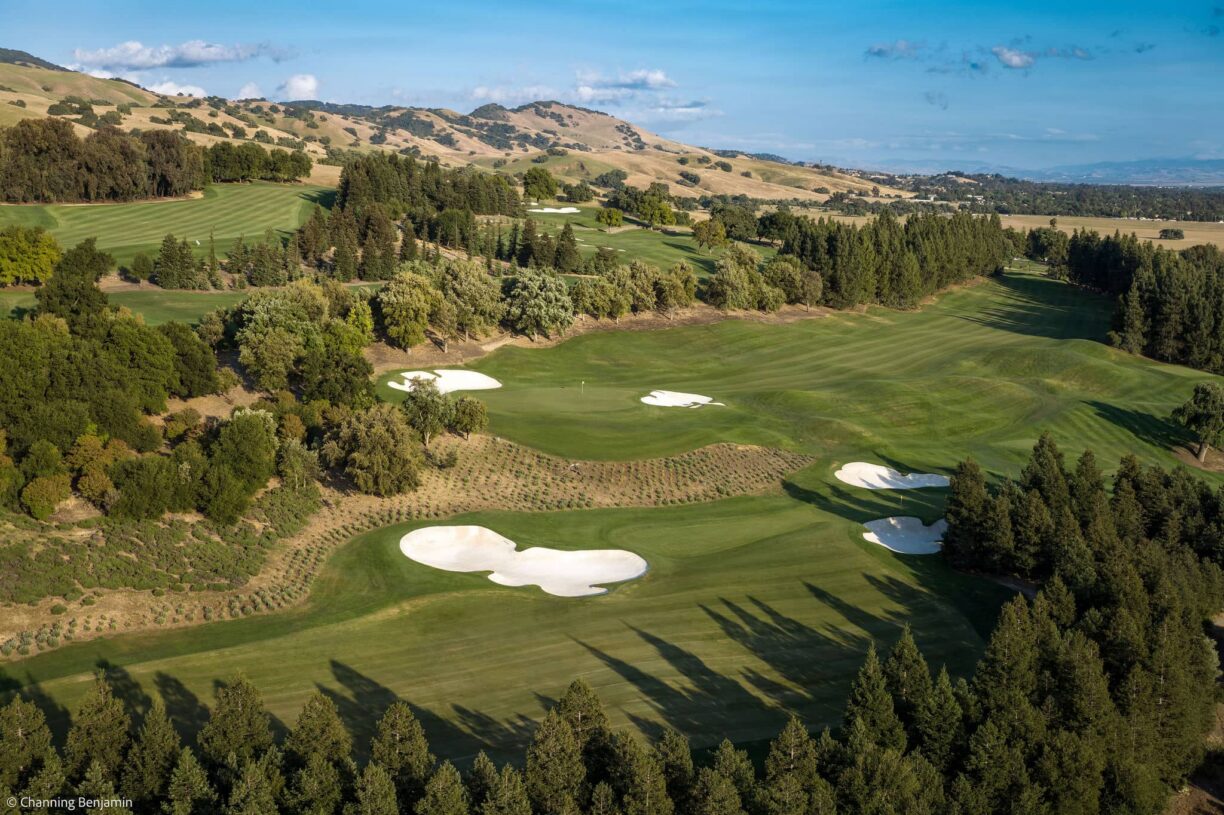
The Institute belongs to a particular tradition in American golf: the privately funded passion project built without the compromises imposed by housing estates, resort traffic or mass play.
Such projects can become eccentric monuments to their owners. The successful ones feel personal without becoming self-indulgent.
Benjamin detected that private commitment immediately. He also found familiar architectural echoes, including a par three that recalls one of Augusta National’s most photographed holes.
You’ve been to other family-owned labours of love like The Institute. Did its set-up remind you of other notable venues?
“I’ve photographed a number of clubs that were built as true passion projects, and you can usually sense that from the moment you arrive. The Institute definitely has that feeling.
At the same time, there are subtle nods to some of golf’s most iconic holes. I remember the par-3 13th immediately making me think of Augusta National’s famous 12th. It’s not a copy, but you can certainly appreciate the inspiration.
What I like is that those influences never define the course. They simply become part of its personality. By the end of the round, The Institute feels like its own place rather than a collection of famous golf holes.”
That last distinction is the important one. Referencing a great hole is harmless. Assembling 18 impressions of other people’s work is closer to architectural karaoke.
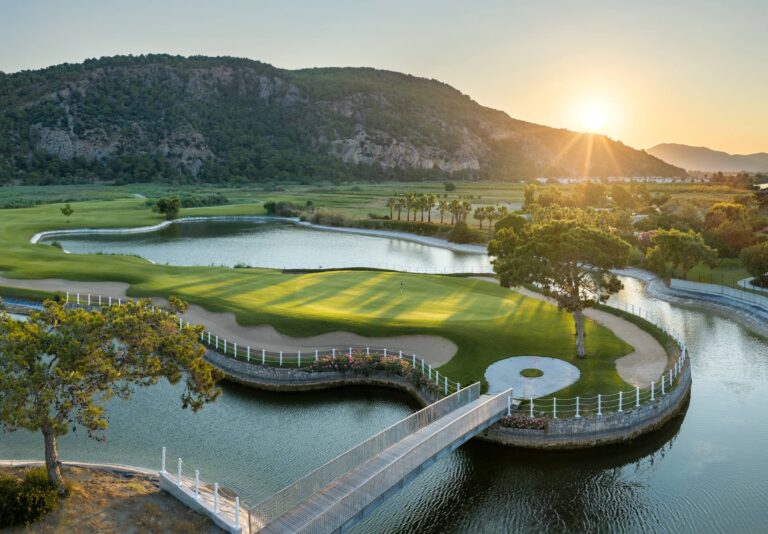
The Institute’s setting prevents those references from becoming its entire character. Its surrounding hills, elevation and changing light give the course a visual language of its own.
The Institute is in a remarkable setting. Tell us how the surrounding landscape contributes to the spirit and enjoyment of the golf course.
“The setting is a huge part of what makes the experience so special.
As a golfer, you appreciate how quiet and secluded it feels. You can completely lose yourself in the round.
As a photographer, the landscape almost becomes another character. The light changes constantly throughout the day, and the surrounding hills frame every hole differently. I’d find myself standing in the same location at sunrise, midday, and sunset because every visit created a completely different image.
That’s one of the things I enjoyed most about photographing The Institute. It kept giving me something new every time I walked the property.”
The strongest course photographs often show more than a hole. They show the relationship between holes, the shape of the terrain and the reason the routing belongs where it does. The Institute’s higher ground gave Benjamin exactly that perspective.
The views and holes that stayed with him
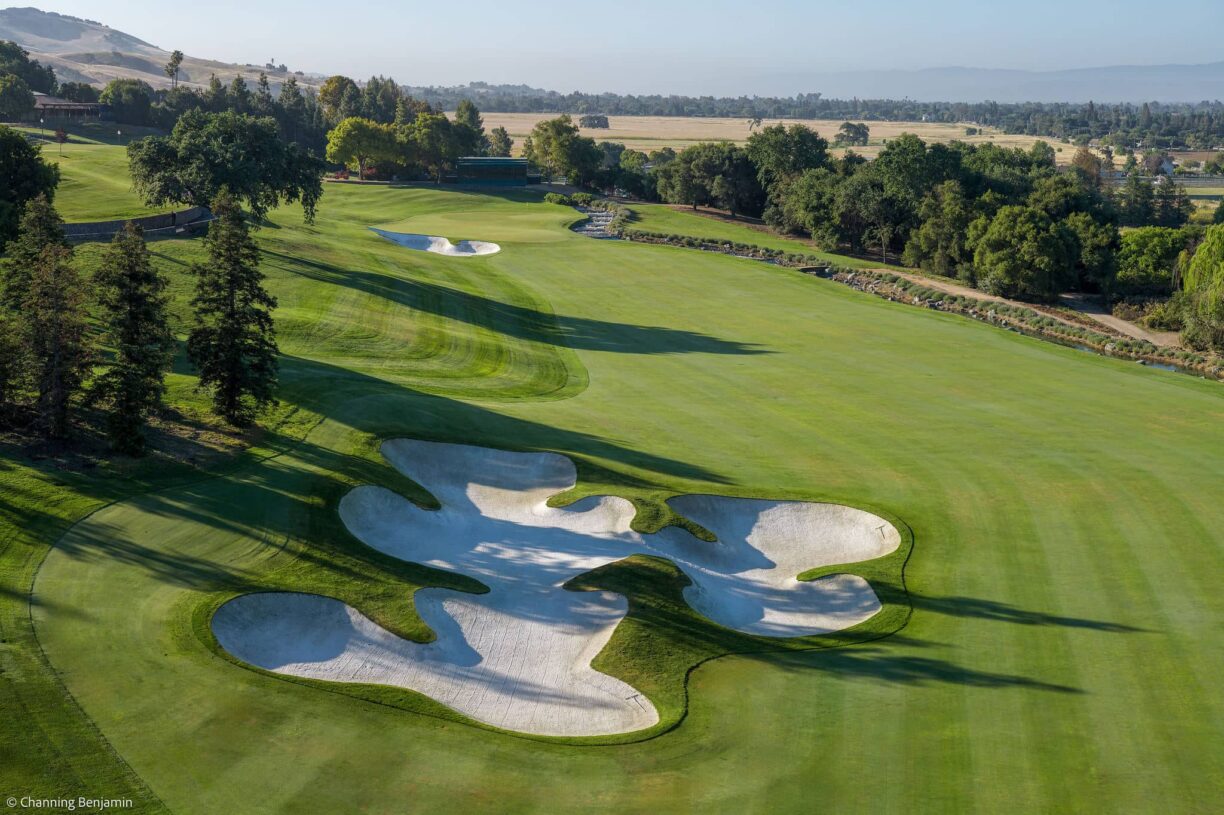
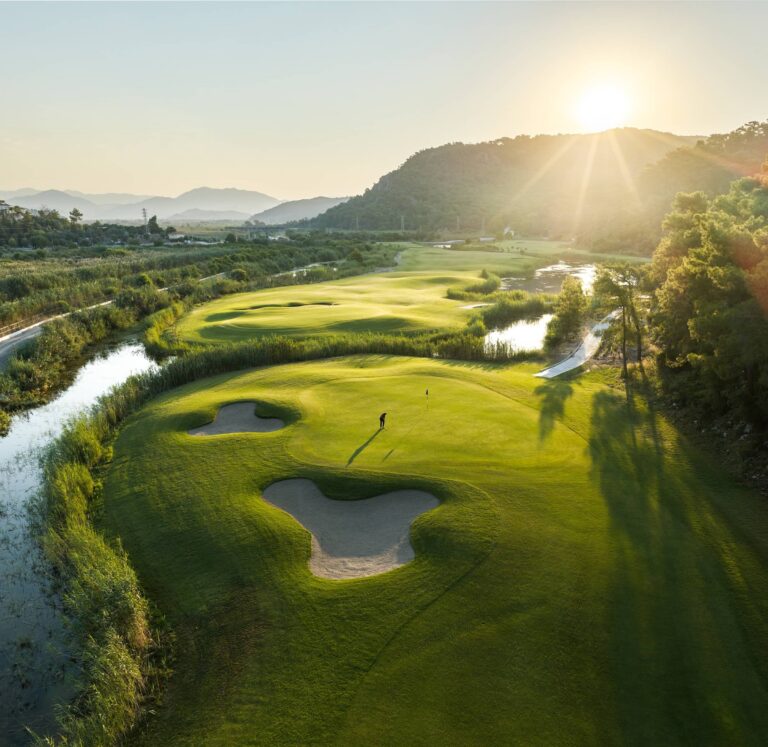
Benjamin repeatedly returned to elevated parts of the property where several holes could be seen together. From there, the course stopped looking like a series of individual compositions and began to read as a complete piece of routing.
Early morning provided the defining atmosphere. Before players arrived, stillness gave the place an almost untouched quality — a useful illusion on a golf course maintained to immaculate standards.
What was your favorite spot on the course?
“I kept finding myself going back to the higher ground where you can see multiple holes at once. It gives you a real appreciation for the routing and how naturally the course fits the land.
That said, my favorite time of day was early morning. Before anyone was on the course, there was this incredible stillness that made the property feel almost untouched. As a photographer, those quiet moments are usually the ones I remember most.”
His favourite hole required less contemplation.
The short, drivable par-four 16th gave Benjamin the sort of introduction that tends to colour a man’s judgement: he drove the green during his scouting round and holed the eagle putt. Objectivity has survived greater challenges, though perhaps not many involving a two on the card.
And your favourite hole?
“That’s an easy one – the short, drivable par-4 16th.
I’ll admit I’m a little biased because during my scouting round I actually drove the green and made the eagle putt. That’s a pretty good way to make a lasting impression.
Even if that hadn’t happened, I’d still love the hole. It asks a question the moment you step onto the tee. Do you play it safe, or do you take on the challenge?
I love golf holes that give you options instead of telling you exactly how they should be played. Those are the holes golfers remember long after the scorecard is put away.”
The best short par fours make restraint and aggression appear equally sensible, at least until the ball lands. They invite a decision rather than dictating one. The scorecard may record only the number, but the golfer remembers the argument that preceded it.
How Channing Benjamin captures a golf course
Benjamin’s work depends upon preparation as much as equipment. He uses Nikon flagship mirrorless cameras and professional lenses on the ground, with DJI aircraft providing aerial perspectives.
The machinery is formidable. It is also, in his view, the uncomplicated part.
What equipment and range of cameras do you take with you to secure such a rich, diverse range of shots?
“People ask me that all the time, and honestly, the cameras are the easy part.
I primarily shoot with Nikon’s flagship mirrorless cameras paired with a variety of professional lenses. For aerial work, I rely on two different tools depending on the assignment: my DJI Inspire 3 when I want the highest level of cinematic image quality, and my DJI Mavic 4 Pro for its versatility and efficiency in the field. Together they allow me to capture perspectives that simply aren’t possible from the ground.
At the end of the day, though, the equipment is just the toolbox. Understanding the golf course, knowing where the light is going to be at sunrise or sunset, and having the patience to wait for the right moment – that’s what creates the photograph.”
That distinction separates course photography from equipment collecting. Cameras record what is placed before them. The judgement lies in knowing where to stand, when to return and why the scene matters.
At The Institute, Benjamin’s repeated visits to the same locations allowed the changing light to expose different aspects of the land. The photographs were not extracted in a hurry. The course made him wait.
Peaceful, strategic and built for a sterner stage
Benjamin reduced The Institute Golf Club to three words: peaceful, strategic and pure.
Each addresses a different part of the experience. Peaceful describes the property’s separation from the outside world. Strategic captures the recurring requirement to choose rather than merely execute. Pure refers to conditioning, limited traffic and the sense that every part of the course remains sharply presented.
What three words best describe The Institute Golf Club?
“Peaceful. Strategic. Pure.
Peaceful because once you’re on property, the outside world disappears. It’s one of those rare places where your entire focus shifts to the golf.
Strategic because it constantly asks you to think. It rewards good decisions every bit as much as good swings.
Pure because the conditioning is exceptional. The course doesn’t see the volume of play that many championship venues do, and it shows. Everything – from the fairways to the greens – felt immaculate. It’s golf in its purest form.”
The club also has ambitions beyond private play. Plans exist to stage significant tournaments, although no event, organising body or timetable was identified in the supplied material.
The obvious question is whether a course protected from regular tournament traffic could withstand both the world’s best players and the demands surrounding them. Benjamin has no doubt about the playing test.
There are plans to host significant tournaments at The Institute in the near future. Do you think it would be a fitting venue for some of the world’s best players?
“Absolutely.
One of the first things that struck me was the overall scale of the golf course. Standing on some of those back tees during my scouting round, I remember thinking, “Wow… this is going to be a serious test of golf.”
There are multiple sets of tees, so golfers of all abilities can enjoy it, but if you tip it out, it’s one of the toughest tests of golf I’ve played.
What impressed me most is that the challenge doesn’t come from length alone. The strategy is just as demanding. The course asks you to think your way around it, and I believe that’s what great championship golf should do. It rewards smart decisions and solid execution, not just power.
I have no doubt the best players in the world would enjoy the challenge. Just as importantly, I think The Institute would make a tremendous championship venue because it has substance behind its beauty.
It would look incredible on television, but more importantly, it has the architecture, strategy, and scale to stand up to the very best players in the game.”
That is the most persuasive argument in the club’s favour. Television can make almost any pristine course look expensive. Championship credibility requires more: strategic variety, room to test elite players and enough architectural substance to remain interesting after the aerial shots have done their work.
The Institute Golf Club has spent years beyond the wider game’s view. Benjamin’s photographs may help draw back the curtain, but his assessment offers the more intriguing picture: a secluded course with the scale to host a spectacle and the confidence not to behave like one.