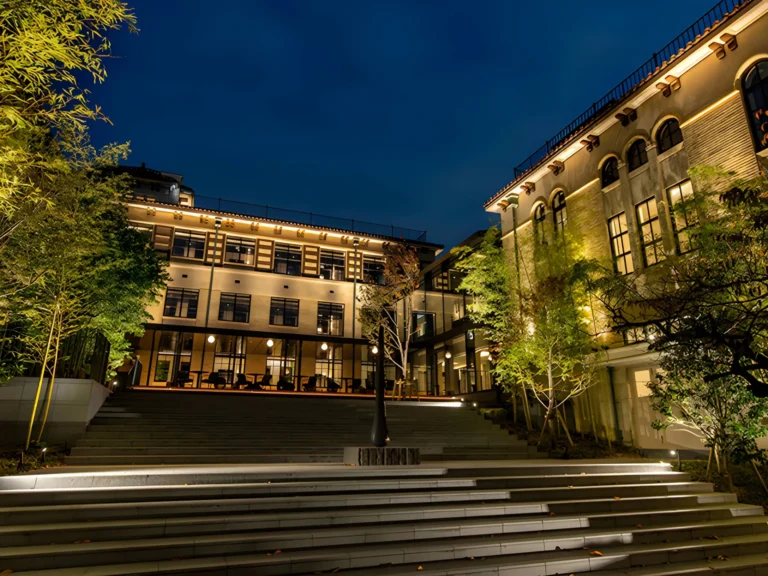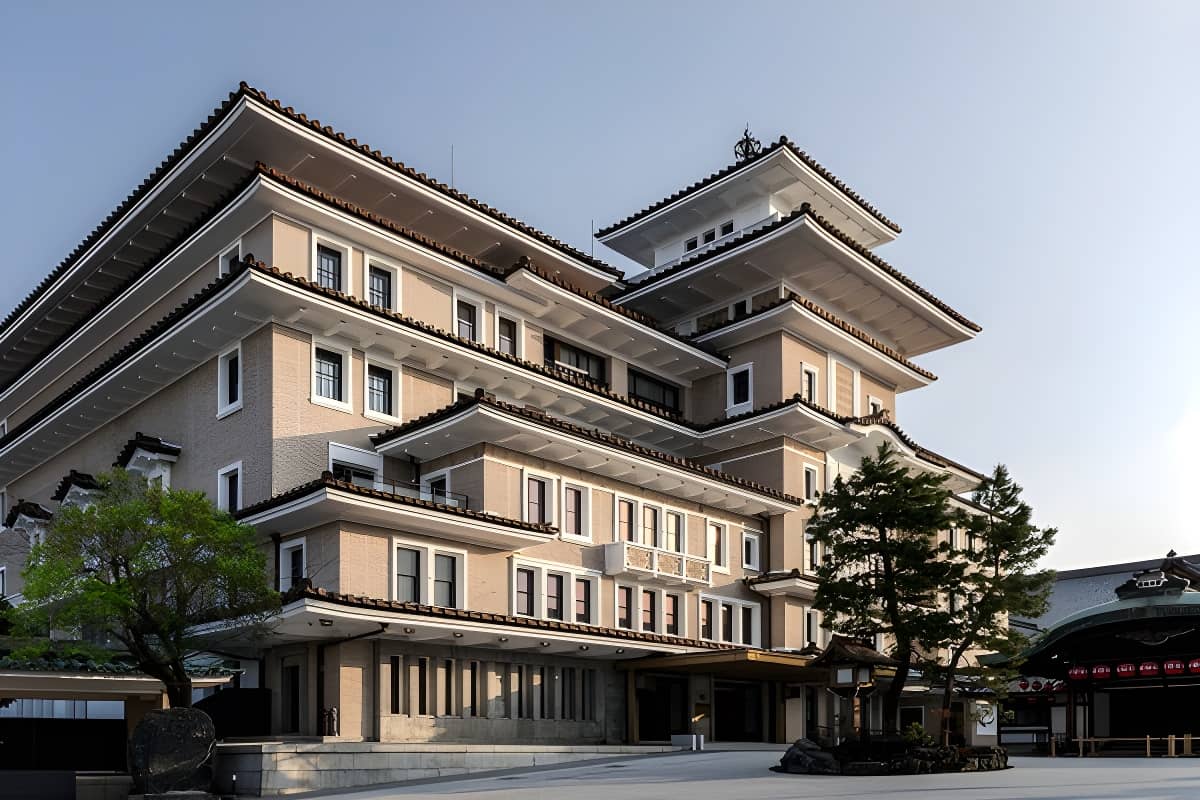
Imperial Hotel Kyoto preserves the 1936 Yasaka Kaikan in Gion, retaining its cultural property status after a meticulous restoration.
The Imperial Hotel, Kyoto, Japan, has gained something rather more enduring than another line for the amenities list.
The historic Yasaka Kaikan at the centre of the new 55-room hotel has retained its status as a Registered Tangible Cultural Property following review by Japan’s Council for Cultural Affairs.
Now designated the Former Yasaka Kaikan, the 1936 building remains part of Kyoto’s protected architectural story even as guests begin wheeling suitcases through it.
That distinction matters because this was never simply a matter of restoring an attractive old frontage and finding somewhere agreeable to put the bar.
The Imperial Hotel Kyoto, which opened in March 2026 in the Gion district, was created through the adaptive reuse of sections of the ageing Yasaka Kaikan. The old structure faced deterioration and seismic concerns, making preservation a considerably more complicated proposition than admiring the building from across the road and declaring it charming.
Demolition would have been easier. Kyoto has generally acquired its reputation by resisting easy answers.
An old Gion landmark gets a new purpose
Completed in 1936 beside the Gion Kobu Kaburenjo, Yasaka Kaikan spent decades as a theatre, cinema, dance hall, performance venue and gathering place.
That variety of uses is important. Historic buildings survive most convincingly when they were actually part of everyday life rather than architectural ornaments preserved principally for people holding guidebooks.
Its design combines Japanese architectural influences with early 20th-century building methods. Most recognisable is the southwestern façade, which became part of the visual fabric of this corner of Gion long before hotel guests arrived.
Preserving that identity became one of the central challenges of the Imperial Hotel Kyoto project.
Rather than attempt to make 1936 behave suspiciously like 2026, the redevelopment retained significant original material while rebuilding and adapting other elements for contemporary use.
The remarkable business of saving 16,000 tiles
The numbers become more interesting once they stop describing room inventory.
More than 16,000 original exterior tiles were restored during the project. Many were removed and later reinstalled using ikedori, a traditional Japanese conservation technique designed to recover and reuse historic material without damaging it.
There is something refreshingly stubborn about conserving thousands of individual tiles in an age when entire interiors can apparently be redesigned because somebody has become tired of beige.
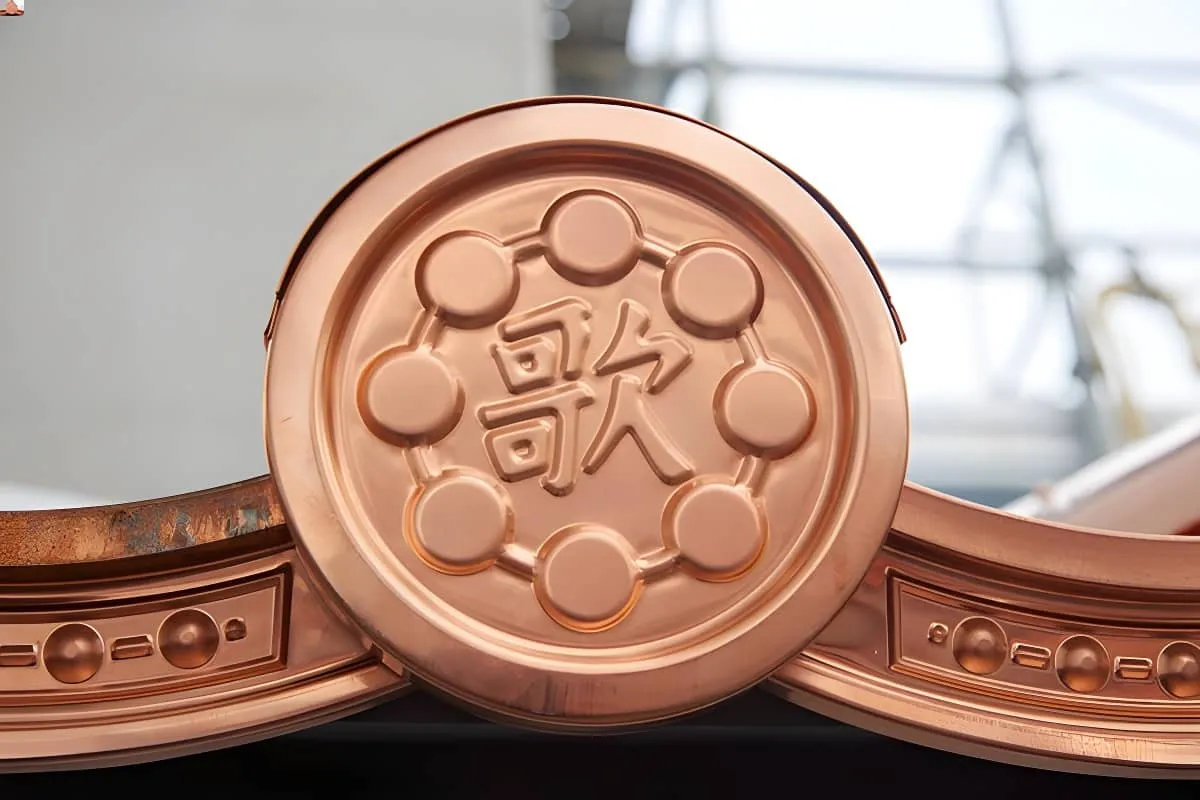
Terra-cotta ornamentation was also conserved and reinstated, including decorative reliefs carrying traditional floral motifs. Sections of the original structural framework survived, while the distinctive copper roof and ornamental metalwork were reconstructed using traditional methods.
Inside, preservation extended to details in the entrance vestibule, including etched glass dating from the original construction.
The cumulative effect is more significant than any one salvaged component. Heritage architecture rarely depends on a single heroic object. It lives in surfaces, proportions, marks of age and countless details that would be cheaper to replace.
Cultural-property status survives the transformation
Following consideration by Japan’s Council for Cultural Affairs, the building’s Registered Tangible Cultural Property status has continued under its new name, Former Yasaka Kaikan.
For a newly opened luxury hotel, that is a more interesting distinction than another marble bathroom could ever hope to be.
“From the beginning, our goal was to honour the architectural and cultural significance of the Yasaka Kaikan while ensuring its relevance for generations to come,” said Reiko Sakata, General Manager of the Imperial Hotel, Kyoto.
“The continuation of its cultural property registration recognises not only the building’s history, but also the importance of preserving meaningful places through thoughtful restoration and reuse.”
That last point is particularly pertinent in Kyoto. The city’s appeal rests heavily on continuity, yet it remains a functioning modern city rather than a museum exhibit. The difficult bit is allowing buildings to keep earning their place without sanding away everything that gave them character in the first place.
Imperial Hotel Kyoto makes history part of the stay
The resulting Imperial Hotel Kyoto has just 55 rooms, putting the emphasis on a relatively intimate experience rather than sheer scale.
Its proposition is therefore unusually dependent on the building itself. Guests are not merely staying near a piece of Kyoto history; parts of that history form the hotel around them.
That gives the property a distinction many luxury hotels spend considerable sums trying to manufacture. New hotels can commission beautiful furniture, superb lighting and sufficiently complicated taps. They cannot commission 90 years of memory before breakfast.
The Imperial Hotel Kyoto also became a member of The Leading Hotels of the World in April 2025, almost a year before its March 2026 opening.
Yet the more compelling credential is arguably the one that cannot be imported: its physical connection with Gion.
A different model for a Kyoto luxury hotel
Kyoto already has no shortage of high-end accommodation, and travellers choosing at this level are hardly deprived of polished service or carefully composed interiors.
The Former Yasaka Kaikan gives Imperial Hotel Kyoto something harder to replicate.
Its strongest point of difference is not simply age, either. Old buildings are plentiful. The interesting part is the decision to retain difficult, fragile and sometimes inconvenient pieces of one while creating a working hotel around them.
That approach carries risk. Too much intervention and heritage turns into decoration; too little and the building ceases to function comfortably for its new purpose. Adaptive reuse lives in that uncomfortable middle ground.
Here, the survival of the façade, original tiles, terra-cotta details, structural elements and interior glass gives the project a tangible connection with what stood on the site before check-in desks and room keys entered the story.
For travellers considering Imperial Hotel, Kyoto, that may ultimately be the reason to pay attention. Luxury can be reproduced almost anywhere. A building that has been entertaining Kyoto since 1936 is rather less portable.
Gion has acquired a new hotel. More importantly, it has not had to lose the old building to get one.