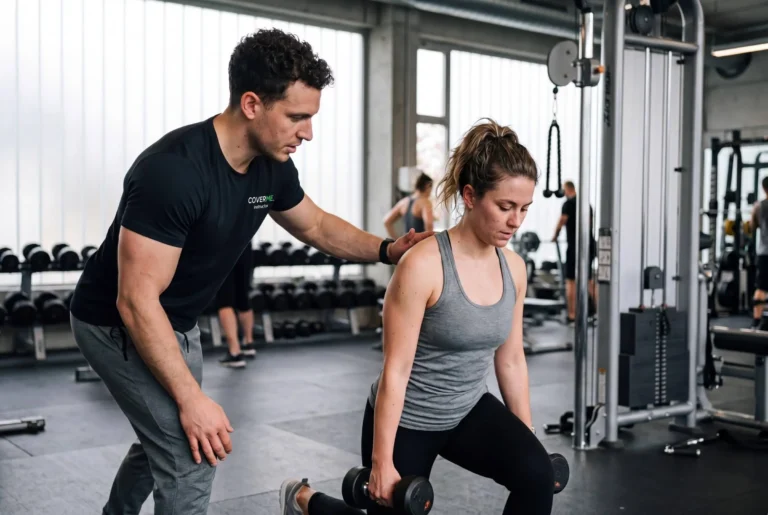


Before buying a block of sessions, check the qualifications, watch how the trainer listens and find out what happens when the plan needs to change.
Buying a block of personal-training sessions is the tidy part. Fitting them around work, family and the Tuesday when everything runs late is where the arrangement has to earn its keep.
If you are wondering how to choose a personal trainer, picture those ordinary weeks. You need someone whose coaching and availability make sense for your life, and whose response to a difficult session leaves you willing to come back.
A trainer’s physique or online following offers limited help with that decision. The more revealing details tend to emerge in conversation: whether they ask questions, explain their thinking and take your concerns seriously.
Start with a conversation

A useful first meeting gives you room to talk. Your goals matter, but so does your starting point: how active you are, what you enjoy, any previous injuries and what has made exercise difficult to maintain.
Be candid about the practicalities. A programme built around a schedule you cannot keep is already asking too much. Equally, there is little sense in keeping quiet about an exercise you dread or a previous coaching experience that put you off.
Pay attention to how the trainer responds. Do they explore what you have said, or move straight to selling a package? Can they explain how they would approach your goals?
Coaching style deserves discussion too. Some people like brisk instructions and plenty of encouragement. Others want time to understand each movement without a running commentary. Neither preference needs defending.
You should feel able to ask for an explanation. An impressive qualification will not make a partnership comfortable if every question feels like an interruption.
Check what the qualification actually covers
Ask which qualification the trainer holds, who awarded it and how you can verify it. Let them explain their education and how it relates to the work you want to do together.
Relevant experience adds another layer. Someone who has spent years coaching experienced lifters may have a different approach from a trainer who regularly helps beginners find their feet. Ask about clients with similar starting points and goals, rather than relying on the number of years listed in a biography.
If you are returning after a long break, are older or have a physical limitation, discuss what additional education and experience the trainer brings. A vague assurance that they work with everyone tells you very little about your particular circumstances.
There should also be a clear boundary around their expertise. Personal trainers provide exercise instruction; they should not diagnose medical conditions or replace a doctor or physiotherapist. Being willing to involve another professional when needed is a useful sign of judgement.
Watch the coaching at work
An introductory session can make the conversation more concrete. Look at whether the trainer explains an exercise clearly, watches your technique and changes their instructions when something is not clicking.
The session should give you some sense of how they adapt. A programme needs to reflect your current abilities, available time and preferences. Familiar exercises can feature in many people’s routines; the choice of movement, level of difficulty and progression should still make sense for you.
Unexpected pain deserves attention. A responsible trainer should respond, modify an unsuitable exercise and, where necessary, suggest advice from an appropriate healthcare professional. Dismissing a concern as a test of commitment gives you a reason to reconsider the arrangement.
Ask how progress will be measured. Depending on your goals, that might mean lifting more, improving endurance or becoming more consistent with exercise. Being better able to manage everyday activities can matter too.
Find out when the programme will be reviewed and how it will become more challenging as you improve. A useful explanation should connect the sessions you are buying with the progress you hope to make.
Read the promises and the small print
Guaranteed transformations deserve scrutiny. Progress varies with factors including exercise history, sleep, stress and consistency. A trainer can explain their approach and what they will help you work towards; a promise of identical results for every client is a warning sign.
Be cautious about an immediate push towards a highly restrictive diet or unproven supplements. Advice should stay within the trainer’s professional scope, and claims deserve an explanation you can assess.
Then deal with the less glamorous questions. Establish the total cost, session length, cancellation terms and any contract commitments. Ask what happens if you miss a session or need to change your usual slot. You should have time to consider those terms before committing to a large package.
Location and format belong in the decision as well. The trainer across town may sound excellent, but the journey still has to fit into your week. Compare the realistic demands of each option alongside the quality of the coaching.
For someone searching locally, working with a professional close to home or work can make regular exercise more manageable. For example, someone searching for a Personal Trainer in Arcadia can evaluate local options while applying the same standards used anywhere else.
The goal is not simply to find the closest trainer, but to find someone whose qualifications and coaching approach align with your needs.
Think, too, about what you want to learn. Some people value ongoing support; others want enough understanding of technique and progression to exercise independently. Discussing that early helps establish whether the arrangement serves your longer-term aims.
Before buying the next block, ask yourself what the sessions have given you: clearer understanding, useful feedback, a routine you can manage. That is a more revealing account of the relationship than the photograph that first caught your eye.