Interval training can improve fitness, burn calories and save time. Here are four smarter HIIT workouts worth trying.
Interval training remains one of the most efficient ways to improve fitness, burn calories and give your weekly routine a proper kick up the backside — without spending half your life staring at a treadmill screen like it owes you money.
The idea is simple enough: work hard for short bursts, recover briefly, then go again. It is fitness with the small talk removed. No wandering about. No pretending to stretch while checking your phone. Just effort, recovery, repeat.
Research published in the British Journal of Sports Medicine helped put high-intensity interval training, or HIIT, firmly on the map by suggesting that shorter, sharper workouts can be highly effective for fat loss when compared with steady moderate-intensity exercise.
That does not mean a gentle jog, long walk or steady cycle is suddenly useless. Far from it. But for people who are time-poor, motivation-light or allergic to spending 60 minutes doing the same thing under fluorescent lights, interval training has obvious appeal.
Why Interval Training Works
The real beauty of interval training is that it asks the body to do something it finds mildly offensive: work hard, recover, then do it again before it has fully forgiven you.
That repeated surge in effort can improve cardiovascular fitness, raise calorie expenditure and challenge muscles in a way that steady-state exercise does not always manage. It also keeps the mind engaged. When you know a hard effort only lasts 30 or 45 seconds, you are more likely to attack it rather than negotiate with yourself like a tired hostage.
For golfers, runners, gym-goers and anyone trying to build usable fitness, that matters. Sport rarely happens at one polite pace. Golf may look calm from the outside, but walking 18 holes, staying sharp late in the round and producing controlled power under pressure all require a body that can recover between efforts.
The Catch: HIIT Is Not A Licence To Be Reckless
Interval training works best when it is scaled properly. Going from no exercise to full-throttle sprints is not ambition; it is a hamstring writing its resignation letter.
Beginners should start with lower-impact intervals: bike sprints, incline walking, rowing, bodyweight circuits or pool-based sessions. The aim is to work hard enough to feel challenged, not so hard that your form collapses and your joints start making executive decisions.
Two or three interval sessions a week is plenty for most people, especially when combined with strength work, mobility, walking and decent recovery. HIIT should be the spice in the fitness stew, not the entire pantry.
Boxing HIIT: Sweat With A Right Hook
Boxing-style interval training is one of the best ways to make cardio feel less like punishment and more like controlled chaos.
A typical session might involve bag work, shadow boxing, pad drills, skipping, press-ups, squats and core exercises. You might throw straight punches for 45 seconds, rest for 15, then move into hooks, uppercuts or footwork drills.
The benefits are obvious. Boxing HIIT builds shoulder endurance, rotational strength, coordination and core control. It also has a rare emotional perk: few things improve a bad day quite like hitting a punchbag with legally acceptable enthusiasm.
For anyone who wants the fitness benefits without actual combat, non-contact boxing classes are a smart option. No black eye required. Just gloves, sweat and the humbling discovery that one minute on a bag can feel longer than a Monday morning meeting.
Aqua HIIT: Harder Than It Looks
Aqua HIIT has had an image problem for years, largely because too many people still picture gentle pool classes with foam noodles and polite splashing.
That view is outdated.
Water-based interval training can be brutally effective because the pool provides natural resistance from every direction. Jumping jacks, sprints, kicks and explosive movements become harder without the same impact you would get on land.
That makes aqua HIIT particularly useful for people managing joint niggles, returning from injury or looking for cross-training that does not leave their knees feeling like old garden hinges.
It is also excellent for runners, golfers and team-sport athletes who want conditioning without piling more stress through the ankles, hips and lower back.
Martial Arts HIIT: Controlled Mayhem
Martial arts-inspired HIIT brings together cardio, strength, mobility and coordination in one sweaty little package.
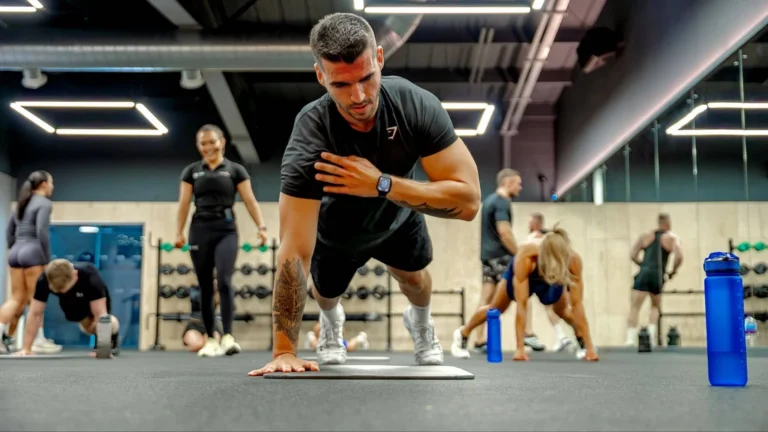
These classes often borrow movements from kickboxing, MMA, Muay Thai or bodyweight conditioning. Think sprawls, knee strikes, fast footwork, punch combinations, plank work and explosive drills.
The attraction is not just calorie burn. Martial arts interval training teaches rhythm, balance and body awareness. It forces you to move in different planes rather than simply going forwards and backwards like a supermarket trolley with better trainers.
For anyone bored of conventional circuits, this kind of session can be a useful reset. It feels athletic. It feels purposeful. And it usually reveals, quite quickly, that “good cardio” is a more complicated beast than surviving 20 minutes on a cross-trainer.
Yoga-HIIT: The Odd Couple That Somehow Works
Yoga and HIIT sound like they should not share a room. One wants you to breathe deeply and find your centre. The other wants your lungs to file a formal complaint.
Yet the combination can work surprisingly well.
Yoga-HIIT typically blends short bursts of strength-based cardio — mountain climbers, squat jumps, plank variations or lunges — with slower mobility and flexibility work. The result is a session that raises the heart rate without abandoning control.
It is not traditional yoga, and purists may raise an eyebrow so high it needs its own postcode. But for modern fitness, the appeal is clear. You get sweat, stretch, strength and a little mental reset in one class.
For people who sit at desks, play golf, lift weights or run regularly, that blend of mobility and intensity can be especially useful.
How To Make Interval Training Work For You
The smartest approach is to match the interval format to your current fitness level.
A beginner might start with 20 seconds of hard work followed by 60 seconds of rest. An intermediate exerciser may try 30 seconds on, 30 seconds off. More advanced athletes can use longer work periods, shorter recoveries or tougher movements.
Good interval training should feel challenging but repeatable. The first round should not destroy you so completely that the rest of the workout becomes interpretive suffering.
A simple starter session could look like this:
Warm-up: 5 minutes easy movement
Main set: 8 rounds of 30 seconds hard effort, 60 seconds easy recovery
Exercise options: bike, rower, incline walk, skipping, boxing bag or bodyweight circuit
Cool-down: 5 minutes gentle movement and stretching
That is not glamorous. It will not make for a mysterious Instagram caption. But it works.
Who Is Interval Training Best For?
Interval training is ideal for busy people who want maximum fitness return from limited workout time.
It suits gym-goers who get bored easily, runners who want speed and conditioning, golfers who need better stamina across a full round, and anyone trying to improve cardiovascular fitness without doing endless steady cardio.
It is less suitable for people currently injured, completely new to exercise or recovering from illness unless modified properly. In those cases, lower-impact options and professional guidance are worth considering.
The Bottom Line
Interval training has lasted because it solves a very modern fitness problem: people want results, but they do not always have endless time.
Done properly, it is efficient, adaptable and far less boring than plodding through the same routine week after week. Boxing, aqua, martial arts and yoga-HIIT all bring something different to the table, which means there is no need to treat fitness like a punishment with a membership fee.
The trick is not to chase exhaustion for the sake of it. Train hard, recover properly, progress sensibly and choose a format you actually enjoy.
Because the best workout is not the one that leaves you crawling dramatically across the floor. It is the one you will come back to next week.