
Inside Hidde Weersma’s HYROX training approach after his 52:42 EMEA Championship performance in London.
Hidde Weersma has the look of a man who has made peace with discomfort, then put it on a spreadsheet. At 28, the Elite 15 HYROX athlete has been competing since 2022 and, in London, became European (EMEA) Champion 2026 with a personal best of 52:42 — the first Elite 15 athlete to break the 53-minute barrier in an individual race.
That sort of number tends to make the rest of us stare at our running shoes as if they have betrayed us personally.
But the interesting part is not merely that Weersma is quick. Plenty of people are quick until the sled turns up and behaves like a piano with a grudge. The more revealing point is how he has built his speed: not through blind punishment, but through a hybrid training system shaped by running, OCR, triathlon, strength work, fatigue management and a rather grown-up relationship with data.
From Collegiate Running To HYROX’s Red Zone
Weersma did not arrive in HYROX as a finished gym-built machine. His route has been more peculiar, and therefore more useful to understand.
“My journey into HYROX has been quite unconventional. I started as a collegiate runner and OCR athlete, and only later shifted my focus more strongly toward strength training.
This multi-disciplinary background has shaped my entire approach to training, especially when it comes to structuring preparation and managing fatigue.”
That word — fatigue — is the central character in this story. In HYROX, it is not a vague fog that arrives somewhere after bad decisions and enthusiastic pacing. It is scheduled. It has landmarks. It waits after the sled, in the lunges, inside the Farmer’s Carry, and somewhere near the Wall Balls with the manners of a nightclub bouncer.
Weersma’s advantage appears to be that he knows where it lives.
The Case For Not Training Like A Lunatic
The amateur instinct is usually simple: suffer more, improve more. It is a popular theory, mostly among people limping down stairs on a Wednesday.
Weersma takes a more measured view.
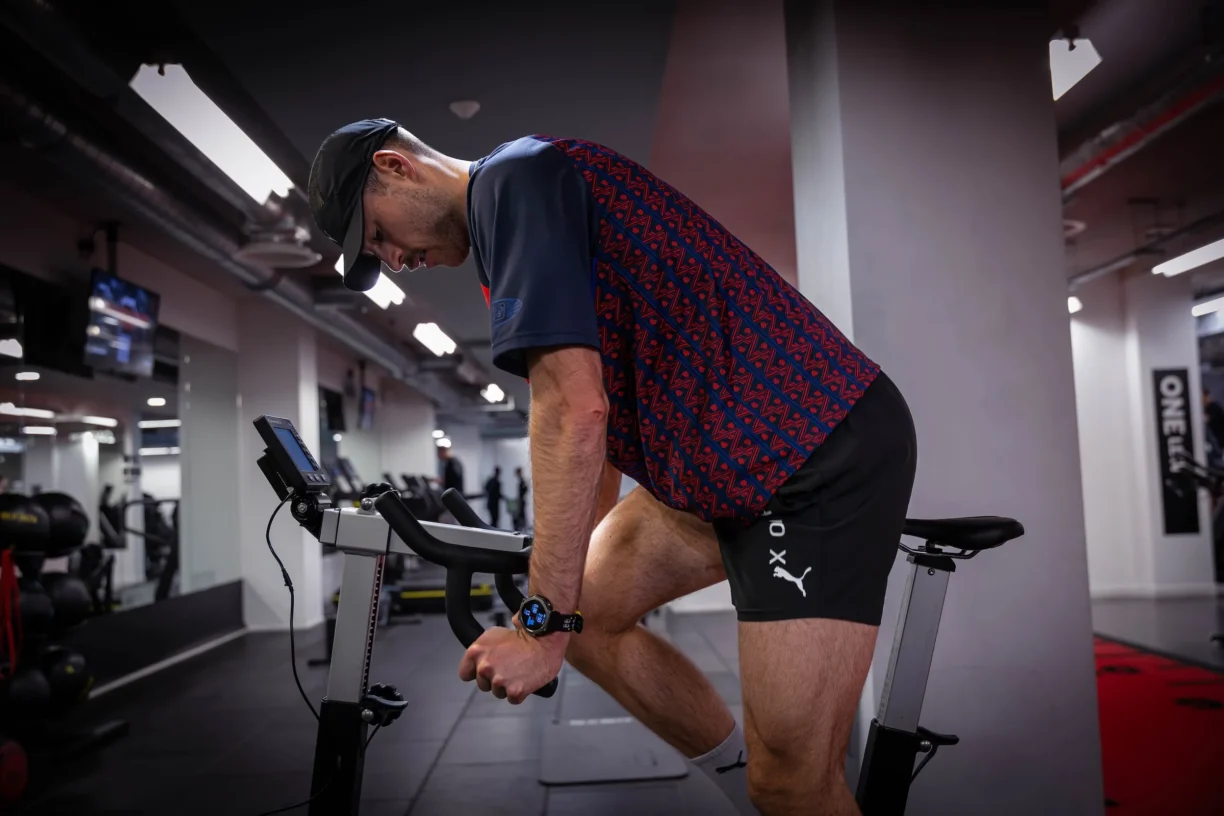
“During the week, I typically complete no more than two or three truly hard training sessions. I am a strong advocate of polarised training, which is why most of my work is done in Zone 2, at low intensity. That is where I build the foundation of my endurance, while I use higher-intensity stimuli only when they are truly necessary.”
This is not softness. It is restraint, which in endurance sport is often harder than effort. Zone 2 training builds the aerobic base that allows athletes to absorb volume, recover properly and keep the engine humming without constantly setting fire to the wiring.
For HYROX competitors, that matters. The event rewards speed, strength endurance and the ability to resume running after stations that make the legs feel as though someone has poured concrete into them.
Why Weersma Runs Fast Before He Trains Tired
The order of work matters. Weersma is not simply trying to survive on tired legs. He is trying to protect and develop real running speed before layering fatigue on top of it.
“In hybrid sessions, I always try to perform threshold running first, while my body is still fresh. Only afterwards do I move on to HYROX stations and work under accumulating fatigue. This allows me to develop real running speed, rather than just learning how to maintain pace on tired legs.”
It is a subtle distinction, but a crucial one. Many hybrid athletes practise being exhausted. Fewer practice being fast, then functional, then fast again. HYROX punishes the athlete who can move well in only one state.
Threshold work is another area where Weersma avoids the heroic nonsense. He is not chasing collapse for its own sake.
“I take a similar approach to threshold training itself. Instead of very long and exhausting intervals, I prefer shorter repetitions with minimal rest. This allows me to accumulate a large volume of work at lactate threshold without generating excessive fatigue that could negatively affect subsequent training sessions.”
That is the sort of sentence that sounds calm until you try it. Shorter repetitions, minimal rest and lactate threshold work are not a spa treatment. But the purpose is precision: enough stimulus to improve, not so much that the next session becomes a salvage operation.
The HYROX Weak Points That Actually Matter
Every HYROX athlete has a private list of enemies. Some are obvious. Sled Push. Sled Pull. Lunges. Wall Balls. The ski erg, depending on the day and the athlete’s mood, can also feel like a row with furniture.
Weersma’s analysis is more exact. “In HYROX, fatigue does not appear randomly. I know exactly which parts of the race are the most demanding. Most often, it is the drop in running pace after exiting a station, especially following sled work and lunges.
Another issue is grip fatigue during the Farmer’s Carry, Sled Pull, or during transition zones. On top of that, there is a sharp increase in lactate levels during the most glycolytically demanding stations, such as the Sled Push, Lunges, or Wall Balls.”
That is the race stripped of romance. The problem is not just doing the stations. It is what the stations do to the next run. That is where HYROX becomes less like a fitness test and more like a negotiation with a very unreasonable accountant.
The answer, for Weersma, is not simply to throw more suffering at the wall and hope some of it sticks.
“That is why I do not believe the solution is simply to train harder. The key is to precisely identify these weak points and target them directly in training.
My plan regularly includes high-density EMOM sessions as well as so-called threshold run bricks—threshold runs interspersed with strength exercises. This prepares my body specifically for the situations I will face in competition.”
There is the essence of the Hidde Weersma HYROX training method: targeted discomfort. Not random punishment. Not social media theatre. Just the right kind of misery, applied at the right time, for the right reason.
The Surprise Waiting For Runners And Triathletes
HYROX has become a natural landing place for runners, triathletes and endurance athletes who fancy something with more equipment and fewer polite water stations. But the transfer is not seamless.
“I also believe that for runners and triathletes transitioning into HYROX, the biggest surprise is muscular endurance in deep ranges of motion. Lunges or squats performed during Wall Balls can quickly expose even highly trained athletes.
This is a quality that deteriorates quickly, which is why I work on it consistently throughout the season, gradually increasing training volume and allowing the body to adapt to rising loads.”
That is a useful warning. A strong aerobic engine does not automatically mean resilient hips, knees, glutes and quads when the repetitions pile up in compromised positions. HYROX exposes the gap between fitness and durability with almost comic timing.
The athletes who adapt best are not always those with the biggest numbers in isolation. They are the ones who can keep producing force, holding form and returning to pace when the body is starting to mutter darkly.
Why Data Has Become A Training Tool, Not A Toy
The modern hybrid athlete is surrounded by information. Heart rate. Pace. Training load. Recovery. Zones. Thresholds. Sometimes the wrist looks like mission control. The danger, of course, is drowning in numbers while forgetting to train.
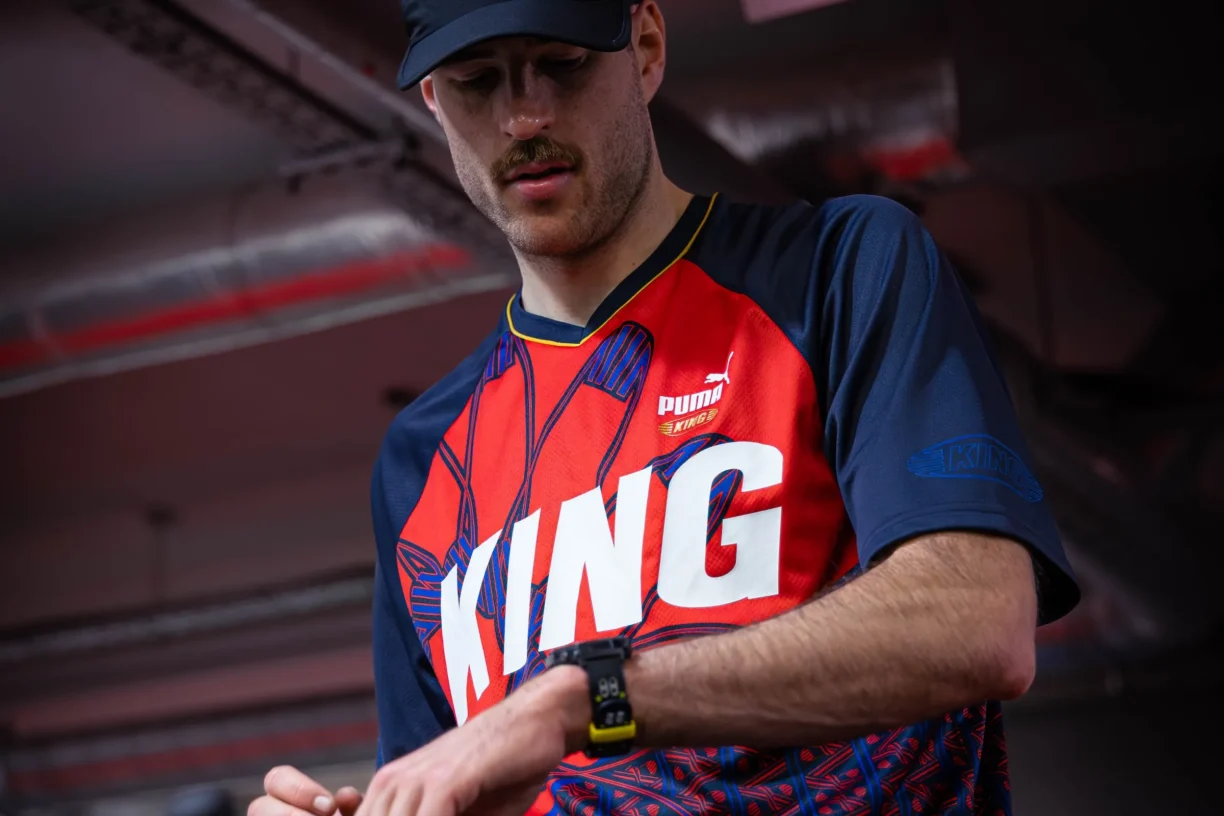
Weersma’s view is more practical. Data is there to sharpen judgement, not replace it. “In HYROX training—and more broadly in hybrid training—data is one of my most important tools. In the past, many athletes trained mainly by feel, but today, thanks to modern sports technology like Amazfit, we no longer need to guess. I can precisely monitor training intensity and make decisions based on concrete data rather than just perception.”
The key phrase is “rather than just perception”. Feel still matters, but feel can lie. A session that feels heroic may be poorly placed. A session that feels controlled may be exactly the work required. Data helps sort training from theatre.
For Weersma, Zone 4 is particularly important. “I pay particular attention to time spent in Zone 4, around the anaerobic threshold. In my view, HYROX largely comes down to who can move fastest at this intensity level.
If I can control this effort and sustain it over time, I can maintain a higher pace without burning out too early on the course. My watch allows me to continuously monitor this and ensure I am executing the intended training stimulus.”
That is as neat a description of HYROX performance as you are likely to hear. Move fast at threshold. Do not cook yourself early. Keep the pace alive after the stations. Repeat until everyone else looks as though they are trying to remember their mother’s maiden name.
The Problem With Measuring Hybrid Effort
Running data is relatively straightforward. Add strength stations, loaded carries and transitions, and the body becomes much harder to read. Wrist-based heart-rate tracking can struggle when grip, load and arm tension enter the conversation.
Weersma accounts for that. “In hybrid training, measurement accuracy is also crucial. During running, most modern watches perform very well, but when strength elements are added—such as the Sled Push, Sled Pull, or Farmer’s Carry—it is worth stabilising data with a chest strap or armband, such as the Helio Strap. This ensures that the data remains accurate regardless of the type of effort.”
For serious HYROX athletes, that accuracy can shape the entire week. Misread intensity and you may push too hard, recover too poorly or miss the session’s purpose entirely. It is not about worshipping gadgets. It is about making better decisions when the margins are small and the sled is not feeling charitable.
Confidence Built Over Months, Not Moments
The best training plans do not only create fitness. They create confidence. Not the noisy kind, but the quieter sort that comes from seeing evidence accumulate.
“Another key value for me is tracking long-term progress. I regularly analyse data such as heart rate, pace, training load, and recovery. This not only helps me plan training more effectively, but also gives me confidence that I am moving in the right direction. When I see improving performance metrics, I know the work is paying off and I can focus on the next steps in my preparation.”
That is a professional’s answer. Less romance, more proof. In elite sport, belief is useful, but belief with data behind it is a far sturdier animal.
Weersma’s approach also offers a reminder to recreational HYROX athletes: the watch is not there to flatter you. It is there to inform you. The numbers only matter if they change behaviour.
The Small Details Behind Big Performances
At the top end of HYROX, performances are not built from one magical session or one heroic week. They are assembled from thousands of small, mostly unglamorous choices: when to push, when to hold back, when to run fresh, when to carry fatigue, when to trust the plan and when to adjust it.
Weersma sees technology as part of that process. “At the highest level of sport, even small details make a difference. That is why I treat a sports watch not as a gadget, but as a fundamental training tool that helps me train smarter, manage intensity better, and optimally prepare for HYROX races.”
There is no grand mystery here, which is perhaps the most alarming part. Hidde Weersma’s HYROX success is built on clarity: an aerobic foundation, threshold discipline, targeted strength endurance, accurate data and a refusal to confuse exhaustion with progress.
It is not easy. It is not glamorous. It is not the sort of training philosophy that looks especially dramatic in a 12-second video clip.
But it does have one rather persuasive quality.
It works.