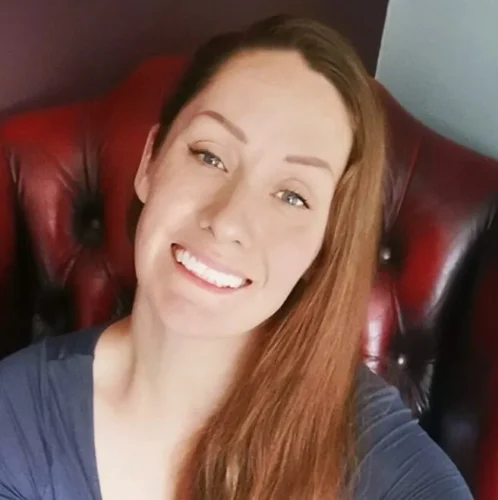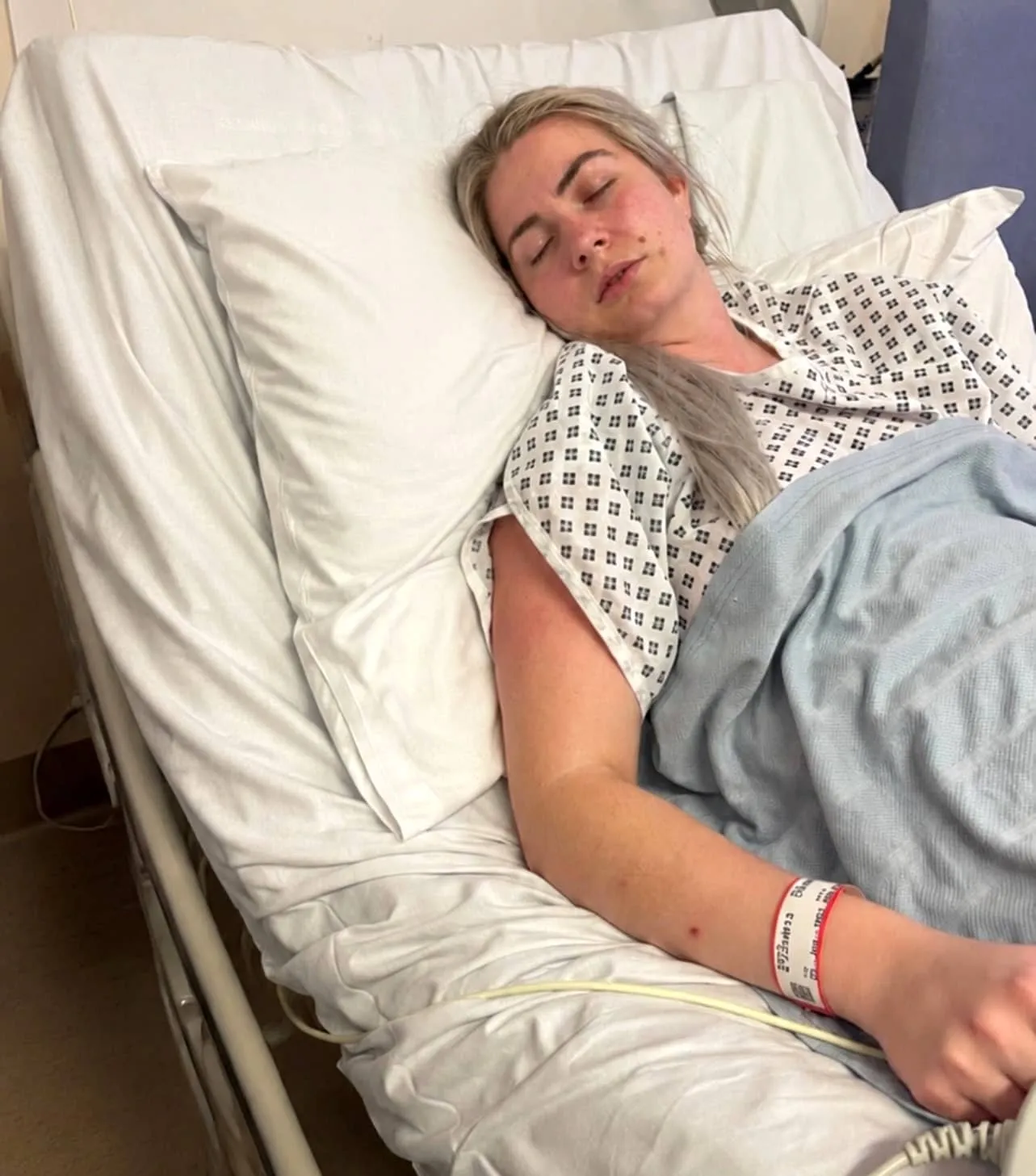
Leicester’s Emma Crabbe speaks about years of severe pain before a stage four endometriosis diagnosis and major surgery.
For Leicester’s Emma Crabbe, endometriosis was not a vague monthly nuisance, nor the sort of pain to be waved away with a sympathetic tilt of the head and a prescription. It was a slow, grinding theft of ordinary life — a condition she says went unrecognised for more than a decade before she was finally diagnosed with stage four, deep infiltrating endometriosis and adenomyosis in 2024.
Now 28, Crabbe says her symptoms began in her early teens, when painful periods became not just unpleasant, but increasingly unmanageable. By 15, she was seeking medical help, already aware that her body was raising more red flags than a nervous marshal on a windy par three.
A Teenager’s Pain That Refused To Behave
Over the years, Crabbe says she made repeated visits to her GP with severe pelvic pain, heavy bleeding, fatigue, nausea and dizziness. The response, she says, was rarely the deeper investigation she felt she needed. Instead, she was advised to try different contraceptive pills or pain relief.
That pattern — pain, appointment, reassurance, repeat — became grimly familiar.
Emma said: “Each time I visited the GP I felt that my experiences were being downplayed or normalised. I was told things like periods are painful, that I might have a low pain threshold and that this was just part of being a woman. But I knew there was more to the symptoms I was experiencing and ultimately realised something wasn’t right.”
There is a particular cruelty in being told your pain is normal when every instinct tells you it is not. It leaves a person doing battle on two fronts: one against the symptoms, and another against the quiet suspicion that perhaps they are making too much of it.
Crabbe’s account is a reminder that menstrual health is still too often treated as a soft-focus subject, when for many women it is anything but. Severe pelvic pain, heavy bleeding and exhaustion do not become harmless because they are common. Common is not the same as acceptable.
From A Cyst To A&E
For more than a decade, Crabbe was prescribed different contraceptive pills and an implant in an attempt to manage her symptoms. In 2017, a scan revealed a 5cm cyst. It later ruptured, leading her to Leicester Royal Infirmary’s A&E department.
Still, the full picture did not emerge.
By 2023, after reaching what she described as “breaking point”, Crabbe attended A&E again with severe pain. Emergency gynaecology then became involved, and treatment for suspected endometriosis began, even though she still did not have a formal diagnosis.
That diagnosis came in September 2024, after a diagnostic laparoscopy and MRI scan. The results revealed stage four, deep infiltrating endometriosis and adenomyosis, including disease affecting her bowel.
In plain terms, this was not a minor finding quietly lurking in the margins. It was advanced, complex and already shaping the future course of her health.
The Diagnosis That Changed Everything
Crabbe is now facing major surgery that may involve removing part of her bowel. There is also the possibility of a colostomy bag, along with further reproductive complications. For a 28-year-old, that is not a footnote. It is the kind of sentence that rearranges a life.
Emma said: “I strongly believe that if someone had listened to me all that time ago, I would not be faced with a condition as severe as what I live with day-to-day. I am now facing major surgery and I just keep asking myself how on earth it has got to this stage.”
Her question sits at the centre of the story. How does a teenager in pain become a woman facing bowel surgery before the condition is fully named? How many appointments does it take before persistent pain is treated not as an inconvenience, but as evidence?
Crabbe believes earlier intervention could have altered the course of her illness. That belief now fuels her decision to speak publicly, not for sympathy, but for change.
The Life Cost Beyond Physical Pain
The physical burden has been heavy enough. Yet Crabbe says the condition has reached into almost every corner of her life. She has had to move back in with her mother, change her job and give up the independence she had worked to build.
Endometriosis is often discussed in terms of symptoms, scans and surgery. Less visible is the administrative chaos it causes: jobs reshaped around pain, homes abandoned, plans postponed, futures rewritten in pencil.
Emma said: “I’ve had to move back home to be cared for by my mother and I’ve had to throw away four years of a home that I worked for. I feel that the natural choices we have in life have been taken away from me and I am afraid of what the future holds.
“It has now got to the point that I do not experience any pain-free days; endometriosis dominates every part of my body and daily life, leaving very little space for anything else.”
That is the line that lands hardest: no pain-free days. Not bad days and good days. Not flare-ups neatly boxed into a diary. Every day.
The emotional toll has also been considerable. Crabbe has described anxiety, depression and uncertainty about her future fertility. For anyone who has ever had to negotiate with their own body before getting out of bed, her words will have a particular, uncomfortable weight.
Why Emma Is Speaking Out
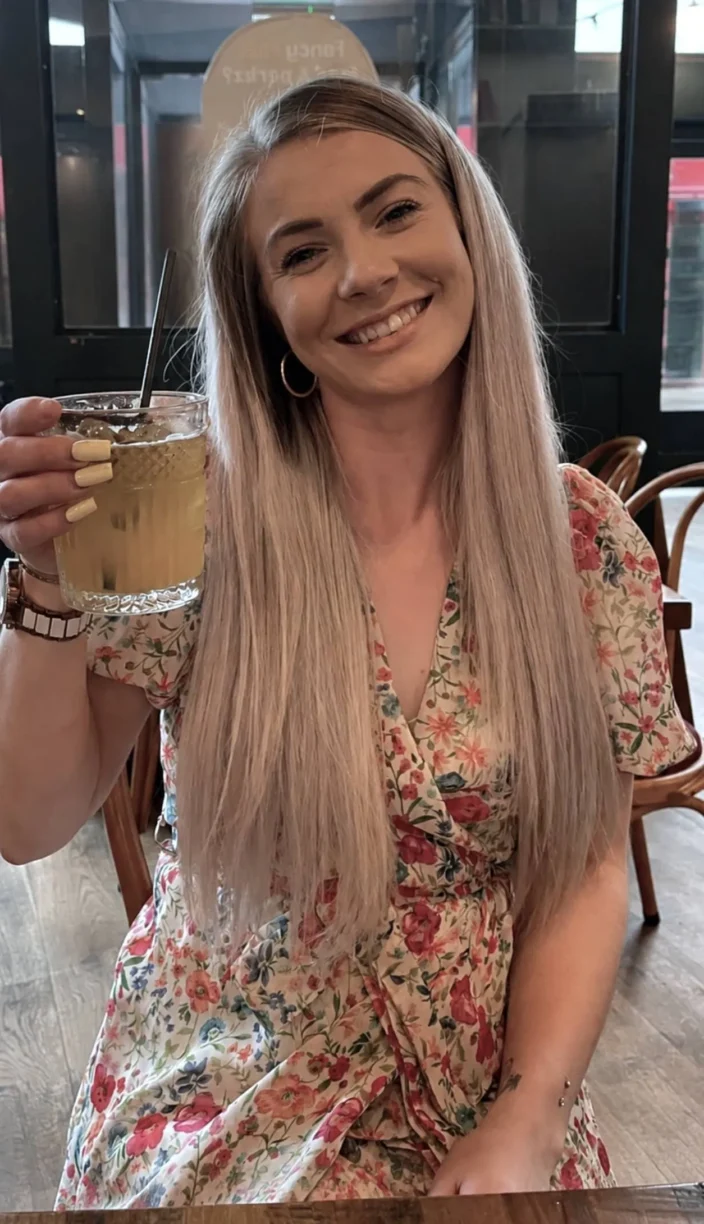
Crabbe now wants her experience to raise awareness of endometriosis and help prevent others facing similar delays. She is calling for better education around menstrual health, earlier recognition of symptoms and improved access to specialist care.
This is not about encouraging panic over every painful period. It is about refusing to let severe, persistent symptoms be filed under “probably normal” until the situation becomes harder, messier and more invasive to treat.
Emma said: “For years, I struggled in silence believing that severe pain was something I just had to endure. I want to use my experience to help create awareness and change, and to encourage others to seek help earlier. I would like future patients to have a clearer, quicker and more compassionate path to diagnosis and treatment than many currently experience.”
There is no neat bow to tie around Crabbe’s story. She is still living it, still facing surgery, still dealing with the consequences of a condition that, by her account, should have been taken seriously much sooner.
But there is a clear lesson in it. Pain that changes a life deserves more than a shrug. And when a young woman says something is wrong, the least the system can do is listen before the whisper becomes a roar.