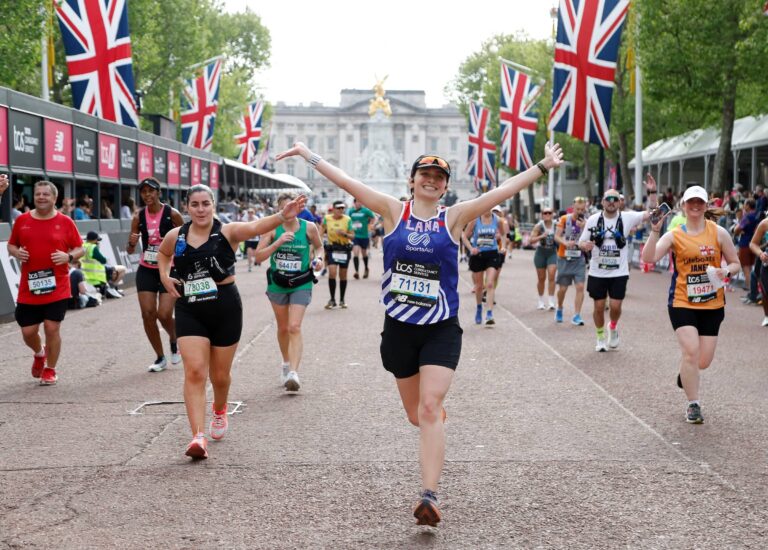
GP-backed breathing advice for runners, including nasal breathing, recovery days, tapering and Breathe Right nasal strip tips.
Breathing techniques for runners can sound like the sort of thing whispered earnestly by someone wearing compression socks in a coffee queue, but ignore your airflow and your body may stage a quiet mutiny somewhere around mile four. If you are putting in the miles, following the plan and still wondering why your pace has the enthusiasm of a damp towel, your lungs and nasal passages may deserve a closer look.
Running is usually sold as a leg sport. Fair enough. The legs do carry the cargo. But the engine room is oxygen, and if that delivery system is compromised, everything else has to work harder. Stamina suffers. Recovery drags. Form can unravel. Then suddenly you are not gliding along the road; you are bargaining with a kerb.
GP Dr Janine David, advisor to Breathe Right nasal strips, says runners often underestimate how much breathing influences performance.
“Breathing is often one of the most overlooked parts of running performance. If your airflow is restricted, your body has to work much harder to deliver oxygen to the muscles, which can impact stamina and how quickly you recover.
“If you think about it, we take about 15 breaths per minute at rest but during a run this can increase hugely to around 40 to 60 breaths per minute,[1] which means your body is working much harder to get oxygen to the muscles. Anything that gets in the way can make this process far more difficult.”
Why Restricted Airflow Can Make Running Feel Harder
A 2026 study found that even small changes in airflow pathways can affect how easily air moves through the airways. That may sound modest, but in running terms modest becomes enormous very quickly. A small restriction at rest can become a full committee meeting once breathing rate rises and the body starts asking for oxygen with increasing impatience.
If airflow is restricted, the body has to work harder simply to breathe. That can raise heart rate sooner, make running feel more difficult and leave recovery feeling like it has been handed over to a sleepy intern.
This is where breathing techniques for runners become more than a wellness garnish. They are part of the performance picture: not glamorous, not especially heroic, but potentially important.
The Fatigue Link Runners Should Not Ignore
Research looking at female runners wearing tight sports bras that physically restricted breathing found that tighter restriction caused more respiratory muscle fatigue. In plain English, the muscles involved in breathing had to work harder, and that can redirect energy away from the legs.
That is not ideal, unless your race strategy involves turning your diaphragm into the star of the show while your calves quietly resign.
Pharmacist Noel Wicks, adviser to Breathe Right, explains the possible knock-on effect for injury risk.
“While your breathing doesn’t impact injury risk directly, it can increase the conditions that cause injuries. For example, if you’re fatigued with tired muscles, then your running form is likely going to be compromised, which in turn can lead to a higher risk of injury.”
That distinction matters. Breathing alone is not presented here as a magic injury switch. But fatigue alters movement, and poor movement under fatigue is often where trouble begins.
Nasal Breathing, Mouth Breathing And Running Efficiency
Research has also examined nasal breathing versus mouth breathing, finding that nasal breathing helped make breathing more controlled and was linked with a slightly lower heart rate. For easier or moderate-intensity runs, that may help runners stay relaxed for longer and delay fatigue.
Noel Wicks says there is a place for both nasal and mouth breathing, depending on intensity.
“Nasal breathing has also been shown to help improve running efficiency at moderate intensity running,[5] although of course, during intense runs such as sprints, both the mouth and nose are needed to help get the maximum amount of oxygen into the lungs.”
That is the sensible bit often lost in online running advice. Nasal breathing is not a badge of purity. It may help with control and efficiency during steadier efforts, but when the pace lifts and your lungs start behaving like bellows in a blacksmith’s shed, the mouth joins the party.
Four Practical Ways To Improve Race-Day Running Performance
1. Do Not Try To Catch Up On Missed Training
Missed sessions happen. Work gets in the way. Life gets untidy. The weather turns biblical. The problem comes when runners try to squeeze lost weeks into a final frantic burst before race day.
That is not training. That is an argument with your tendons.
Noel Wicks says: “Instead, stick to training that you can realistically manage and focus on consistency. Gradually building your mileage again is far safer than suddenly increasing the distance or intensity, especially close to a race.”
Consistency beats panic. It nearly always does.
2. Use Recovery Days Properly
Rest can feel suspicious when you are training for an event, as if fitness is leaking out through the sofa cushions. In reality, recovery days are where the body gets around to repairing the damage caused by training.
Noel Wicks explains that it is during recovery days where muscles repair. “This helps to reduce your injury risk. But you don’t need to sit still during your rest days: light movement such as walking, stretching or mobility work can support recovery without putting strain on your body.”
That is the key: recovery is not necessarily inactivity. It is lower stress. Walking, stretching and mobility work can all help keep the system ticking over without turning every day into a personal best attempt.
3. Consider Where Nasal Strips Fit In
Breathe Right nasal strips are drug-free, flexible adhesive bands designed to help people breathe better by opening the nasal passages. The brand says Breathe Right® nasal strips open your nose up to 38% more, and they can be worn during exercise as well as sleep.
Original Breathe Right nasal strips come in beige fabric and are designed to relieve nasal congestion that can arise from colds, allergies or a deviated septum. They are available in Small/Medium or Large, with packs of 10 or 30 strips.
Breathe Right Nasal Strips Clear are designed for sensitive skin. They work in the same way as the other strips, but use a hypoallergenic, flexible and non-porous material intended to make removal easier. These also come in packs of 10 and 30 in Small/Medium or Large.
Breathe Right Nasal Strips Extra Strength are 50 per cent stronger than Original Breathe Right® nasal strips and are positioned for times when congestion feels more stubborn. They are available in one size designed to fit most noses, in packs of eight or 26 strips.
The sensible editorial caveat is simple: nasal strips are not a substitute for training, recovery, pacing or medical advice. But for runners dealing with nasal congestion or restricted airflow, they may be a useful part of the kit bag rather than another drawer-bound gadget bought during a late-night fitness wobble.
4. Taper Before Race Day
The final week before a race is not the time to prove moral superiority through mileage. Tapering means reducing intensity and distance so the body can absorb training and arrive fresher at the start line.
“This helps your body recover so you can arrive at the start line feeling fresh rather than exhausted,” says Dr Janine David. “Use this week to really focus on good sleep, good nutrition and lots of stretching and mobility!”
It is not laziness. It is strategy. There is a difference, although admittedly both can involve sitting down.
The Final Breath
Running performance is rarely about one grand revelation. It is usually a stack of small things done well: sensible training, good sleep, recovery, pacing, nutrition, mobility and, yes, breathing.
Dr Janine David puts it plainly. “Breathing is so important – we all do it, every day, yet we give it such little thought. When you’re running, your body needs to get oxygen to your muscles, so you can keep going without getting tired. Inefficient breathing can ruin this. So, with this in mind, focusing on your breath should be up there in your list of priorities. Breathe Right nasal strips offer immediate relief by opening up your nose, easing congestion and allowing you to breathe more freely.”
For runners chasing improvement, the lesson is not to obsess over every inhale like a monk with a stopwatch. It is to stop treating breathing as background noise. The miles matter, obviously. But so does the air that gets you through them.