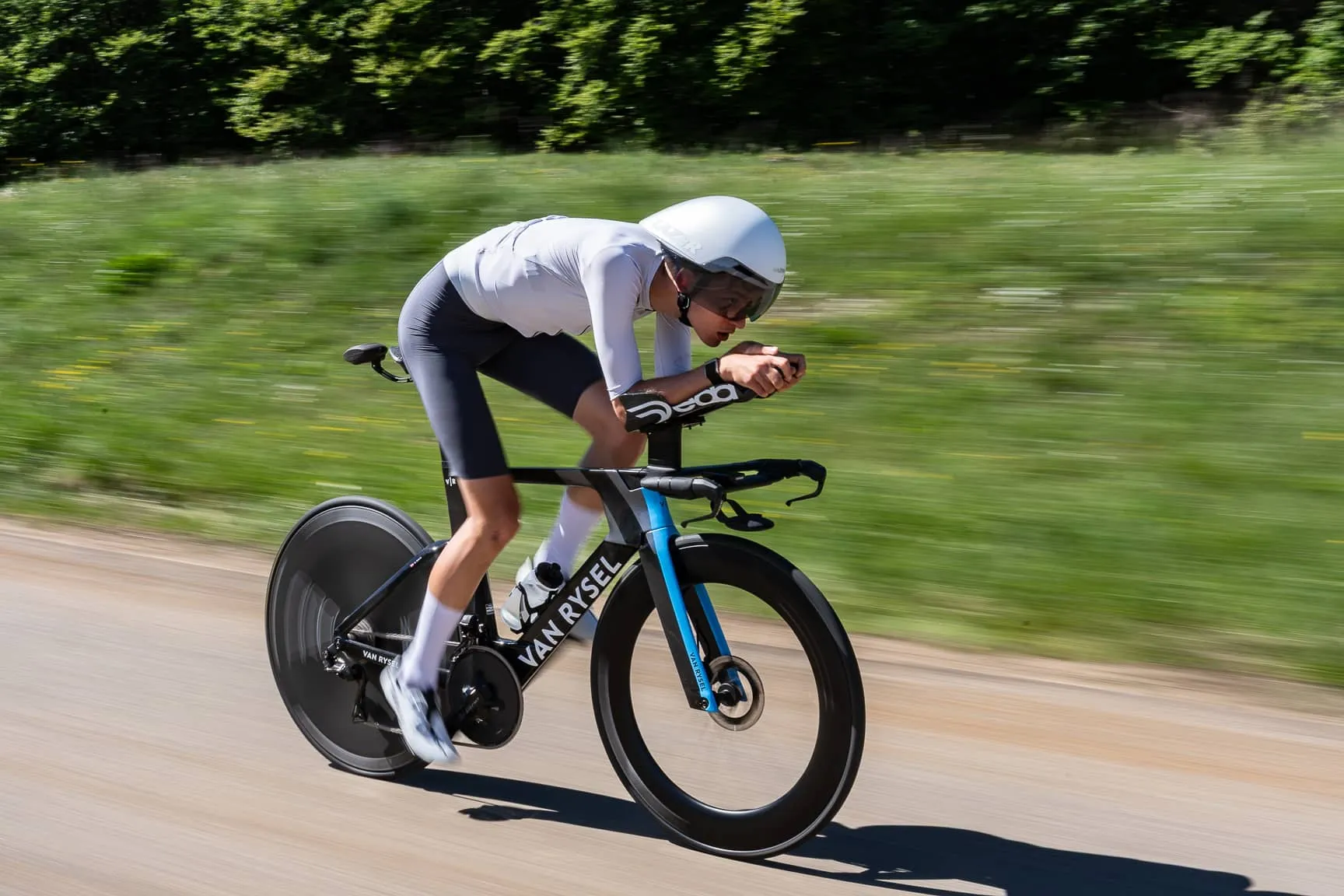
Aeroscale’s new cycling tracker measures wasted watts in real time, turning road data into sharper performance decisions.
The Aeroscale WASTED WATTS TRACKER has opened international pre-orders through Kickstarter, promising serious cyclists something they have long suspected but rarely seen clearly: exactly where their hard-earned watts vanish once the road, wind, tyres and drivetrain have finished taking their cut.
For riders who already know their FTP, tyre pressure, chain wax preference and preferred sock height with forensic certainty, this is not another vague fitness gadget promising enlightenment between two push notifications. Aeroscale is pitching its new system as a real-time cycling efficiency tracker capable of measuring the watts lost to aerodynamics, rolling resistance and drivetrain friction while the rider is actually out on the road.
That matters because cycling is a sport in which riders will cheerfully spend a small fortune to save a handful of watts, then sit bolt upright into a headwind like a patio umbrella. The WASTED WATTS TRACKER is designed to show, live on a cyclist’s head unit, how much energy is being wasted and why.
A Lab-Style Cycling Tracker Built For The Real Road
Aeroscale says its system is the first onboard set-up capable of measuring, analysing and displaying lost watts in real time during outdoor riding. Rather than relying on a wind tunnel, rolling resistance rig or post-ride guesswork, the WASTED WATTS TRACKER collects data in real-world conditions.
That means a rider can test a new position, wheelset, tyre pressure, clothing choice or equipment change during an actual ride, not under sterile laboratory conditions where the coffee is poor and the wind is suspiciously obedient.
The system combines two connected modules, a smartphone app and a high-precision GPS RTK data correction service. By synchronising power output, ground speed, altitude and airspeed, Aeroscale says it can deliver actionable insights with only a few seconds of latency.
“Our mission is to make the invisible losses that hold back performance visible. With this Kickstarter launch, we want to give every demanding cyclist the keys to optimization that was previously reserved for elite athletes and research laboratories.” — Manuel Sellier, Founder and CEO of Aeroscale.
How The Aeroscale WASTED WATTS TRACKER Works
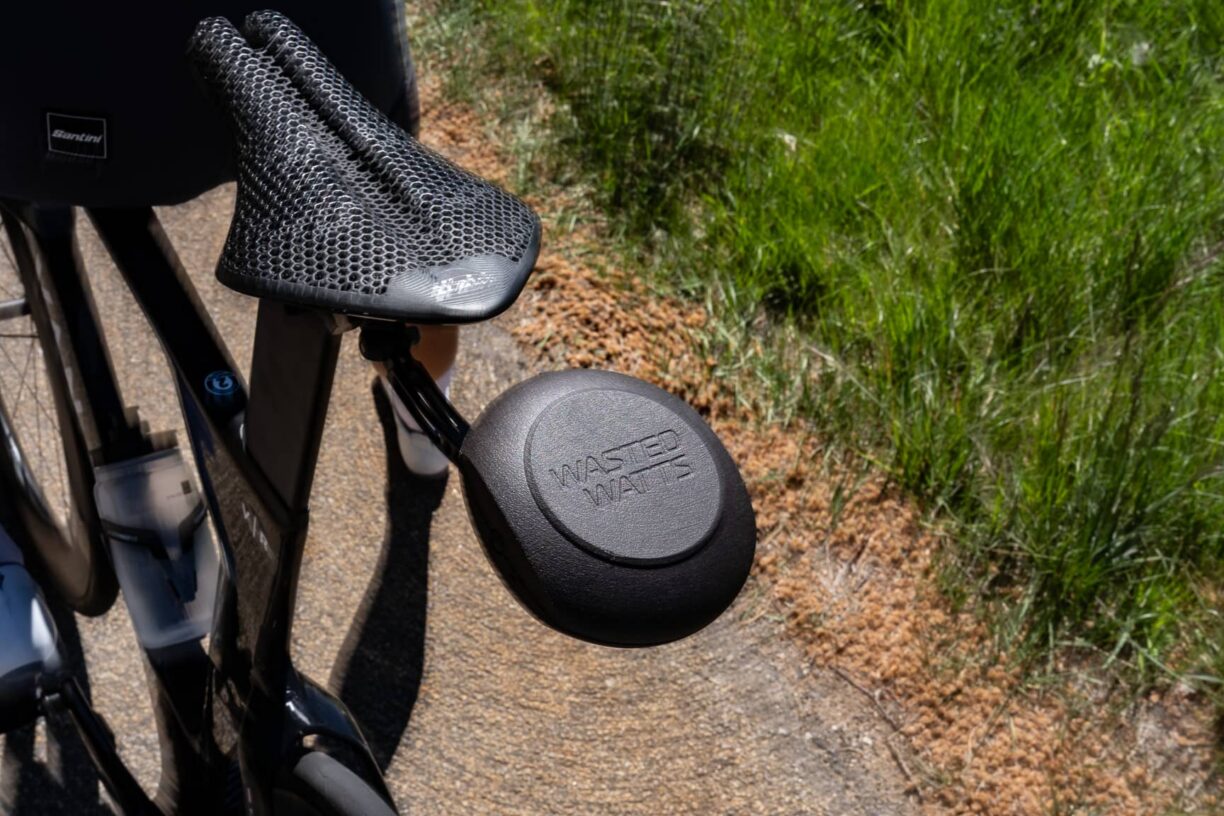
The WASTED WATTS TRACKER is built around two key hardware modules: one at the rear and one at the front. Together, they are designed to compare what the rider produces with what the bike actually achieves on the road.
The rear module acts as the system’s brain. It uses the principle of conservation of energy, comparing the mechanical energy generated by the rider via a power meter with changes in kinetic and potential energy. In plain English, it asks a rather uncomfortable question: if you are putting out this many watts, why are you not going faster?
A magnetic sensor on the rear wheel measures tiny changes in rotation down to the microsecond, while GPS RTK technology is used to improve altitude accuracy. Aeroscale says this delivers centimetre-level altitude resolution, far beyond standard GPS and significantly sharper than high-end barometers.
That altitude detail is important because even slight gradients can distort performance data. Anyone who has tried to interpret a ride file after a rolling route knows the feeling: half science, half séance.
Why The Front Module Matters
At the front of the bike sits the Pitot module, which measures airspeed. This allows the system to turn Raw Wasted Watts into what Aeroscale calls Normalized Wasted Watts, an efficiency score designed to account for wind conditions.
Aeroscale claims the front module can do this with a margin of error of less than 1 watt. As ever with performance tech, that claim will be judged by riders in the blunt courtroom of the open road, where crosswinds, bad tarmac and questionable pacing habits tend to cross-examine everything.
Still, the aim is clear: to help cyclists understand whether a change in position, kit or set-up is genuinely saving energy, rather than merely looking fast in the café window.
Less Calibration, More Riding
One of the more interesting claims around the Aeroscale WASTED WATTS TRACKER is its self-calibration system. Technologies that measure aerodynamic drag and rolling losses have often required fiddly set-up, careful inputs and a level of patience normally associated with assembling Scandinavian furniture after a long ride.
Aeroscale says its patented self-calibration algorithm avoids the tedious calibrations usually required by this type of technology, including rider weight, rolling resistance and probe calibration.
The company describes the device as a 100% “Plug & Ride” solution. Install it, ride, and let the system do the arithmetic.
Already Tested At The Sharp End
Aeroscale says its technology has already been used for several seasons by multiple WorldTour teams. That gives the product a useful performance pedigree without requiring the rest of us to pretend we are floating up Alpine climbs with a directeur sportif shouting split times from a team car.
The more interesting commercial question is whether this kind of data can move beyond elite teams and into the hands of demanding amateurs, time-triallists, triathletes and data-led road cyclists.
Power meters made that journey. Once niche, expensive and intimidating, they eventually became standard equipment for riders who wanted structured training rather than emotional guesswork. Aeroscale is clearly betting that wasted-watts tracking could follow a similar path.
Price, Kickstarter Offer And Subscription Detail
The WASTED WATTS TRACKER is currently available for pre-order through Kickstarter at a special Early Bird price of $1,899. Aeroscale lists the final retail price as $2,499 after the campaign.
Kickstarter backers also receive lifetime access to the data correction feed, which Aeroscale says will later be offered as a $9.99/month subscription.
That makes the launch offer considerably more attractive for early adopters, though this is still firmly premium performance territory. This is not casual commuter kit. It is for riders who look at a headwind and see not weather, but an invoice.
Pros And Cons
Pros
The biggest strength is obvious: the Aeroscale WASTED WATTS TRACKER is designed to show real-time efficiency losses on the road, not in a controlled lab setting. For serious cyclists, that could make equipment testing, position changes and pacing decisions far more practical.
The system also combines several important data points — power, speed, altitude and airspeed — into one performance picture. That is more useful than staring at a single number and pretending it explains the universe.
The inclusion of lifetime access to the data correction feed for Kickstarter backers also adds genuine value, especially if the later subscription model becomes part of the long-term ownership cost.
Cons
The price is substantial. At $1,899 during the campaign and $2,499 at final retail, this sits in the realm of committed performance investment.
It also appears best suited to cyclists already using a power meter and comfortable interpreting advanced ride data. Riders who simply want to enjoy a Sunday spin without discovering that their rain jacket has the aerodynamic profile of a garden shed may not need this level of scrutiny.
As with any Kickstarter campaign, buyers should also understand that backing a product launch is different from buying an established item off a shop shelf.
Who Is This Best For?
The WASTED WATTS TRACKER is best suited to serious road cyclists, time-triallists, triathletes, coaches, performance teams and technically minded riders who want to quantify equipment and position changes outdoors.
It will appeal most to cyclists who already train with power, care about aerodynamics and want to know whether a wheelset, tyre pressure change, skinsuit, helmet or bike position is genuinely improving efficiency.
It is probably overkill for casual riders. Then again, so are deep-section wheels on a coffee ride, and that has never stopped anyone.
Is It Worth It?
For the right cyclist, the WASTED WATTS TRACKER could be a serious testing tool rather than another expensive dashboard ornament. Its value lies in turning hidden performance losses into visible, rideable data.
If the system delivers on its promise, it could help riders make better decisions about kit, position and set-up without needing access to a wind tunnel or professional testing lab.
For everyone else, it is a reminder that cycling remains beautifully, absurdly measurable. You can ignore wasted watts, of course. But once someone shows you where they are hiding, they become very hard to unsee.