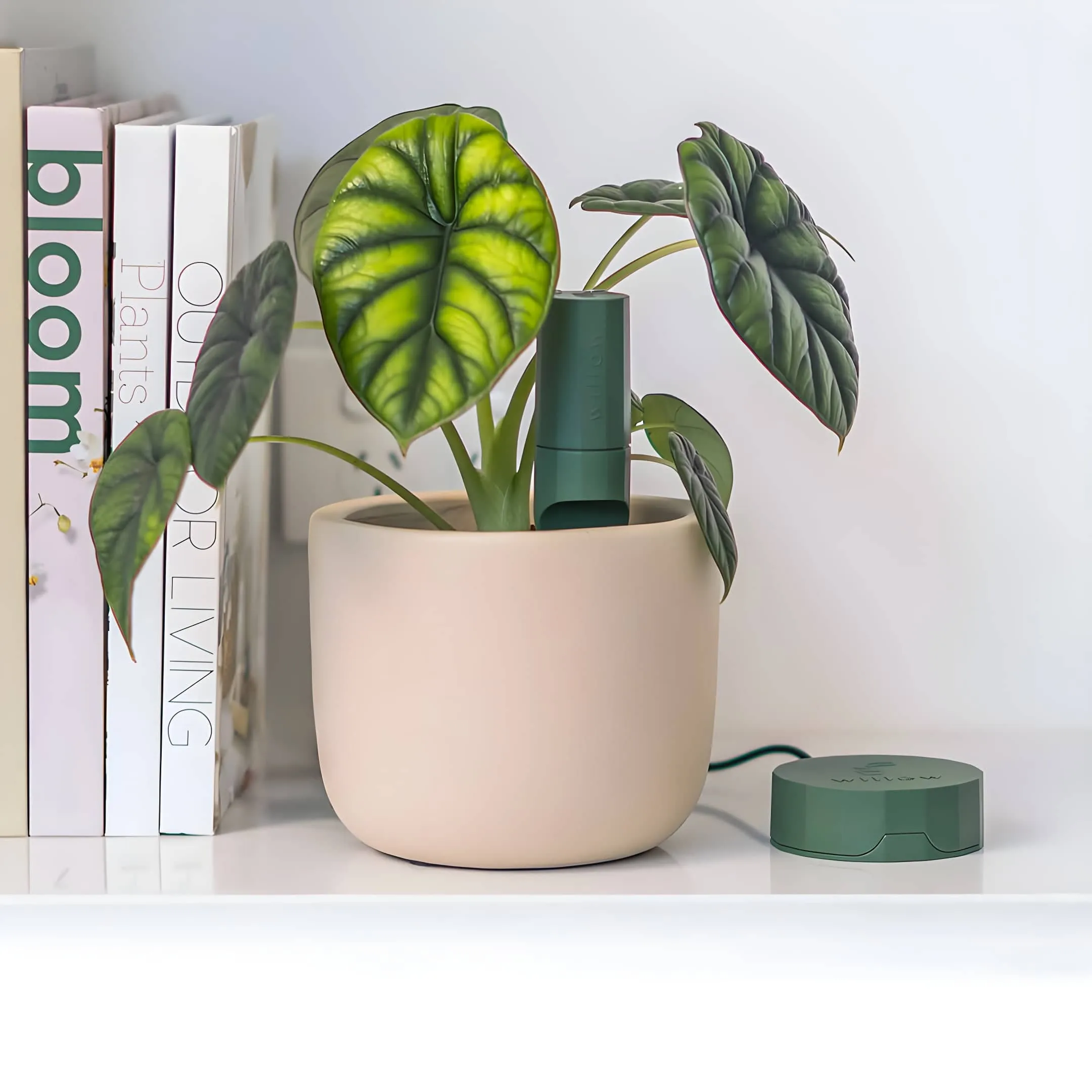
Willow’s smart sensor promises to take the guesswork out of houseplant care with live alerts on watering, light and nutrients.
The modern houseplant has become both prized possession and silent accuser, sitting on kitchen shelves and living-room ledges looking decorative one week and quietly mutinous the next.
Plant care brand Plant With Willow is betting that plenty of those leafy domestic dramas come down to one thing: too much guesswork. Its answer is a £34.99 smart sensor designed to tell owners exactly what their plant needs, and when.
It is a neat idea, and one that feels rather overdue. Homes have embraced smart heating, lighting and security with the enthusiasm of a Labrador chasing a tennis ball, yet plant care has largely remained a fog of vague advice, crossed fingers and the occasional panicked splash of water.
Plant With Willow’s new sensor is meant to change that by tracking the essentials that matter most to plant health: moisture, light, temperature, humidity and nutrients. Placed discreetly in the soil, it sends notifications to a connected phone, turning the uncertain art of keeping greenery alive into something a good deal more measurable.
A smarter answer to an old problem
For many people, caring for a houseplant has long involved a kind of cheerful improvisation. Owners prod the soil, inspect a leaf, squint at a windowsill and make a decision that may or may not amount to horticultural manslaughter.
Willow’s appeal lies in stripping that back. Instead of relying on generic advice or rigid weekly routines, the sensor is designed to respond to the real conditions around each plant. That matters because no two homes are quite alike. One living room may be dry and bright; another cool and gloomy. What keeps one fern happy may finish off another.
By focusing on live conditions rather than guesswork, Plant With Willow is positioning the sensor as a practical tool for everyday plant owners rather than a gadget for specialists.
Five key measurements, one clear message
The company says the sensor monitors the five variables that genuinely shape plant health. Moisture is the obvious one, and perhaps the most useful, given how often overwatering sends plants into a slow, soggy decline. But Willow also tracks light exposure, ambient temperature, humidity and nutrients, building a fuller picture of what is happening in the pot and around it.
The result, according to the brand, is a set of simple, actionable notifications rather than a flood of technical data. In other words, the technology does the diagnosing while the owner gets the instruction.
That approach may prove especially useful with light. Anyone who has ever tried to decode the phrase “bright, indirect sunlight” will know it can sound less like plant guidance and more like a riddle muttered by a Victorian groundskeeper. Willow measures light intensity every minute, helping users work out whether a plant is actually in the right spot rather than merely somewhere that feels vaguely promising.
A “baby monitor” for plants
One of the more eye-catching features is Willow’s so-called “Happiness Score”, which offers an at-a-glance health check through the app. If the score drops, users are told what needs adjusting before the plant begins to show obvious distress.
That may be the most important part of the pitch. Plant care often becomes reactive. By the time yellow leaves appear or stems start drooping, the damage is usually well underway. Willow is trying to move that timeline forward, giving owners a warning before the plant waves the white flag.
The company describes the device as a kind of baby monitor for houseplants, and while that may sound slightly absurd, it gets to the heart of the idea: reassurance. For nervous plant owners, or those with a growing indoor collection, clear prompts may be more useful than another well-meaning internet chart.
Built for one plant or a full indoor jungle
The £34.99 Starter Pack includes one Hub and one Sensor, but the Hub can support up to 40 sensors. That gives Willow room to serve both the casual buyer with a single peace lily and the more committed collector whose hallway looks like the edge of a rainforest.
It also nudges the sensor beyond novelty territory. Plenty of products are clever with one plant on a windowsill. Fewer feel built for households where greenery has become part décor, part obsession.
Why the timing makes sense
The launch lands at a moment when houseplants have become part of how people shape their homes, not merely decorate them. Indoor plants now sit alongside candles, lamps and artwork as markers of taste and atmosphere. The trouble is, they are alive, which means they have the awkward habit of dying when ignored or misunderstood.
Willow’s sensor taps into that wider shift. It is not just selling plant care; it is selling confidence. For those who like the idea of a greener home but lack the instinct or experience to keep plants thriving, that could be a persuasive promise.
The final word
Plant With Willow has identified a familiar domestic frustration and dressed it in the language of smart living. Whether it becomes a staple of modern plant care remains to be seen, but the idea is easy to grasp: less guesswork, fewer casualties, and a better shot at keeping the average houseplant upright and alive.
For anyone who has ever watched a once-healthy monstera collapse with the expression of a betrayed relative, that will sound less like indulgence and more like progress.