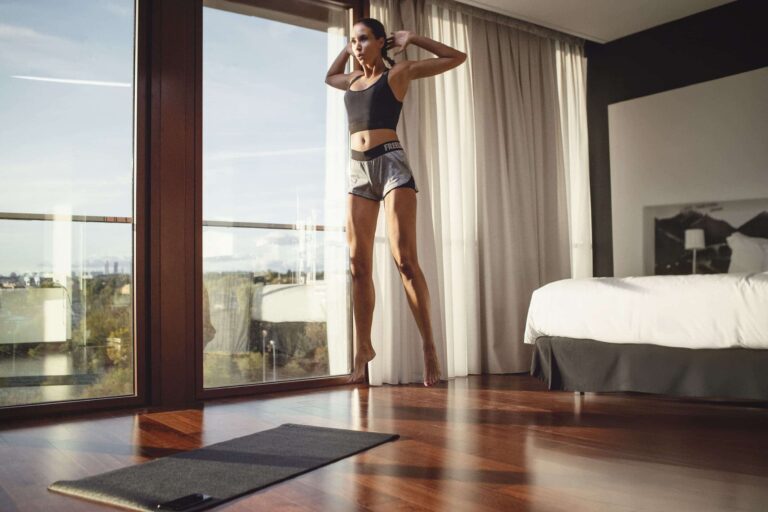
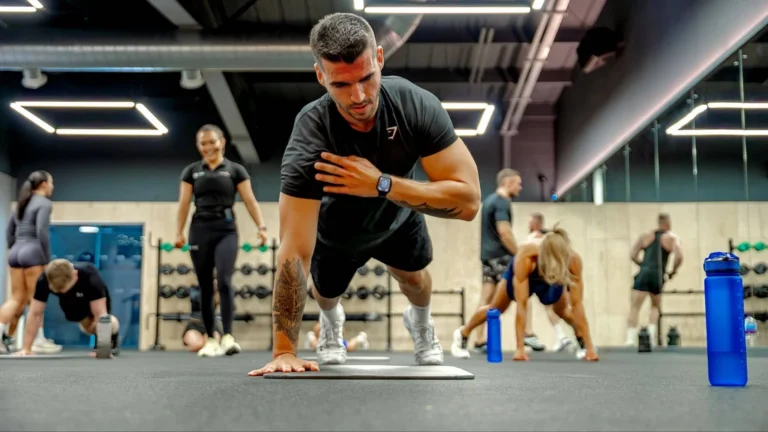
Micro HIIT uses short max-effort bursts to boost fitness and metabolism fast, with a quick bodyweight routine included.
If your schedule is packed tighter than a Sunday car park at a retail outlet, Micro HIIT might be the most honest deal in modern training: less time, fewer reps, and an unmistakable invitation to work harder than you normally would. It’s HIIT’s sharper, shorter cousin—designed to get you into the high heart-rate zones quickly, then get you back to real life before your kettle has finished making its point.
At its core, Micro HIIT is simple: you push at a higher intensity over fewer repetitions, using even shorter bursts than a standard HIIT session. The pitch is not “easy.” The pitch is “brief.” And for a lot of people, that’s exactly the trade they’re willing to make.
What is Micro HIIT, exactly?

Traditional HIIT often gives you longer blocks to build effort—work intervals that feel tough, but not necessarily like you’re bargaining with your lungs. Micro HIIT cuts the runway. Those shorter, sharper bursts are meant to elevate your heart rate faster and keep the session compact, while still delivering meaningful stimulus.
In practical terms, Micro HIIT tends to work best when:
- the movements are simple and repeatable (bodyweight staples),
- the pace is high but controlled,
- rest is structured (not accidental),
- and you finish feeling worked, not wrecked.
If standard HIIT is a hard lecture, Micro HIIT is the pop quiz. You don’t get long to prepare—so you turn up and perform.
What the research is suggesting
The interest in Micro HIIT has been fuelled by studies pointing toward real benefits from surprisingly short bouts of intense work.
One recent push came via research highlighted in an American College of Sports Medicine journal, reporting that around seven minutes of intense HIIT can be enough to deliver fitness benefits. In other words: the body responds to intensity, not just duration—provided the effort is genuinely high.
A separate line of research reported in Cell Metabolism has also suggested that bouts of Micro HIIT can slow down cellular ageing. That’s a big claim, and worth treating with appropriate caution in day-to-day conversation—but the direction of travel is clear: short, intense exercise is being taken seriously by scientists, not just fitness influencers with excellent lighting.
Who can benefit from Micro HIIT?
Micro HIIT is particularly useful for people with limited time—parents, commuters, shift workers, anyone who can’t reliably protect an hour for training.
It’s also practical because it’s modular. You can do short bursts:
- first thing in the morning,
- on a lunch break,
- between meetings,
- or while dinner cooks.
And yes—this is the rare fitness trend that doesn’t collapse when you attempt it in the real world.
Micro HIIT and body fat
Micro HIIT can be attractive for those aiming to reduce body fat, including fat stored around the middle—often discussed alongside insulin and blood-glucose regulation. Insulin is the hormone that regulates glucose in the blood; when cells absorb more glucose than they can use, that excess can be stored as fat.
Research discussed in Frontiers has indicated that HIIT-style training programmes, including Micro HIIT approaches, can have positive effects for people at risk of type 2 diabetes. The sensible takeaway is not “this replaces medical care.” The sensible takeaway is that intense, time-efficient training can be a useful tool in a broader lifestyle picture.
The recovery angle: stress that helps, not stress that breaks
A well-run Micro HIIT session creates what you could call “healthy stress”—a stimulus that pushes adaptation. There’s also discussion around autophagy: the body’s process of clearing out damaged cells and regenerating healthier ones. Autophagy is commonly described as part of the body’s housekeeping system, and it’s often linked (in broad terms) to healthy ageing and disease risk reduction.
Here’s the practical point: whether you care about autophagy or not, Micro HIIT works best when it’s programmed with restraint—high effort, good form, and enough recovery that you can repeat it consistently.
How to do Micro HIIT without making a mess of it
Before the workout, a blunt warning in plain English: Micro HIIT punishes sloppy form. Keep it clean.
- Intensity: Aim for hard, not chaotic. If your technique collapses, scale it.
- Frequency: Start with 2–3 sessions per week. Add only when recovery is solid.
- Progression: Improve by adding a round, tightening rest slightly, or upgrading a regression (knee push-ups → full push-ups).
- If you’re new, returning, pregnant, injured, or managing a health condition: get clearance and modify intelligently.
Now, the practical bit.
A Micro HIIT workout you can do anywhere
This session is adapted from the newly launched Freeletics 15-minute Training Journey concept: bodyweight-only work, no equipment, done anytime and anywhere. Use it as a template—keep the structure, adjust the difficulty.
1) Dynamic warm-up
10 squats
Feet shoulder-width apart. Drop your hips below knee height into a deep squat, then fully extend knees and hips to stand tall. Repeat smoothly.
10 windmills
Arms by your sides. Rotate your shoulders backwards. Lift arms to shoulder height and continue the rotation so the arms travel behind the head in a controlled circle.
20 bicycle crunches
Lie on your back. Knees up at 90 degrees. Shoulders slightly off the ground, hands touching ears. Bring elbow to opposite knee while the other leg extends and hovers off the floor.
10 side lunges
Arms out in front at shoulder height. Feet wider than shoulder width, standing tall. Shift hips back and down on one side while the other leg stays extended. Alternate sides.
2) Drill
Negative push-ups
Start in a regular push-up position. Fully extend arms to lift the body. Lower under control until chest and knees touch the floor. Push the chest up while knees stay down, then lift knees to return to the full position.
This drill is about control. Treat it like strength practice, not a race.
3) Interval: 3 rounds
10 knee push-ups
Standard push-up position with hands either side. Chest lifts as arms extend while knees remain on the floor.
10 burpees
From standing, drop into a squat with hands on the floor. Kick feet back into a plank with arms extended and body aligned. Return to standing and jump up, hands on head.
15 shoulder bridge leg raises (left)
Lie on your back, feet on the floor, knees raised. Lift hips. Extend the right leg while the left foot stays down. Rotate hips so the right ankle is above the hip, then slowly lower the right leg so knees come together.
15 shoulder bridge leg raises (right)
Repeat on the other side.
30 seconds rest
If round three is falling apart, you’re not failing—you’re learning where your current ceiling is. Scale, finish strong, and come back next time.
4) Active cooldown
20 seconds shoulder stretch (left)
Stand upright. Extend left arm across the body, use the right arm to pull it closer into the chest.
20 seconds shoulder stretch (right)
Repeat on the other side.
30 seconds deep squat hold
Feet shoulder-width apart. Lower hips below knees, heels down. Hold.
30 seconds butterfly hold
Sit tall. Soles of feet together, heels tucked in, knees outwards.
30 seconds toe reach
Stand with feet together. Hinge at the hips, keep knees extended, reach toward toes. Hold.
The straight talk: Micro HIIT is not magic, but it is useful
Micro HIIT won’t out-train a chronically poor diet, no-sleep weeks, or stress levels that could sandblast paint. But as a time-efficient training tool, it’s hard to argue with. It asks for focus, rewards consistency, and fits into modern life without needing a home gym, a spare hour, or a dramatic personality change.
If you want a starting plan, do this Micro HIIT session twice a week for two weeks. Keep notes on how you feel, how your form holds up, and how quickly you recover. Then adjust—like an adult—based on results.
FAQs
Is Micro HIIT good for beginners?
Yes, if you scale the movements and keep technique strict. Start with fewer rounds and longer rest.
How often should I do Micro HIIT?
Two to three times per week is a solid start, alongside walking and basic strength work.
Do I need equipment?
No. This Micro HIIT session is bodyweight-only.
Can Micro HIIT help with fat loss?
It can support it, but fat loss still depends on overall energy balance, sleep, and consistency.