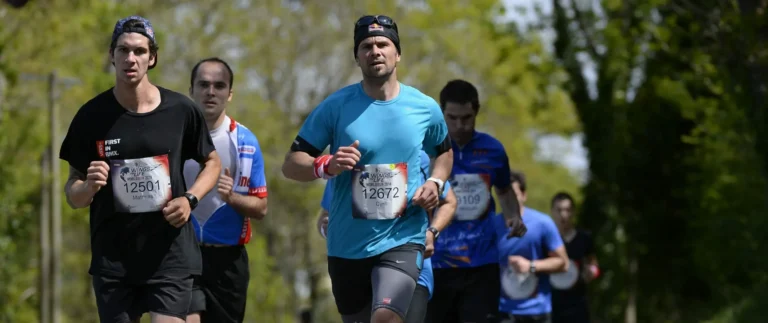
Ultra-Trail Australia returns to the Blue Mountains with elite runners, live coverage, cultural heritage and six rugged race formats.
Ultra-Trail Australia returns to the World Heritage-listed Blue Mountains for its 18th edition, bringing more than 8,000 runners, six race formats and the first major international trail-running test of the UTMB World Series season to one of the most spectacular natural arenas in endurance sport.
This is not a gentle Sunday jog with a banana at the finish and a smug watch notification. This is sandstone, sweat, stairs, forest, ambition and the sort of terrain that makes your calves begin legal proceedings before halfway.
Officially known as HOKA Ultra-Trail Australia by UTMB®, the event is the first of the four UTMB® World Series Majors and will be broadcast live, including on live.utmb.world. In short, the Blue Mountains are not merely hosting a race. They are staging a global trail-running production, with the landscape doing half the drama and the runners supplying the rest.
A Blue Mountains Race With A Global Pulse
Set in the heart of the Blue Mountains, Ultra-Trail Australia has grown into one of the great fixtures of the international trail-running calendar.
Its strength, though, lies in the fact it still feels rooted rather than imported. Around 90% of runners come from Australia, while 65% are from the Blue Mountains area, giving the event a rare blend of global profile and local heartbeat.
Plenty of major sporting events arrive in town like a travelling circus, plant a few flags, sell a few hoodies and disappear by Monday. This one feels different. It belongs to the region, shaped by the cliffs, the trails, the volunteers, the communities and the annual sight of thousands of runners moving through the bush with expressions ranging from spiritual awakening to mild regret.
Six Race Formats Across A Properly Wild Playground
The 2026 edition offers six race formats: 161km, 101km, 51km, 22km, 11km and a 1km children’s race.
Each distance gives runners a different version of the Blue Mountains experience. The shorter races open the event to families, newer trail runners and those who want the atmosphere without spending what feels like a geological age on their feet.
The longer distances, meanwhile, ask more pointed questions. Questions about pacing. Questions about resilience. Questions about why anyone thought a 161km trail race through sandstone country was a sensible weekend plan.
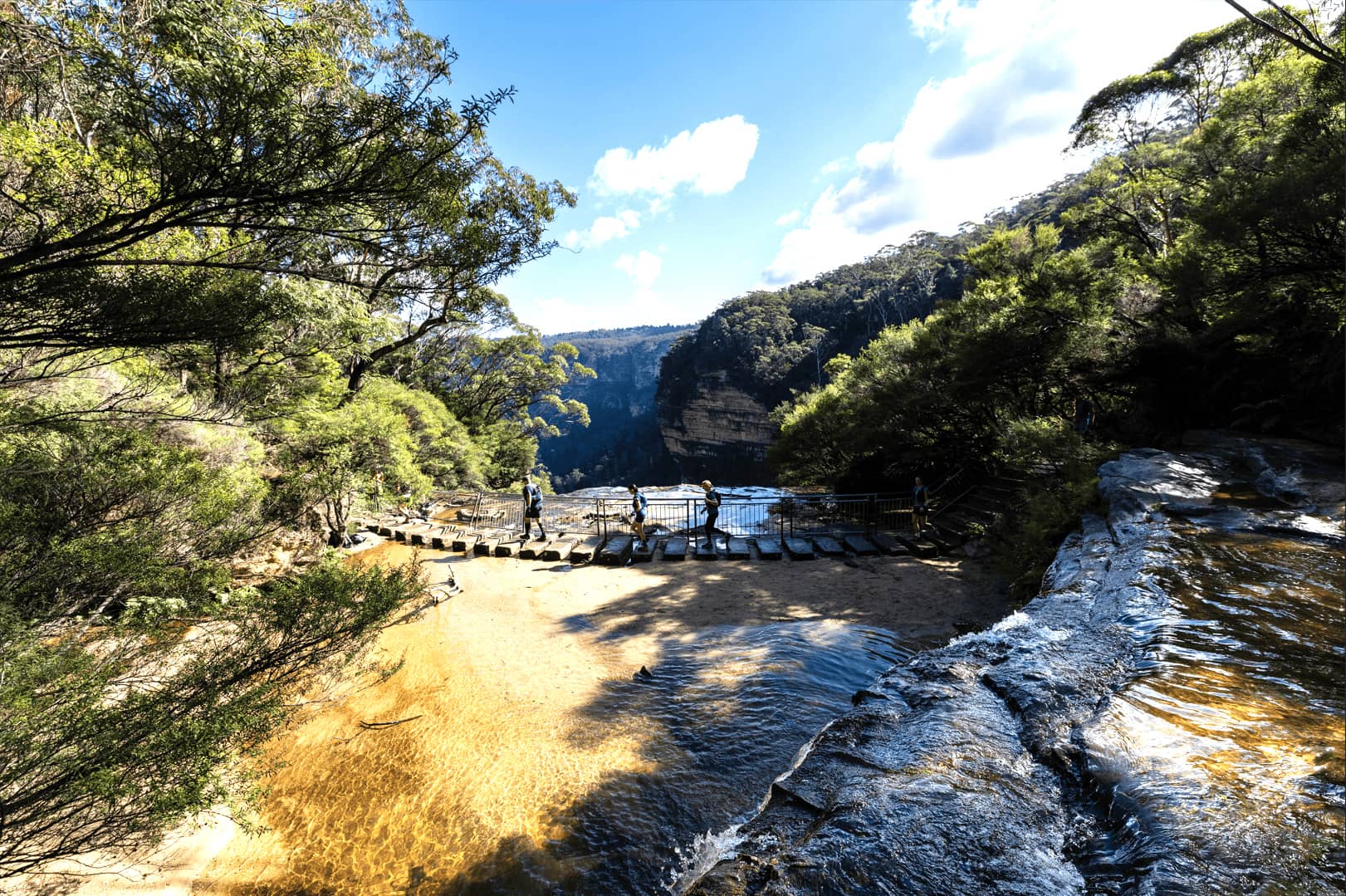
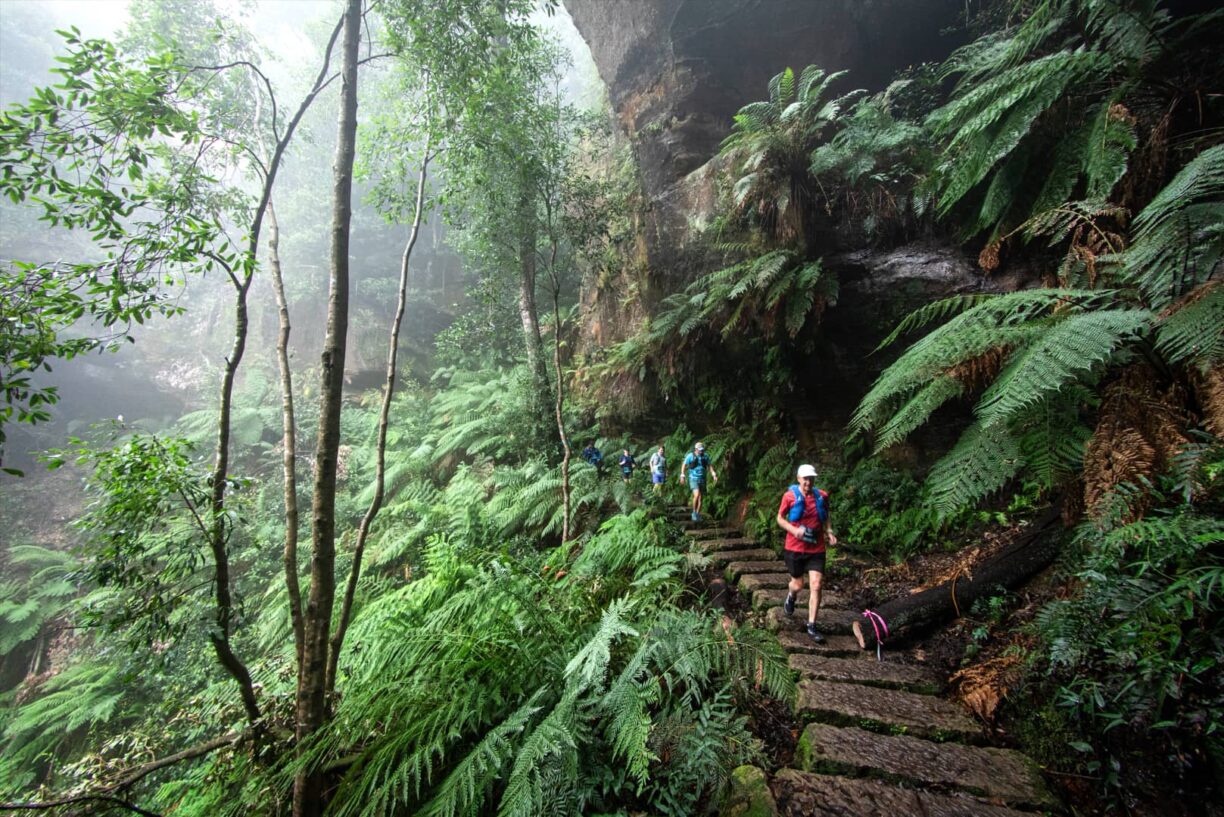
The routes take in dense forest, ridgelines, sandstone cliffs and iconic sections including the legendary Furber Steps. Those steps are less a staircase and more a vertical disagreement with gravity.
A Landscape With Memory
One of the defining strengths of Ultra-Trail Australia is the way it recognises the cultural significance of the land it crosses.
Aboriginal culture is honoured through a Welcome to Country ceremony, traditional smoking rituals of cleansing and welcome, and the presence of yidaki players along the course. These are not decorative flourishes bolted onto the side of a sports event. They help frame the race as an experience connected to place, heritage and respect.
In the lead-up to the weekend, dedicated content helps runners understand the history and significance of the landscapes they pass through. That gives the event a depth many endurance races chase but few genuinely achieve.
Runners are not simply passing through scenery here. They are moving through a living landscape.
Ultra-Trail Australia Sets A Strong Standard For Female Participation
Ultra-Trail Australia also arrives with one of the strongest female participation profiles in the UTMB World Series.
Women account for 43% of the field, one of the highest proportions across the circuit. On the shorter formats, the figures are even more striking, with women making up 55% of the 22km race and 61% of the 11km.
That is not a token statistic. That is a sport changing shape.
The event supports that growth through practical measures, including dedicated changing rooms and toilets, feminine hygiene kits at aid stations and panel talks on the main stage. These details may not have the cinematic appeal of a last-kilometre sprint, but they are exactly the sort of infrastructure that makes participation feel supported, normal and sustainable.
The shift is wider than one race, too. Tarawera Ultra-Trail by UTMB in New Zealand recorded historic gender parity across all its races earlier this year, underlining the momentum across Oceania. In this part of the trail-running world, gender balance is no longer being treated as a distant ambition. It is becoming part of the culture.
Ruth Croft And Miao Yao Headline A Fascinating 50K
While every race distance brings its own flavour of suffering, the 50K looks set to command particular attention.
The women’s field is especially strong. New Zealand’s Ruth Croft arrives with a UTMB Index of 823, a UTMB 2025 victory and a streak of four consecutive wins. She is the kind of athlete who does not simply enter a race; she alters the temperature of it.
Facing her is China’s Miao Yao, with a UTMB Index of 822 and an OCC 2025 win to her name. One point separates them on the index. One point. That is not a ranking gap; that is a polite disagreement on a spreadsheet.
Two reigning UTMB World Series champions meeting on the Blue Mountains trails gives the 50K an immediate edge. It is form against form, nerve against nerve, and likely the sort of race where the decisive move may come on a climb, a descent, or one of those quiet, brutal sections where nobody says much because breathing has become the main hobby.
Daniel Jones Returns With A Title To Defend
In the men’s race, New Zealand’s Daniel Jones returns as defending champion with a UTMB Index of 942.
Jones is one of the leading regional figures in trail running and will arrive with the clear aim of retaining his title. That sounds simple enough until you remember the Blue Mountains have absolutely no interest in reputations.
Defending a trail title is never just about being fast. It is about managing terrain, fatigue, nutrition, weather, pressure and the small psychological collapse that can occur when another climb appears exactly where your legs had hoped for a café.
Jones has the pedigree. The question is whether he can control the race when the course starts behaving like the course.
Asian Runners Add Serious Depth Across The Distances
The 2026 Ultra-Trail Australia field also reflects the growing strength of Asian trail running across the UTMB World Series.
In the 100M, China’s Lin Chen, winner of the 100M at Kodiak Ultra-Marathons by UTMB 2025, arrives with a UTMB Index of 783 and clear ambitions.
The 100K field features another strong Chinese presence, with Guidu Qin carrying a UTMB Index of 924 and Guomin Deng at 898. Both are expected to be among the athletes pushing the sharp end of the race.
In the 50K, Japan’s Hiroki Kai adds further quality. Kai, winner of the 20K at Chiang Mai Thailand by UTMB, the final Major of the 2025 season, brings a UTMB Index of 847 and another layer of international intrigue.
That is where Ultra-Trail Australia earns its Major status. It is local enough to feel personal, but competitive enough to pull in runners capable of shaping the wider UTMB season.
How To Watch Ultra-Trail Australia Live
Thanks to its status as a Major in the UTMB World Series, two races — the 50K and 100K — will be broadcast live on video.
Coverage will be available on DAZN outside Canada and the USA, and on Flosports in the USA, with expert commentary. The global UTMB tracking platform, live.utmb.world, will also offer live chat, statistics, runner tracking and real-time results.
For a sport that has often asked fans to follow dots on a map and imagine the pain, this is a useful step forward. Trail running is becoming more visible, more immediate and more watchable without losing the wildness that makes it compelling in the first place.
The event will also be covered across the UTMB World Series and event social media channels, including Instagram, TikTok and YouTube Shorts, with highlights and behind-the-scenes content throughout the weekend.
“We are delighted to open the UTMB Live season with an event so deeply rooted in its region, fully reflecting our vision for the circuit: a strong local experience, driven by its community and made accessible to audiences worldwide through an enhanced, more immersive live broadcast this year,”said Antoine Aubour, Communications, Marketing and Media Director, UTMB Group
The Bigger Picture
Ultra-Trail Australia has the useful habit of being several things at once.
It is a serious elite race. It is a mass-participation festival. It is a showcase for the Blue Mountains. It is a cultural event rooted in place. It is also a marker of where trail running is heading: more inclusive, more global, better broadcast and increasingly confident in its own identity.
The Blue Mountains give the event its body. The runners give it movement. The community gives it soul.
And when thousands of people line up beneath those cliffs, with the air sharp, the forest waiting and the Furber Steps lurking like an unpaid debt, Ultra-Trail Australia will again show why some races are not simply completed.
They are survived, remembered and quietly carried home.