Monza, Monaco and Silverstone headline this Formula 1 travel guide to the world’s most atmospheric and historic race destinations.
If you follow your holidays by the Formula 1 calendar rather than the school one, this season might as well be a travel brochure with tyre smoke. Since Netflix lit the fuse with “Drive to Survive”, Grand Prix weekends have become bucket-list events, and race destinations are suddenly competing with beach resorts and city breaks for your annual leave.
Holidu, the holiday rental search engine, has crunched the numbers on the world’s favourite circuits and produced a ranking that doubles as a Formula 1 fan travel shortlist. Review scores, volume of ratings and how often each track has hosted a Grand Prix all went into the mix – and three venues in particular stand out as proper pilgrimages rather than just days at the races.
Why F1 Travel Is Having a Moment
The modern Formula 1 weekend is no longer just a couple of hours of racing and an overpriced hot dog. It’s a rolling, global festival of speed, sound and slightly singed suncream.
Night races like Las Vegas have turned city streets into neon tunnels. Classic venues like Monza and Monaco still trade on history and atmosphere. And places like Silverstone have quietly reinvented themselves as family-friendly motorsport parks with coding workshops, kids’ zones and full-scale music festivals bolted onto the back of the grandstands.
For fans, the appeal is obvious: see the fastest cars on earth, then step outside the circuit gates into some of Europe’s most characterful cities and coastlines.
Monza, Italy: Living at the “Temple of Speed”
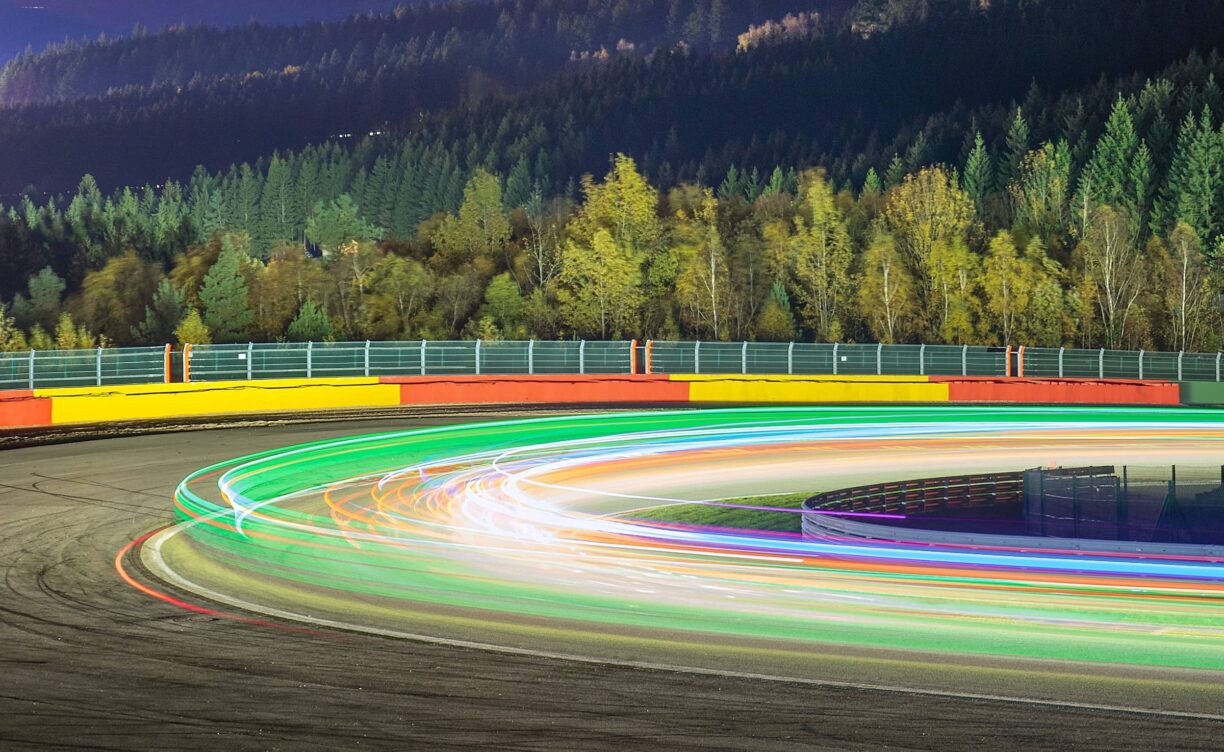
Top of Holidu’s table is Monza, in northern Italy, home to the Autodromo Nazionale Monza – better known, quite modestly, as the “Temple of Speed”. One of the oldest national Grands Prix on the calendar, it’s a place where the history of Formula 1 feels closer than the armco.
More than 11,000 Google reviews and an average 4.6-star rating back up its reputation. The circuit is carved into royal parkland, where the September light filters through tall trees, the air smells of espresso and tyre rubber, and the Ferrari tifosi turn the grandstands into a red, roaring hillside. Emotion isn’t a sideshow here; it’s standard equipment.
Architecturally, Monza is a statement of intent. Long straights and fast curves reward speed and bravery rather than fingertip finesse. Even when the race is over, the layout invites you in: outside Grand Prix week you can ride the track by bike, car or van, or unleash the family on the on-site kart circuit. It’s one of the few places where an ordinary fan can retrace the exact line of the heroes, if at slightly more survivable speeds.
Compared with other historic Formula 1 venues like Spa or Suzuka, Monza offers a unique blend: operatic crowd, flat-out layout and a major European city (Milan) just down the road for fashion, food and nightlife. You get race mythology on Sunday and an aperitivo in the Navigli district by sunset.
Monte Carlo, Monaco: Street Circuit, Superyachts and Sheer Nerve

Second in the Holidu ranking is Monaco, which manages to be both the slowest circuit on the Formula 1 calendar and one of the most intoxicating weekends in world sport.
Wedged between the Mediterranean and the cliffside, the Monte Carlo street circuit snakes through a harbour town that long ago decided normal urban planning was beneath it. According to Holidu’s analysis, the track scores 4.7 stars on Google, and it earns every decimal: cars thread between luxury hotels, jewellery stores and superyachts like very noisy sewing machines.
On a design level, this is the anti-Monza. Instead of long straights, you get tight radius corners, blind entries and elevation changes that punish the slightest lapse in concentration. The circuit may be short on overtaking, but it’s rich in jeopardy. A modern F1 car at Monaco is like a jumbo jet in a phone box – that’s the spectacle.
For fans, the vantage points are as much part of the experience as the racing. Place d’Armes is one of the best and brightest spots for fans; another hotspot is La Rascasse, a bar near the pit entrance. This is where the grid brushes past real life: you can sip a drink within metres of the cars you normally only see in slow-motion replays.
Culturally, Monaco is unlike any other Formula 1 stop. Singapore offers its own high-rise drama, and Baku has its castle walls, but neither have the dense, almost theatrical intimacy of Monte Carlo – a race where the paddock, the harbour and the city all occupy the same cramped stage.
Silverstone, United Kingdom: Where the Modern Show Was Built

Third place in the Holidu rankings goes to Silverstone, the Northamptonshire airfield that helped invent the Formula 1 World Championship and has been reinventing itself ever since.
The circuit enjoys over 15,000 Google reviews with an average of 4.6 stars, reflecting its status as one of the most loved stops on the calendar. The track itself is a high-speed knot of long corners and rapid direction changes: places like Maggotts and Becketts don’t just test downforce, they test neck muscles and nerve.
As a piece of sporting infrastructure, though, Silverstone has quietly become one of the most complete weekends on the grid. The Northamptonshire circuit has dedicated family areas, last year it offered coding workshops, electric go-karts and sports zones. The Red Arrows offer even more spectacle with their fantastic flypasts.
And because this is modern Britain, the Grand Prix doubles as a music festival. Last year, as well as the brilliant entertainment there were musical acts such as Rudimental and Voice UK Anne-Marie judge Anne Marie. You can arrive for the race and accidentally stay for the headline act.
Compared to newer Formula 1 venues in the Middle East or the United States, Silverstone trades less on skyline and more on heritage. This is where the world championship effectively began in 1950, where local fans treat the race as a pilgrimage, and where the weather can add an extra variable faster than any pit wall strategy call.
The Nations Behind the Helmets
Holidu didn’t stop at the grandstands. To add context to its Formula 1 travel ranking, it also analysed data from the official F1 website on race winners, tracks and calendars over the years. One of the more revealing sidebars is the distribution of world champions by country.
The three countries with the most champions in the world
United Kingdom – 20 Titles
Germany – 12 Titles
Brazil – 8 Titles
The United Kingdom’s dominance, reflected in 20 titles, dovetails neatly with Silverstone’s prominence on the calendar. Germany’s 12 and Brazil’s 8 tell their own stories of golden eras, dominant drivers and fan cultures that sustained the sport through different decades.
For travelling supporters, these numbers hint at another layer of F1 tourism: visiting the countries that produced the legends, as well as the circuits where they did their winning.
How the Best Formula 1 Travel Destinations Were Ranked
To keep this more science than guesswork, Holidu analysed the data present on the official F1 website to find out the winners of races as well as the tracks and calendars of the current and past years.
To compile the ranking, the ratings of the tracks on Google were taken into account, looking at the number of reviews as well as their average star rating out of 5. To complement this ranking, the number of times the circuits have hosted a Grand Prix was also added.
To make the study even more interesting, the three countries with the most champions in the world were ranked.
Fans who want to dig into the full list can head to the Holidu study page to read about the complete top 10 ranking: https://www.holidu.co.uk/magazine/best-formula-1-travel-destinations
Planning Your Own F1 Pilgrimage
So where should a travelling Formula 1 devotee start? If you’re after raw speed and partisan atmosphere, Monza is the obvious first stamp in the passport. For glamour, street racing and the faint smell of expensive fuel and more expensive champagne, Monaco remains unmatched. For a complete weekend that blends history, high-speed racing and full-scale entertainment, Silverstone is hard to beat.
What links all three is that the experience doesn’t end at the chequered flag. Each destination offers a distinct flavour of Europe: Italian parkland and piazzas, Riviera cliffs and coves, English villages and airfields.
In a sport obsessed with tenths of a second, these places remind you that time well spent is just as valuable as time well saved. Pick a circuit, book the flights, and let the Formula 1 calendar decide where your next holiday goes.