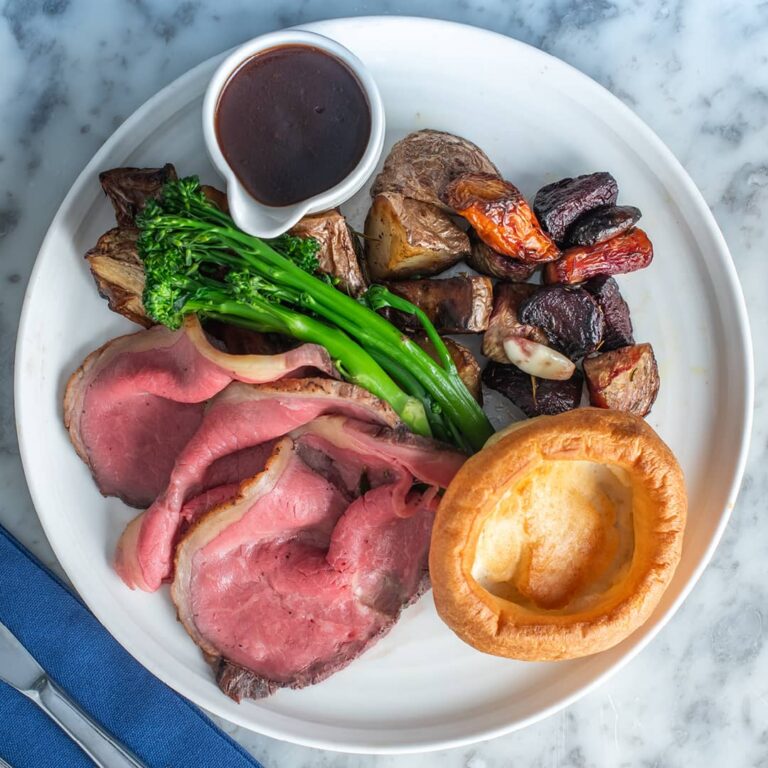
Brits spend four hours cooking Sunday lunch, then finish it in 29 minutes. New research reveals a nation dining in a hurry.
There is something faintly tragic about a Sunday lunch that takes four hours to build, only to disappear in 29 minutes like a decent tee shot into thick fog. The ritual is still there, at least on paper: the roast, the trimmings, the gravy, the sense that this ought to mean something. But new research suggests the modern British table is less scene of family ceremony and more feeding station with Yorkshire puddings.
A study of 2,000 Brits and Mediterraneans found the average Brit will spend four hours preparing a full Sunday roast, then polish it off in just 29 minutes. Across the continent, by contrast, people typically take just over an hour to enjoy a big family lunch on a Sunday. Same broad idea. Very different tempo.
And there, in one stat, sits the whole problem with modern dining in Britain. We still like the theatre of a proper roast dinner. We just do not hang around for the second act.
Four hours in the kitchen, half an hour at the table
The numbers paint a picture of a nation eating as though someone has shouted last orders before the potatoes have crisped.
One in three Brits, 33 per cent, admit they are fast eaters. A quarter say they wolf down food rather than take their time and enjoy it. Nearly one in four, 23 per cent, go further and see meals mainly as fuel before moving on to the next task.
That is quite the fall from grace for the humble Sunday roast, which has long fancied itself the crown jewel of British comfort food. Roast potatoes, meat, vegetables, gravy, perhaps a splash of beer on the side, and ideally enough conversation to justify loosening your belt. Instead, too often, it seems to be treated like a pit stop with cutlery.
A nation of scoffers
The real story here is not just about speed. It is about what eating has become.
This research, commissioned by Italian Alpine beer brand Menabrea, found diners elsewhere in Europe are far more likely to treat meals as social rituals, lingering over food, talking properly, and letting lunch behave like lunch rather than an appointment to be survived.
Britain, meanwhile, appears to have developed a slightly joyless efficiency around mealtimes. Phones are checked an average of 13 times during dinner. Conversation is interrupted by screens. Plates are cleared before anyone has fully landed in the moment. Even the family lunch, once one of the last protected spaces in the week, is being hurried along.
Eleanor Quigley, Brand Manager for Menabrea, said: “Food and drink should be about far more than simply fueling the day, they should be a chance to pause, connect with others and properly savour the moment.”
Quite right too. A meal is not just calories in a clever arrangement. At its best, it is punctuation in the day. A pause. A gathering. Occasionally even a memory.
Why Brits rush their Sunday lunch
The reasons are not especially mysterious, though they are a bit grim.
When asked what gets in the way of slowing down, 28 per cent cited cost, 27 per cent said lack of time, and 19 per cent blamed distractions. Others said they get bored easily or simply feel they have better things to do.
That last one is a remarkable indictment of modern life. Imagine spending hours preparing a Sunday lunch and then deciding the actual eating of it is the least interesting part.
Menabrea’s experts suggest part of the answer may lie in Britain’s long relationship with tea culture, where a quick brew and a small bite have long been stitched into the day. Add the habits forged during the Industrial Revolution, when workers had precious little time to eat between shifts, and you can see how rushed mealtimes became embedded in the national character.
The British talent for making everything brisk has its uses. It built railways, won wars and produced the queue. But it does a Sunday roast no favours at all.
Italy shows what a meal can still be

In Italy, the attitude remains gloriously different.
A striking 88 per cent of Italians surveyed say a good meal should never be rushed, and many spend at least an hour at the table over lunch. Almost half, 45 per cent, say they never eat dinner in front of the television. Just 4 per cent do it regularly.
Compare that with Britain, where 87 per cent say they eat dinner in front of the TV, and the contrast is not subtle. One culture still treats dining as an event. The other often treats it as background noise.
That is what makes the Mediterranean approach so appealing. It is not only about food quality, though that helps. It is about tempo. Meals are allowed to breathe. The table is not merely where eating happens, but where the day slows down enough for people to notice each other.
Modern life is rushing more than just roast dinners
This is not only a Sunday lunch issue. It is a broader national habit.
More than a third of Brits, 36 per cent, say they have rushed family meals because of time pressures. Exercising, drinks with friends and lunches with mates are all being shortened by busy schedules. One in six have even cut dates short because they had other things to do.
That tells you plenty. The rush is no longer limited to work. It has spread into the places that are supposed to make life feel like life.
And yet there is a revealing twist in the findings. A full 90 per cent of Brits say they would love to adopt a more European approach to dining. So the appetite for change is clearly there. The difficulty is not desire. It is habit. Sixteen per cent admit they simply struggle to switch off and relax at mealtimes.
Can Sunday lunch be rescued?
It probably can, though not with another lecture about mindfulness delivered over a lukewarm carrot.
The answer may be simpler than that. Put the phone down. Sit a little longer. Pour another drink. Let the gravy settle. Ask a second question. Treat the roast dinner as something more than a task to complete before the washing-up begins.
Because the British Sunday lunch is still one of the great institutions of domestic life. It smells like home, sounds like clattering plates and low-level family debate, and carries the sort of emotional weight that no midweek sandwich could ever dream of. But if it is going to remain a ritual rather than a race, it needs reclaiming from the cult of hurry.
A proper Sunday roast should not feel like a timed event. It should feel like the one part of the week that does not need timing at all.