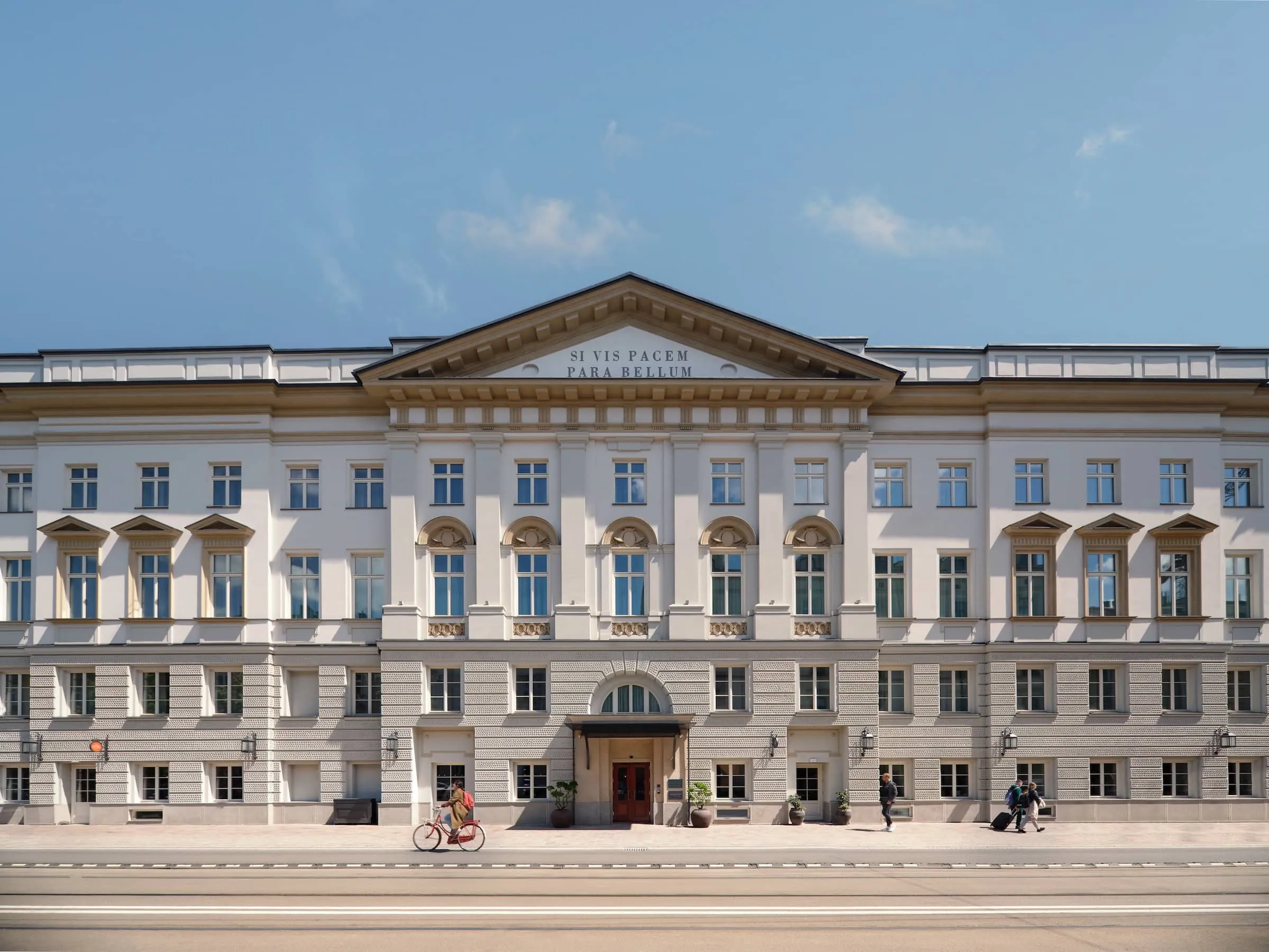
Stradom House brings heritage, wellness and standout dining together in one of Europe’s smartest city breaks.
There are hotels that offer you a bed for the night, and then there is Stradom House, which seems to offer a temporary upgrade on life itself. Reintroduced in Kraków with a Michelin Key, a second straight Green Key certification and recognition from Gault & Millau, this is less a routine luxury opening than a statement of intent: the old city now has an address that understands how modern travellers want to feel as much as where they want to sleep.
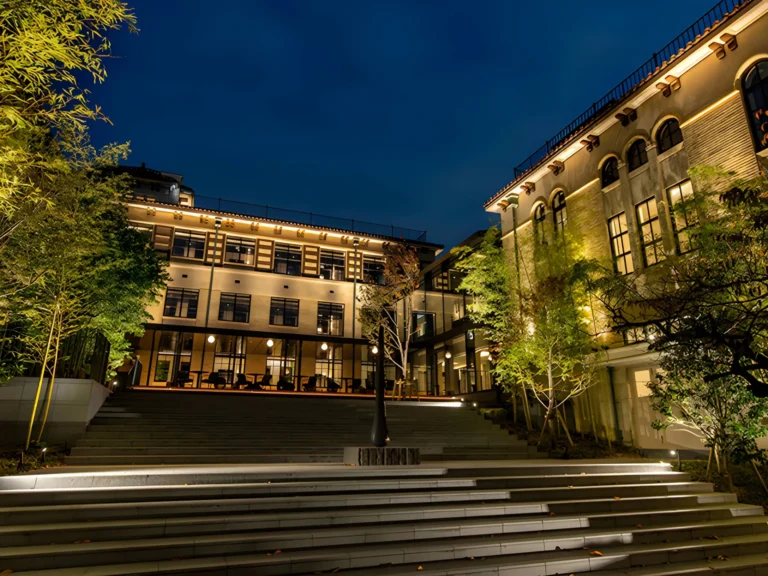
Set between Wawel Castle and Kazimierz, inside a carefully restored 14th-century monastery, Stradom House occupies a piece of Kraków that already had gravitas before anyone thought to add cocktails, spa rituals and designer furniture. The result is unusually complete. It has history in the walls, polish in the service, and enough atmosphere to make many so-called luxury hotels feel like brightly lit waiting rooms.
A Kraków setting with real weight
Location is often treated as a line item. Here, it is part of the theatre.
Step outside and Kraków does what Kraków does best: church bells in the distance, cobbled streets underfoot, a light that softens old stone rather than flattening it, and a city centre that still feels lived in rather than staged for tourists. Wawel brings the grandeur. Kazimierz brings the soul. Stradom House sits neatly between the two, which is a little like having one foot in history and the other in a very good bar.
That matters because the best urban hotels are not merely shelters from a city. They are interpreters of it. Stradom House appears to understand that better than most.
Heritage architecture without the museum dust
Too many heritage properties lean so hard on their age that they end up feeling like exhibits. Stradom House has taken a more intelligent route.
Its 125 rooms and suites, including the Chapel Loft, sit within a building that still carries the bones of the monastery, yet the hotel avoids the trap of turning reverence into stiffness. Interiors by ADC Atelier draw together original frescoes, vaulted ceilings, layered textures, bespoke pieces and vintage touches with the sort of residential warmth that makes people exhale when they walk in.
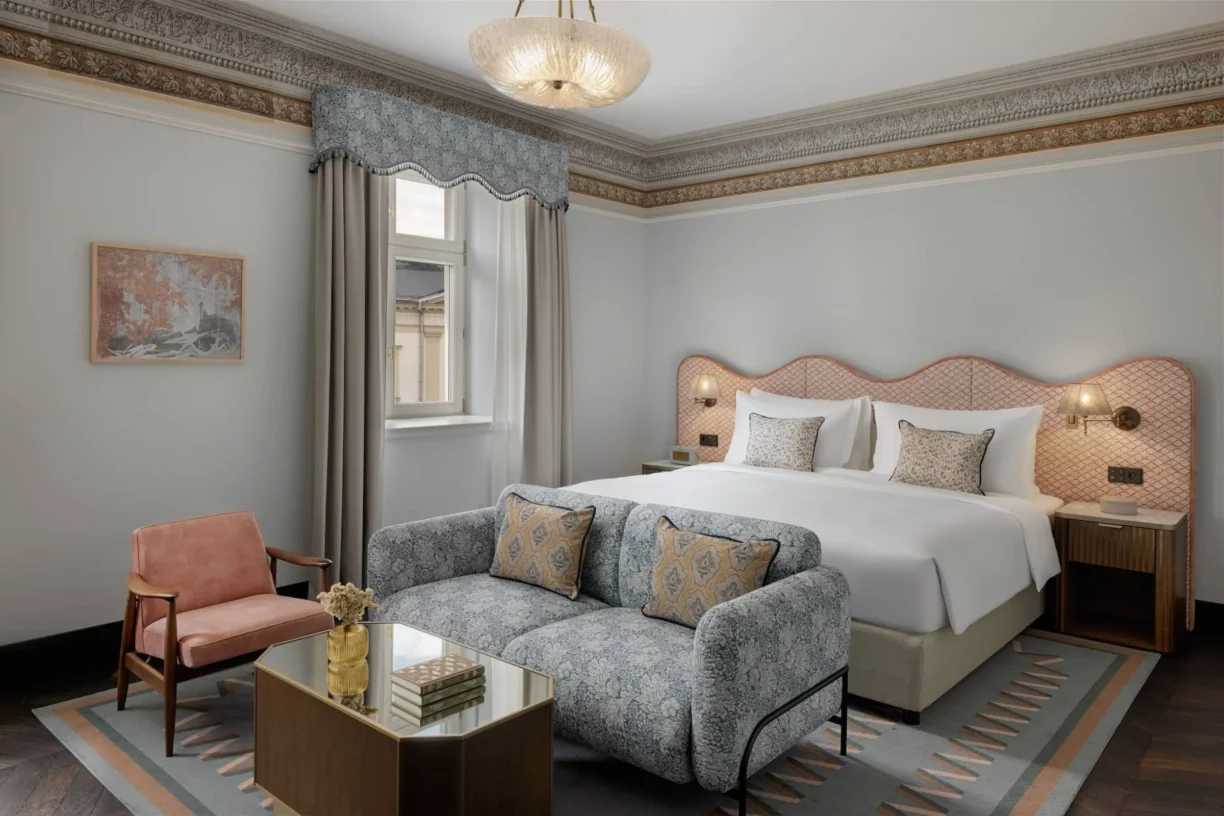
This is not old-meets-new done by committee. It is old-meets-new done by adults.
There is a members’ club confidence to the design, but it never slides into smugness. Instead, Stradom House feels grounded in Kraków’s cultural character, with enough contemporary flair to keep it from becoming sepia-toned nonsense.
SÓL Spa gives the hotel its heartbeat
Every hotel says wellness now, just as every pub claims to do food. The difference lies in whether the thing has been thought through.
At SÓL Spa, wellness is not tacked on like parsley. It is central to the identity of Stradom House. Developed with London-based practitioner Alexandra Soveral, the spa draws inspiration from Poland’s salt-mining traditions and folds them into a contemporary circuit of recovery and restoration.
There is a 20-metre indoor pool, infrared and bio saunas, a steam room, hydromassage experiences, relaxation spaces and a fully equipped fitness studio. In lesser hands, that could read like a checklist. Here, it sounds more like a proper system.
The Soveral Method facials, built around organic bioactive nutrients and advanced manual techniques, reinforce the point. This is not wellness as decoration. It is wellness as a disciplined, sensory experience, aimed at physical renewal and mental clarity rather than social media content and a cucumber slice over each eye.
In a European city-break market crowded with smart hotels and token spa basements, Stradom House has made a stronger argument. It has built an urban retreat that seems intended to change your pulse rate, not just your room number.
Food and drink with serious ambition
Luxury hotels often speak grandly about gastronomy before serving meals that feel like afterthoughts in expensive rooms. Stradom House has taken a firmer line.
Its culinary programme is positioned as part of the wider wellbeing picture, which is a sensible modern touch, but it is also clearly about pleasure. Chef Robert Panek leads the charge, using Stradomska 12 to reinterpret traditional Polish cuisine with a cleaner, more contemporary sensibility.
That is important in a city and a country whose food story deserves more international attention than it usually gets. Polish cuisine is too often lazily summarised by people who have not properly met it. Panek’s approach suggests a kitchen interested in moving the conversation along.
Then there is Gaia, which adds a Mediterranean thread, while Hedwig’s Bar, described as the hotel’s social centre, brings a broader food and drinks offering with a full menu, snacks, cocktails and wine. Hedwig’s Club, set within a former chapel, sounds like the sort of setting that could either be magnificent or terribly try-hard. At Stradom House, one suspects it lands firmly in the former.
The Bakehouse rounds things out with speciality coffee and artisanal cookies, lending the place a more relaxed, local rhythm. That matters too. A hotel can be terribly grand and still fail if it does not know how to feel easy.
More than a hotel, closer to a cultural address
One of the more interesting things about Stradom House is that it does not stop at rooms, spa and food. It is also being positioned as a cultural node within Kraków’s fast-rising creative landscape.
The hotel’s contemporary art collection, curated by Francesca Gavin, includes works by Polish and international artists such as Wilhelm Sasnal, Agnieszka Polska, Monika Sosnowska, Jakub Julian Ziółkowski, and Gideon Rubin. Spread across public and guest spaces, it creates an ongoing conversation between local heritage and global contemporary practice.
That sounds lofty, but the idea is simple enough: Stradom House wants to be somewhere with a point of view.
Recent guests including Billie Eilish and Florence Welch only add to the sense that the property is pitching itself as a place with cultural relevance, not just polished taps and thread counts. In truth, that may prove one of its cleverest moves. Plenty of luxury hotels can be beautiful. Far fewer manage to feel current.
Why Stradom House stands out in Europe
Europe does not lack handsome city hotels. Prague, Vienna, Budapest and Paris can all produce grand addresses with marble, mood lighting and enough concierge charm to sell you a river. What separates Stradom House is that it seems to have found a more modern balance.
It has the architecture and heritage of a classic Central European landmark, but the operating philosophy is much more contemporary: longevity, wellness, design, culinary depth, creativity, and a sense that the guest is after immersion rather than mere indulgence.
That gives it a different feel from the traditional palace hotel model. Less ceremonial. More lived-in. Less about being impressed for ten minutes. More about wanting to stay another two nights.
The fact that Kraków is increasingly easy to reach from major European hubs, alongside nonstop service from Chicago and straightforward connections from major U.S. cities, only strengthens the case. This is no longer a beautiful place that feels slightly awkward to get to. It is very much on the map.
The luxury of staying longer
There is also a degree of intelligence in the seasonal strategy.
The Easter Escape package leans into one of Kraków’s most culturally vibrant periods, while extended-stay rates encourage guests to linger. That is more than a commercial nudge. It fits the broader philosophy behind Stradom House, which is that real luxury now lies in time, balance and experience rather than frantic box-ticking.
That is a truth more hotels are beginning to understand, though not all of them act on it well. The modern traveller, particularly at the upper end, is not always chasing spectacle. More often, they are chasing feeling: restoration, curiosity, space, rhythm, and a version of comfort that goes beyond expensive surfaces.
Stradom House seems tuned to exactly that frequency.
A new standard for Kraków city breaks
What makes Stradom House compelling is not any one element in isolation, although several are impressive enough on their own. It is the composition.
The monastery setting could have been a gimmick. The wellness could have been thin. The food could have been decorative. The design could have been clever but cold. Instead, the whole thing appears joined up, with each part strengthening the next.
For travellers looking at Central Europe and wondering where to go next, Kraków suddenly looks harder to ignore. And for those already headed there, Stradom House offers the kind of stay that sharpens a city rather than merely framing it.
In the end, that may be the real achievement here. Stradom House does not simply sell luxury. It sells depth, atmosphere and a sense of place. In a market full of hotels straining to look special, that is a rare and valuable thing.