Prague tops Europe’s best solo reset breaks, with €1,000 stretching to five days of calm, culture and recovery.
European travel costs can turn a dreamy escape into a spreadsheet with a boarding pass attached, but new April 2026 research suggests Prague is the rare European city where €1,000 still buys more than a nervous weekend and a disappointing sandwich.
With burnout now affecting one in four European workers, the study by online luggage shop Eminent looked at more than 30 European cities to find where solo travellers can properly disconnect, recharge and still return home with their bank account breathing.
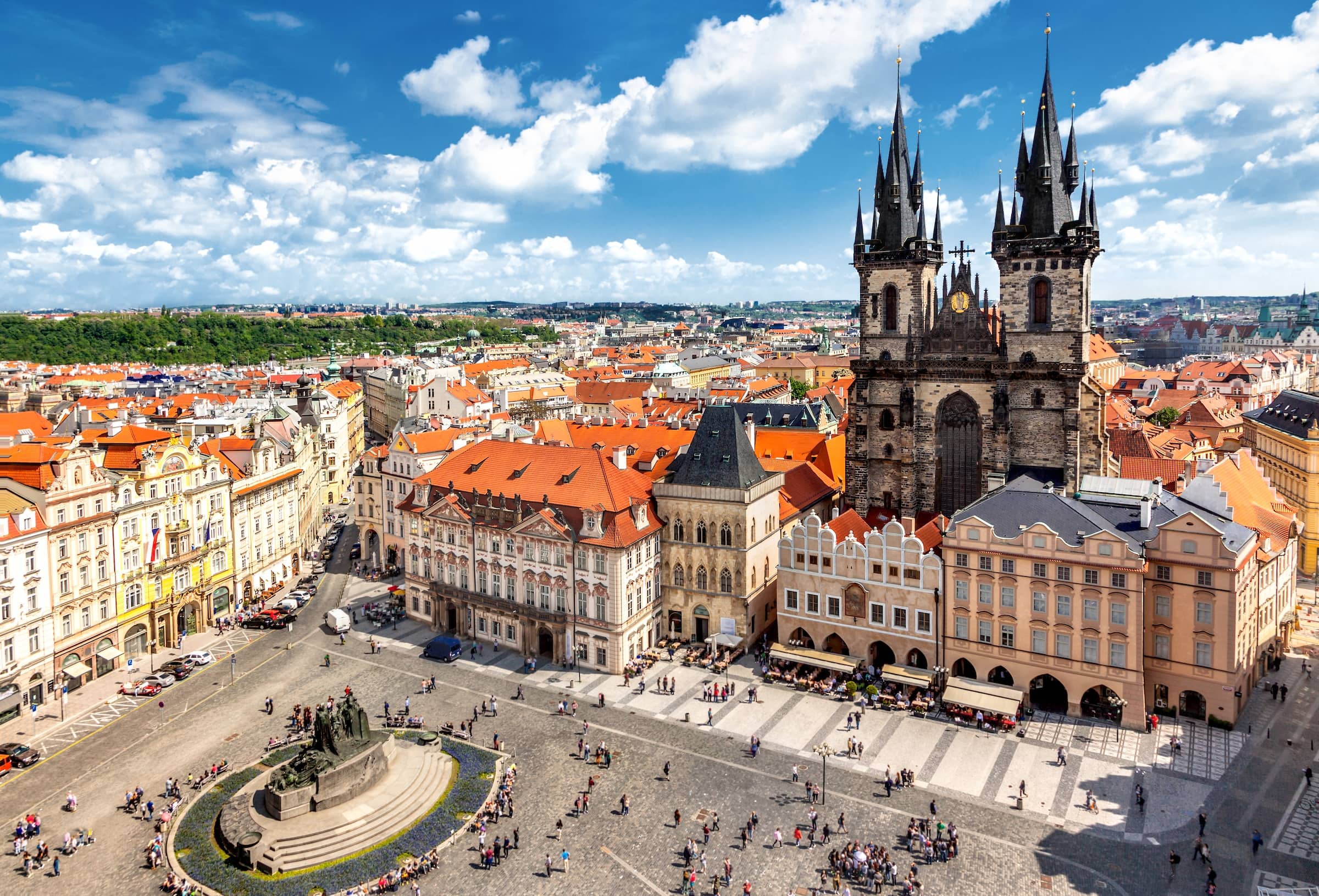
The winner? Prague. A city of copper rooftops, gothic spires, calm riverside walks and enough affordable breathing room to make your shoulders drop before the second coffee.
Prague Crowned Europe’s Best Budget Reset Break
Prague came out on top as the best European destination for a solo refresh under €1,000.
The numbers do the talking. Average daily spending sits at €194, giving travellers around 5.1 days in the Czech capital on a €1,000 budget. That includes food, transport and a good hotel, which in modern Europe feels less like budgeting and more like finding a forgotten tenner in an old jacket.
The city also scored 70.3 out of 100 for peacefulness, 91.5 for daytime safety and 73.8 for nighttime safety. For solo travellers, that matters. A beautiful city is one thing; feeling comfortable wandering through it without clutching your phone like a life raft is quite another.
Prague also offers more than 200 spas and over 50 parks, giving visitors plenty of places to steam, stretch, stroll or simply sit quietly while pretending not to check their emails.
Why Europe Travel Costs Matter For Burnout Breaks
| City | Average Daily Spending | Peacefulness Score | Trip Days under €1,000 | Final Score |
|---|---|---|---|---|
| 🇨🇿 Prague | €194.20 | 70.3 | 5 | 100 |
| 🇭🇺 Budapest | €156.40 | 69.1 | 6 | 99.1 |
| 🇪🇸 Madrid | €246.60 | 80.5 | 4 | 97.8 |
| 🇦🇹 Vienna | €278.70 | 77.4 | 4 | 96.9 |
| 🇵🇹 Lisbon | €239.20 | 86.2 | 4 | 95.6 |
| 🇵🇱 Warsaw | €153.60 | 51.4 | 7 | 94.3 |
| 🇩🇪 Berlin | €251.20 | 71.6 | 4 | 92.7 |
| 🇪🇸 Barcelona | €276.80 | 92.6 | 4 | 91.5 |
| 🇳🇱 Amsterdam | €323.00 | 83.7 | 3 | 90.2 |
| 🇩🇪 Munich | €259.40 | 62.4 | 4 | 88.9 |
The most interesting part of the research is not just where is cheapest. It is where a traveller can stay long enough to actually feel human again.
A two-night dash can be pleasant, but it rarely resets the nervous system. By the time you have unpacked, found the hotel kettle and worked out which plug adaptor you forgot, it is nearly time to leave.
That is why European travel costs are now central to wellness travel. The question is no longer simply “Where can I go?” It is “Where can I stay long enough to recover?”
A travel consultant from Eminent commented on the study: “Burnout isn’t something you fix with a day trip. It requires stepping away long enough for your nervous system to actually calm down, which takes at least 3 to 5 days. That’s why these budget calculations matter.
If your €1K only gets you two nights in London, you’re flying home before the stress leaves your body. But in Budapest or Warsaw, that same budget gives you a full week to sleep properly, walk around without a schedule, and remember what it feels like to be bored.”
Budapest Offers More Days For Less Money
Budapest finished second, and for anyone who enjoys thermal water, grand architecture and the feeling of being gently reassembled by steam, it makes a strong case.
At around €150 per day, Budapest lets solo travellers stretch a €1,000 budget to more than six days. That is almost a full week of unhurried mornings, slow walks along the Danube and long soaks in the city’s famous thermal baths.
The Hungarian capital has more than 200 thermal baths and wellness centres, making it one of Europe’s most convincing destinations for travellers who want recovery without the luxury-hotel price tag.
It also scored 85 out of 100 for daytime safety, with mild weather helping visitors spend more time outside rather than hiding indoors with room-service crisps and regret.
Madrid Brings Sunshine, Spas And City Energy
Madrid came third, with an average daily spending of about €245. That gives solo travellers around four days in the Spanish capital on a €1,000 budget.
It is not the cheapest city on the list, but Madrid makes up ground with scale, sunshine and energy. The city has more than 330 spas, among the highest totals in the study, plus nearly 80 parks for those who prefer their recovery with trees rather than tiled treatment rooms.
Its climate rating sits above 85, which means visitors can realistically spend much of the trip outdoors. That matters for anyone chasing a reset. Sunlight, movement and open space tend to do more for the mood than another doom-scroll under hotel lighting.
Madrid is less a whisper-quiet retreat, more a full-blooded urban revival. Think warm plazas, late lunches, green parks and enough cultural voltage to remind you that life is not supposed to be lived entirely through a laptop screen.
Vienna Is The Calm Operator
Vienna took fourth place, and it is the grown-up in the room.
With €1,000, solo travellers can manage around four days in the Austrian capital, including hotels, restaurants and transport. It is not bargain-basement cheap, but Vienna brings a different currency to the table: calm.
The city recorded low noise levels at 30 out of 100 and an 82 out of 100 safety score. For travellers who want order, elegance and clean pavements rather than chaos with a cocktail umbrella, Vienna is hard to fault.
It has around 100 spas and more than 40 parks. That is fewer than Prague or Budapest, but still plenty for a proper mental breather.
Vienna does not shout for attention. It waits for you to notice the detail — the architecture, the coffee houses, the quiet efficiency of a city that appears to have ironed its shirt before breakfast.
Lisbon Rounds Out The Top Five
Lisbon completed the top five, helped by the best climate rating in the study: a near-glorious 98 out of 100.
Average daily spending is around €240, giving travellers four full days of rest on a €1,000 budget. Add in up to 40 parks, more than 200 spa facilities and one of the lower crime rates in the research, and Lisbon becomes a compelling option for anyone who wants their reset with Atlantic light and tiled streets.
The Portuguese capital has that rare quality of feeling relaxed without being sleepy. The hills may test your calves, but the views pay interest. Warm weather, gentle evenings and a slower rhythm give Lisbon an obvious appeal for solo travellers needing space from the noise.
Warsaw Is The Hidden Budget Winner
Although Prague topped the overall ranking, Warsaw deserves a firm nod for pure value.
At just €150 per day, it emerged as the cheapest getaway for tourists wanting to decompress without spending heavily. In practical terms, that means a €1,000 budget can go much further than in many better-known European capitals.
For travellers watching European travel costs closely, Warsaw is the sort of destination that deserves more attention. It may not yet carry the romantic shorthand of Paris, Lisbon or Prague, but value has a charm all of its own when you are booking flights after a difficult quarter at work.
Barcelona Leads On Wellness Facilities
Barcelona did not crack the top five overall, but it made a major impression for wellness access.
The city offers more than 640 wellness centres, placing it among Europe’s strongest destinations for spa facilities and detox-style breaks. For travellers who want a reset wrapped around treatments, sea air, food and walkable neighbourhoods, Barcelona remains a heavyweight.
The trade-off, as ever, is cost. Bigger-name destinations tend to pull harder on the wallet, especially when demand is high. That is where European travel costs become the deciding factor between a restorative break and an expensive blur.
What Makes These Cities Stand Out
The study did not simply rank cities by price. It examined daily costs, hotels, meals, transport, pollution levels, parks, wellness facilities, safety and climate.
That broader approach matters because a reset trip is not the same as a cheap trip. A city can be affordable and still leave you frazzled. The sweet spot is value plus calm: somewhere safe, walkable, restorative and generous enough to let time slow down.
Prague, Budapest, Madrid, Vienna and Lisbon each offer that in different ways.
Prague has historic atmosphere and strong value. Budapest has thermal-bath culture and low daily costs. Madrid offers sunshine, parks and urban vitality. Vienna delivers calm, safety and polish. Lisbon brings warmth, light and a softer pace.
The Bigger Travel Takeaway
The real lesson from this ranking is that recovery has a duration. It needs a few days to take hold.
That makes European travel costs more than a budgeting detail. They shape whether a trip becomes a genuine reset or just a change of scenery with a hotel invoice attached.
Prague may be the headline act, but the broader message is encouraging. Across Europe, there are still cities where €1,000 can buy time, quiet, culture and a little room to remember what normal feels like.
And that, in travel terms, is the equivalent of finding the middle of the fairway after three months in the rough.