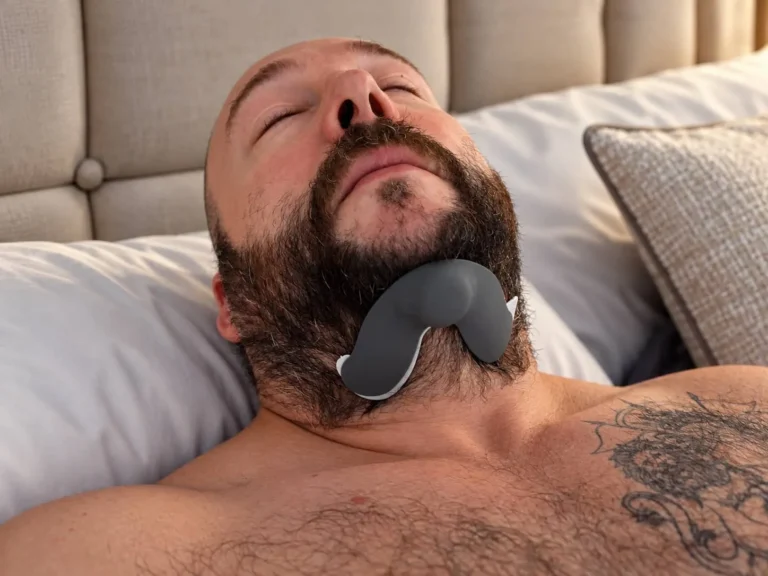
Why separate beds can ease snoring, protect sleep and reduce tension without harming a healthy relationship.
Sleep, like money and kitchen renovations, has a habit of exposing reality. For couples weighing up separate beds as a practical solution, the old assumption that sleeping apart must signal trouble is beginning to look like a relic. In many homes, it is not a white flag for romance.
It is simply a sensible response to snoring, restless nights, clashing routines and the basic human desire to wake up feeling less like roadkill.
The phrase “sleep divorce” has done this idea no favours. It sounds dramatic, legalistic and vaguely hostile, as if someone has served papers across the duvet. In truth, separate sleeping arrangements are often less about emotional distance and more about survival by Thursday.
One account of the arrangement captures the point rather well: “A separate bed – there’s stigma against that but if we are just tired and I need a good night’s sleep, and I want to get to bed at nine o’clock and I don’t want to put my ear plugs in or I don’t need to be disturbed by snores, then that’s OK, to say ‘I just need my space.’”
That is not the language of collapse. It is the language of exhaustion, practicality and someone who would quite like eight uninterrupted hours without being serenaded by a human chainsaw.
The stigma around separate beds is fading
The numbers suggest this is no fringe behaviour. A National Bed Federation survey found nearly one in six British couples who live together now sleep apart, and almost nine out of 10 of those do so in separate rooms. Earlier research from 2013 found fewer than one couple in 10 had separate beds, which points to a steady rise rather than a passing fad.
There are good reasons for that shift. Modern life has made sleep both more precious and more fragile. Long working days, screens, stress, early starts and patchy routines mean couples are often arriving in bed already depleted. Add snoring, tossing, turning, different bedtimes or one partner treating the mattress like a mixed martial arts arena, and the shared bed starts to resemble a negotiation rather than a sanctuary.
Why couples often sleep worse together
There is an awkward truth at the centre of all this: people frequently sleep worse beside the person they love most. That sounds bleak, but it is probably just biology refusing to be sentimental.
In a TED talk, US sleep medicine specialist Wendy Troxel put it plainly: “In fact, if you sleep with someone who snores, you can blame them for up to 50% of your sleep disruptions,” she said. “But when you ask those disrupted sleepers, ‘Do you prefer to sleep with your partner or do you prefer to sleep alone?’, most say that they prefer to sleep with their partner.
This suggests that our social brain is prioritising our need for closeness and security at night – even when it comes at a cost to our sleep.”
That tension is the whole ball game. Emotionally, many couples want closeness. Physiologically, they may sleep better with space. The rise of separate beds sits right in that gap between affection and actual rest.
Snoring is often the real villain
“Snoring remains the most common reason couples sleep apart, with men and women reporting it at similar rates. It is not glamorous, but then neither is lying awake at 2.47 am wondering whether you can smother somebody with a pillow and still claim diminished responsibility.
Colin Espie, professor of sleep medicine at Oxford University, makes the broader point that sleeping together is rarely perfectly peaceful anyway:
“A lot of people prefer to sleep with their partner, naturally, but when people move around in bed they do disturb their partner when they turn over – that’s just part of what happens during sleep and it’s not something that usually keeps you awake, it’s just something you get used to. And some people find they don’t sleep so well when their partner isn’t there, so I guess it works both ways.”
That is the sensible middle ground. Not every movement in the night is a crisis. Some couples adjust. Some do not. What matters is whether the disturbance becomes chronic.
On snoring, Espie is equally direct: “Some people choose to sleep in separate beds because of a problem like snoring,” says Espie. “Snoring does interfere with another person’s sleep, but you become used to it – it’s like living next to a train station, although it can be irritating.
“Snoring is the vibration of the upper airway and a narrowing of the airway, but air’s getting across – it’s just noisy sleep breathing and it’s more likely to happen if you’re lying on your back because all the ‘bits’, like your tonsils and your tongue, fall to the back of your throat. So quite often people elbow their partner to push them on their side so they’re less likely to snore.”
There is something wonderfully British about that image: no expensive gadget, no grand therapy plan, just a sharp jab to the ribs and a muttered plea for silence.
Poor sleep does not stay in the bedroom

The important point is that lost sleep rarely confines itself to the night. It leaks into the next morning, then into patience, tone, tolerance and the ability to discuss where the olive oil has gone without sounding like a courtroom prosecutor.
A 2016 study by Paracelsus Medical University in Germany found sleep issues and relationship problems tend to occur at the same time. Another study, from the University of California, Berkeley in 2013, found that one partner’s sleepless night caused by disturbances from the other can lead to more conflict the following day.
As study lead author Amie Gordon put it: “Couples experience more frequent and severe conflicts after sleepless nights,” says study lead author Amie Gordon.
That will surprise nobody who has ever tried to discuss anything important after being woken six times by snoring, duvet theft or a midnight expedition to the bathroom with all the subtlety of a stage crew.
This is where separate beds become less a symbol and more a tool. If a better night’s sleep reduces irritability, resentment and low-level squabbling, it may support the relationship rather than undermine it.
What to try before moving into separate rooms
Sleeping apart is one option, not a commandment. In some cases, the issue can be managed before couples start shopping for another mattress.
Espie points to a few obvious culprits: “The worst situation is when a problem could be resolved and it isn’t being,” says Espie. “If people lose weight, for example, they don’t snore so loudly or so much, because when they’re overweight the baggy tissue round the neck tends to make it more likely that the airway will be partially obstructed, so losing weight and improving the muscles around the throat can reduce snoring.
“Drinking less alcohol can also help, as alcohol is a muscle-relaxant and tends to make it more likely that people will snore.”
There is also the matter of timing. If one partner is a committed snorer or fidgeter, getting to sleep first can reduce the number of disturbances that register at all.
Espie again: “Moving into a separate bedroom is just one solution, but it’s not the only one – there may be other ways of addressing problems. In some cases, people might have clinical disorders that need treatment – if their breathing stops at the end of a snoring episode it could be obstructive sleep apnoea which is a medical condition that needs investigation.”
That last point matters. Persistent loud snoring, gasping or interrupted breathing is not simply annoying; it can be medical. No amount of stoicism, scented candles or passive-aggressive nudging will fix obstructive sleep apnoea.
The best couples treat it as a conversation, not a verdict
Perhaps the most useful thing about the separate beds discussion is that it forces couples to ask the right question. Not, “What will this look like?” Not, “Will people think this is strange?” But, “What problem are we actually trying to solve?”
If the answer is poor sleep, regular tension, different schedules or one partner sounding like a diesel engine at 1am, then a practical arrangement may be the healthiest option available.
Espie’s advice lands where it should: “Another thing to consider is how the sleeping arrangements affect the relationship,” he says. “Snoring can at times lead to tension in the relationship, and the best thing to do is discuss it and have a plan of action.
Maybe you’d sleep in separate beds, or you could ask your partner if they mind you elbowing them in the ribs to stop them snoring. Or just say you’ll go to bed first and fall asleep before them.”
And there it is. No melodrama. No hand-wringing. Just a plan.
Separate beds are not the problem
The grown-up view is this: relationships are not measured by mattress geography. They are measured by kindness, communication, honesty and whether two people are making life better for each other. If sleeping apart helps both partners wake up calmer, healthier and less inclined to commit a felony before breakfast, that hardly sounds like failure.
For some couples, a shared bed will always feel right. For others, separate beds may be the smarter arrangement, whether that means two singles, separate duvets or different rooms altogether. What matters is not the furniture. It is the quality of the sleep and the health of the relationship that follows.
Sometimes love looks romantic. Sometimes it looks like giving the other person enough space to get a decent night’s sleep.