Seven expert-backed reasons your weight loss has plateaued — and how to fix them sustainably.
Few things test a person’s patience quite like weight loss. You clean up your diet, lace up your trainers, wave goodbye to biscuits — and the scales respond with all the enthusiasm of a damp Tuesday. Worse still, they creep back up.
Before you declare metabolic mutiny, it’s worth examining what might actually be happening. Because in most cases, stalled weight loss isn’t about effort. It’s about strategy.
Here are seven common mistakes that quietly undermine progress — according to the experts.
1. You’re Eating ‘Diet’ Foods Instead of Real Food
The word “detox” should trigger the same suspicion as “miracle cure.”
“‘Detox’ products won’t work for weight loss,” says dietitian Sophie Medlin. “Remember, if there was a drink or a supplement you could take that worked safely and effectively for weight loss, we wouldn’t have an obesity epidemic.”
That’s not cynicism. It’s physiology.
Highly processed “diet” products often replace fat with sugar, or calories with chemicals that leave you hungrier than before. They promise simplicity but deliver rebound cravings.
Medlin also warns against the aesthetic fantasy sold online.
On the subject of diet influencers, Medlin says the ‘eat like me to look like me’ ideology is deeply flawed. “We all have different genetics and lifestyles – we can’t all look the same.
“Dietitians haven’t been saying anything new for a very long time, because nutrition is about balance. It’s not about cutting things out, it’s not about making people feel guilty for eating normal food.
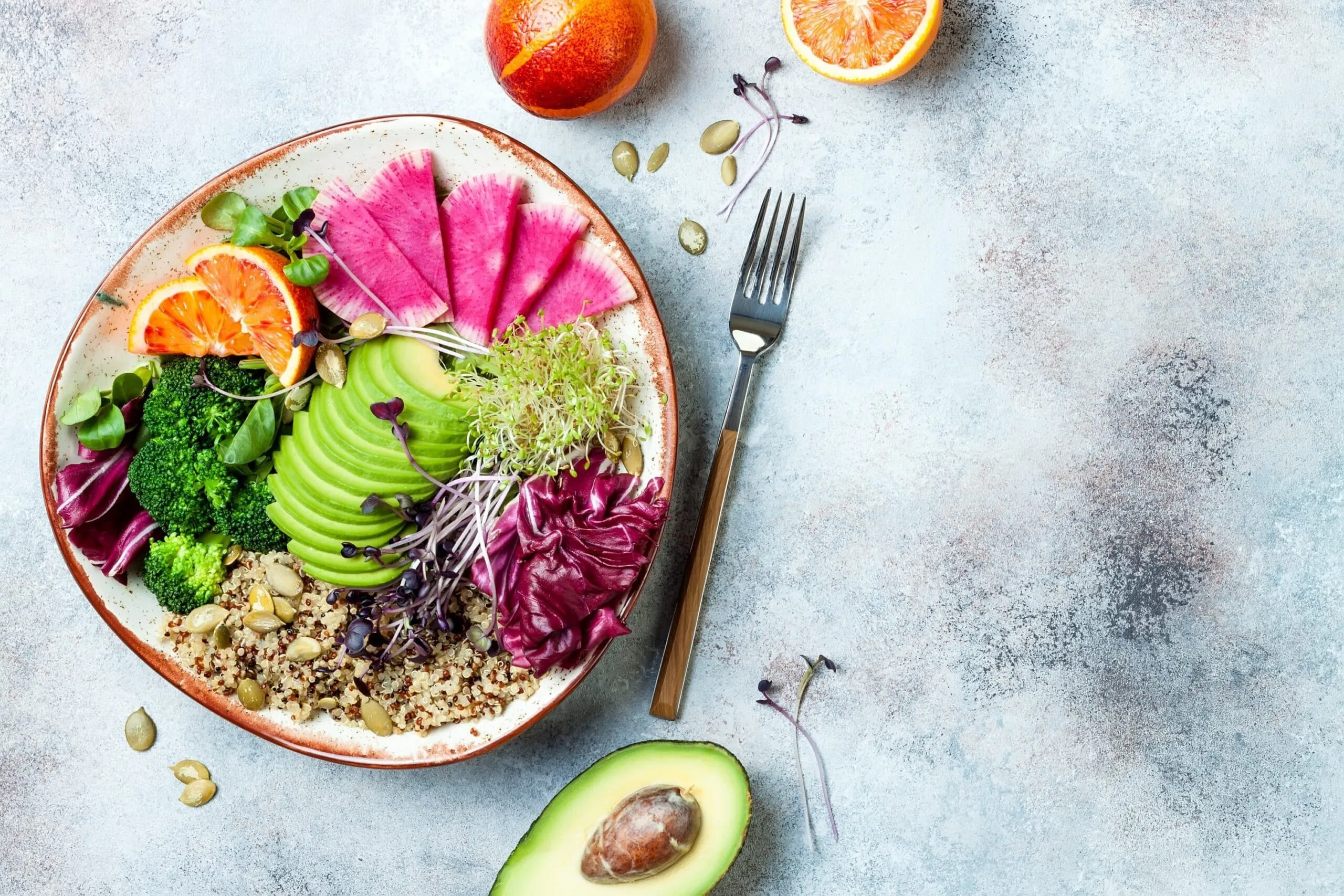
“I tend to tell people to base their diet around fruit and vegetables, lean protein, have some nuts and seeds and things like pulses.”
It isn’t glamorous advice. It’s just durable.
2. You’re Not Eating Mindfully
Modern eating often resembles multitasking with cutlery.
Lunch in front of a screen. Dinner accompanied by emails. Snacks inhaled between notifications. And then we wonder why weight loss feels unpredictable.
Georgie Murphy, a nutritionist at personalised vitamin service, Vitl (vitl.com) explains: “If while eating, our mind is distracted by deadlines and headlines, a cascade of physiological stress responses will put us in ‘fight or flight’ mode. Research suggests over time, this can negatively influence our appetite and eating behaviours towards obesogenic habits, such as comfort eating and bingeing.”
Stress chemistry alters appetite regulation. It nudges us toward calorie-dense comfort foods and blunts satiety signals.
Meanwhile, mindfulness – she says – has been shown to stimulate the parasympathetic nervous system (PSNS), critical for the state of ‘rest and digest’, “increasing communication between the brain and our gut, to support the physiological processes necessary for optimal digestion”.
In plain English: slow down. Chew. Pay attention. Your gut and brain need to speak the same language.
3. You’re Overestimating the Impact of Exercise
The gym is a wonderful place. It improves cardiovascular health, insulin sensitivity, mood and bone density.
But as a standalone weight loss strategy? It is often overrated.
Personal trainer Mark Fox from The Training Room sees the same pattern repeatedly.
“They think if they exercise constantly and burn more calories, they’ll eventually achieve their ideal weight. Unfortunately, what people don’t realise is that the more they exercise, the more their appetite will increase, to compensate for the increased energy required. As the saying goes, ‘You can’t out-exercise a poor diet’.”
Energy balance still matters. Calorie intake still counts. Alcohol still carries more energy per gram than most people realise.
Exercise supports fat loss. It doesn’t excuse excess.
4. You Forget About Movement Outside the Gym

Thirty minutes of spin class does not cancel ten hours in a chair.
Fox highlights NEAT — non-exercise activity thermogenesis — as a quiet hero of sustainable weight loss.
“A better approach is to slightly increase your energy expenditure through a mixture of exercise and NEAT (none-exercise activity thermogenesis),” says Fox, “which is the energy expended from daily, non-sports-like activities, such as walking instead of driving to work, or cleaning the house.
“This way, your body is less likely to significantly increase your appetite and hunger, helping you stick to your nutrition plan.”
It’s not glamorous. It’s cumulative. And it works.
5. You’re Only Doing Cardio
Cardio burns calories. That’s true.
But resistance training changes your metabolic landscape.
“Resistance (strength) training tends to burn fewer calories as you perform it, so many people ignore its ability to assist in weight loss. What they don’t realise, is that if you build more muscle, your body requires more calories to maintain that muscle. This results in a higher calorie burn each day, even at complete rest.”
Muscle is metabolically active tissue. The more you carry, the higher your resting energy expenditure.
“A combination of the two [cardio and resistance] provides better results,” he says.
Translation: lift something.
6. You’re Overeating Healthy Food
Avocados are nutritious. Nuts are excellent. Olive oil is beneficial.
They are also energy-dense.
“If the goal is weight loss, moderation is important,” says Murphy. “For example, being mindful of portion size of healthy foods such as nuts and avocados, can go a long way in supporting your weight-loss regime.”
Calories do not become invisible because they are virtuous.
Whole foods support appetite control and nutrient density. Portion awareness supports fat loss.
7. You’re Not Sleeping Enough
Sleep is the most underused performance enhancer in modern life.
“Sleep regulates two hormones called ghrelin and leptin that are essential in appetite control. Sleep deprivation has been shown to decrease leptin and increase ghrelin, leading to an increase in overall hunger. Therefore, a better night’s sleep may support you to eat wisely and avoid mindless grazing,” Murphy says.
Less sleep equals more hunger. More hunger equals harder weight loss.
Add muscle recovery, stress regulation and glucose control to the list, and eight hours suddenly looks like a strategic decision rather than a luxury.
The Bottom Line
Sustainable weight loss is rarely dramatic. It is built on small, consistent adjustments: whole foods, portion control, strength training, daily movement, proper sleep and mindful eating.
There is no miracle drink. No secret detox. No influencer shortcut.
Just biology, patience and habits that make sense.
Always speak to your GP before undergoing any new weight-loss programme.