Passenger princess poses look cute—physios warn they can defeat seatbelts and airbags. Here’s the safest way to sit.
The passenger princess trend has become social media’s favourite way to romanticise the passenger seat: toes up, seat back, eyes closed, life effortless. It looks like leisure. Physiotherapists see something else entirely—your body stepping outside the very zone modern cars were designed to protect.
This isn’t a finger-wag at TikTok. It’s a blunt conversation about impact forces, restraint systems, and the small positional choices that decide whether you walk away from a crash or meet your orthopaedic surgeon in a hurry. Gulf Physio, an online supplier of physiotherapy and sports medical equipment, says those viral poses can turn safety tech into a liability because they assume you’re sitting a certain way.
Kieran Sheridan, physical therapist and co-owner of Gulf Physio, puts it in terms even a sleepy motorway passenger can’t ignore:
“Seatbelts and airbags are designed around one assumption,” Sheridan explains. “That you are sitting upright, facing forward, with your feet on the floor. The moment you change that position, you change how force travels through your body in a crash.”
The physics social media doesn’t show

Cars are engineered with an invisible map of intended protection—call it a safety envelope. Seatbelts, airbags, belt pretensioners, load limiters: all calibrated around an occupant’s expected posture, distance from the dash, and the way a torso rotates forward under sudden deceleration.
The moment the passenger princess aesthetic shifts you into a recline, a twist, or a legs-up sprawl, you’re no longer cooperating with that choreography. Your belt angle changes. Your pelvis isn’t where it should be. The airbag meets limbs instead of a forward-facing upper body. And in a crash, milliseconds are not an accessory.
The most dangerous passenger postures
Based on Sheridan’s clinical guidance, here are some of the most common driver mistakes:
1. Feet on the dashboard
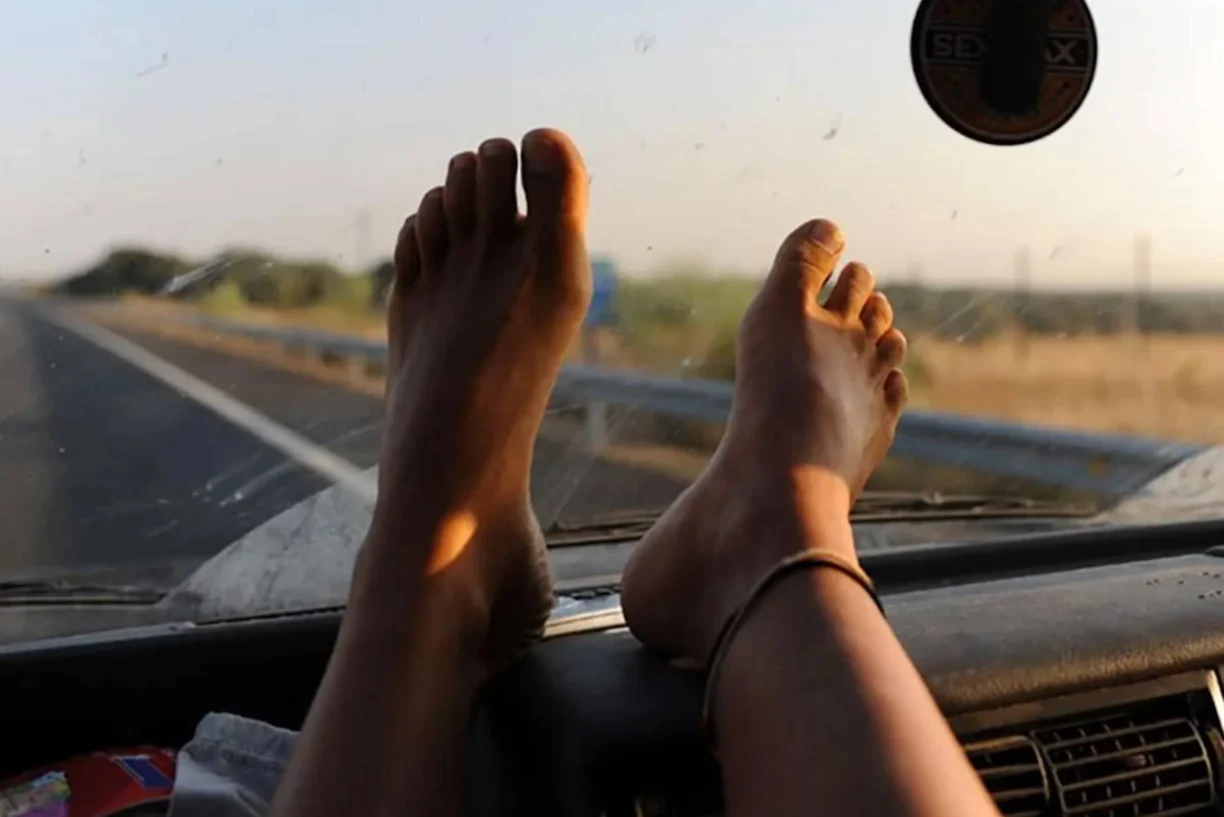
It’s the signature pose: knees high, ankles crossed, camera angled for maximum “unbothered.” It is also, according to physiotherapists, the quickest way to convert an airbag into a knee-powered catapult.
Airbags deploy at speeds estimated between 160 and 320 km/h. With legs elevated, the airbag can drive the knees backward toward the face and torso almost instantly—an ugly intersection of speed, leverage, and anatomy.
“In that position, your hips are externally rotated and vulnerable,” Sheridan says. “We are talking about potential hip dislocations, pelvic fractures, and severe spinal trauma. The airbag is not malfunctioning. It is doing its job. The posture is the problem.”
The grim irony: the safety feature works perfectly—just not for the position you’ve chosen.
2. Fully reclined sleeping position
Long drives do funny things to the human body. The seat goes back “just a bit” and suddenly you’re nearly horizontal, drifting off as the road hums. Comfort feels earned. The risk comes down to belt geometry and timing.
“When the seat is reclined too far, the lap belt shifts upward onto the abdomen instead of resting across the pelvic bones,” Sheridan explains. “In a collision, that can dramatically increase the risk of internal injuries.”
Seatbelts are meant to load strong structures—think pelvis and ribcage—not soft tissue. Excessive recline changes how your body “submarines” under the belt and disrupts the intended sequence between belt restraint and airbag deployment. In other words: you’ve improvised a new system, and the car didn’t rehearse it.
3. Cross-legged, curled-up, or sideways sitting
The curled-up passenger seat pose—knees to chest, sideways lean, cross-legged sprawl—reads cosy online. Biomechanically, it’s a collection of compromises: misalignment, rotation, and reduced restraint effectiveness.
“The spine is strongest in a neutral alignment,” Sheridan says. “When you twist or rotate the torso, you introduce torque. In a high-force event, that rotational stress can increase the likelihood of disc injury or ligament damage.”
Even low-speed collisions can punch above their weight when the body is pre-twisted. The restraint system can’t manage you properly if you’re not facing forward and anchored as intended.
What safe passenger posture actually looks like
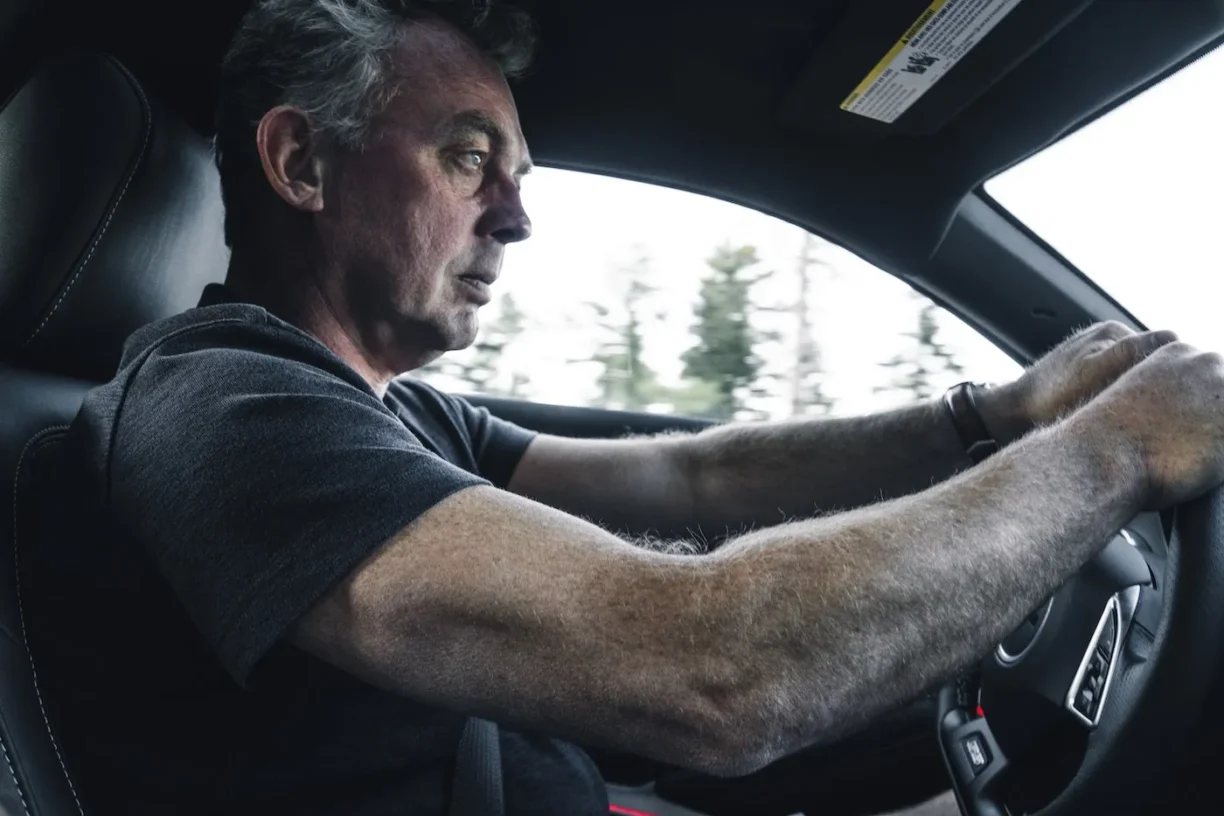
If the passenger princess trend is the fantasy, this is the grown-up version—still comfortable, just not catastrophically optimistic. Proper posture is less about sitting like a statue and more about staying inside the vehicle’s engineered protection.
Correct posture aligns with vehicle design:
- Sit upright with the seatback angled approximately 100 to 110 degrees
- Keep both feet flat on the floor
- Ensure the lap belt rests firmly across the pelvis
- Adjust the headrest to mid-head height
- Face forward with a neutral spine
“It is not about sitting stiffly,” Sheridan says. “It is about staying within the safety envelope your car was engineered for.”
There’s an understated elegance to that, really: letting high-end engineering do what it was built to do, instead of asking it to accommodate a pose.
The cultural shift: comfort without the cost
Trends move faster than education. What’s new is not the existence of bad passenger posture—it’s the global broadcast of it as aspirational behaviour. The passenger princess label makes it playful; the risks, unfortunately, remain stubbornly literal.
As viral content continues to influence behaviour globally, health professionals argue that safety messaging needs to evolve with it—less scolding, more explanation; less fear, more clarity.
“Awareness is not about fear,” Sheridan adds. “It is about understanding how small posture choices can make a significant difference in injury severity.”
And that’s the point worth keeping: you can still ride in comfort, still enjoy the journey, still recline a touch and relax—just don’t turn your body into the variable your car’s safety systems were never designed to solve.