Child obesity is rising, and Diabetes UK warns type 2 diabetes diagnoses among children are climbing too.
Obesity in children is no longer just a public health worry whispered about in policy papers; it is now being linked to a worrying rise in type 2 diabetes diagnoses among young people, with Diabetes UK warning that the cost of living crisis could make a bad situation worse.
The charity says high levels of childhood obesity have led to a “concerning climb” in the number of children diagnosed with type 2 diabetes. It is the sort of sentence that lands heavily, not least because type 2 diabetes was once discussed mainly as an adult condition. Now, increasingly, children are being dragged into the conversation before they have even had a fair crack at growing up.
According to the National Child Measurement Programme in England, 14% of children in reception year at school are obese. The proportion of four and five-year-olds in England who are obese increased by 46% between 2019/20 and 2020/21.
Those are not gentle nudges in the wrong direction. They are red flags flapping in a gale.
Why Obesity And Type 2 Diabetes Are Being Linked
Type 2 diabetes is closely associated with excess weight, diet, inactivity and wider social conditions. In children, that makes rising obesity levels especially concerning.
The body has to work harder to manage blood sugar. Over time, carrying excess weight can increase insulin resistance, which is one of the key factors in type 2 diabetes. Not every child living with obesity will develop diabetes, and not every case of type 2 diabetes is caused by weight alone. But the connection is strong enough for health charities to be sounding the alarm.
The difficulty is that this warning arrives at precisely the moment many families are being squeezed by food prices, energy bills and the daily arithmetic of getting dinner on the table without financially injuring themselves.
Telling parents to “just eat healthier” is not much use if the advice sounds as though it was written by someone who has never compared two loaves of bread under fluorescent supermarket lighting while a child campaigns for chocolate cereal.
Healthy Food Does Not Have To Be Expensive
Healthier diets could help reduce obesity in children and, in turn, may help lower the risk of obesity-related type 2 diabetes. But the advice has to be practical, affordable and rooted in real family life.
Aisling Pigott, registered dietitian and British Dietetic Association spokesperson, stresses that eating well does not have to cost the earth. But she is also clear that families need more than a finger-wagging lecture over the shopping trolley.
“You’ve got to have the knowledge, the cooking materials, facilities and hygiene – and that’s not always readily available to everybody.
“The first thing is increasing the amount of fruit and vegetables we’re consuming. That often feels like it could be expensive, but there are lots of really affordable ways of doing it. Simple swaps can be made, that doesn’t have to be painful for families.”
That last point matters. If healthy eating feels like a punishment, children will treat it like one. And frankly, so will most adults.
Frozen And Tinned Vegetables Count
There is a lingering idea that fruit and vegetables only really count if they are fresh, rustic-looking and faintly smug. Fortunately, that is nonsense.
Frozen and tinned fruit and vegetables can be cheaper, easier to store and just as useful nutritionally. For families trying to improve children’s diets without increasing the food bill, that is a small but meaningful victory.
“Vegetables maintain quite a lot of nutrients,” she says, “and frozen veg can contain more nutrients than fresh produce, because it’s often frozen at the point of picking or production. You can get really affordable frozen and tinned vegetables.”
Frozen peas, tinned tomatoes, sweetcorn, mixed vegetables and frozen berries may not have the glamour of a wellness influencer’s chopping board, but they can help families put better food in front of children more often. In the fight against obesity-related diabetes risk, boring and reliable is sometimes exactly what is needed.
Fibre Helps Children Feel Fuller
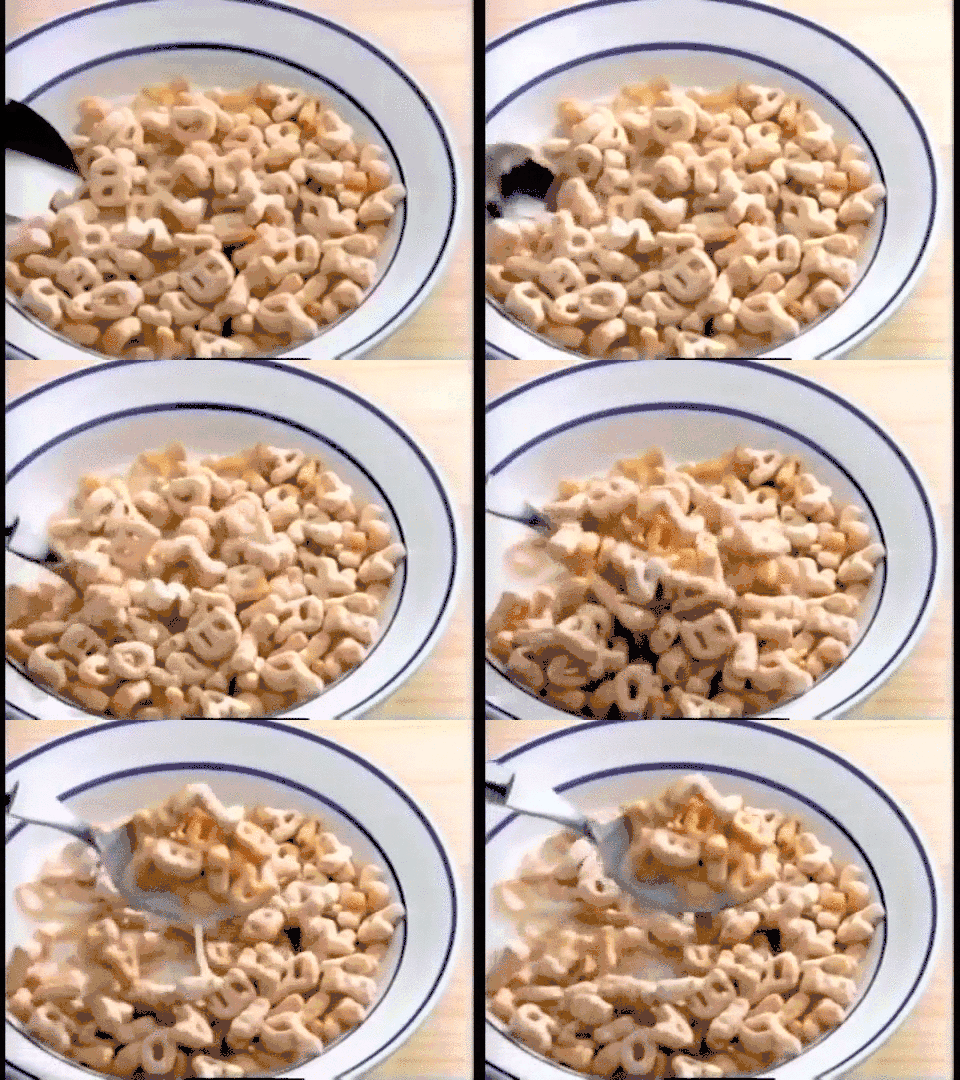
Fibre rarely gets a standing ovation. It should.
Higher-fibre foods can help children feel fuller for longer, which may reduce overeating and make meals more satisfying. That is important when tackling obesity in children because constant grazing on sugary, salty or highly processed snacks can quietly push diets in the wrong direction.
“Fibre in food makes it more satisfying, so we’re less likely to overeat.”
Fibre can come from vegetables, beans, lentils, wholegrain bread, brown rice, wholegrain pasta and certain breakfast cereals. Pigott accepts there is “often a reluctance to buy foods that are foreign or different”, particularly where children are involved.
Anyone who has watched a child examine a new food as if it has just crawled from a pond will understand the issue. The answer is gradual change, not culinary ambush. Small swaps, familiar meals and steady improvements are more likely to last.
Breakfast Is A Sensible Place To Start
If there is one aisle where childhood nutrition can go spectacularly off-piste, it is breakfast cereal. Many children start the day with bowls that look cheerful enough but carry more sugar than parents might expect.
“A really simple change people can make is at breakfast, when children often eat high-sugar breakfast cereals,” says Pigott. “They can often be changed for cheaper, high-fibre options, which can contain two or three times the amount of fibre, and much less sugar.”
She suggests supermarket own-brand wheat-based cereals, wheat biscuits, ready oats and porridge.
“They often match branded products nutritionally and are fortified with vitamins and minerals, at a fraction of the cost.”
That is useful because reducing obesity-related type 2 diabetes risk is not about one dramatic overhaul. It is about repeated, ordinary choices that quietly improve the day’s nutritional scorecard.
Children Need To Be Part Of The Shopping Conversation
There is little point buying healthier food if it returns home and is greeted by the children like an unwelcome exchange student.
Pigott suggests involving children in choosing food at the supermarket. Not giving them command of the trolley — that way lies chaos and possibly a multipack of iced buns — but asking them to help find cheaper, healthier options they might actually eat.
This gives children some ownership. It can also turn healthy eating from a parental instruction into a small practical challenge. Find the cheapest fruit they like. Pick a cereal with more fibre. Choose a yoghurt that is not pretending to be pudding in a small plastic hat.
Small victories count.
Snacks Do Not Have To Come Out Of A Packet

Pre-packaged snacks such as chocolate bars and biscuits are convenient, but they can become expensive over time and add extra fat, sugar and salt to children’s diets.
Instead, Pigott points towards everyday options that do not arrive wrapped like tiny edible parcels.
“There are things like yoghurt, a little bit of cheese, a piece of fruit, some wholegrain toast – there are lots of healthy and appropriate snacks that don’t come out of a packet.
We’ve been conditioned to think everything we snack on has to come out of a very convenient packet – but that costs money we don’t need to spend.”
This is where the cost-of-living point becomes painfully relevant. Families are often paying more for foods that are less helpful. Breaking that habit can support both the household budget and children’s long-term health.
Sweet Treats Need Boundaries, Not Bans
No useful health advice should pretend children are never going to eat biscuits. They are children, not monks.
Pigott recommends having rules around when sweet treats are eaten. This “doesn’t necessarily mean restricting them, but having them at a certain time of the day or week”.
That approach can reduce constant snacking without turning sugar into forbidden treasure. The more dramatic the ban, the more interesting the biscuit tin becomes.
Similarly, Pigott says: “A really simple trick lots of families find helpful is putting treat foods in a cupboard that’s not accessible to young children.”
It is not a revolution. It is a cupboard. But sometimes public health starts with the small domestic manoeuvres nobody writes songs about.
The Diabetes Warning Should Be Taken Seriously
The rise in childhood obesity and type 2 diabetes diagnoses should trouble anyone who cares about children’s health. It points to a wider problem involving food access, household income, education, habits and the way cheap, convenient food is often the easiest food to buy.
But the answer cannot be guilt. Parents are not helped by being made to feel as though every lunchbox is a moral examination.
A more useful response is practical: more fibre, more fruit and vegetables, cheaper frozen and tinned options, fewer high-sugar breakfasts, fewer packet snacks, and clearer boundaries around sweet treats.
None of this guarantees protection from type 2 diabetes. Health is never that simple. But for families trying to reduce obesity-related risk in children, these are sensible steps that can be taken without turning the weekly shop into a financial horror film.
And in a country where too many children are facing adult health problems far too early, sensible is not a small thing. It may be the most powerful place to start.