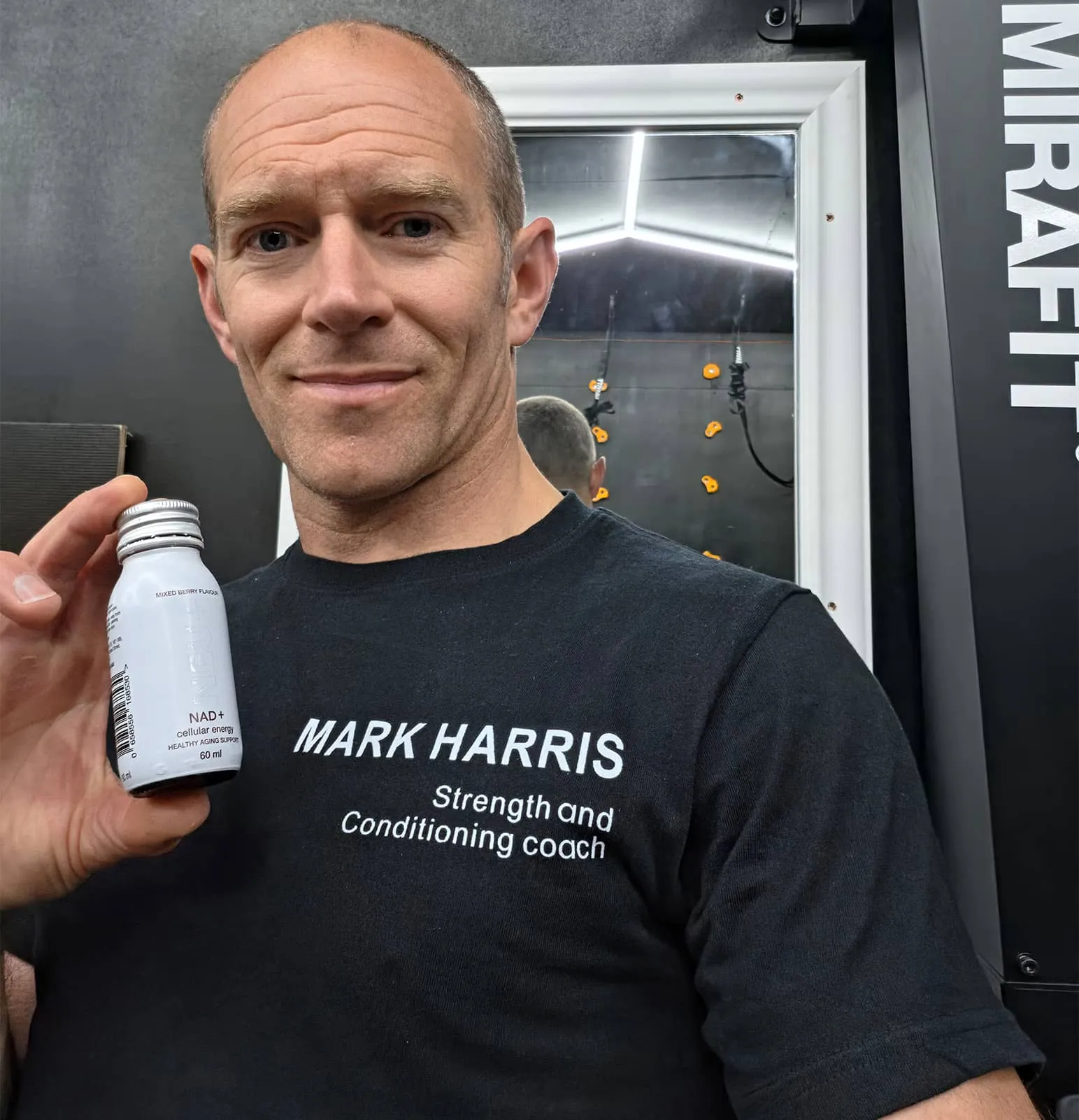
A strength and conditioning coach tracked NAD+ and NMN supplementation through ten days of heavy work, training and coaching. The Garmin numbers were intriguing — but they need careful interpretation.
NAD+ has become one of those performance buzzwords that sounds as if it was assembled in a laboratory by people who wear white coats even to dinner.
But behind the slightly sci-fi name sits a serious question for athletes, coaches and high-output professionals: can cellular energy support actually improve recovery, or is it just another expensive route to brightly coloured urine?
For me a Level 4 Strength and Conditioning Coach and facility owner, the test was not conducted from a chaise longue with a wellness podcast humming in the background.
This was a 10-day loading protocol tracked through a Garmin HRM Pro, set against the sort of daily workload that would make most fitness watches ask for compassionate leave.
The schedule included 15,000 to 20,000-plus steps a day, manual labour, hybrid athletic event preparation and back-to-back personal training sessions. In other words, the central nervous system was not being politely invited to participate. It was being dragged into the arena and handed a shovel.
Why NAD+ Matters For Energy And Recovery
NAD+ is involved in cellular energy production, particularly through its relationship with mitochondrial function and ATP production. Put less clinically, it helps the body do the unglamorous work behind the scenes: converting fuel into usable energy, supporting repair processes and keeping the engine room from filling with smoke.
That does not make it magic. It does not mean everyone needs to start loading supplements into their morning routine like a Tour caddie packing rain gear at Troon.
Sleep, hydration, nutrition and sensible training still sit at the top table. But for coaches, hybrid athletes and professionals with extreme physical output, the appeal is obvious. If your normal day includes heavy movement, mental focus, repeated coaching demands and structured training, the standard afternoon crash can feel less like tiredness and more like a system shutdown.
The aim here was simple: see whether NAD+ and precursors such as NMN could elevate the body’s baseline, rather than simply slap a stimulant plaster over fatigue.
The “Real-Time Recovery” Anomaly
The most eyebrow-raising part of the 10-day protocol came on Day 10.
The day included an 8.5-hour manual labour shift, a 60-minute low-aerobic cardio flush, a 38-minute continuous strength block and three hours of active coaching on the gym floor. That is not a training day. That is a small industrial dispute with added sweat.
According to the Garmin data, the workload produced a 73-point drain on Body Battery. So far, so grimly predictable.
Then came the oddity: Training Readiness increased from 88 to 91 by bedtime.
In a typical performance profile, sustained physical and cognitive load creates a slow decline in readiness and energy across the day. You spend the battery; the battery goes down. That is usually how batteries behave, unless they have been purchased from somewhere suspicious.
Here, the curve appeared to move the other way. The body was still working, still moving and still under load, yet the recovery markers suggested the system was coping unusually well.
That does not prove a universal outcome for every athlete. It does, however, make the data difficult to dismiss as mere placebo, particularly when paired with workload volume and repeated biometric tracking.
NAD+ Is Not Caffeine In A Lab Coat
The important distinction is that Neu NAD+ does not behave like caffeine.
Caffeine can sharpen alertness, lift perceived energy and drag you through the back nine of a long day. But it can also borrow heavily from tomorrow. The bill tends to arrive around 4 pm, wearing steel-toecap boots.
NAD+ works in a different lane. The reported effect was not a jolt, buzz or stimulant spike, but a steadier sense of resilience under load. The protocol was designed around cellular energy support rather than artificial stimulation.
That became clearer during a late-afternoon anaerobic test on Day 8, when the subject was already deep into a 20,000-step day.
The session was a heavy Erg Challenge: 500m ski, 30-calorie air bike, 500m row and 500m curved treadmill. Peak heart rate reached 170 bpm, with more than eight minutes spent strictly in Zone 4 to finish under 10 minutes.
Normally, that kind of work late in the day has the subtlety of being hit with a sand wedge. Lactic accumulation, central fatigue and evening readiness scores are rarely enthusiastic bedfellows.
Yet the evening Training Readiness remained in the optimal zone. The interpretation was not that fatigue vanished, but that the system appeared more capable of absorbing stress without the usual cliff-edge drop.
The Washout Phase: When The Dose Stops
The most useful part of any supplement protocol is not always the glamorous middle. It is the awkward silence afterwards.
Stop taking it, and you find out whether the product changed anything meaningful or merely rented you a feeling.
After 48 hours with no exogenous NAD+ or NMN, the morning metrics hit maximum capacity: 100 Body Battery and 100 Training Readiness. Resting heart rate sat at 47 bpm, with HRV reported as balanced.
That matters because it suggests the protocol may have created a residual recovery buffer rather than a short-lived morning lift.
Again, this is not a clinical trial. It is a disciplined, self-tracked performance experiment. But in practical coaching terms, the washout data is arguably more interesting than the loading phase. Any supplement can feel useful when you are actively taking it. Fewer still appear to leave the system better prepared once the active dosing has stopped.
By 72 hours post-protocol, after another 16,000-plus step day and a heavy training block without supplementation, the numbers finally began to drift back towards a more moderate baseline.
That is a more believable ending, frankly. If the metrics had stayed perfect forever, we would be less in the realm of supplementation and more in the realm of Marvel origin story.
Who Might Actually Benefit?
For the average gym-goer training three or four times a week, NAD+ supplementation should not jump the queue ahead of the basics.
Poor sleep, low protein intake, erratic hydration and chaotic stress management will not be rescued by a capsule, powder or protocol with a clever label. The body is annoyingly old-fashioned like that.
Where NAD+ becomes more interesting is among people with unusually high daily output: strength coaches, endurance athletes, hybrid competitors, manual workers, busy personal trainers and performance-minded professionals who are constantly balancing physical load with cognitive demand.
For that group, the value is not merely “more energy”. The more relevant question is whether recovery can keep pace with output.
In this 10-day protocol, the most notable changes were not theatrical. There was no superhero transformation, no overnight enlightenment, no sudden desire to wear compression sleeves at breakfast. Instead, the key markers pointed towards improved resilience: less obvious afternoon decline, stronger recovery data under load and a higher apparent baseline during the washout window.
The Sensible Verdict On NAD+ And NMN
The best reading of this experiment is cautious but genuinely intriguing.
NAD+ and NMN supplementation did not appear to behave like a stimulant. The data suggested a steadier biological effect linked to recovery capacity, cellular energy and fatigue resistance. For a high-output coach operating under heavy physical and mental load, the protocol appeared to support a stronger baseline rather than simply masking tiredness.
That is the crucial distinction.
A stimulant lets you ignore the warning light. Cellular energy support, at least in theory, helps the engine run more efficiently.
For athletes and professionals demanding extreme daily output, that is where NAD+ earns its place in the conversation. Not as a miracle. Not as a shortcut. But as a potentially useful performance tool for people who have already earned the right to look beyond the basics.
Because once sleep, nutrition and training discipline are in place, the next frontier is not doing more for the sake of it. It is recovering well enough to do the next hard thing properly.
And in the long war against the afternoon crash, that is a far better strategy than simply throwing another coffee into the furnace and hoping the wheels stay on.