Mid-life triathlon pacing explained: realistic swim, bike and run targets, common mistakes and a smarter pre-race plan.
The mid-life triathlon is a different beast from the same race at 25. The recovery curve flattens, the heart-rate cap moves, and the pacing maths needs to actually pencil out across three disciplines. Most age-group athletes underestimate one segment and overpay for it in the next. The fix is upstream, in the pace-calculation work before the race.
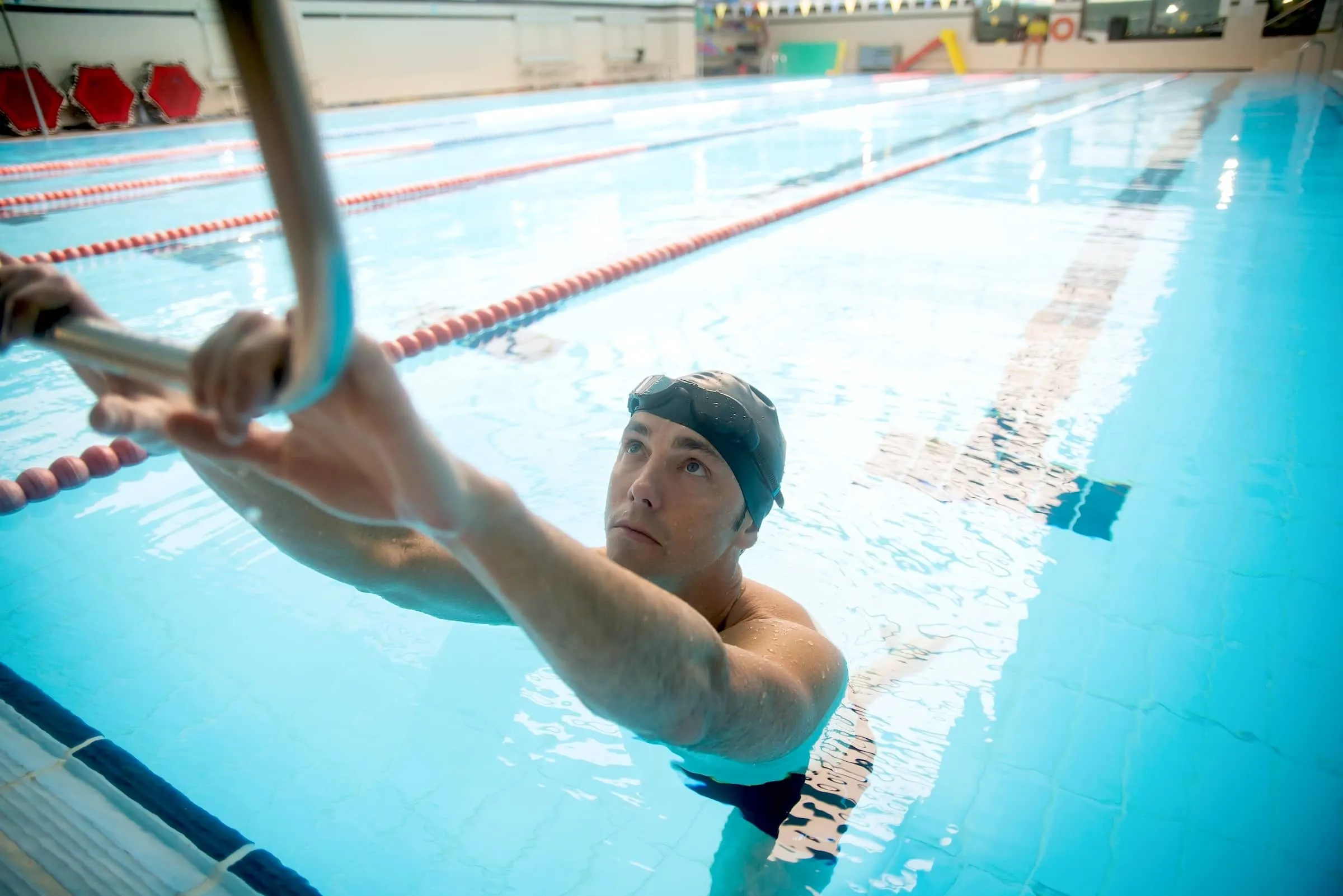
Alt text: A mid-life triathlete training in a swimming pool
A triathlon pace plan is a written set of target times for swim, transition, bike, and run segments calibrated to the athlete’s training data. Tools like the Swim Bike Run pace calculator help athletes estimate realistic targets across all three segments. The calculator inputs a recent benchmark per discipline and outputs a coherent race-day target. The framework below explains the maths it runs.
Why Does Mid-Life Triathlon Pacing Differ From Younger Pacing?
A mid-life triathlete is an age-group athlete between 35 and 60 racing at recreational or competitive amateur level. Three physiological shifts shape the pacing question.
The first is the lactate threshold drift. The percent of VO2 max at which lactate accumulates shifts down 1 to 2 percent per decade after 35. The race-day pace plan must account for this. Younger athletes can hold 85 percent of VO2 max for an Olympic-distance race; most 50-year-olds hold 78 to 82 percent. Mid-life tactical training approaches often borrow elite frameworks while adjusting the recovery cadence.
The second is the recovery cadence. Mid-life athletes need 24 to 48 hours of additional recovery between hard sessions compared to athletes in their 20s. The training plan that sets up the pace data carries this drag.
The third is the segment-pacing interaction. A swim 5 percent too hard burns the bike. A bike 7 percent too hard burns the run. The cascade is more punishing past age 40 because the recovery within the race is slower.
How Do You Calculate Realistic Race-Day Paces?
A five-step framework calibrates each segment.
- Pull a recent benchmark per discipline. A 1,500m pool time-trial, a 40km bike time-trial, and a 10km open run time-trial all within 4 weeks of race day.
- Convert to pace per 100m, per km, and per km. Divide each benchmark by its distance.
- Apply the race-distance derate. Olympic-distance pacing runs 92 to 95 percent of the time-trial pace. Half-distance runs 85 to 88 percent.
- Add the age-cohort correction. Subtract 2 to 4 percent per decade past 35 from the derated pace.
- Stress-test in a brick session. A 30-minute bike at target watts followed by a 15-minute run at target pace confirms the plan holds.
The Public Health England physical activity guidelines cover the underlying activity-level framework worth referencing. The NHS exercise overview for adults sets out the broader public-health context.
What Pace Targets Do Mid-Life Triathletes Hit Across Distances?
The table below sets out realistic age-group targets across the standard triathlon distances. Times are middle-of-the-pack benchmarks for a competitive amateur.
| Distance | Age 35-39 | Age 45-49 | Age 55-59 |
|---|---|---|---|
| Sprint swim 750m | 13 to 15 min | 14 to 17 min | 16 to 20 min |
| Sprint bike 20km | 32 to 38 min | 34 to 41 min | 38 to 45 min |
| Sprint run 5km | 20 to 24 min | 22 to 27 min | 25 to 31 min |
| Olympic swim 1500m | 25 to 30 min | 28 to 33 min | 32 to 38 min |
| Olympic bike 40km | 65 to 75 min | 70 to 82 min | 78 to 92 min |
| Olympic run 10km | 42 to 50 min | 46 to 55 min | 52 to 62 min |
The bands shift with terrain, weather, and individual training history. A flat course in cool weather sits at the fast end of each band. A hilly hot-weather course sits at the slow end.
What Are the Common Pacing Errors Mid-Life Triathletes Make?
A pacing error is a deviation of more than 5 percent from target pace within a segment. The errors below recur across the age-group field. Knowing them lets the athlete plan around the temptation. Coverage of how to start training for cycling reinforces the discipline of paced builds rather than ego-driven sessions.
The first is the swim-start surge. The first 200m run 10 to 15 percent above target pace. The lactate spike costs the rest of the race.
The second is the bike-out cooldown skip. The first 5km on the bike should be 10 percent below target to recover from the swim. Most mid-life athletes start too hard.
The third is the run-out shock. The first 2km off the bike feels easy until the heart rate catches up. A 10 percent below-target start protects the back half.
The fourth is the late-race fade. Athletes who haven’t paced the front of the race lose 8 to 15 percent on the closing kilometres. The losses compound on the run.
A Quick Pre-Race Pacing Reality Check

- Run the brick session 10 to 14 days before race day to verify the plan
- Write each segment target on a wristband or bike-top sticker
- Account for the start-line adrenaline by setting the first 5 minutes 5 percent below target
- Map the aid-station spacing into the bike and run pace plan
- Confirm the swim sighting pattern on the actual race course in the days before
Alt text: A mid-life cyclist on a UK country road
The Mid-Life Triathlete’s Bottom Line
Pacing is the lever that protects the back half of the race. Mid-life triathletes who run the maths upstream and respect the segment-to-segment interaction almost always finish stronger than those who race off feel. The training data, age-cohort correction, and brick-session stress test together build the plan. A wristband sticker keeps the plan visible when the adrenaline tries to override it.
Frequently Asked Questions
How Long Before Race Day Should I Build the Pace Plan?
Around 4 to 6 weeks out. The pace plan needs recent time-trial data per discipline, plus 2 to 3 brick sessions to confirm it holds. Building it earlier risks stale benchmarks.
Should I Use a Power Meter for the Bike Segment?
Yes for any competitive amateur. Bike power is the most stable pacing signal across terrain and weather. Heart rate works as a backup for athletes without a power meter.
What’s the Single Biggest Mid-Life Pacing Mistake?
The swim-start surge. Athletes overcook the first 200m and pay across the entire race. A controlled first 5 minutes protects the next 2 to 5 hours.
How Often Should I Re-Run the Pace Calculations?
Every 6 to 8 weeks during a build cycle. The benchmarks shift as fitness builds, and the pace plan needs to track. Stale data leads to under-paced or over-paced racing.