Discover the best Lake District spring walks for bluebells, lambs, accessible trails and responsible countryside exploring.
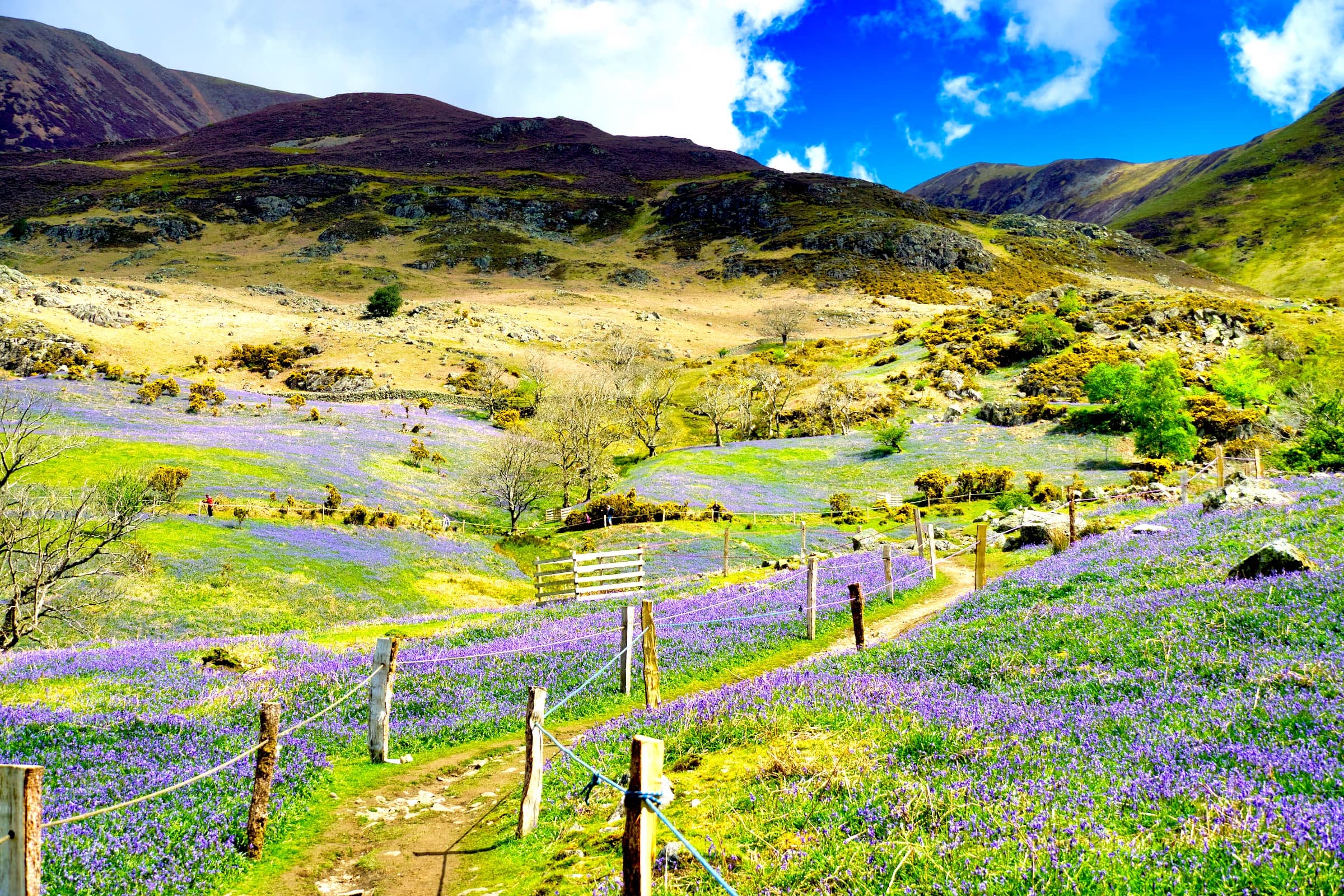
The Lake District in spring is not so much a destination as a full-body reset: stone walls, soft light, lambs wobbling about like tiny four-legged drunks, and woodland floors lit up by bluebells as though someone has spilt a painter’s box across the fells.
Yes, the Lakes have long had the dramatic stuff covered — rugged ridges, glacial valleys, moody skies and scenery that could make a tax inspector sentimental. But spring brings something gentler. The landscape loosens its shoulders. The air softens. The paths start calling.
For anyone looking to lace up their walking boots, book a countryside escape or simply remember what birdsong sounds like without traffic growling underneath it, this is one of the finest times of year to visit.
Jerry Rebbeck, Managing Director of the Lake District holiday cottage company Wheelwrights, has shared his favourite locations for spotting two of spring’s great rural pleasures: wild bluebells and lambs.
And, crucially, how to enjoy them without behaving like a tourist who thinks “right of way” means “permission to charge through nature like a Labrador at a buffet.”
Why Spring In The Lake District Feels Different
There are grander months in the Lake District, certainly. Summer brings the walkers, the kayaks, the packed car parks and the ice creams being eaten in mild panic before the weather turns.
But spring has its own quiet authority.
The fells still carry a hint of winter severity, yet the valleys begin to glow. Hedgerows thicken. Woodland paths smell of damp earth, moss and leaf mould. The light arrives at an angle that makes old stone barns look as though they have been patiently posing for centuries.
It is also the season when the Lake District feels most alive at ground level. Lambs fill the fields, bluebells flood the woods, and even the most determined indoor person may feel a suspicious urge to buy socks with reinforced heels.
Best Places To See Lambs In The Lake District
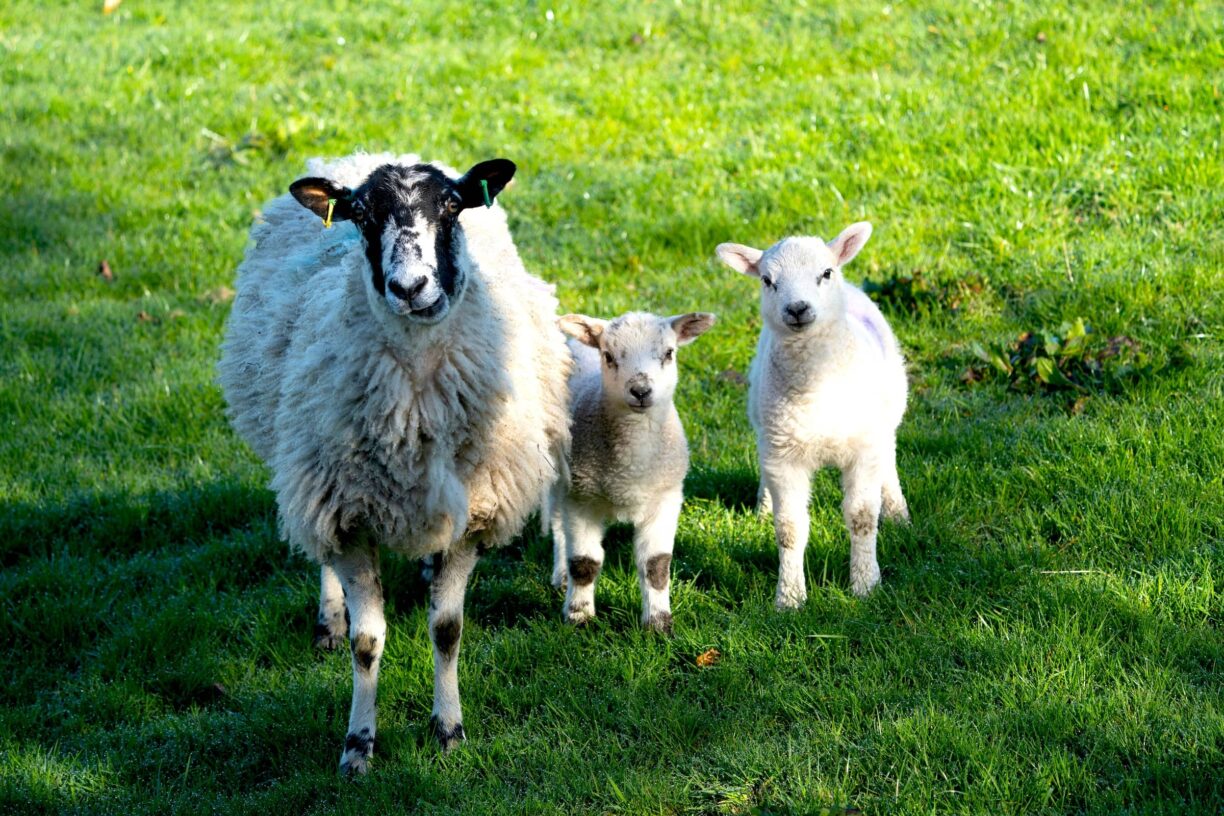
Few sights say “British spring” quite like lambs bouncing around a field with the reckless confidence of something yet to discover tax, knee pain or email.
In the Lake District, lambing season is woven into the landscape. This is working countryside, not a decorative backdrop, and that is part of its charm. The sheep are not props. The farmers are not extras. The valleys are living, breathing places shaped by generations of rural life.
Jerry Rebbeck recommends Langdale Valley as one of the best places in the South Lakes to see lambs.
“Langdale Valley is one of the best places to spot lambs in the South Lakes, with popular walks from Elterwater, leading up to Loft Crag and Stickle Pike. The flocks here are largely the famous Herdwick sheep, the same breed Beatrix Potter once farmed in this very valley. They roam freely through several farmers’ fields, which you can walk through, making it easy to see them close up!”
Langdale is a classic Lake District heavyweight. It has the kind of scenery that makes walkers stop mid-sentence: craggy tops, rough pasture, slate-grey barns and paths that climb from pretty villages into proper fell country.
The Herdwick sheep add another layer of heritage. This hardy breed is part of the Lake District’s cultural DNA, famously linked with Beatrix Potter, who was not just the creator of Peter Rabbit but also a farmer, conservationist and champion of the local landscape.
For another strong option, Jerry points visitors towards Borrowdale.
“Borrowdale, near Keswick and Derwent Water, is another great location, offering a scenic valley setting where lambs roam freely through traditional farmland, making sightings almost guaranteed during lambing season.”
Borrowdale has a softer, almost storybook feel in places, though the fells around it are more than capable of reminding you who is boss. Near Derwent Water, it offers the classic Lake District combination of water, woodland, pasture and mountain drama, with lambs scattered across traditional farmland like spring’s own little chorus line.
Where To Find Wild Bluebells In The Lake District
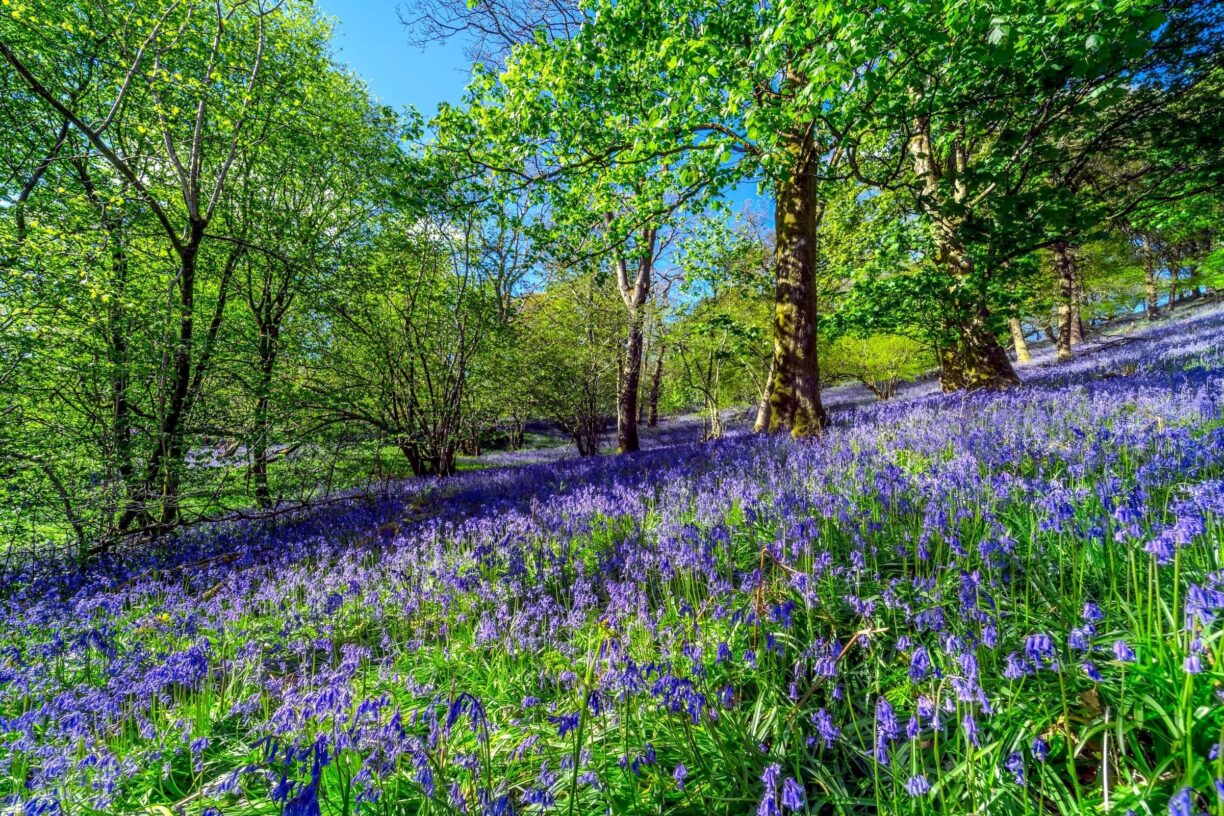
Bluebells are one of Britain’s great seasonal spectacles, partly because they never hang around long enough to become ordinary.
One week the woodland floor is green and quiet. The next, it has turned into a violet-blue haze, especially in the soft shade of old trees. It is delicate, fleeting and very easy to ruin if visitors wander off paths for the sake of a photograph.
Jerry recommends Skelghyll Woods in Ambleside as one of the standout places to see them. “Skelghyll Woods in Ambleside comes alive during spring, becoming a fairytale scene with a blanket of wild bluebells. The woods are part of the National Trust’s Ambleside Tree trail, and contain some of the tallest trees in England, which provide ample shade for the bluebells to thrive, making walks through them magical during May,” says Jerry.
That word “magical” gets abused in travel writing more often than hotel breakfast gets abused by a coach party, but here it earns its keep. Skelghyll Woods has height, shade, texture and that wonderful filtered light that makes bluebells look almost luminous.
For a more accessible spring walk, Whitemoss Common in Grasmere is another strong choice.
“Whitemoss Common in Grasmere is another beautiful option, with the surrounding woodlands bursting with the purple and blue hues during spring. It is also part of the Miles without Stiles Trail, making it accessible for wheelchairs and pushchairs.”
That accessibility matters. The Lake District can sometimes feel like it was designed by someone with very strong calves and no sympathy for prams, but the Miles without Stiles routes help open up the landscape to more visitors.
Grasmere, meanwhile, needs little introduction. It is one of the Lake District’s most beloved areas, known for its literary associations, lakeside calm and the kind of village charm that makes people suddenly consider moving north and buying a raincoat with intent.
Jerry also highlights the wooded walks around Langdale. “You can also enjoy bluebells in the wooded areas around Langdale in the various circular walks you can do from Elterwater to Little Langdale, taking in Cathedral Cavern, Colwith Force and Skelwith Bridge.
This is a route with plenty of theatre: woodland, water, old quarry history, waterfalls and bridges, all tied together by one of the Lake District’s most satisfying walking areas.
Responsible Walking: How To Enjoy Lambs And Bluebells Properly
The Lake District may look rugged, but in spring it is full of fragile things. Lambs are vulnerable. Ewes are protective. Bluebells are delicate. Farm animals and loose dogs are a combination nobody needs.
And Rebbeck’s advice is clear. “When visiting during lambing season, make sure to keep your dog on a short lead, and keep them away from ewes and lambs, as mothering ewes can be very protective, which can cause injury to dogs and people alike. Dog waste should always be picked up and removed, as it can be harmful if eaten by farm animals.”
This is not countryside etiquette dressed up as fussiness. It is basic respect. Lambing season is demanding for farmers, stressful for livestock and full of avoidable problems when visitors forget that fields are workplaces, not theme parks with grass.
Children, too, need guidance around animals. “Children should also be kept at a safe distance, as lambs can be easily distressed and ewes may react if they feel threatened.”
Bluebells require the same care, though for different reasons. They may look abundant when carpeting a woodland floor, but they are slow to establish and easily damaged.
“When it comes to bluebells, whilst it’s tempting to take some of those beautiful flowers home with you, it’s important to remember they are protected by the Wildlife and Countryside Act 1981, making it illegal to pick, uproot or destroy them.”
They take decades to establish, and with the UK holding 50% of the world’s bluebells, protecting them is vital. Stick to designated paths and keep dogs on leads, as bluebells are delicate and can be permanently damaged if trampled,” says Jerry.
That last point is worth lingering over. Britain holds around half the world’s bluebells, which makes these spring woodlands globally significant, not merely pretty. A bluebell walk is not just a nice afternoon out; it is a front-row seat to one of the natural world’s quieter masterpieces.
How The Lake District Compares With Other UK Spring Escapes
There are other superb spring destinations in the UK. The Cotswolds has honeyed villages and rolling charm. Snowdonia brings mountain drama. The Scottish Highlands offer scale and solitude. Cornwall has coastal colour before the summer crowds descend.
But the Lake District has a rare concentration of elements: high fells, accessible valleys, literary history, working farms, ancient woodland, lakeside walks and villages that still feel anchored to the land around them.
It is not polished in the way some luxury destinations are polished. It is better than that. It has mud on its boots, weather in its bones and enough beauty to make even a hardened city dweller briefly consider buying binoculars.
For golf travellers, walkers, nature lovers and anyone seeking a restorative spring break, the Lake District offers something more textured than a simple countryside escape. It is active without being aggressive, peaceful without being dull, and scenic without feeling stage-managed.
Where To Stay And How To Make A Spring Trip Work
The best way to experience the Lake District in spring is to slow down. Stay close to the valleys you want to explore. Choose a cottage, inn or small hotel that gives you easy access to morning walks and late-afternoon wandering.
Langdale, Ambleside, Grasmere, Keswick and Borrowdale all offer strong bases depending on the mood of the trip. Ambleside gives access to woods, lake walks and shops. Grasmere brings poetry, village charm and accessible routes. Langdale is for those who want the fells looming magnificently over breakfast.
Spring weather, naturally, can be gloriously indecisive. Pack layers, waterproofs and sensible footwear. The Lake District is fully capable of delivering sunshine, drizzle, wind and philosophical reflection before lunch.
Final Thought: Spring Is When The Lakes Whisper
The Lake District does not need much help selling itself. It has been seducing walkers, writers, painters, farmers and weather-beaten romantics for generations.
But spring gives it a particular kind of magic: lambs in the valleys, bluebells in the woods, and that fresh green charge that makes the whole landscape feel newly plugged in.
Go for the views, certainly. Go for the walks, the villages, the quiet lanes and the cottage evenings. But go carefully, too. Keep to paths. Keep dogs under control. Leave the flowers where they are.
Because the best souvenirs from the Lake District are not the things you take home in your hand. They are the things that stay with you long after the mud has dried on your boots.