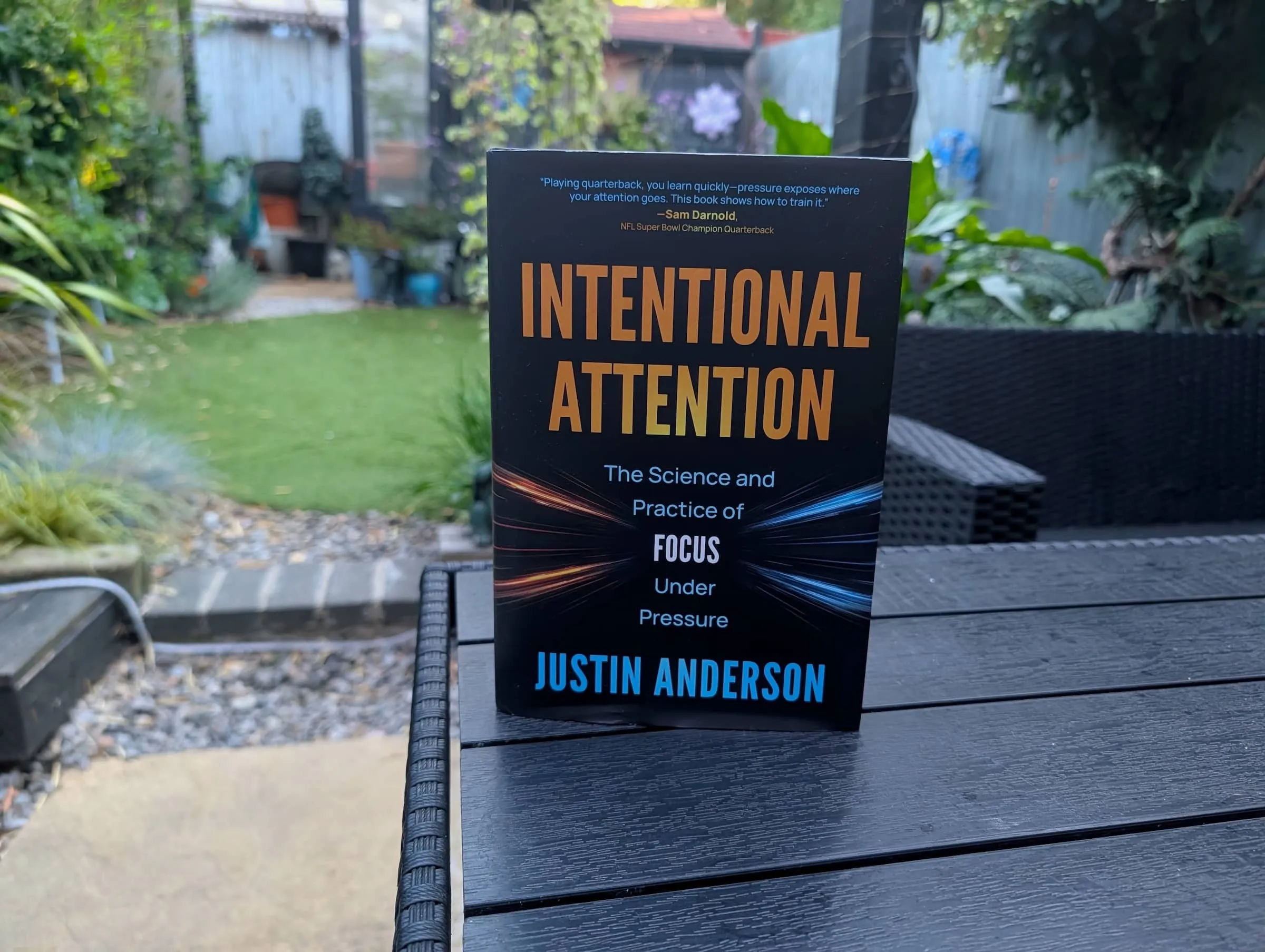
Intentional Attention review: Dr Justin Anderson explains how athletes can train focus, regulate pressure and perform with greater consistency.
The central idea behind this Intentional Attention book review is deceptively simple: under pressure, talent is only useful if your mind is looking in the right place.
Dr Justin Anderson, a sport psychologist with more than two decades spent around elite athletes, championship teams and executives, argues that focus is not an innate gift reserved for the unusually composed. It can be trained, sharpened and recovered when it wanders.
Given that modern life now seems engineered to interrupt us every few seconds, he may have chosen his moment rather well.
Why attention has become a performance problem
Sport has always punished wandering minds. A golfer can hit 70 excellent shots and remember the one played while mentally drafting the acceptance speech. A quarterback gets rather less time for introspection.
Anderson’s argument is that modern life has made attentional discipline harder, not because human beings suddenly became feeble, but because more of the environment is built to compete for notice. Notifications, feeds, algorithms and now AI systems all make claims on the same finite mental bandwidth athletes need for reading situations, regulating emotion and executing decisions.
The interesting part is not the familiar complaint that phones are distracting. We know. The more useful claim is that attention can be trained with the same deliberate structure applied to physical technique.
The brain under pressure is not always a helpful caddie
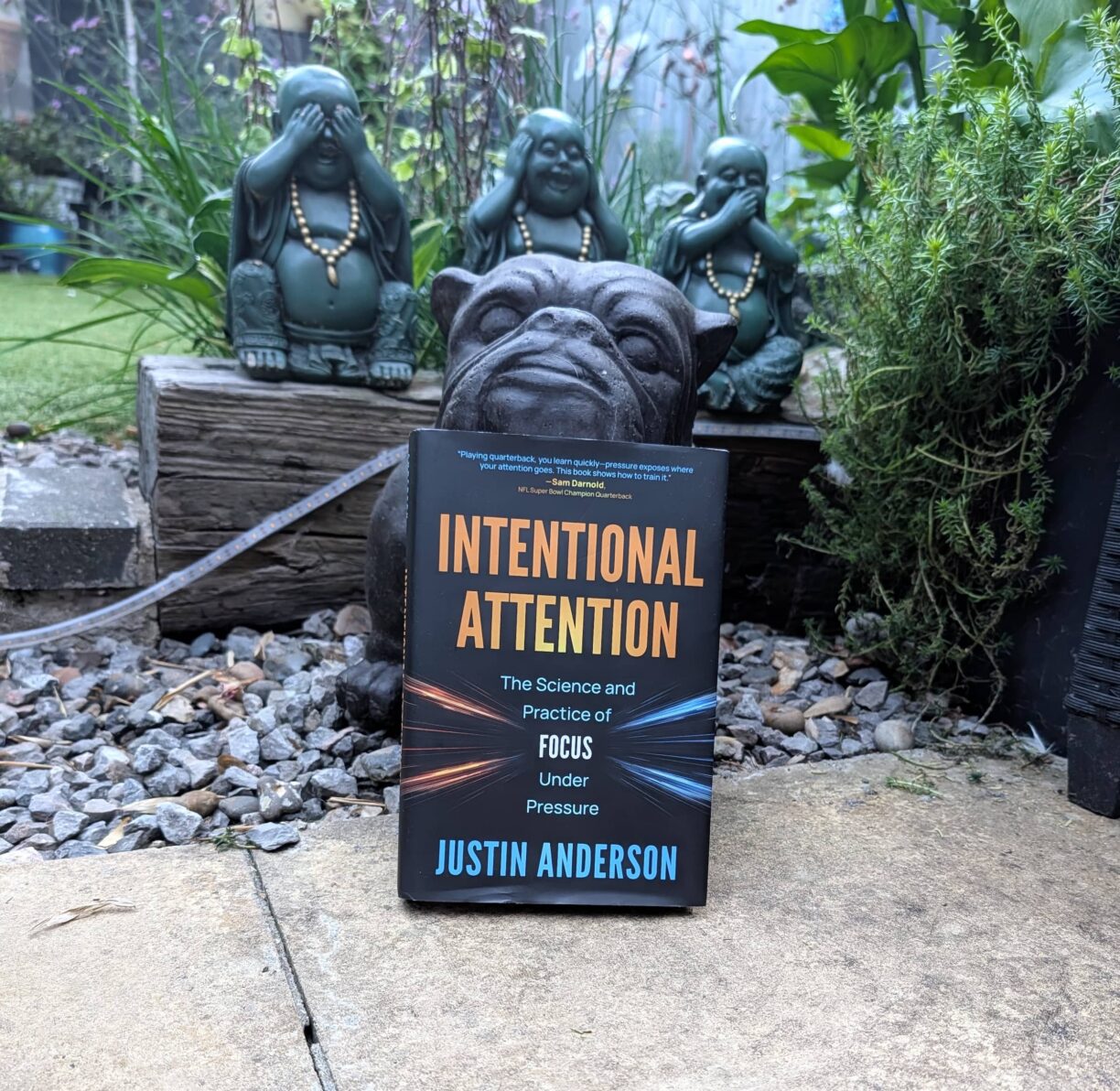
One of the book’s central ideas is that the brain can default towards protection rather than clean execution as pressure rises. That will sound familiar to anyone who has watched an athlete become mechanical at precisely the moment fluency matters most.
The practical issue is attentional drift. Under stress, thought can jump from the immediate task to consequences, mistakes, judgement or threat. In golf, that might be the difference between committing to a target and suddenly wondering what a double bogey will do to the card. The swing has not forgotten itself; the mind has simply invited several unhelpful guests into the room.
Anderson’s framework aims to make athletes notice those shifts earlier, then redirect attention deliberately. That is a more credible proposition than promising permanent concentration, which would be both unrealistic and, frankly, exhausting.
A framework built around repeatable habits
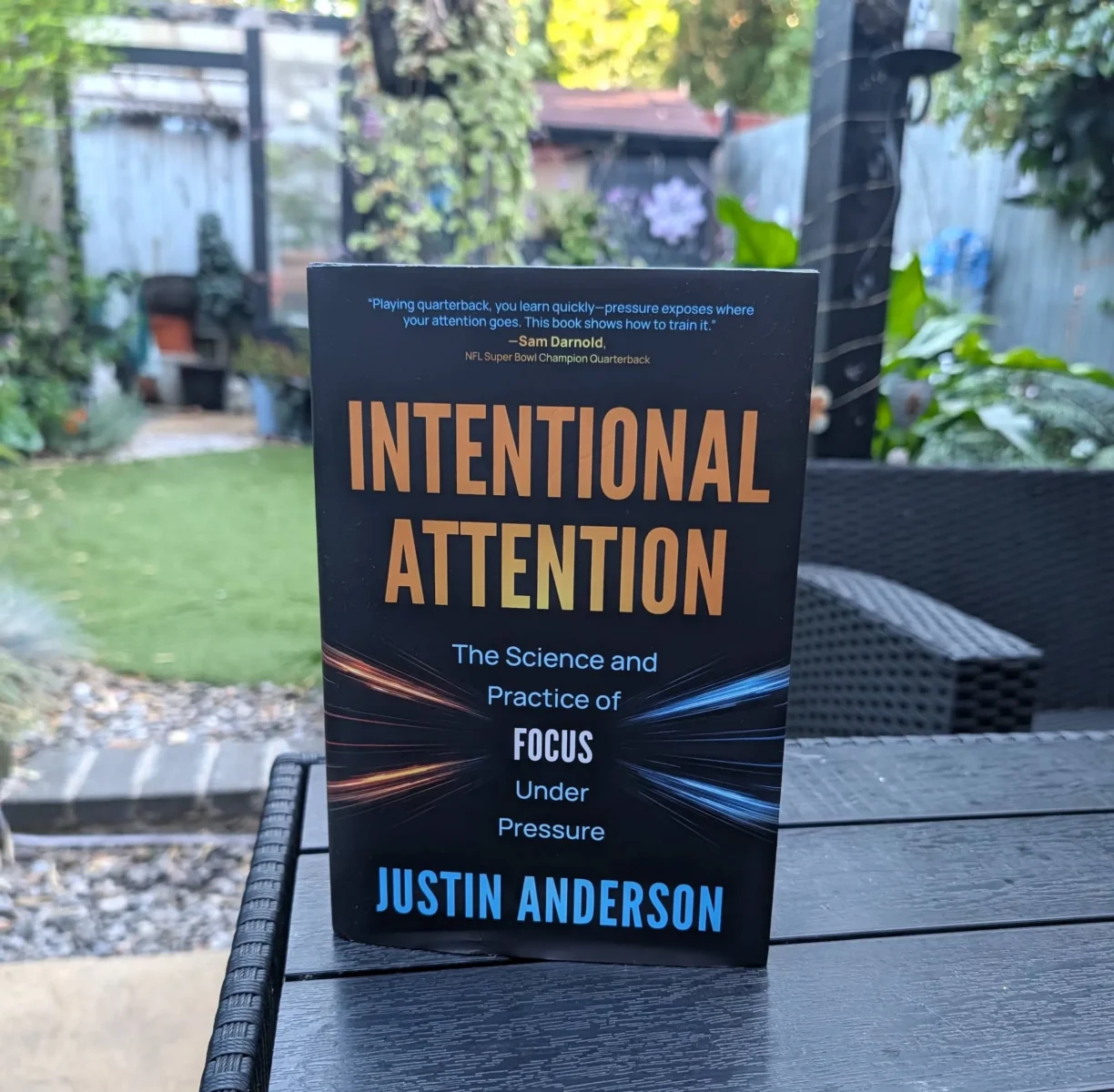
The book is organised around routines for awareness, intention, execution, reflection and renewal. That sequence matters because it treats performance as a cycle rather than a single heroic act of concentration.
Awareness comes first: noticing where attention has gone. Intention gives it a destination. Execution is the doing. Reflection asks what happened without turning every mistake into a character assessment. Renewal creates space to reset before the next demand.
None of those ideas is especially theatrical, which may be their strength. Elite performance is often presented as a parade of grand gestures and chest-thumping certainty. In reality, consistency is usually less cinematic. It is built from small routines repeated when nobody is applauding.
Anderson brings locker-room credibility, not just theory
Anderson’s background gives the book an unusually broad operating range. He is the founder and chief executive of Premier Sport Psychology and Premier Performance Advising, a licensed psychologist, a Certified Mental Performance Consultant and a former collegiate quarterback.
His work has extended across major US professional leagues, Olympic sport, collegiate athletics and executive leadership.
That experience should help him bridge a gap that weak performance books often fall into: explaining psychology in language that survives contact with actual competition.
The strongest endorsement supplied is also admirably concise:
“Pressure exposes where your attention goes. This book shows how to train it.” — Sam Darnold, NFL Super Bowl Champion Quarterback
It is a neat summary because pressure rarely creates a completely new performer. More often, it reveals the habits already lurking underneath.
Who is Intentional Attention likely to help?
The obvious audience is athletes, coaches and performance staff, but the framework is broader than sport. Executives, leaders and anyone working in high-stakes environments face the same basic problem: deciding what deserves attention while emotion, noise and uncertainty try to make the decision for them.
For golfers, the appeal is particularly obvious. The sport contains long pauses, ample time for self-interference and an almost comic number of opportunities to revisit the past. Training attention does not promise better ball-striking by itself. It may, however, help a player give the swing they already own a fairer chance of appearing when the score matters.
Intentional Attention appears strongest when it treats focus as behaviour rather than personality. “I’m just not good at concentrating” is a convenient verdict because it ends the discussion. A trainable model is less comfortable. It suggests the player has work to do.
That is probably the point.
The central argument in this Intentional Attention book is one every athlete will recognise sooner or later: under pressure, talent is only useful if your attention is in the right place.
It is a skill that can be trained, strengthened and recovered when the mind inevitably wanders — which, in a culture apparently designed to interrupt us every few seconds, feels less like self-help and more like competitive maintenance.