New data reveals which marathons are hardest to enter, from South Africa’s wild Big Five Marathon to Antarctica’s frozen test.
Not all marathons are created equal. Some are grand civic parades with tens of thousands thundering through city streets in matching vests and questionable fancy dress. Others are something else entirely: scarce, exotic and maddeningly hard to access. A new study by SportsShoes.com has now put some numbers on that obsession, revealing which races generate the fiercest demand relative to the number of finishers who actually make it to the line.
The findings come from the newly released running report, which examines statistics, trends and behavioural patterns from across the running world. One figure stands out straight away: one in ten runners plans to enter a marathon in 2026. That helps explain why the global appetite for iconic endurance events now looks less like a hobby and more like a land grab.
Which marathons are hardest to get into?
The study measured global monthly Google search volumes over the past 12 months and set them against official finisher totals from each event’s most recent edition. In simple terms, it divided interest by access. That reveals which races attract remarkable levels of attention for a very limited number of places.
By that measure, South Africa’s Big Five Marathon sits at the top of the pile and rather comfortably too. It recorded 444.4 searches for every finisher, fuelled by 44,000 global searches and only 99 finishers in its latest edition. That is not normal demand. That is the sort of imbalance that turns a race entry into prized contraband.
And it is not hard to see why.
The marathons people dream about
The Big Five Marathon is not merely a test of legs and lungs. It is staged in a private wildlife reserve, where runners share the landscape with elephants, lions and other animals. There are marathons, and then there is the mildly unsettling business of running while nature reminds you that humans are not always at the top of the pecking order.
That blend of danger, rarity and spectacle has made it a genuine bucket-list event. It offers what many modern runners are chasing: not just a finish time, but a story worth telling badly at dinner parties for the next 20 years.
Second on the list is the Antarctic Ice Marathon, which draws 346.5 searches per finisher. It is the only official marathon held on mainland Antarctica, and that sentence alone does much of the heavy lifting. For runners pursuing the dream of completing a marathon on all seven continents, it occupies an almost mythical place.
The appeal is obvious. Antarctica is not a backdrop so much as an adversary. The cold is savage, the logistics are complicated, and participant limits are necessarily strict. In a running culture that increasingly prizes singular experiences, this is about as singular as it gets.
Third is the Great Wall Marathon in China, attracting 193.1 searches per finisher. It has long held a fearsome reputation, and with good reason. Thousands of steps, punishing elevation changes and the psychological nuisance of knowing the route is older and tougher than you are make it one of the world’s most distinctive endurance races. It combines physical hardship with historic grandeur, which is catnip for runners looking to suffer somewhere memorable.
Why destination marathons are thriving
A ranked look at the world’s most in-demand marathons based on finishers, Google searches in 2025 and the resulting demand score.
| Rank | Marathon Name | Location | Finishers in Latest Edition | Google Searches in 2025 | Demand Score (Searches per Finisher) |
|---|---|---|---|---|---|
| 1 | Big Five MarathonHighest demand | South Africa | 99 | 44,000 | 444.4 |
| 2 | Antarctic Ice Marathon | Antarctica | 65 | 22,520 | 346.5 |
| 3 | Great Wall Marathon | China | 334 | 64,500 | 193.1 |
| 4 | Zermatt Marathon | Switzerland | 462 | 37,500 | 81.2 |
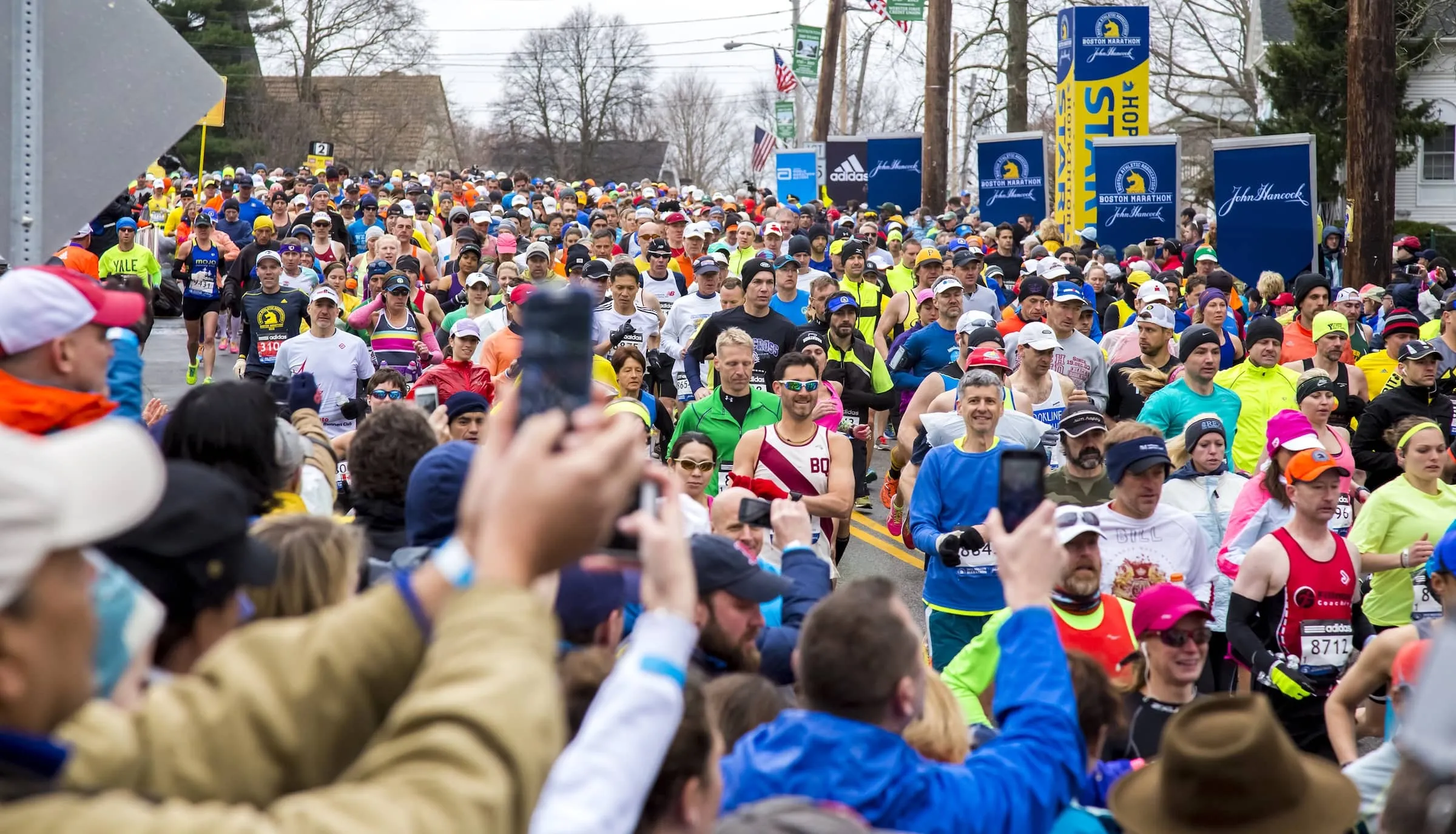
| 5 | Boston Marathon | USA | 28,381 | 2,154,000 | 75.9 |
| 6 | Lausanne Marathon | Switzerland | 1,851 | 127,100 | 68.7 |
| 7 | Zagreb Marathon | Croatia | 656 | 43,200 | 65.9 |
| 8 | Reykjavík Marathon | Iceland | 519 | 31,100 | 59.9 |
| 9 | Dubai Marathon | UAE | 1,800 | 98,300 | 54.6 |
| 10 | Midnight Sun Marathon | Norway | 1,570 | 85,100 | 54.2 |
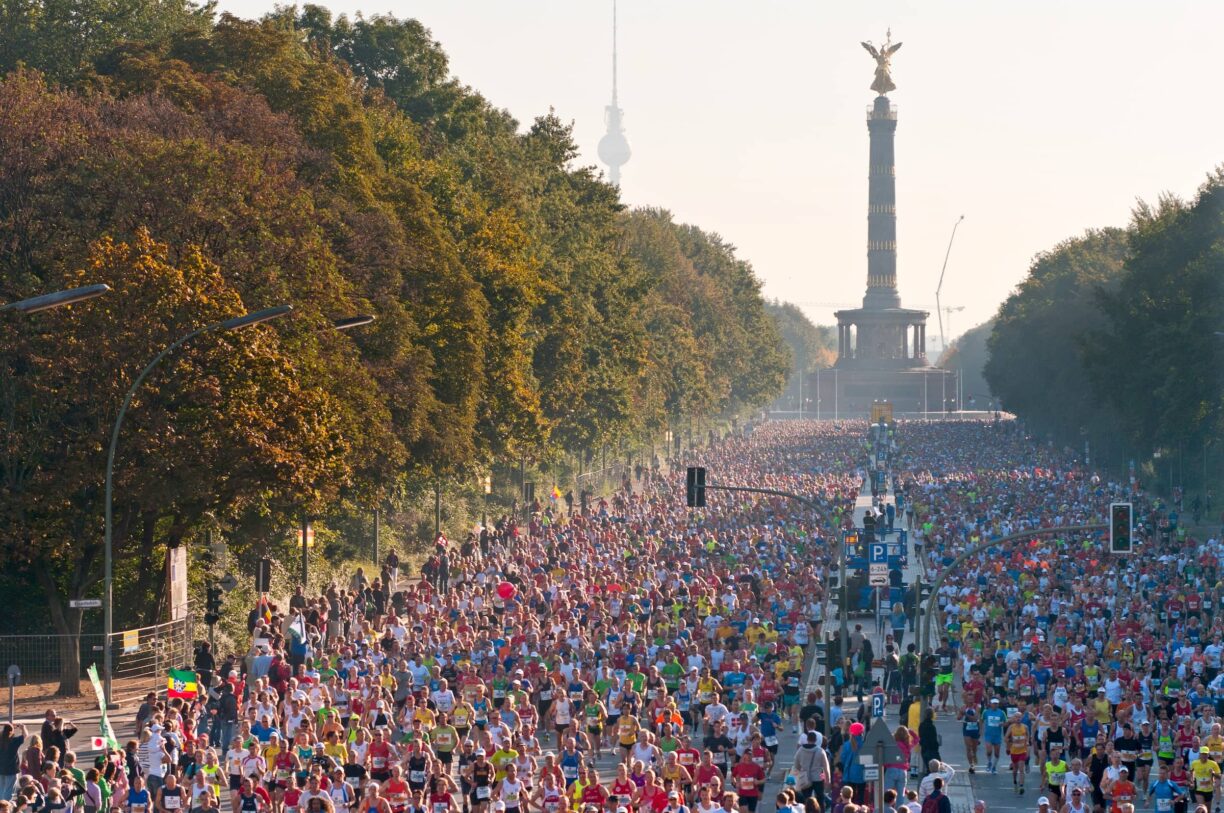
| 11 | Berlin Marathon | Germany | 17,100 | 890,900 | 52.1 |
| 12 | Cork Marathon | Ireland | 1,942 | 99,000 | 51.0 |
| 13 | Salzburg Marathon | Austria | 1,257 | 60,800 | 48.4 |
| 14 | Helsinki City Marathon | Finland | 2,276 | 106,600 | 46.8 |
| 15 | Niagara Falls International Marathon | Canada/US | 950 | 43,300 | 45.6 |
| 16= | Riyadh Marathon | Saudi Arabia | 607 | 27,550 | 45.4 |
| 16= | Great Ocean Road Marathon | Australia | 1,853 | 84,100 | 45.4 |
| 18 | Queenstown Marathon | New Zealand | 2,926 | 129,100 | 44.1 |
| 19 | Graz Marathon | Austria | 1,138 | 49,180 | 43.2 |
| 20 | Calgary Marathon | Canada | 1,932 | 82,700 | 42.8 |
The broader trend here is clear. The most coveted marathons are no longer defined purely by prestige or flat, fast times. Increasingly, they are shaped by place, scarcity and experience.
For many runners, the marathon has become a passport as much as a race. Some want city energy. Some want alpine drama. Some, evidently, want to test their resolve in frozen wilderness or on a wall built to keep people out. The race bib is now part athletic goal, part travel aspiration.
That helps explain why Europe performs so strongly in the rankings, with ten marathons making the global top 20. Switzerland places two races in the top six, the Zermatt Marathon and the Lausanne Marathon, underlining the enduring pull of scenic alpine events. Mountain air, dramatic elevation and postcard views remain a powerful combination, especially when packaged as a physical challenge with a medal at the end.
London’s surprise absence
There is one notable omission. Despite its reputation as one of the hardest races to enter, the London Marathon does not crack the top 20 most in-demand marathons worldwide on this specific measure.
That may sound odd until the maths barges in. London attracted around 1,429,800 global searches over the last year, making it the second most searched marathon in the world after Boston. But it also had 56,061 finishers in its latest race. That brings it to 25.5 searches per finisher, which is substantial, but nowhere near enough to trouble the more exclusive events.
So yes, London remains enormous, prestigious and highly competitive. It is just not scarce in the same way as these more remote, tightly capped races. This ranking is less about fame than pressure per available place.
What this says about modern running
The study offers a neat snapshot of where running culture now stands. Demand for marathons is not only growing, it is becoming more adventurous. Runners are looking beyond the household names and toward events that promise landscape, adversity, bragging rights and a touch of glorious impracticality.
In other words, the modern marathon runner increasingly wants more than 26.2 miles. They want a narrative.
And that is why the world’s most sought-after marathons are not necessarily the biggest. They are the races that offer something difficult to replicate: rarity, character and the sort of setting that makes finishing feel like you have done something faintly unreasonable. Which, in truth, is exactly the point.