New rankings reveal the fastest-growing fitness trends for 2026, led by Japanese walking, walking yoga and plank hovers.
If you’re hunting for the fitness trends in 2026, here’s the good news: you won’t need a Himalayan training camp, a £900 gadget, or a life coach named Blade. According to the fitness gurus over at PureGym, the next wave of workouts is less about punishing yourself into greatness and more about moving better, moving often, and choosing routines you can actually stick with when real life gets loud.
PureGym’s annual Fitness Report has once more dived into global search data to predict the top trends going in 2026—and it’s a proper snapshot of what people are genuinely curious about, not what a few influencers are trying to sell.
The analysis compares the current three-month rolling average of global Google searches for more than 250 fitness trends, both emerging and established, to the same period one year ago.
This year’s results capture a clear shift back to basics, with lower-impact, more accessible forms of movement centred around things like walking and mobility taking centre stage.
The headline act: Japanese walking goes stratospheric
Japanese walking takes the top spot as the fastest growing trend for 2026, with year-on-year interest up by our largest figure in recent years – a massive 2,968%. The trend, rooted in a 2007 Japanese study comparing intervals of fast and slow walking, went viral on TikTok earlier this year and has seemingly maintained its momentum ever since.
And it’s not travelling alone. The dominance of walking-led trends continues with walking yoga in second place (+2,414%) and incline walking also appearing in the top 20 (+50%). Translation: 2026 is shaping up to be the year people stop overcomplicating exercise, lace up, and get on with it.
Walking is suitable for all levels and free, making it an accessible way to move consistently. And with a study from earlier this year showing meaningful health benefits from just 7,000 steps a day rather than the well-known 10,000, it’s a great way for anyone to improve their health.
However, Phil Carpenter, Personal Trainer and Assistant General Manager at PureGym Portsmouth explains that becoming too reliant on metrics like step counts can lead to an unhealthy obsession with numbers. He says: “Step counts can be a helpful way of tracking your fitness goals, but you should try not to hold yourself to them. Unless you are on a very regimented training plan for an event or competition, you should always avoid chasing numbers
“Progress comes from finding movement in your day-to-day, whether it’s 7,000 steps, 10,000 steps – or just finding ways to be active in a way that suits your routine and lifestyle, and trying new workout trends such as Japanese walking could be the push you need to get going. It really is back to basics, finding simple ways like walking more in order to become fitter and healthier.”
That’s the practical heart of the fitness trends in 2026 story: not a cult, not a miracle, just a smart return to movement that doesn’t require you to rearrange your entire personality.
The quiet comeback: core strength, mobility, and “desk-job damage control”

A lot of this year’s top trends show that people are working towards improving their movement quality and reversing the impact of sedentary lifestyles. The plank hover completes the top three (+967%), while Nord Pilates ranks in fourth (+750%) with the dead hang exercise (9th, +128%), mobility flow (12th, +90%) and hot reformer Pilates (17th, +53%) all placing in the top 20.
In plain terms: people aren’t just chasing sweat anymore. They’re chasing better posture, stronger joints, and the kind of stability that stops your lower back sending complaint letters after a long day. It’s not glamorous, but it’s sensible—and sensible tends to win in the long run.
The “I need a target” era: Hyrox, training plans, and structured challenges

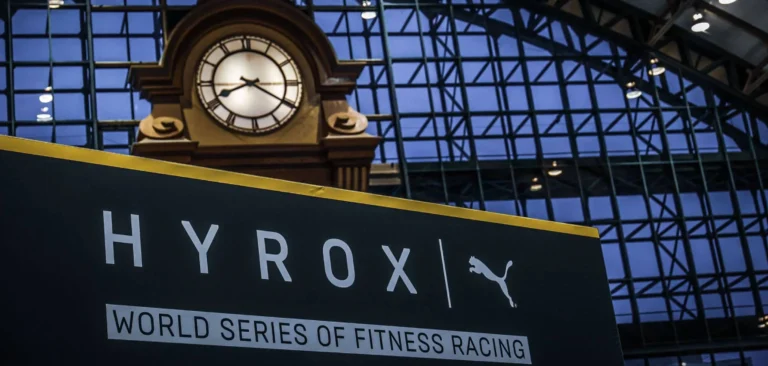
Numerous events also feature within the top 20, with Hyrox ranking in 8th place (+171%) and ultra-marathon plans ranking in 18th (+50%), closely followed by 5k training plans in 19th (+50%), highlighting how people may be looking to embark on physical challenges in 2026, and push their boundaries further than before.
Challenges also prove popular, with 75 medium and 75 hotter placing in 10th and 11th places respectively; many fitness enthusiasts finding these helpful for re-igniting their workout routines and providing a short-term goal to work towards. There’s something old-school about this: give people a plan, a finish line, and a reason to show up on the days motivation goes missing.
The biggest risers: top 20 fitness trends for 2026
Here are the trends with the highest growth in interest, based on PureGym’s analysis (Jul–Sept 2024 vs. Jul–Sept 2025):
Fastest-Rising Fitness Trends
Top movers first. Expand only if you want the full list.
A vibration plate sitting alongside indoor rowing and dead hangs tells you everything: fitness trends in 2026 will be a blend of the familiar and the slightly odd-looking—provided it’s accessible and feels like it works.
What’s fading: the fads being shown the exit
This is the fifth iteration of PureGym’s top trends research, and one thing is continuously clear: while microtrends come and go, the core trends behind them (such as running, Pilates, strengthening your core, or improving mobility) stay firmly put.
This volatility is particularly clear among the fitness trends on their way out ahead of 2026. Wall Pilates, 2024’s top trend, has dropped by a further 63%, while remote personal training has fallen even further at 81% after leading in 2025. Although virtual classes, online fitness programs and virtual fitness challenges still appear among the top trends, the drop in remote personal training hints at a reignited desire for more hands-on, face-to-face coaching.
Here are PureGym’s “on the way out” top 10 (Jul–Sept 2024 vs. Jul–Sept 2025):
Trends Losing Momentum
That doesn’t mean these are “bad.” It means the internet is restless, attention moves on, and people are increasingly choosing what fits around work, family, sleep, and sanity.
“the more the merrier”—and 2026 gets more realistic
James Gauduchon, Group Marketing Director at PureGym commented: “It’s always interesting to look at emerging trends in the fitness industry and see what is capturing people’s attention. It’s amazing to see so many new trends pop up all the time however, and in our opinion, the more the merrier. Anything that gets people off the sofa and finding more movement in their lives is good in our book.
“This year, we’re seeing is a shift away from super high-intensity workouts, towards softer versions of fitness that put less pressure on us to be perfect and consider the changing needs of our bodies and our schedules. These kind of activities are sustainable and flexible, making it easier for people to stay consistent over time“
And that’s the blunt truth. The fitness trends in 2026 aren’t about who can suffer the most. They’re about who can keep turning up, week after week, without breaking down or burning out.
The takeaway: what to try first in 2026
If you want to ride the 2026 wave without drowning in options, start with three lanes:
- Walking-led training (Japanese walking, incline walking, walking yoga) for consistency and low friction.
- Movement quality (plank hover, mobility flow, dead hangs, Pilates variations) to feel better day-to-day.
- A clear target (Hyrox, 5k plans, structured challenges) if you need purpose to stay engaged.
For the full fitness report, which alongside more information on 2026’s emerging fitness trends, includes insights around people’s current attitudes towards health and fitness, as well as up-to-date gym usage statistics, visit: https://www.puregym.com/blog/uk-fitness-report-gym-statistics/