Why Emily Ratajkowski’s abs still spark fascination — and what really creates visible core definition.
Emily Ratajkowski can still make the internet behave like a panel of part-time physiologists. One appearance in a white bandeau top and low-slung skirt at the Vanity Fair Oscars party did more than turn heads; it reignited a familiar argument about visible abs, body fat, genetics and whether a sharply defined midsection is built in the gym, the kitchen, or quietly handed out in the DNA queue.
The outfit drew the usual split verdict. Some thought it was too revealing for a room full of Hollywood gloss. Others looked at the stomach and, quite understandably, lost interest in the dress code altogether.
Showbiz presenter Ksenija Lukich cut through the handwringing with admirable economy: “If I had abs like that, I’d probs wear that too.”
Why this still matters now

The reason that old red-carpet moment still has legs is simple: it tapped into the modern fantasy that a few heroic ab exercises can produce the sort of definition seen on celebrities and magazine covers.
That is the part fitness culture still gets wrong. A strong core matters for balance, athletic movement, posture and everyday function, but visible abs are usually a mix of muscle development, body-fat levels and genetics rather than proof that someone has discovered a mystical new crunch. Core training is valuable for health and performance, even when it does not leave your midriff looking like a carved staircase.
The ab crack myth, in plain English
Adam Pinder, head trainer at F45 Peckham Rye, put the essentials bluntly: “Everyone has abs under there somewhere – they just need to be revealed.”
He added: “Emily is blessed with some pretty fantastic genes and a low body fat percentage, combine that with a decent work ethic and you’ve got the recipe for some well-defined abs.”
That is about as close to the truth as fitness talk gets without someone trying to sell you resistance bands at the end of it. Genetics influence fat distribution, muscle shape and where definition shows up first. Training can improve core strength and build muscle, but it does not negotiate with biology.
And while low body fat may make abdominal definition more visible, very low levels can carry health risks, particularly for women, which is why visible abs should never be treated as a universal marker of wellbeing.
What actually changes the picture
Pinder’s next point has aged rather well, because it remains the least glamorous and most accurate line in the whole discussion: “It’s true what they say: abs are made in the kitchen,”
Then he goes further: “Combine a solid workout programme with a calorie deficit and you’ll earn the abs you’ve been chasing.
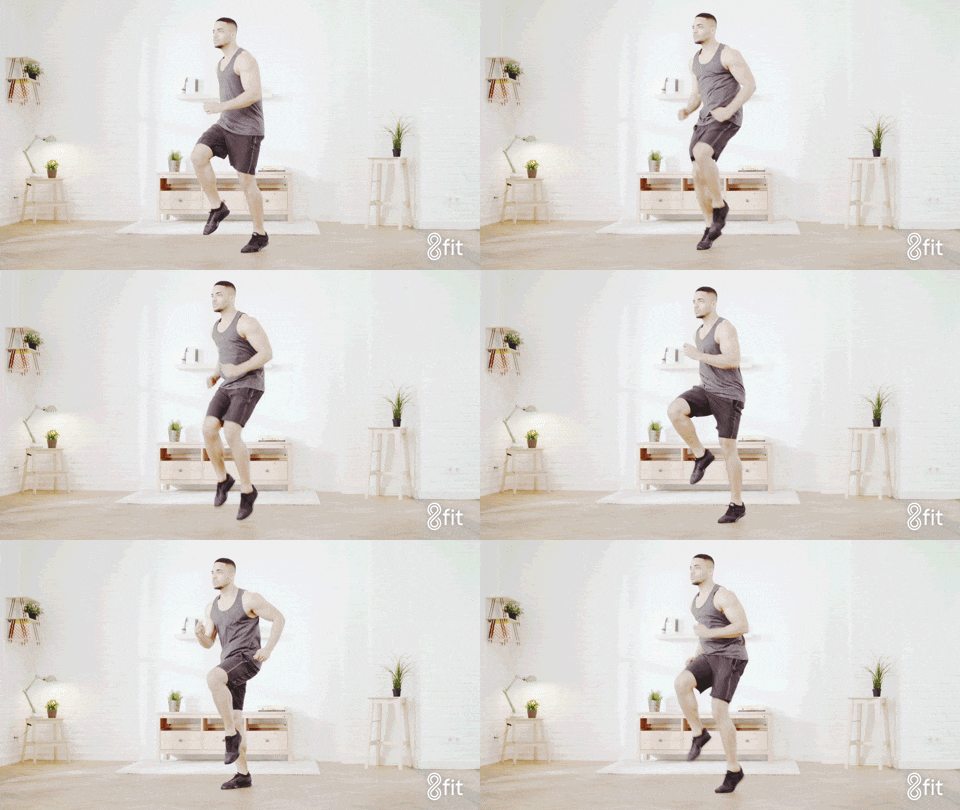
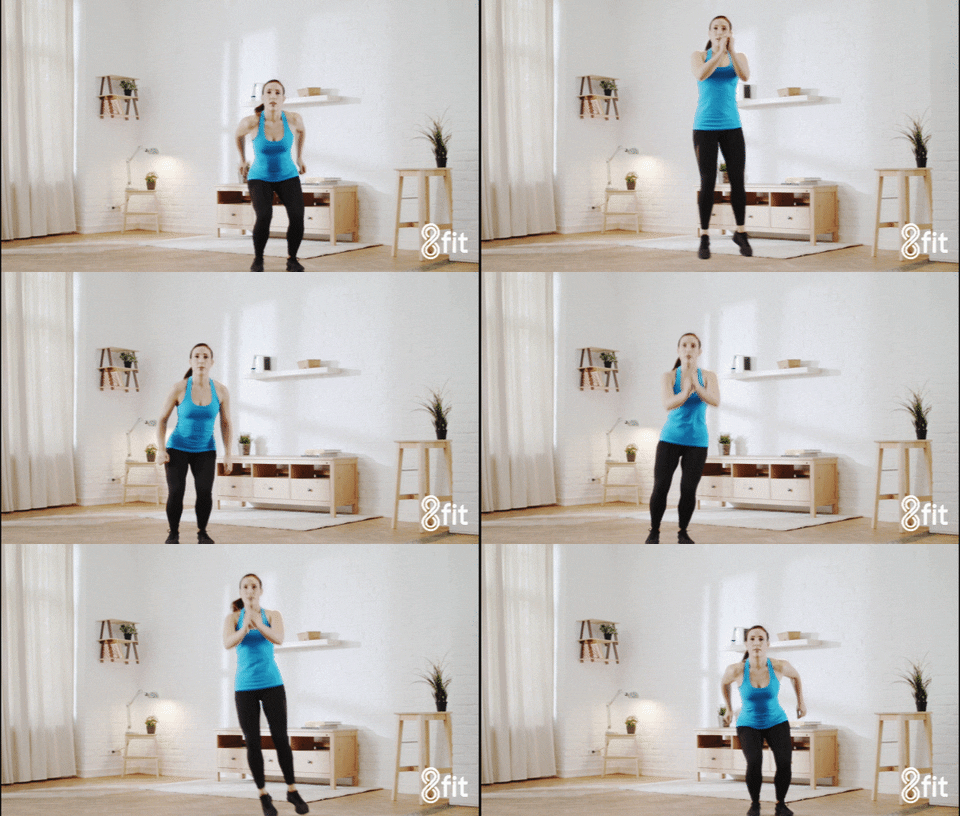
“The best way to get an ab crack is to drop body fat, and you can achieve this with HIIT – high intensity interval training.”
There is no poetry in that, but there is honesty. Nutrition affects body composition. Training affects muscle tone, movement quality and energy expenditure. Put the two together and you may see more abdominal definition. Leave one out and you are mostly just collecting sweat and disappointment.
HIIT can be an efficient tool, particularly for people who like intensity and short sessions, but it is not the only road into better shape. Strength work, consistent movement and sustainable eating patterns tend to survive longer than punishing bursts of good intentions. NHS guidance also frames strength and resistance exercise as a practical way to improve health and mobility, not merely to chase aesthetics.
Four ab exercises still worth your time
Four ab exercises still worth your time
The useful part of this conversation is not the celebrity comparison. It is the reminder that good core work is still good core work.
Hollow hold
This is the sort of exercise that looks innocent until about eight seconds in, when your torso begins writing formal complaints to management. Done well, it teaches deep core tension and control.
Hanging leg raise
A tougher movement, and a very honest one. It builds lower-ab strength, hip control and stability, with the hanging position exposing any weakness immediately and without mercy.
Planks
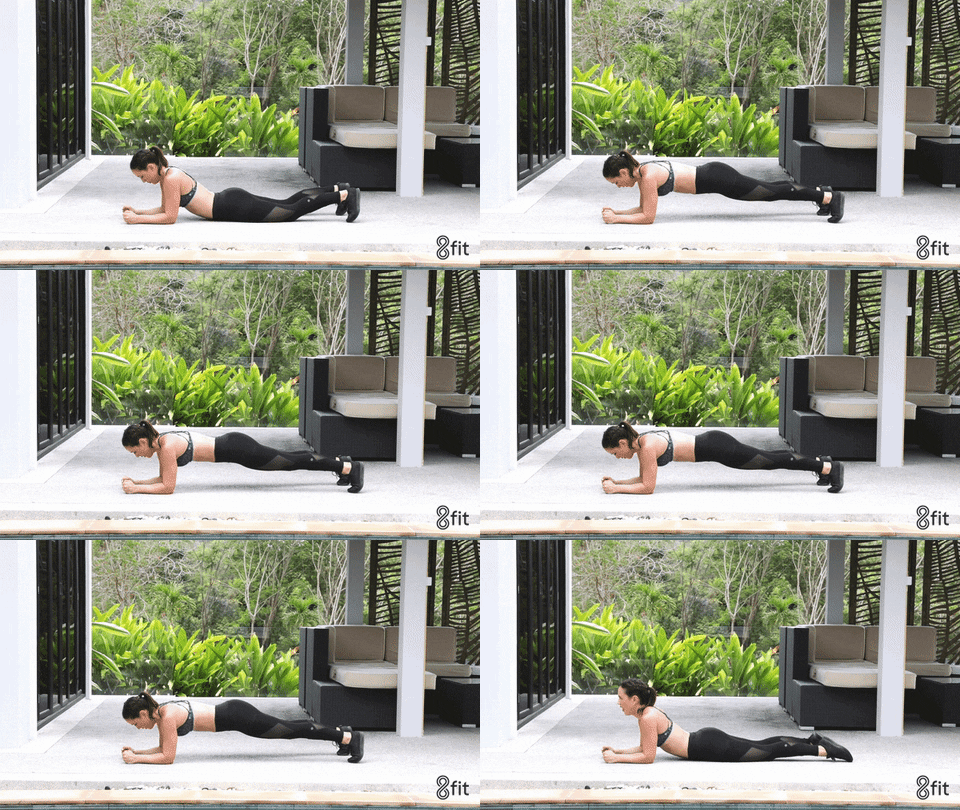
Still fashionable because they still work. Forearm planks, side planks and hip-dip variations challenge the trunk without theatrical movement, which is often how the best core training behaves.
Crunches
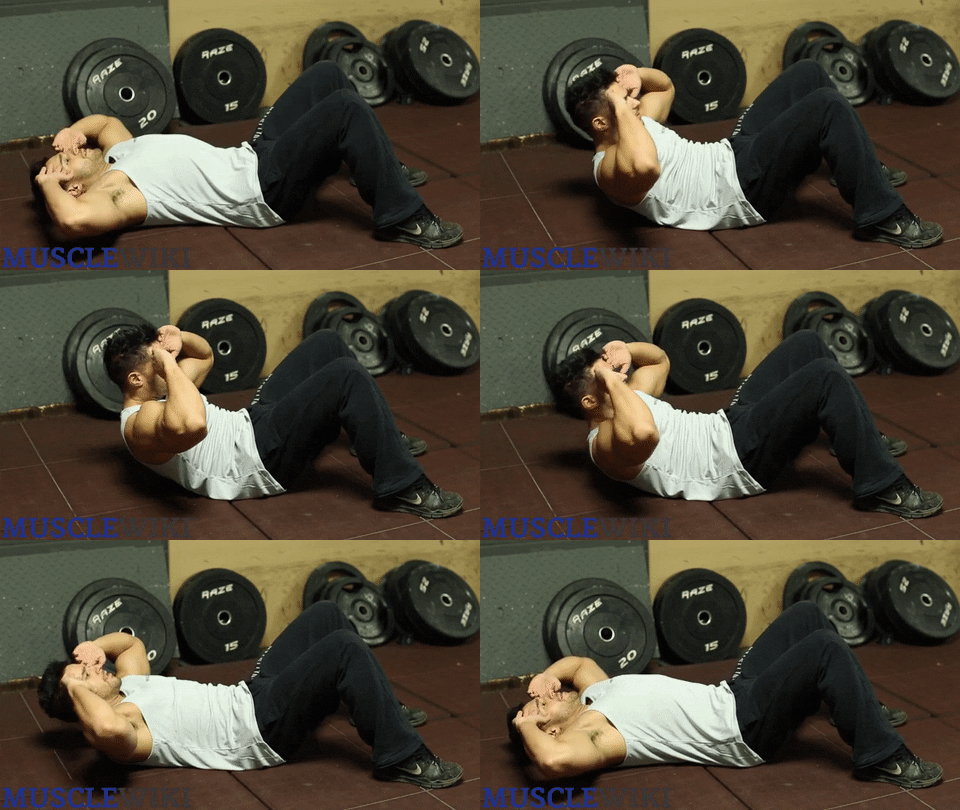
They have been mocked, overused and mangled in every commercial gym in Britain, yet the basic crunch remains useful when done properly. The trick is control, not yanking your neck like you are starting a lawn mower.
The smarter way to read the body in front of you
Pinder also offers the line that should probably sit above every mirror in every gym: “However, we’re all put together a little differently and one person’s abs may not necessarily look like someone else’s.”
And then the real finish: “It’s better to focus on yourself than chase someone else’s physique.”
That, finally, is the evergreen lesson. Emily Ratajkowski’s physique is not a template. It is one body, one set of genetics, one set of habits, one snapshot in time. The more useful question is not whether you can look exactly like somebody else on a red carpet, but whether your training is making you stronger, more capable and more at ease in your own skin.
Because visible abs may win the headline, but a strong core, sensible expectations and a bit of perspective will take you much further than an internet-induced date with 1,000 sit-ups.