Eddie Hearn opens up on weight, stress, sleep and the five-year health shift he says is only just beginning.
Eddie Hearn did not begin this particular fight under floodlights or with Michael Buffer clearing his throat. The Matchroom chairman’s health overhaul started in the least glamorous setting imaginable: on a plane, in a suit, losing an argument with a seatbelt. It was a small moment, but one with the sort of quiet sting that lingers longer than a left hook.
For a man who has spent years operating at full tilt in boxing’s travelling circus, the warning signs did not arrive with sirens. They crept in the way these things often do — through long-haul flights, late nights, stress, patchy sleep and the steady accumulation of habits that seem harmless until they are not.
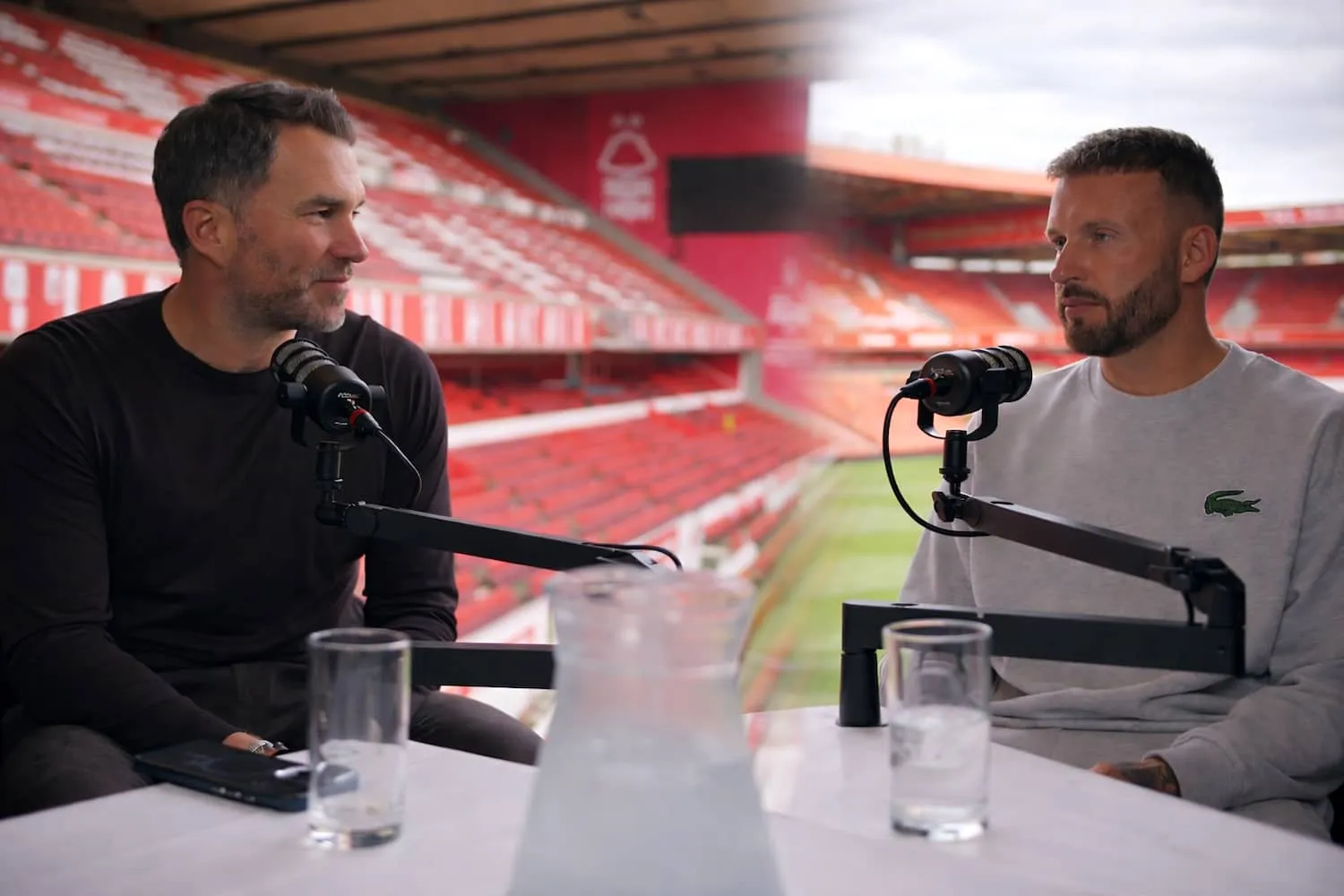
Speaking on a new episode of The Ten Percent Club podcast, filmed at Nottingham’s City Ground, Hearn laid out the reality with the blunt honesty of a man who has finally stopped pretending he can outrun physiology.
“I’m on a plane, I’ve got a suit on and I can feel my belly going over my suit. Some seat belts, I couldn’t even get them on,” Hearn said. “I didn’t feel like I was 120 kilos. So there was no particular wake-up call. Like nothing really.”
That last bit is what gives the story its bite. No dramatic collapse. No sermon from a specialist in a white coat. Just the gradual realisation that a body keeps score, even when the calendar is full and the business is booming.
Five Years In, and Still Not Satisfied

There is something almost perversely impressive about Hearn admitting that after five years of work, he still believes he is miles from where he wants to be. Most people would have polished the tale, rounded off the edges and called it a triumph. Hearn, to his credit, did the opposite.
“I’ve been doing this now for five years and I feel like I’m about 20 percent of where I could get to,” he said. “And I’ve worked pretty hard at it.”
That line tells you plenty about the man. The same restless drive that built one of the biggest promotional outfits in sport now appears to be pointed inward. Not toward vanity, either. This is not a midlife rebrand dressed up as wellness. It sounds more like a long, stubborn attempt to stay functional in a life that does not exactly encourage balance.
At 46, Hearn now trains every day. Yet even that comes with a twist that cuts through the usual before-and-after nonsense.
“I always say I go to the gym more for my mental health than I do for my physical,” he said.
There it is: the modern truth many still dance around. For high-performing men especially, the gym is often sold as a place to build a chest, flatten a stomach and win imaginary contests with mirrors. In reality, for plenty of them, it is where the noise calms down.
Stress, Sleep and the Real Opponent
The more interesting part of Eddie Hearn’s health story is not the weight loss. It is the stress.
Promoters do not exactly live monk-like lives. Hearn’s world is airports, negotiations, event nights, shifting time zones and the sort of low-level adrenaline that follows you into bed and then refuses to leave. He says he typically runs on around five hours’ sleep, which is less recovery plan and more survival tactic.
To manage that, he has turned to wearable tech, using data to judge whether his body is actually ready to rest. It is a very 2026 solution to a timeless problem: the mind saying “enough” while the nervous system still thinks it is in round 12.
“If you go to bed and your stress level is 1.5, 1.6, 1.7, you’re not going to fall into that deep sleep,” he said. “I would get into bed, lay there, check it and it’s like 0.4. And I’m thinking, right, I’m ready to sleep.”
There is a strange elegance in that. Eddie Hearn, a man known for reading opponents, crowds and contracts, now reading his own body with the same level of scrutiny. The scoreboard has changed, but the obsession with margins remains.
Family History Changed the Stakes
If the seatbelt moment lit the fuse, family history made the matter urgent.
Hearn revealed that heart trouble runs through the bloodline, and that knowledge appears to have stripped away any comforting illusions. This was not just about looking sharper in a suit or carrying less timber through the airport lounge. It was about where the road was leading.
“My dad has had three heart attacks, and his dad died at 46,” he said. “I realised if I didn’t change things, it was only going one way.”
That lands hard. Suddenly the story is no longer about a boxing executive improving his lifestyle. It becomes a reckoning with inheritance, risk and the uncomfortable truth that some futures announce themselves early if you are willing to look.
The candour matters because it makes the whole thing more useful. Too many conversations around health still get flattened into aesthetics. Lose weight. Build muscle. Look younger. Hearn’s version is much less glossy and a good deal more credible. He is talking about stress management, sleep quality, cardiovascular risk and mental health — the unsexy fundamentals that decide whether the engine keeps running.
More Than a Transformation Story
The temptation with a story like this is to wrap it neatly and call it redemption. Hearn himself does not appear interested in that. He is not presenting a finished product. He is presenting a work in progress, which is far more believable and, frankly, far more relevant.
In elite sport and the business that surrounds it, health can become something people promise themselves they will deal with later. After the next fight. After the next event. After the next deal. Later, of course, has a nasty habit of arriving all at once.
That is why this version of Eddie Hearn feels notable. Not because he has become a fitness guru. Not because he has discovered some miracle formula. But because he has admitted, plainly, that performance means very little if your body is quietly heading for the exit.
“If I hadn’t made that shift, I’m not saying I’d be dead, but I’d have serious health problems.”
It is a sobering line, and a useful one. In a sport built on damage, Eddie Hearn’s most revealing message may be about prevention. No belts. No bravado. Just the long, necessary business of trying to make sure there are many more rounds left.