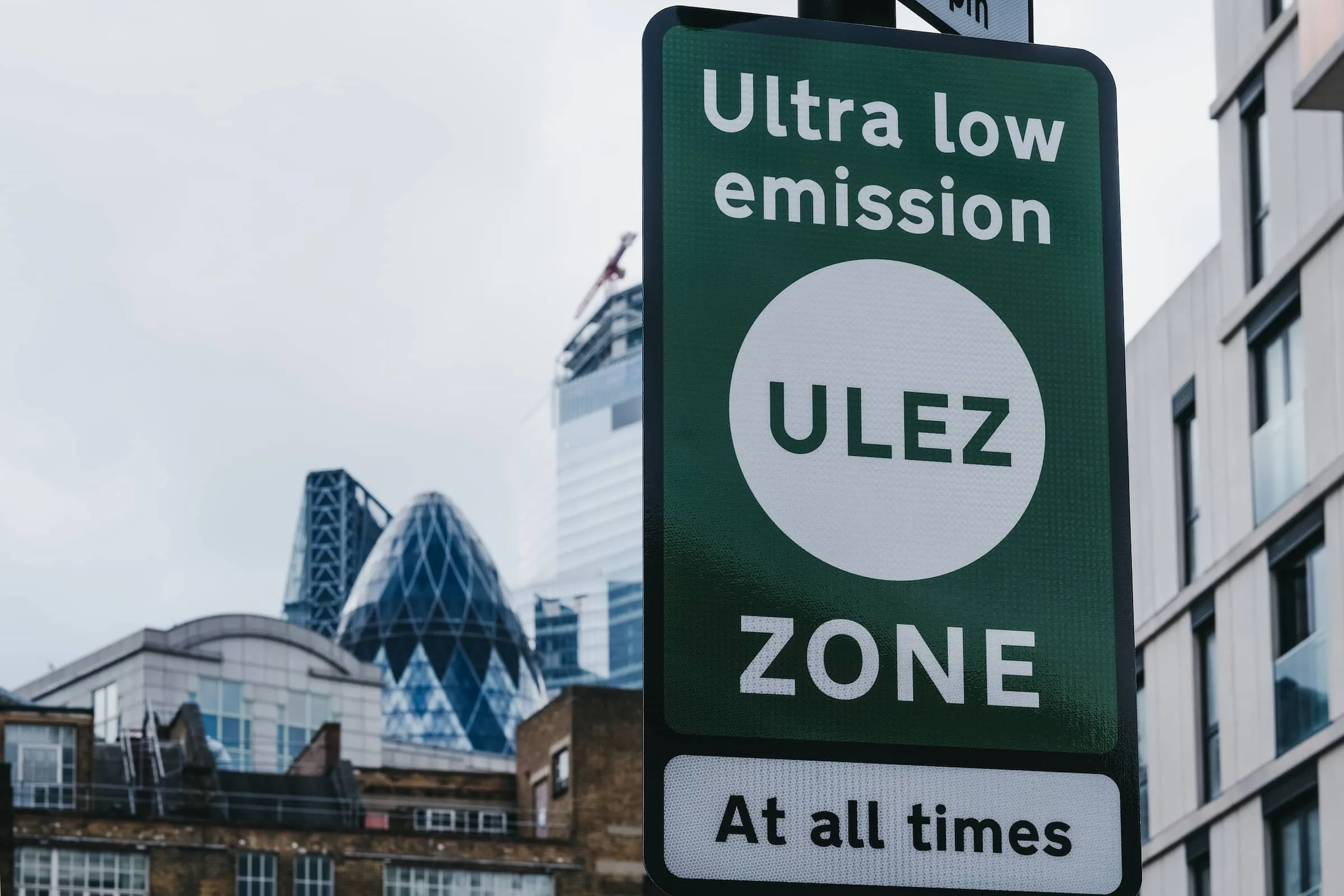
How smarter cities, quieter EVs and better design could turn stressful urban driving into a calmer daily experience.
Urban driving has long been associated with stress. Congested roads, unpredictable delays, aggressive stop-start conditions, and constant sensory overload all contribute to a daily experience that many commuters simply accept as part of modern life.
But as cities evolve and transport systems become more intelligent, a new question is emerging: can mobility itself be redesigned in a way that improves mental wellbeing rather than undermining it?
The relationship between driving and mental health is no longer just about road safety or efficiency. It is increasingly about cognitive load, emotional regulation, and how the structure of a city shapes the human experience within it.
The Psychology of Urban Driving Stress

Driving in dense urban environments demands continuous micro-decisions. Lane changes, pedestrian awareness, timing gaps in traffic flow, and navigating infrastructure all require sustained attention. Over time, this creates cognitive fatigue.
Psychologists often refer to this as “decision density”—the number of meaningful choices a person must make within a short time window. In congested traffic, decision density is high but the rewards are minimal. You are constantly reacting, rarely progressing.
Vehicles like the London black cab or modern city-focused EVs such as the Nissan Leaf are often designed with this reality in mind, prioritising visibility, predictability, and ease of use in stop-start conditions. But the broader system they operate in remains a significant source of stress.
Congestion as a Cognitive Load Problem
Traffic congestion is usually discussed in terms of time loss or economic inefficiency. Less often considered is its psychological impact.
Standing still in traffic while surrounded by constant movement elsewhere creates a specific form of frustration known as “goal interruption stress.” The brain expects forward motion, but receives repeated signals of delay. This mismatch contributes to irritability and fatigue.
Research in urban behavioural science suggests that prolonged exposure to this pattern can elevate baseline stress levels, even outside of driving contexts. In other words, the commute doesn’t end when the engine is turned off.
The Rise of Intelligent Mobility Systems
Smart mobility systems are beginning to address this issue not just through faster travel times, but through smoother cognitive experiences.
Adaptive traffic light systems, real-time routing algorithms, and connected infrastructure aim to reduce unpredictability—the single largest contributor to driving stress. When a journey becomes more consistent, the mind can shift from reactive mode into something closer to autopilot.
This is where the concept of “flow states” becomes relevant. In psychology, flow refers to a mental state where a person is fully immersed in an activity with a balance between challenge and control. Driving rarely achieves this in congested environments, but smoother systems increase the likelihood.
Electric vehicles such as the Tesla Model Y also contribute to this shift. Reduced engine noise, smoother acceleration, and simplified driving interfaces lower sensory overload, making the driving experience less cognitively fragmented.
EV Adoption and the Reduction of Sensory Stress
One of the most noticeable changes in urban mobility over the past decade has been the gradual replacement of internal combustion engines with electric vehicles.
This transition is not just environmental—it is sensory.
Engine noise, vibration, gear changes, and exhaust feedback all contribute to a constant stream of micro-stimuli in traditional vehicles. EVs remove much of this. The result is a quieter, more uniform driving environment.
For some drivers, this reduction in sensory input creates a calmer experience. For others, it requires adjustment, as silence can initially feel unfamiliar in motion-heavy environments.
However, studies in urban transport behaviour suggest that reduced auditory and mechanical noise correlates with lower perceived stress during commutes.
Designing Cities for Mental Flow
Beyond vehicles themselves, city design plays a critical role in shaping mobility-related wellbeing.
Modern urban planning increasingly focuses on “smooth flow networks”—road systems designed to reduce abrupt stops, unnecessary intersections, and unpredictable congestion points. Roundabouts replacing junctions, synchronised traffic systems, and dedicated bus lanes all contribute to more continuous movement.
The goal is not just speed, but predictability. A predictable journey reduces mental workload, allowing drivers and passengers to disengage from constant threat assessment.
Cycling infrastructure, pedestrian prioritisation, and mixed-use zoning also reduce dependency on long car commutes, indirectly lowering stress exposure for large segments of the population.
The Paradox of Automation
As vehicles become more intelligent, a new psychological dynamic is emerging: the tension between control and delegation.
Advanced driver assistance systems (ADAS) and semi-autonomous features reduce the need for constant attention. Lane-keeping, adaptive cruise control, and automated braking systems all aim to reduce cognitive burden.
However, studies in human-machine interaction show that partial automation can sometimes increase anxiety, particularly when drivers are required to supervise systems they do not fully trust. This creates a “watchful passivity” state rather than true relaxation.
The challenge for automotive design is therefore not just reducing workload, but doing so in a way that feels stable and intuitive.
Subtle Personalisation and Emotional Comfort
Interestingly, mental wellbeing in driving environments is not only influenced by infrastructure and technology—it is also shaped by personalisation.
Drivers often create small, familiar environments within their vehicles that contribute to a sense of control and comfort. Seat positioning, ambient lighting, and interior configuration all play a role in reducing perceived stress.
Even exterior elements contribute indirectly to emotional experience. For drivers investing in personalisation, companies like Number 1 Plates have seen growing interest from motorists who want their vehicles to reflect a sense of identity that aligns with modern, cleaner automotive design trends.
While seemingly minor, these details contribute to a broader psychological effect: familiarity reduces cognitive load, and reduced cognitive load supports calmer driving states.
Can Driving Become Restorative?
The most interesting question is whether driving in cities can move beyond being merely tolerable and become genuinely restorative.
In its current form, urban driving is largely reactive. But with the integration of smarter infrastructure, quieter vehicles, and more predictable traffic systems, it is possible to imagine a future where commuting is not a stressor but a transitional mental space.
Not necessarily enjoyable in the traditional sense, but less disruptive—an interval between environments rather than a source of tension.
Conclusion
The relationship between mobility and mental health is often overlooked in discussions about urban design. Yet for millions of people, driving is one of the most frequent and psychologically significant daily experiences.
Smarter mobility systems, EV adoption, and improved city planning are already reshaping that experience. They are not eliminating the commute, but they are changing its texture.
And in that shift—from unpredictability to flow, from noise to quiet, from reaction to rhythm—there is potential for something more than efficiency gains.
There is the possibility of calmer cities, built not just for movement, but for the people moving through them.