
Brain health is reshaping modern wellbeing, from stress resilience and sleep to focus, performance and mental fitness.
For decades, health and fitness have largely been defined by the visible, such as strength, endurance, body composition and physical performance. We have become adept at tracking steps, lifting heavier, and fuelling our bodies with precision. Yet one vital system has remained comparatively overlooked in mainstream fitness and wellness culture – the brain. But that is beginning to change.
We are now seeing a decisive shift, where brain health is no longer considered separate from physical performance and overall wellbeing. It’s actually central to it. In many ways, it is becoming the next frontier in health and wellness.
The rise of brain health in modern wellbeing
The demands of modern life are cognitively intense. Constant connectivity, high workloads, chronic stress and poor sleep mean the brain is under near-continuous pressure. As a result, even people who appear healthy on the outside may still struggle with fatigue, anxiety, low mood, poor focus, disrupted sleep or feeling mentally overwhelmed. This is where brain health becomes increasingly important.
The brain regulates energy, emotional resilience, motivation, focus, sleep and decision-making. When it is functioning well, we tend to feel more balanced, productive and emotionally steady. When it is under strain, it can affect every aspect of daily life, from our relationships and work performance to our sleep quality, mood and overall sense of wellbeing.
We are increasingly recognising that good health is not simply about how the body functions, but how effectively the brain supports it.
Stress, neurotransmitters and performance
At the centre of this conversation lies stress. When stress becomes chronic, it can affect the brain’s neurotransmitter systems, including dopamine and serotonin, as well as elevating cortisol, the body’s main stress hormone. These chemical signalling systems play important roles in motivation, mood, focus, emotional regulation and energy. Dopamine is linked to motivation and drive, serotonin is involved in mood stability and emotional wellbeing, while cortisol, although helpful in short bursts, can negatively affect sleep, recovery and cognitive clarity when levels remain elevated for prolonged periods.
When these systems become dysregulated, the effects can be both mental and physical. People may feel more anxious, emotionally reactive, mentally fatigued or struggle to switch off and sleep properly. Others notice reduced motivation, brain fog or difficulty concentrating.
In this sense, burnout is physiological as well as emotional, rooted in how the brain and nervous system respond to prolonged stress.
Optimising the brain to support overall wellbeing
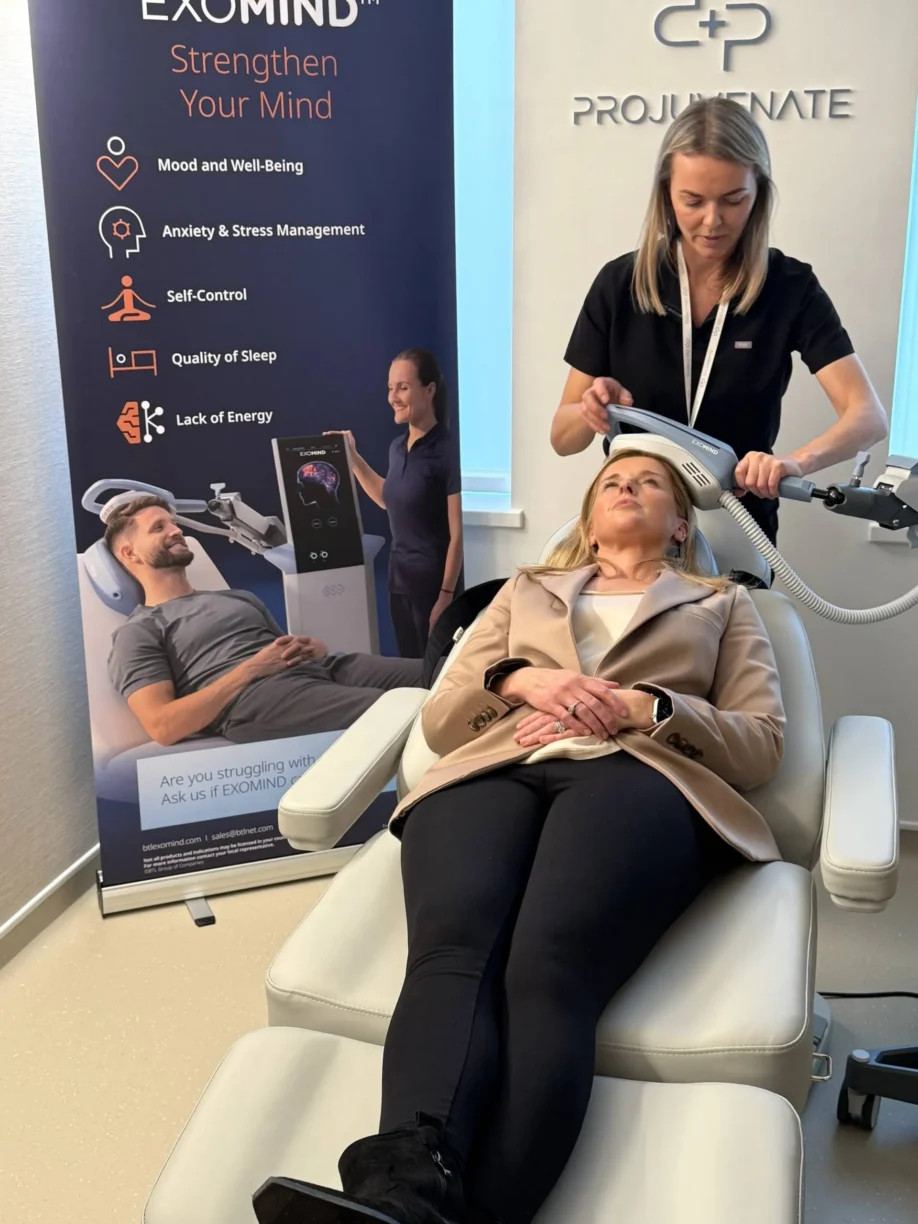
When we begin to support and optimise brain function, the effects can often be felt across every area of life. Patients frequently report sleeping more deeply, feeling calmer and more emotionally balanced, experiencing steadier energy throughout the day and finding it easier to focus and cope with pressure.
Many also notice improvements in mood, resilience and motivation, helping them feel more engaged both personally and professionally. For some, it can support consistency with healthy habits such as exercise, while for others the most noticeable changes are better sleep, reduced anxiety or feeling more present at home and work.
Over time, this allows people to sustain high performance in a healthier and more balanced way. Rather than relying solely on willpower, brain optimisation aims to support the systems responsible for recovery, emotional regulation and cognitive function.
Why high performers are prioritising mental fitness
Among entrepreneurs, executives, athletes and other high-performing individuals, this shift is particularly evident.
There is growing recognition that mental clarity, emotional resilience and cognitive performance are just as important as physical health. In many cases, they are what determine whether someone simply keeps up with life’s demands or truly thrives under pressure.
At Projuvenate, we are seeing more people invest in their mental fitness in the same way they would invest in personal training, nutrition or preventative healthcare, not because something is wrong, but because they want to feel sharper, think more clearly and function at their best more consistently.
The role of emerging technologies
Alongside lifestyle interventions such as sleep optimisation, nutrition and stress management, emerging technologies are beginning to play a role in this space.
One example is Exomind, a non-invasive brain stimulation intervention gaining traction globally. Built on established transcranial magnetic stimulation (TMS) technology, it works by stimulating the dorsolateral prefrontal cortex (DLPFC), an area of the brain involved in decision-making, emotional regulation and motivation.
By delivering targeted magnetic pulses, EXOMIND aims to support neural pathways involved in cognitive function, focus and stress regulation.
In a multicentre clinical study (Dees et al., 2025), 87.5% of participants showed improvement in validated mental well-being scores at 3-month follow-up, with patients reporting feeling less stressed (78%), sleeping better (78%) and noticing improvements in mood (81%) and focus (72%). 91% rated the procedure as comfortable.
EXOMIND is intended to support mental wellness in healthy adults rather than to treat diagnosed mental health conditions, and individual results vary. These findings reflect a growing understanding that the brain can be actively supported and optimised in much the same way as the body.
At Projuvenate, we often describe this treatment as a workout for the brain, a targeted intervention designed to support cognitive function, emotional wellbeing and resilience.
Treating the brain like a muscle
Perhaps the biggest shift is conceptual. We are moving away from viewing the brain as something fixed or reactive, and towards understanding it as adaptable and trainable. Just as muscles respond to consistent support, recovery and conditioning, so too does the brain.
This reframing has significant implications. It encourages people to take a more proactive approach to their mental wellbeing, investing in clarity, resilience and emotional balance, rather than waiting until stress, anxiety or burnout become overwhelming.
The future of wellness
The future of health and wellbeing will not be defined solely by physical metrics. It will be more holistic, recognising the connection between the brain and body as interconnected systems that influence every aspect of how we live.
Physical fitness will always matter, but increasingly, people are recognising that feeling healthy is also about sleeping well, thinking clearly, managing stress effectively, maintaining emotional balance and having the energy and resilience to cope with modern life.
Ultimately, the question is no longer just how healthy we look on the outside, but how well we feel and function overall, and the brain plays a central role.